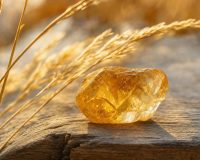
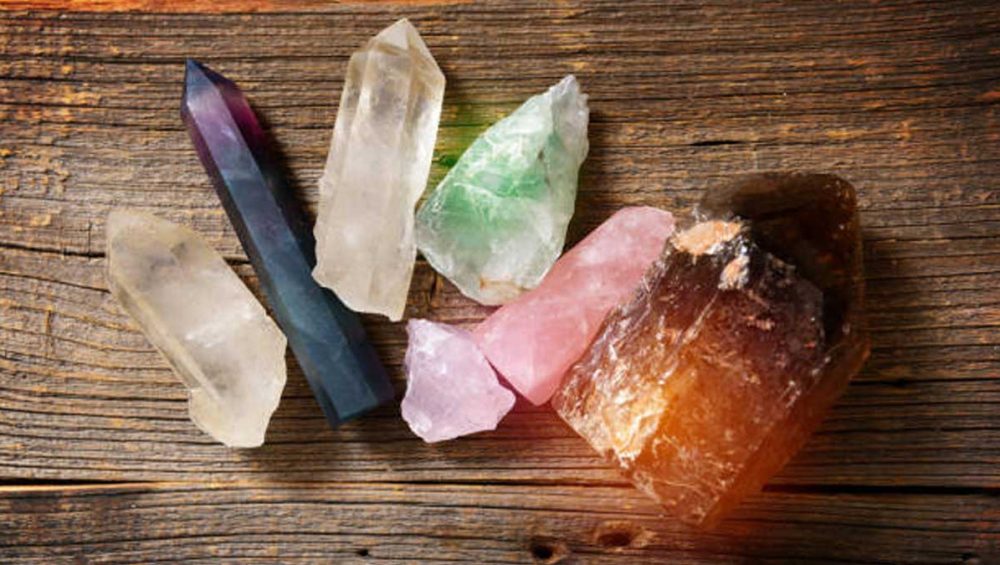
Most people do not begin exploring crystals through a neat chart or a perfectly organized glossary. The experience usually starts somewhere quieter. A color catches the eye. A polished stone feels unexpectedly calming in the hand. A crystal point on a shelf seems to hold a kind of order the nervous system notices before the mind can explain it. For many people, that first connection is subtle but memorable. It feels less like collecting information and more like recognizing something they did not yet have words for.
That is often why learning about types of crystals feels so helpful. It creates a sense of orientation. Instead of meeting amethyst one day, black tourmaline another day, and citrine somewhere in between, readers begin to see relationships. Some stones belong together because they share a mineral family. Others are grouped because they carry similar symbolic meanings or tend to be chosen for similar emotional needs. Once those patterns become visible, the crystal world feels less scattered and far more understandable.
Within the broader tradition of crystal healing, different stones are often approached with different intentions. Some are turned to for steadiness and grounding. Others are associated with clarity, intuition, compassion, courage, truth, or renewal. These meanings do not replace geology. Instead, they sit beside it, offering another language for understanding why particular stones continue to matter so deeply to so many people.
For readers who want a wider view of that tradition, the crystal healing guide offers a larger framework for how crystals have been used in reflective, spiritual, and emotional practices over time. But before moving into rituals, care methods, or meditative uses, it helps to understand the foundation: the many different types of crystals and the patterns that connect them.
Some categories are geological. Quartz is a mineral family. Tourmaline is another. Calcite, fluorite, and selenite each have their own structures, textures, and formation stories. Other categories are symbolic and experiential. People often speak of protective stones, heart-centered stones, clarity stones, grounding stones, and crystals that support meditation or emotional healing. These systems overlap. A single stone can belong to several categories at once, which is part of what makes crystal work feel both layered and personal.
That is also why larger collections of gemstone meanings become so useful. They allow readers to move from broad understanding into more specific relationships with individual stones. A person may start with a general search for types of crystals, then realize they are especially drawn to quartz, or to grounding stones, or to crystals associated with emotional comfort. The broader page becomes a doorway rather than a dead end.
This article is meant to function in that way. It sits between broad crystal education and deeper gemstone-specific exploration. It lives beside organizing hubs like crystals by intention and chakra crystals guide, but its purpose is slightly different. Rather than sorting stones only by goal or energy center, this page helps readers understand the larger terrain. It introduces crystal families, emotional categories, and practical ways of thinking about how stones relate to one another.
That matters because many people are not just looking for a list. They are looking for orientation. They want to know where to begin without feeling overwhelmed. They want to understand why certain names appear over and over again. They want to recognize the difference between a family like quartz and a category like grounding stones. And often, they want to do all of that without losing the sense of wonder that drew them toward crystals in the first place.
When you begin to understand crystal types, the world of stones becomes less like a crowded shelf and more like a meaningful landscape. Some stones feel bright and clarifying. Some feel deep and protective. Some seem to carry tenderness, while others feel like truth, resilience, or stillness. Learning those patterns does not force certainty. It simply gives the reader a gentler, steadier way to move through the crystal world with more confidence, more clarity, and more emotional connection.
What makes one crystal type different from another?
There is more than one answer to that question, and both matter. From a geological perspective, crystals are distinguished by composition, structure, hardness, color, and the environmental conditions that formed them. Quartz is not the same as tourmaline. Selenite is not the same as onyx. These differences are real, material, and shaped by deep geological processes that unfolded over immense spans of time. Each crystal carries its own physical story.
But human beings do not only meet crystals through mineralogy. They also meet them through emotion, intuition, beauty, ritual, and lived experience. That is why crystal types are often discussed in a second way: through felt categories. Some stones are commonly described as grounding. Some are called protective. Some are associated with love, truth, meditation, creativity, or spiritual clarity. These categories are less about what a crystal is made of and more about how people have learned to relate to it.
That layered way of understanding crystals is not a flaw in the topic. It is part of what makes the subject so rich. A single stone can belong to a geological family and an emotional category at the same time. Rose quartz is part of the quartz family, but many people also encounter it as a heart-centered crystal. Black tourmaline has a mineral identity, but it is also widely understood as a grounding and protective stone. Instead of making the topic confusing, these overlapping systems make it more human. They allow readers to connect with crystals through both structure and meaning.
For many people, that is exactly what they need. They are not searching for crystals only as objects of scientific study, though that aspect is valuable. They are often searching because they want language for what they are feeling. Crystal categories can provide that language gently. They can help someone name a need for stability, openness, clarity, or rest without making the experience feel mechanical.
Quartz crystals: the family many people meet first
If one crystal family introduces more people to the wider world of stones than any other, it is quartz. Quartz is abundant, visually diverse, and woven into both geology and spiritual symbolism. It can appear clear, smoky, golden, pink, purple, or milky white. It can feel clean and minimal or warm and emotionally expressive. Because of that range, quartz often becomes the first real framework readers encounter when they begin learning about types of crystals.
One reason quartz matters so much is that it shows how one family can hold many different emotional tones. The symbolism attached to clear quartz meaning often centers on clarity, amplification, and focus. In contrast, amethyst is frequently associated with reflection, intuition, and spiritual calm. Citrine is often linked with warmth, confidence, and creative energy. Quartz contains all of these, which makes it a powerful reminder that one mineral family can still hold tremendous variety.
Readers are also often drawn toward softer quartz expressions. Rose quartz healing is widely associated with compassion, tenderness, and emotional repair, while smoky quartz meaning tends to be approached through themes of grounding, stability, and release. Both are quartz. Both are distinct. That tension between shared structure and different feeling is one of the clearest ways to understand what crystal families can teach.
Quartz also appears frequently in personal practice because it feels accessible. It is common in altars, pocket stones, meditation tools, jewelry, and beginner collections. Many readers start there because quartz feels familiar without feeling simplistic. It offers variety without demanding specialized knowledge. In that way, quartz becomes more than a family. It becomes a doorway through which many people first learn how crystal categories work.
Within symbolic systems, quartz stones are often considered alongside chakra crystals guide, where color and energetic associations give readers another way to understand why certain stones feel aligned with particular forms of healing or awareness. Even for people who do not personally use chakra language, that framework can still reveal how colors, emotional symbolism, and crystal categories often intersect.
Protective and grounding stones
Not every crystal is sought for uplift, brightness, or expansion. Some are chosen because life feels too exposed, too noisy, or too emotionally fragmented. In those moments, readers are often drawn toward stones that feel denser, darker, and more anchoring. Protective and grounding stones tend to hold that place in the crystal world. Their value often lies not in how dramatic they seem, but in how steady they feel.
These stones are frequently associated with boundaries, containment, and reconnection to the body. That matters for people moving through stress, grief, overstimulation, emotional fatigue, or seasons when the nervous system already feels overextended. In those moments, a grounding crystal can symbolize something very simple but very real: the desire to come back to yourself.
Among the best-known stones in this category are black tourmaline and onyx. Black tourmaline is often approached as a stone of protection and energetic shielding. Onyx is more often linked with inner strength, emotional endurance, and the capacity to remain steady under pressure. Neither needs to feel flashy to feel meaningful. Their emotional appeal often comes from how quietly stabilizing they are.
This category overlaps naturally with the language of crystals for grounding, where stones are treated not as abstract concepts but as companions in the everyday work of coming back into presence. That grounding can be practical rather than mystical. It can mean feeling less scattered, less flooded, less pulled away from the moment you are actually living in.
For some readers, grounding practices deepen further through grounding with crystals daily practices, where stones become part of repeated rituals of breath, pause, reflection, or nervous-system support. In that way, grounding stones are not only symbols. They become part of a lived relationship with steadiness. Sometimes the most powerful crystal is simply the one that helps a person feel like they can exhale again.
Heart, truth, and emotional connection crystals
Some crystal categories are held less by density and more by softness. These are the stones many people turn toward when they are seeking tenderness without fragility, openness without overwhelm, or truth that does not arrive as force. Their colors often reflect that tone: pink, pale green, soft blue, luminous white, or deep, thoughtful indigo. They tend to gather around the emotional territories of compassion, trust, communication, grief, honesty, and reconnection.
Rose quartz is perhaps the most familiar heart-centered stone, but its symbolism reaches beyond romance. Many readers are drawn to it because it suggests gentleness, receptivity, self-kindness, and the possibility of healing after emotional strain. That softer emotional language often becomes clearer through rose quartz heart healing, where the stone is understood less as decoration and more as a symbol of repair, empathy, and openness.
Truth-oriented crystals often move that emotional language in a different direction. Lapis lazuli has long been associated with wisdom, insight, and the courage to speak from a deeper place. In a quieter but related way, selenite is often approached through themes of clarity, purification, and spaciousness. These stones are not emotionally identical, but they do share a quality of helping readers imagine what inner clarity might feel like.
Other stones in this broader category support calm expression and emotional steadiness through gentler pathways. The atmosphere surrounding blue lace agate crystal meaning often centers on softness in communication, a quieter kind of truth, and the relief that comes when expression no longer feels forced or defended. This makes such stones especially meaningful for readers who are healing their relationship to voice, honesty, or emotional safety.
These crystals also connect naturally with wider ideas rooted in emotional wellness foundations, where safety, awareness, and self-compassion form the underlying ground for healing. For many people, the appeal of heart-centered or truth-oriented crystals is not that they promise instant transformation. It is that they mirror a slower process already underway: learning to soften, to speak, to trust, and to remain present with what is real.
Meditation, cleansing, and daily relationship with crystals
Once readers begin to understand different crystal types, a second question often emerges: how do these stones actually enter daily life? The answer is rarely through one dramatic moment. More often, a relationship with crystals develops gradually. A stone is kept by the bed. Another sits on a desk. One is carried in a pocket on difficult days. Over time, what started as curiosity becomes rhythm.
This is one reason crystals naturally intersect with contemplative practice. Many people are drawn toward crystals for meditation because stones can help shape an atmosphere of focus, presence, and intentional stillness. Some crystals feel clarifying in meditation. Others feel grounding or protective. The category matters because different stones support different inner conditions, and meditation is rarely one-size-fits-all.
Care is part of that relationship too. Readers often reach a point where they realize crystals are not only chosen but tended. The quieter logic of crystal cleansing without water becomes important here, especially because not every stone responds safely to water or moisture. Care methods matter not just for preservation, but because tending a crystal can become part of the emotional meaning attached to it.
Eventually, this daily relationship often widens into daily rituals with crystals, where stones become companions in morning pauses, evening reflections, intention setting, grounding after overwhelm, or simple moments of reconnection. In those practices, crystal types stop feeling like categories on a page and start feeling like a language of lived experience.
That shift is part of why learning about crystal types matters in the first place. It does not end with classification. It opens into relationship. The reader starts by naming categories, but often stays because those categories begin to reflect real emotional needs, rhythms, and forms of care that feel deeply personal.
Frequently asked questions about types of crystals
What are the main types of crystals?
The main types of crystals can be grouped in more than one way. Some are categorized by mineral family, such as quartz, tourmaline, calcite, or fluorite. Others are grouped by the emotional or symbolic roles people associate with them, such as grounding stones, heart-centered stones, meditation stones, or protective crystals. Both systems are useful. One helps explain what a crystal is physically, while the other helps explain how people tend to relate to it in everyday life.
Is quartz a type of crystal or a separate stone?
Quartz is both a crystal type and a mineral family. It is one of the most common minerals on earth, and many well-known stones belong to it. Clear quartz, rose quartz, amethyst, citrine, and smoky quartz are all quartz varieties. That is why quartz is often the first family people encounter when learning about different types of crystals.
How do people choose the right type of crystal for them?
People usually choose crystals through a combination of meaning, appearance, and emotional resonance. Some start with a need, such as grounding, clarity, courage, or comfort. Others feel drawn to a stone before they know why. Neither approach is wrong. For many people, the most supportive crystal is the one that feels steady, honest, and emotionally right for the season they are in.
Are protective crystals different from healing crystals?
They can overlap, but they are not always spoken about in the same way. Protective crystals are usually associated with boundaries, containment, and stability. Healing crystals are often discussed in a broader sense and may include stones connected with emotional release, compassion, insight, calm, or renewal. A single stone can belong to both categories depending on how it is understood and used.
Do crystal colors matter when understanding crystal types?
Yes, color often plays an important role, even though it is not the only factor. Color can reflect mineral content, formation conditions, and visual character, but it also shapes how people experience a crystal emotionally. Darker stones are often seen as grounding or protective. Lighter or brighter stones may feel clarifying, uplifting, or heart-opening. Color is not the whole story, but it often becomes part of how people instinctively understand a crystal.
Conclusion
Learning about the different types of crystals can be unexpectedly reassuring. What first appears to be a vast world of names, colors, shapes, and meanings begins to organize itself into something gentler and more coherent. Families emerge. Emotional patterns become visible. Readers begin to understand that some stones belong together because of structure, while others belong together because they speak to similar human needs.
That kind of understanding matters because it protects the experience from becoming overwhelming. Quartz teaches variety within one family. Grounding stones teach steadiness, containment, and return. Heart-centered and truth-oriented stones teach that clarity can arrive in many forms, including softness, honesty, tenderness, and release. When those patterns become visible, crystals stop feeling random. They start to feel relational.
For some readers, that relationship remains rooted in geology and appreciation for the natural world. For others, it opens into ritual, meditation, emotional healing, or symbolic self-understanding. Both approaches are valid. Both can coexist. The value of learning crystal types is not that it forces one interpretation. It simply helps readers move through the landscape with more trust in what they are seeing and why it may matter.
And that may be the real gift of a page like this. It does not ask anyone to rush toward certainty. It simply offers a steadier map. From here, readers can move into individual stones, deeper meanings, and personal practices with more confidence and less confusion. Sometimes that is all a beginning really needs: not a final answer, but a clear and welcoming way forward.

Where softness, self-awareness, and emotional healing are allowed to coexist. Through reflective writing, grounding rituals, and intentional beauty, Sparrow Trades offers gentle support for sensitive souls learning to reconnect with themselves.