
There are some crystals that feel like a quiet companion—steady, neutral, supportive in a background kind of way. And then there are crystals like citrine, which tend to arrive with a different energy entirely: warm, clarifying, forward-moving.
If you’ve ever felt emotionally dimmed out by life—like your hope got “turned down” over time—citrine often speaks to that place. Not in a loud “fix everything” way, but in a gentler, more human way: Let’s try again. Let’s begin again. Let’s trust that light can exist even after disappointment.
For many people, the question “what is citrine?” begins as curiosity. Maybe you’ve seen it in jewelry. Maybe you’ve heard it called the “merchant’s stone” or linked to abundance. Maybe you’re navigating a season of change, and you’re drawn to anything that feels like renewal.
But citrine also tends to resonate with people who’ve been through burnout, emotional depletion, chronic stress, or relationship dynamics that taught them to shrink. When your nervous system has spent a long time bracing—whether from trauma, emotional invalidation, or simply being in survival mode—joy can start feeling unfamiliar. Receiving can feel unsafe. Even optimism can feel suspicious, like it won’t last.
Citrine doesn’t demand that you suddenly become positive. It doesn’t require you to perform confidence or “manifest harder.” Instead, it offers something more grounded and nervous-system-friendly: a sense of safe warmth, a slow return of self-belief, and the emotional permission to feel good again without immediately waiting for the other shoe to drop.
On the energetic level, citrine is often associated with the solar plexus chakra—a center linked with self-worth, identity, courage, and personal power. But you don’t have to think in terms of chakras to understand what that means emotionally. If you’re already exploring chakra crystal healing, citrine often becomes one of the first stones people reach for when they’re trying to rebuild their sense of self.
Solar plexus healing, in real life, looks like this:
- trusting your yes and no again
- feeling allowed to have preferences
- noticing your motivation return
- taking up space without apology
- believing you deserve support without earning it through suffering
And for people who have learned to survive by being “useful,” “easy,” “good,” or “low-maintenance,” that kind of healing can feel like coming back home to yourself.
In this guide, we’ll explore what citrine is, what it symbolizes, and why it’s often described as a stone of abundance, confidence, and vitality. We’ll keep it grounded in lived experience, because healing isn’t just information—it’s what happens when you feel yourself slowly come back to life. If you’re building a calmer relationship with spiritual tools overall, crystal healing can be a supportive foundation to return to whenever things start feeling overwhelming or unclear.
What Is Citrine? (1 of 2)
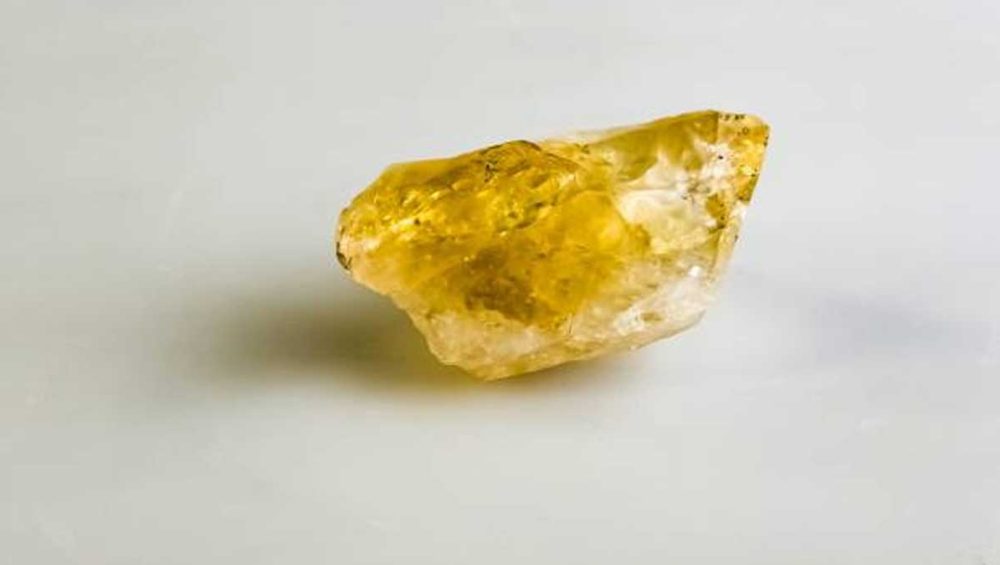
Citrine is a yellow-to-golden variety of quartz, known for its warm color, bright clarity, and association with confidence, abundance, and emotional energy. Its color can range from pale champagne and honey tones to deep amber-gold, and it’s often loved for the way it seems to “hold sunlight” inside it.
In the larger world of gemstone meanings, citrine stands out because it feels emotionally direct. It doesn’t have a mysterious, hard-to-name vibe. It feels like warmth. Like movement. Like you’re allowed to want something again.
On a purely physical level, citrine is a mineral—beautiful, natural, and often translucent, sometimes with small inclusions or cloudy areas depending on the specimen. But on a human level, citrine often becomes something else: a symbol.
Because the truth is, people don’t just wear crystals because they’re pretty. People wear crystals when they’re trying to carry something invisible with them—something they can’t always explain, but they can feel.
For many, citrine symbolizes:
- hope that feels realistic, not forced
- confidence that doesn’t require arrogance
- energy that isn’t frantic or performative
- warmth that doesn’t come with strings attached
That’s why citrine is often chosen during transitions: career changes, emotional healing, rebuilding after burnout, leaving a controlling relationship, stepping into a new identity, or simply learning how to feel safe in your own life again.
Citrine is sometimes described as a stone of joy, but I think the deeper truth is this:
Citrine doesn’t just help you feel happy. It helps you feel alive.
And there’s a difference.
Happiness can feel like a mood. Aliveness feels like an internal return—like you’re coming back online after being emotionally offline for too long.
If you’ve been living with anxiety, people-pleasing, chronic tension, or that subtle survival-mode exhaustion where even good things feel overwhelming, citrine can be a gentle reminder that your system doesn’t have to stay in “braced” mode forever.
It won’t do the work for you, but it can support the work—especially when you’re ready to start believing that you’re allowed to want more, receive more, and feel more without guilt.
What Is Citrine? (2 of 2)
Citrine is sometimes marketed like it’s only about money, success, or “high vibes.” But for many people, citrine is less about a flashy outcome and more about an inner shift—like your body is remembering something it forgot: I can move forward again.
That’s one of the reasons citrine is a natural fit inside crystals by intention. It supports an intention that isn’t performative. It supports the kind of growth you feel in your chest and stomach before you can put it into words.
If you’re recovering from burnout, citrine can feel like a tiny flame being protected. If you’re healing from emotional harm, it can feel like a boundary that doesn’t require anger. If you’re rebuilding self-worth, it can feel like the quiet belief that you deserve more than survival.
It’s also an accessible crystal for beginners—not because it’s “easy,” but because it doesn’t ask you to become someone else. Citrine tends to meet you where you are and say, Okay. Let’s start from here.
The most grounded way to think about citrine is this:
Citrine doesn’t change your life for you.
It helps you stop abandoning yourself while you’re trying to change your life.
And when you’ve spent years twisting yourself into shapes that felt acceptable, that kind of support is not small. It’s everything.
Citrine Meaning: Emotional Warmth, Self-Worth, and Permission to Receive
Citrine is often called a crystal of abundance, but emotionally speaking, its deeper meaning is permission.
Permission to want more.
Permission to feel good without explaining yourself.
Permission to stop shrinking.
Permission to receive without earning it through pain.
For people with a trauma history—or even a long pattern of emotional stress—receiving can feel surprisingly hard. Not because you don’t want support, but because your body may have learned that:
- attention comes with pressure
- being seen comes with criticism
- success invites resentment
- happiness doesn’t last
- rest is followed by consequences
- joy makes you vulnerable
So you learn to stay small. You learn to stay prepared. You learn to keep your expectations low so you won’t be crushed by disappointment.
This is where citrine can feel emotionally powerful. Not as a magical fix—more like a steady warmth that says:
“You don’t have to be on guard every time life gets good.”
Citrine carries a meaning of self-trust and self-worth, but not the rigid kind. It’s not about forcing confidence. It’s about rebuilding the internal belief that you’re capable of handling life—without betraying yourself in the process.
In lived experience, citrine energy can feel like:
- making a decision and not immediately doubting it
- noticing jealousy and turning it into clarity (“I want that too”)
- feeling motivated again after numbness
- remembering what you enjoy
- reclaiming the parts of you that used to feel bright
And if you’ve been through seasons of emotional invalidation, citrine can be especially soothing because it supports the idea that your feelings matter. When that’s something you’re actively rebuilding, trauma-informed crystal care can help keep your relationship with crystals gentle, safe, and emotionally supportive.
Sometimes the biggest healing isn’t learning how to cope.
It’s learning how to expand.
Citrine is often chosen as a companion when someone is ready to stop surviving and start living—slowly, gently, honestly.
Citrine Healing Properties: What It’s Used for Spiritually and Emotionally
When people talk about citrine healing properties, they’re usually referring to the ways citrine is believed to support emotional energy, confidence, clarity, and abundance.
But a trauma-informed lens matters here, because sometimes “abundance” language can feel disconnected—or even triggering—if you’ve lived through scarcity, instability, or repeated emotional letdowns.
So instead of treating citrine like a shortcut to getting what you want, it can be more helpful to see it as a support for restoring what chronic stress steals from you:
- hope
- motivation
- self-belief
- pleasure
- creativity
- energy
- direction
Spiritually, citrine is often associated with:
- clearing stagnant energy
- uplifting mood and outlook
- supporting manifestation intentions
- strengthening personal power
- protecting emotional energy from drain
Emotionally, citrine tends to help people reconnect with parts of themselves that feel dimmed—especially after burnout, trauma, or long-term people-pleasing.
It’s a crystal many people reach for when they’re tired of asking, “What’s wrong with me?” and are ready to ask something kinder and more true:
“What happened to me… and what do I need now?”
Because when you’re recovering, you don’t need constant self-improvement. You need restoration. The deeper emotional context behind that is part of why benefits of healing crystals can feel so reassuring—it helps you remember that support can be soft, personal, and non-performative.
Citrine can also be supportive for those who struggle with self-trust. Not self-trust as an idea, but self-trust as a body experience:
- feeling safe making choices
- tolerating uncertainty without panic
- staying connected to yourself when others disapprove
- believing you’re allowed to build a life you actually like
In that way, citrine’s healing isn’t loud. It’s steady.
It can become a daily reminder that your light isn’t something you have to prove. It’s something you get to protect, nurture, and reclaim.
Citrine and the Solar Plexus Chakra: Confidence Without Force
Citrine is most commonly linked to the solar plexus chakra, which is often described as the energy center connected to confidence, self-worth, identity, and inner power.
But let’s talk about what that means in real life—especially if you’re nervous-system sensitive or healing from trauma.
For many people, confidence has been misunderstood as being loud, bold, or fearless. But trauma survivors often know a different truth:
Sometimes “confidence” is quiet.
Sometimes confidence is:
- saying no and not over-explaining
- resting without guilt
- letting someone be disappointed without rescuing them
- changing your mind without shaming yourself
- choosing yourself even when no one claps
Solar plexus energy is where you store your sense of self. And when that center is wounded—by criticism, control, emotional manipulation, or chronic invalidation—you may notice patterns like:
- second-guessing everything
- needing permission to make basic choices
- feeling responsible for everyone’s reactions
- shrinking your needs to avoid conflict
- feeling guilty for wanting more
You might look functional on the outside, but internally you feel unstable—like your sense of direction disappears the moment someone disapproves of you.
Citrine can be a supportive anchor for rebuilding that center.
Not by forcing “high vibes,” but by gently reinforcing emotional sovereignty:
“I’m allowed to be me.”
“I’m allowed to choose.”
“I’m allowed to take up space.”
And if you’ve been living in freeze, fawn, or shutdown states, citrine’s warmth can feel like a thawing—like your system is remembering that it’s safe to feel energy again.
It’s also a powerful crystal for people who are rebuilding their voice after years of self-erasure. Because solar plexus healing isn’t just about confidence.
It’s about ownership.
Ownership of your time, your needs, your boundaries, your dreams, your energy, your future. If you want a bigger energetic “map” for how stones connect to the body, chakra crystals guide can be a steady reference without turning healing into a checklist.
How to Use Citrine in Daily Life (Without Forcing “Positive Vibes”)
One of the most supportive things you can do with citrine is use it gently—as a reminder, not a demand.
Because if you’ve been through emotional intensity, chronic stress, or trauma, “positivity” can sometimes feel like pressure. It can feel like a performance you have to keep up.
Citrine works best when it’s approached with softness.
Here are a few nervous-system-aware ways people use citrine in everyday life:
Wear it as a steady cue.
Citrine jewelry can act like an emotional anchor. Not because it fixes your day, but because it gives your mind and body a symbol to return to: warmth, self-belief, enoughness. If you’re drawn to wearing it, citrine jewelry can help you explore pieces that feel aligned with your energy and your style.
Keep it in a space where you want to feel more like yourself.
This could be near your desk, on your nightstand, or in a corner of your home that you associate with peace. Think of it like placing a warm light in a room—not to change everything, just to shift the tone.
Use it during transitions.
Before a hard conversation. Before you hit send on something important. Before you walk into a space where you usually shrink.
Not as armor—more like companionship.
Pair it with simple grounding.
Hold the stone for a few breaths. Place a hand on your chest or belly. Let your system register safety. Citrine doesn’t need elaborate rituals to be meaningful, and if you want a gentle structure for integrating crystals into daily life, daily rituals with crystals can help you keep it simple and steady.
Let it represent receiving.
If receiving feels hard for you, citrine can be a symbol of practicing openness in small ways:
- accepting a compliment without deflecting
- allowing help without immediately offering repayment
- buying yourself something small without guilt
- taking rest seriously
The goal is not to force yourself into joy.
The goal is to give your nervous system tiny moments of evidence that good can be safe.
That’s how healing becomes sustainable: not through intensity, but through repetition.
How to Tell Real Citrine vs Heat-Treated Amethyst
If you’ve started shopping for citrine, you may quickly notice something confusing: a lot of citrine on the market looks darker, more orange, or almost burnt.
That’s because much of what’s sold as citrine is actually heat-treated amethyst (or sometimes heat-treated smoky quartz). When certain types of amethyst are heated, they can turn a yellowish or orange-brown shade that gets labeled and sold as citrine.
This isn’t always presented clearly, and that can feel disappointing—especially if you’re someone who values honesty, transparency, and emotional integrity in the things you bring into your healing space.
Here’s a gentle, practical way to approach it:
Natural citrine often has a softer, lighter, more even tone—like pale champagne, honey, or lemon. It can be transparent and bright without looking overly saturated.
Heat-treated amethyst is often:
- very orange or reddish-brown
- darker at the tips, lighter at the base
- sold in clusters with a “burnt” look
Natural citrine is more commonly found as:
- points
- tumbled stones
- lighter-toned pieces
- sometimes with subtle smokiness
That said, it’s okay to not turn this into perfectionism.
If you find a piece that feels calming, supportive, and beautiful to you, that matters.
But if you’re intentionally seeking natural citrine, the best approach is:
- buy from reputable sellers
- look for clear labeling
- ask questions without embarrassment
- trust your own preferences
Sometimes the most nervous-system-safe choice is simply learning how to care for what you have, in a way that doesn’t create pressure or rigidity. For example, crystal cleansing without water can be a gentle option if water cleansing feels stressful, confusing, or not practical for your lifestyle.
Trauma-informed healing includes learning that you’re allowed to want what you want—without being shamed for it.
You don’t have to settle.
You don’t have to over-justify.
You don’t have to “be grateful” for something that doesn’t feel aligned.
Choosing your citrine can be part of practicing self-trust.
Frequently Asked Questions About Citrine
What is citrine used for?
Citrine is commonly used for emotional energy, confidence, motivation, and abundance-focused intentions. Many people choose citrine when they’re rebuilding self-worth, recovering from burnout, or trying to feel more hopeful and energized. It’s often treated as a supportive stone for personal power, and citrine healing can help you explore the emotional and spiritual ways people work with it.
Is citrine a real gemstone?
Yes—citrine is a real gemstone and a naturally occurring variety of quartz. However, a lot of stones sold as “citrine” are actually heat-treated amethyst or smoky quartz. Natural citrine tends to have softer golden tones, while heat-treated pieces can appear more orange or burnt. If you’re drawn to citrine as part of a broader crystal practice, crystal healing guide can help you stay grounded in what matters to you.
What chakra is citrine associated with?
Citrine is most often associated with the solar plexus chakra, which relates to confidence, self-worth, identity, boundaries, and personal power. If you like working with crystals through an energy-center lens, chakra crystal healing can support a gentler, more connected approach that still feels clear.
Can citrine help with anxiety or stress?
Citrine is often described as uplifting, which can feel supportive during anxious or low-energy periods. While it’s not a medical tool, many people find that holding or wearing citrine reminds them to breathe, reset, and reconnect with hope. If you’re looking for supportive, body-friendly ways to ground your emotional energy during stress, crystal healing practices can offer ideas that don’t feel intense or overwhelming.
Does citrine attract money and abundance?
Citrine is widely known as a stone of abundance and manifestation, and many people associate it with prosperity and success. But abundance doesn’t have to mean pressure, hustle, or proving yourself. Sometimes abundance means feeling supported, safe, and open to receiving in small ways. If you want a broader way to connect stones to the energy you’re calling in, crystals by intention can help you stay emotionally aligned with the practice.
Can you wear citrine every day?
Yes, citrine is often worn daily in jewelry because it’s durable quartz and emotionally easy to integrate into routines. Many people like citrine as an everyday stone because it feels warm, stabilizing, and confidence-supportive without being overwhelming. If you want to keep your relationship with crystals soft and sustainable, how often to cleanse crystals can help you build a routine that feels calm rather than rigid.
Conclusion
So, what is citrine?
Citrine is a golden quartz crystal often associated with abundance, confidence, emotional vitality, and personal power—but the real reason people fall in love with it is simpler than that.
Citrine feels like warmth that doesn’t ask you to earn it.
And for anyone who has spent years bracing, shrinking, doubting themselves, or surviving through constant self-monitoring, that kind of warmth can be deeply healing.
Citrine doesn’t promise that life will always be easy.
It doesn’t pretend you can bypass grief, exhaustion, or the reality of what you’ve lived through.
Instead, it offers something more sustainable:
A reminder that your light is still yours.
That your joy is not childish.
That your dreams are not naïve.
That your desire for more is not selfish.
That receiving can be safe.
That confidence can be gentle.
And if you’re in a season where you’re learning to trust yourself again—where you’re trying to rebuild energy after burnout, recover self-worth after emotional harm, or step into a future that feels uncertain—citrine can be a steady companion.
Not a cure.
Not a shortcut.
Not a spiritual performance.
Just a small, sun-colored reminder that you’re allowed to grow.
You’re allowed to expand.
You’re allowed to want good things.
And you’re allowed to feel alive again—slowly, honestly, one warm step at a time.
If you feel yourself wanting a clearer sense of what citrine can support, citrine stone benefits can be a natural next place to land.
If you’re feeling pulled toward quieter practices, crystals for meditation can offer a steady rhythm without pressure.
If you’re drawn to working with intention in a more structured way, crystal grids can support that kind of focus while still keeping your energy grounded.
If your body feels like it needs permission to pause, resting crystals intentionally can help you soften your approach without losing consistency.
If you’re learning how to listen for subtle shifts, signs your crystal needs rest can help you stay connected to your own pacing.
If you like pairing stones with small moments of steadiness, morning affirmation rituals with crystals can help you begin the day feeling more anchored in yourself.
And if you ever want to return to the bigger landscape that holds all of this, crystal healing guide can bring you back to center again.

Where softness, self-awareness, and emotional healing are allowed to coexist. Through reflective writing, grounding rituals, and intentional beauty, Sparrow Trades offers gentle support for sensitive souls learning to reconnect with themselves.