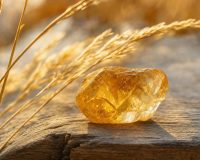
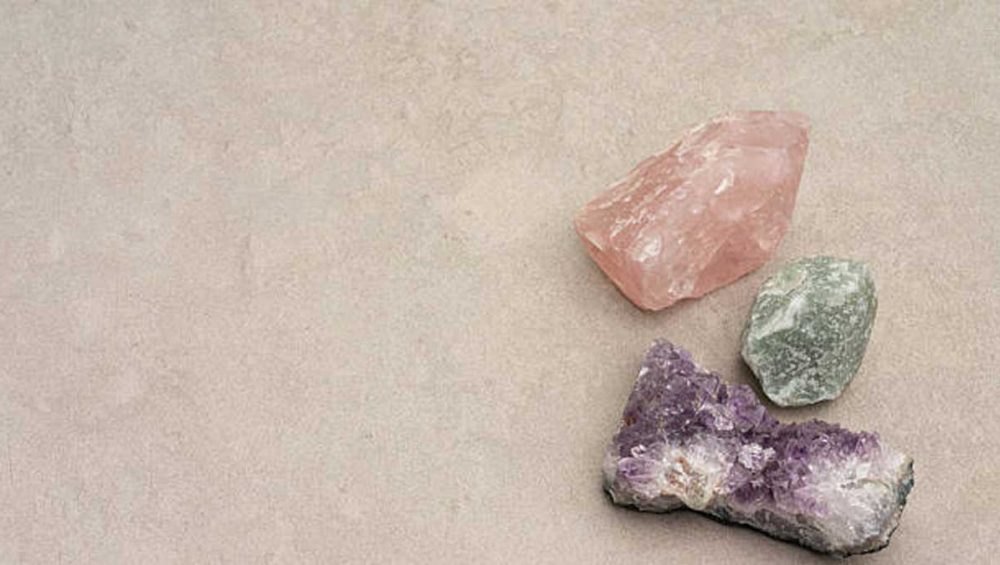
There is something quietly powerful about holding a stone in your palm.
It doesn’t speak. It doesn’t instruct. It doesn’t demand anything from you. And yet, many people feel something when they touch a piece of amethyst, rose quartz, or black tourmaline. A steadiness. A softening. A subtle sense of connection that can be hard to explain—especially if you’ve been living in your head for a long time, or if your body has been carrying more than your mind knows how to name.
This is where gemstone meanings begin—not in rigid rules or spiritual pressure, and not in “you should” language that tightens the nervous system. They begin in resonance. In the moment you notice a sensation shift as your fingers trace the edge of something ancient and real. In the relief that comes from a symbol that feels like it understands you without asking you to justify yourself.
Many people arrive here during transition. After heartbreak. During burnout. While rebuilding trust in themselves. Sometimes it starts with a quiet hope for safety, the kind of steadiness that lives beneath the surface and becomes easier to access when you have strong emotional roots like those explored in emotional wellness foundations.
Others come through curiosity about energy and symbolism—what people mean when they talk about crystal healing—and whether there’s a way to make that language feel grounded instead of performative. And some are drawn in through beauty alone: color, texture, weight, the feeling of being anchored to something tangible in a world that often feels abstract and overstimulating.
Gemstones carry meaning because humans give them meaning. That doesn’t make the meanings “made up.” It makes them relational. Over time, certain stones have gathered consistent emotional themes: amethyst with clarity and intuition, rose quartz with compassion and heart repair, black tourmaline with protection and grounding, citrine with confidence and abundance, clear quartz with amplification and clarity. These themes show up again and again because people keep returning to the same needs.
And when life is intense, needs become loud.
This guide is here to help you understand gemstone meanings as an emotional language—one that can support your inner world without overriding it. You don’t have to accept everything you read. You don’t have to “believe” perfectly. You’re simply invited to notice what resonates, and to build a relationship with symbols that help you feel more present in your own life.
The Emotional Language of Gemstones
Gemstones are often described in spiritual terms, but what many people are really describing is a body experience. A stone becomes meaningful when it mirrors an emotion you’re trying to hold, or a nervous-system need you’re trying to meet. In that sense, gemstone meanings aren’t just “properties.” They’re patterns—repeated associations between certain stones and certain internal states.
Within the broader framework of chakras and energy, stones are often connected to emotional centers of the body. Whether you approach that map spiritually, psychologically, or as a blend of both, the pattern is the same: some stones feel like they bring the mind into focus, others soften the heart, others help you feel safe in your skin.
That’s why many people choose stones through crystals by intention rather than shopping purely by aesthetics. Intention-based selection can feel like a small act of self-trust, especially for anyone who has learned to doubt their own inner signals.
There’s also something important here from a trauma-informed perspective: you are not required to force resonance. If a stone is “supposed” to feel calming and it doesn’t, that isn’t failure. It’s information. Your body is allowed to have preferences. Your system is allowed to say yes, no, or not yet.
Meaning becomes most supportive when it helps you listen inward, not when it replaces your instincts. If you’ve lived through emotional invalidation or chronic stress, you may already know what it feels like to be talked out of your own reality. Gemstone meanings are not here to do that again. They’re here to offer a gentle mirror—something you can hold while you practice believing yourself.
Core Gemstone Meanings and What They Tend to Hold
Some stones show up everywhere because their symbolism has remained steady across time. They appear in spiritual traditions, modern self-care spaces, and everyday jewelry because they speak to common human needs—clarity, love, courage, protection, confidence.
Amethyst is often associated with insight, clarity, intuition, and a calm mind. People who feel mentally overstimulated or emotionally flooded often gravitate toward the themes explored in amethyst crystal meaning. It’s not that amethyst “fixes” overwhelm. It’s that it can symbolize a return to inner quiet—especially when your thoughts have been running like a motor you can’t turn off.
Rose quartz carries a softer kind of meaning—compassion, tenderness, heart repair, the willingness to be kind to yourself even when you feel unworthy. The emotional terrain inside rose quartz healing often resonates with people moving through grief, heartbreak, shame, or a season of learning how to receive care without bracing for the cost.
Citrine is commonly tied to confidence, joy, creativity, and abundance. For many, that meaning lands during periods of rebuilding—after burnout, after stagnation, after the slow dimming that can happen when you’ve been surviving instead of living. The associations in citrine crystal meaning can feel like a reminder that your inner light is allowed to return, and that growth can be warm instead of punishing.
Black tourmaline is widely associated with protection, grounding, and energetic boundaries. People drawn to black tourmaline meaning are often seeking a sense of containment—something that helps them feel less permeable, less absorbent, less “raw” in environments that are loud, tense, or emotionally unsafe.
Clear quartz is often called an amplifier, a clarity stone, a “master healer.” Whether you take that literally or symbolically, the themes in clear quartz meaning tend to revolve around focus, cleansing, and the desire to feel mentally and emotionally clear when everything inside feels cluttered.
None of these meanings are cages. They’re invitations. You can hold a stone for one reason today and discover a different reason next month. Meaning evolves as you do.
Gemstones, Safety, and the Nervous System
When your nervous system is stressed, it seeks predictability. It seeks anchors. It seeks cues that tell the body, “You’re here. You’re safe enough to exhale.” Gemstone meanings become especially compelling in those seasons because stones are tangible. They have weight. They can be held. They can be touched in moments when thoughts are spiraling and your body needs something real.
That’s why grounding stones have become so central for people who feel anxious, overstimulated, or emotionally porous. Many people begin with lists like best grounding gemstones, but what they’re often searching for is not a “best” stone. They’re searching for stability—something that makes the day feel more inhabitable.
For some, grounding is easiest when it becomes a routine. Practices like grounding with crystals daily practices bring the concept out of the abstract and into the lived body: morning steadiness, mid-day resets, small rituals that help your system come back online without forcing you to “push through.”
And for those navigating emotional overwhelm, the language inside grounding rituals for emotional safety can feel like permission to stop trying to out-think what your body is experiencing. Sometimes the most healing thing is not insight. It’s regulation. It’s a hand on your chest. It’s the cool weight of a stone in your palm. It’s one slow breath that tells your system it can loosen its grip.
Gemstone meanings support you best when they honor your pacing. If a stone feels activating, you’re allowed to set it down. If it feels comforting, you’re allowed to keep it close. The goal is not to perform spirituality. The goal is to feel more at home in yourself.
How Meaning Deepens Through Ritual and Care
Meaning grows through relationship. The more you interact with something intentionally, the more it becomes a symbol your nervous system recognizes. That’s why simple routines—done gently, without pressure—often feel more powerful than elaborate practices you can’t sustain.
For many people, it starts with small moments that are almost invisible from the outside: placing a stone by your bed, touching it before a difficult conversation, holding it during a commute, or choosing to wear something that feels like quiet support. Over time, those moments become a pattern, and the pattern becomes a cue.
That’s one reason people are drawn to daily rituals with crystals. Not because you need to do a “perfect” ritual, but because repetition creates familiarity. Familiarity creates safety. And safety is where healing can actually happen.
Care practices can deepen that relationship too, especially when they’re gentle and nervous-system-friendly. Many people prefer methods like crystal cleansing without water because it keeps the process soft, sensory, and low-pressure. It also respects the reality that not everyone wants a practice that feels intense or ceremonial.
And if you are sensitive—emotionally, energetically, or simply because you’ve been through a lot—there can be a unique relief in approaches shaped by trauma-informed crystal care. The emphasis is not on doing more. It’s on doing what feels safe. On honoring consent. On recognizing when you need grounding instead of activation.
Ultimately, crystal care is self-care by reflection. When you treat an object with gentleness, you reinforce the truth that gentleness is allowed—toward your life, your body, and your healing process.
Gemstone Meanings in Jewelry: When You Want Support You Can Wear
For many people, gemstones become most meaningful when they’re part of daily life—when the symbol can move with you instead of staying on a shelf. That’s where jewelry becomes more than decoration. It becomes a portable reminder of what you’re protecting, what you’re healing, what you’re calling in.
When you choose a piece from jewelry, you’re not only choosing color and style. You’re choosing what you want to carry close—especially on days when your inner world feels shaky. Wearing a grounding stone can feel like an energetic boundary you don’t have to explain. Wearing a heart stone can feel like a quiet promise to treat yourself with softness. Wearing a clarity stone can feel like a gentle tether back to your own truth.
Sometimes meaning in jewelry shifts with seasons of life. In one chapter, you may crave steadiness. In another, you may crave confidence. In another, you may simply want warmth. The emotional lens inside choosing jewelry by emotional season can help you recognize that your needs are not fixed—and that what supports you today doesn’t have to be what supports you forever.
And for those who use stones for reflection or meditation, wearable pieces can become part of a calming loop. When something is already on your body, you can touch it in moments of stress and remind yourself to slow down—similar to how people use breath or attention cues while working with crystals for meditation.
Jewelry doesn’t need to be defensive to be protective. It can be soft. It can be beautiful. It can be an act of care that doesn’t announce itself.
FAQ: Gemstone Meanings and How to Work With Them
What are gemstone meanings based on?
Gemstone meanings come from a mix of historical symbolism, cultural associations, color psychology, and repeated emotional themes that people have noticed over time. Many traditions also connect stones to energy centers and spiritual frameworks, but even without a spiritual lens, the emotional patterns tend to be consistent. Stones become meaningful because they hold a symbol your mind and body recognize.
Are gemstone meanings scientifically proven?
There is limited scientific evidence that gemstones have measurable energetic properties that directly change mood or health. However, symbolism and ritual can be psychologically powerful. When you pair a stone with intention, repetition, and calm attention, it can function as an emotional anchor—something your nervous system associates with steadiness and support.
How do I choose a gemstone that fits me?
You can choose by intention, by emotional need, by color resonance, or by the simple feeling you get when you hold or wear the stone. The most supportive choice is the one that feels grounding rather than pressured. If you’re unsure, start with what you need most right now—calm, clarity, protection, confidence, or softness—and notice what naturally calls to you.
Do gemstone meanings change over time?
Yes. Some core themes stay steady, but interpretations evolve as culture evolves and as personal experience deepens. You might relate to a stone one way today and differently later. Meaning is not a rulebook—it’s a relationship, and relationships change as you grow.
Can gemstones replace therapy or medical care?
No. Gemstones can be supportive tools for reflection and emotional grounding, but they cannot replace therapy, medical treatment, or professional trauma care. If you’re struggling with mental health symptoms or trauma responses, it’s important to seek qualified support. Stones can be a complement to healing, not a substitute.
What’s the best way to use gemstone meanings without getting overwhelmed?
Keep it simple. Choose one stone and one intention, and let that be enough. Wear it, hold it, or place it somewhere you’ll see it. Build a small, repeatable moment around it—one breath, one sentence of self-kindness, one pause. The goal is not to do more. The goal is to feel more supported.
Conclusion: Meaning Is a Relationship, Not a Requirement
Gemstone meanings are not rigid truths you have to memorize or defend. They are invitations—ways of naming what you’re longing for and honoring what your body already knows.
Sometimes a stone becomes meaningful because it makes you feel safe enough to soften. Sometimes it’s meaningful because it reminds you of your strength when your confidence is low. Sometimes it’s meaningful because it sits in your palm and asks nothing from you, which can be surprisingly healing in a world that constantly demands performance.
If you take nothing else from this guide, let it be this: you are allowed to let meaning be gentle. You are allowed to choose symbols that support your nervous system instead of activating it. You are allowed to build a relationship with a stone in a way that feels real to you—quiet, personal, and evolving.
The power isn’t in proving the meaning. The power is in living it—one grounded moment at a time.
Where softness, self-awareness, and emotional healing are allowed to coexist. Through reflective writing, grounding rituals, and intentional beauty, Sparrow Trades offers gentle support for sensitive souls learning to reconnect with themselves.