If you’ve ever held a piece of selenite, you probably felt it before you “understood” it. Not in a dramatic, cinematic way — more like a subtle easing. A softening of the jaw. A small drop in the shoulders. The kind of quiet that doesn’t demand you be calm, but invites you to stop fighting your own nervous system for a minute.
So what is selenite, really?
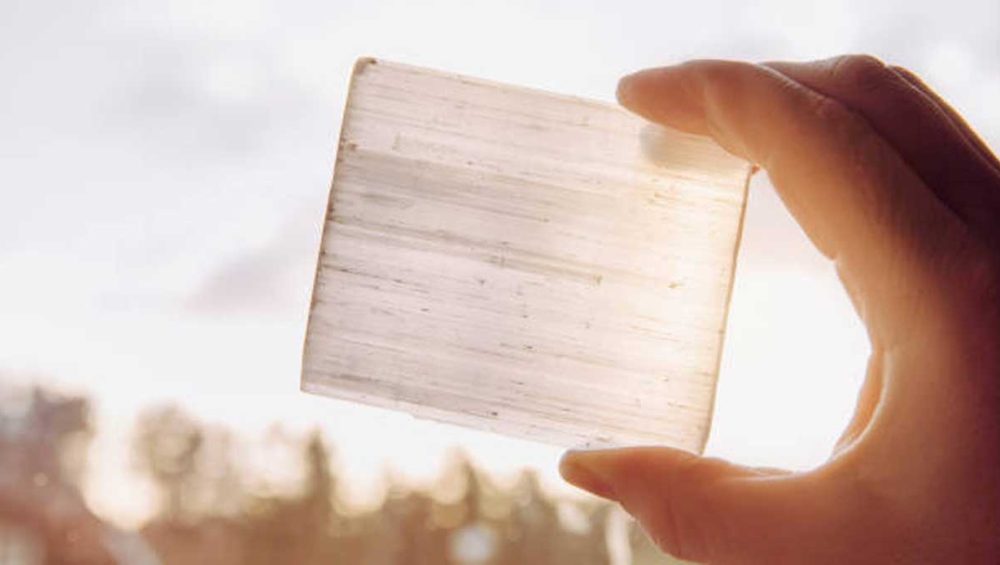
On the surface, it’s a crystal variety of gypsum — pale, luminous, often striated like frozen moonlight. It’s delicate enough to scratch with a fingernail. It doesn’t do well in water. It can look almost too gentle to be useful.
And yet, people reach for it in some of their most overwhelmed moments.
Not because it “fixes” everything. Not because it’s a shortcut to clarity. But because when life gets loud — emotionally loud, mentally loud, spiritually loud — selenite has a way of making a little space. And for a nervous system that’s been braced for too long, space can feel like medicine.
In the larger world of crystal healing, selenite is often talked about as a cleansing stone. But cleansing doesn’t have to mean harsh. It can mean gentle restoration. It can mean opening a window after weeks of stale air. It can mean remembering what it feels like to breathe without holding tension in your ribs.
Within the broader landscape of gemstone meanings, selenite is a clarity stone — not the kind of clarity that turns you into a productivity machine, but the kind that helps you hear your own thoughts again. The kind that helps you notice what you’re actually feeling underneath the noise.
It’s also deeply connected to subtle energy work and the architecture of chakras and energy. Many people associate selenite with the crown chakra — the energy center linked to perspective, spiritual connection, and the sense that you’re more than whatever is currently happening to you.
But you don’t need a perfect belief system to benefit from it.
Sometimes selenite is simply a sensory object that communicates “soft.” A reminder to slow down. A cue to unclench. A small ritual that says, “You don’t have to carry all of this at once.”
If you’ve been living in fight-or-flight — if your mind keeps scanning for problems, if your body can’t fully land, if your thoughts loop in circles late at night — selenite can feel like someone turning down the brightness on an overexposed screen.
In that sense, learning what selenite is isn’t just about mineral composition. It’s about why so many people return to it when they’re depleted, overstimulated, grieving, or simply tired of being strong.
Let’s explore what makes this crystal unique — physically, emotionally, and energetically — and how to use it in ways that protect both your tools and your tenderness.
The Physical Identity of Selenite
Selenite is a crystalline form of gypsum, composed primarily of calcium sulfate dihydrate. Its name traces back to the Greek word for moon, a nod to its soft glow and pearly sheen. It forms in evaporative environments — places where water once existed, then receded, leaving mineral memory behind.
That origin story matters more than it seems.
Selenite is literally shaped by what disappears. It’s formed through evaporation, through absence. There’s something quietly resonant about a stone that comes into being when water leaves — especially for people who’ve lived through emotional droughts, seasons where comfort felt scarce, seasons where you had to survive without the nourishment you deserved.
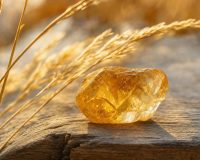
Visually, selenite often appears as wand-like blades, satin-smooth slabs, or fibrous “angel wing” clusters. It’s known for luminous translucence, like light caught in stone. Many pieces show fine striations — natural lines that look like they were drawn with patience.
And then there’s the tenderness of it: selenite is soft. On the Mohs hardness scale, it sits around 2. You can scratch it with a fingernail. It chips easily. It can cloud or break if handled roughly. It dissolves in water over time, meaning traditional cleansing methods don’t apply. This is why methods like crystal cleansing without water are especially relevant for selenite.
That softness is not a downside. It’s a lesson.
Some crystals feel protective because they’re dense. Some feel powerful because they’re hard. Selenite doesn’t win through force. It works through gentleness — and that makes it easy to underestimate until you realize how much of your life has been lived in hardness.
Compared to clear quartz meaning, which is often approached as an amplifier and clarifier, selenite feels less like “turning things up” and more like “letting things settle.” It doesn’t intensify. It quiets.
And compared to black tourmaline, which people often reach for when they want energetic protection and grounding, selenite is like lifting your face to air after being underwater. Not defense — relief.
That distinction matters because it helps you use the right stone for the right moment. If you’re braced and guarded, you might need grounding first. If you’re foggy and overstimulated, you might need clearing. Selenite tends to meet the latter.
This physical fragility also shapes how it’s used. It’s rarely tossed into a bag like a worry stone. It’s placed with care. Positioned intentionally. Kept where its presence can be felt without being damaged. In that way, selenite asks you to treat it the way you wish you had been treated: gently, attentively, without rushing.
The Emotional and Energetic Meaning of Selenite
Emotionally, selenite is often associated with clarity, calm, and nervous-system decompression. If you’ve ever felt like your brain is full of static — not even coherent thoughts, just constant pressure — selenite can feel like quiet arriving before answers do.
And that’s important: clarity doesn’t always show up as insight.
Sometimes clarity is simply the absence of panic. Sometimes it’s a body that stops flinching. Sometimes it’s being able to feel one emotion at a time instead of being flooded.
Within many crystal healing practices, selenite is used to clear stagnant energy, reset the field of a room, or create a calm container for meditation. It’s also commonly used as a “charging” surface for other crystals — not because it forces them into something new, but because it creates a clean slate.
But even if you don’t relate to energetic language, the ritual is still meaningful. Setting something down. Clearing a space. Making room for a quieter moment. These are regulating actions.
Selenite is often linked to the crown chakra — the energy center associated with perspective, meaning, and connection beyond the immediate crisis. If you’ve explored the framework of the chakra crystals guide, you’ll recognize that lighter stones are frequently associated with upper energy centers.
Still, a trauma-informed approach matters here.
If you’ve lived through chronic stress, dissociation, or hypervigilance, “going upward” can sometimes feel destabilizing. For some people, crown-focused work can feel floaty. Too open. Too ungrounded. If that’s you, you don’t have to force selenite to be a spiritual tool. It can be a gentle clarity tool — and you can pair it with grounding-oriented practices when needed.
One expansion path that often supports this balance is selenite and the crown chakra, especially when the goal is not “activation,” but safe, steady connection.
Selenite also tends to show up on beginner lists because it’s non-aggressive. It doesn’t feel like it’s asking you to perform. That’s why it’s often included among best crystals for beginners in meditation — not because it instantly makes you enlightened, but because it supports the simple act of sitting with yourself without spiraling.
If you want to understand the meaning of selenite, pay attention to what happens in your body when it’s near.
Do you breathe slower?
Do your eyes relax?
Do your thoughts become less sharp-edged?
If yes, that’s the meaning.
Selenite isn’t a stone of force. It’s a stone of permission. Permission to pause. Permission to soften. Permission to not have it all figured out.
And if you’ve spent years living in survival mode, permission can feel like the first step back to yourself.
How to Use Selenite in Everyday Life
The best way to use selenite is the way that supports your real life — your actual mornings, your actual stress, your actual nervous system — not an idealized spiritual routine you never have time for.
Selenite tends to work best when it becomes part of a small, repeatable rhythm. Something that tells your body, “We are safe enough to unclench for a moment.”
Here are some practical, emotionally grounded ways people use it:
Create a “soft corner” in your space
Selenite is often used to clear a room’s energy, but even more than that, it can designate a space as quieter. Place it on a nightstand, a meditation shelf, or anywhere you want your mind to slow down. The placement becomes a cue — a visual reminder that not everything in your home has to be functional. Some spaces can be restorative.
Use it as a transition tool
Many people struggle with transitions — from work to home, from social interaction to solitude, from day to sleep. Holding selenite for 60 seconds can become a gentle bridge. Not a fix, but a signal to your system that the next phase is beginning.
Pair it with other stones intentionally
Selenite is often compared to stones that energize, like citrine, or stones that soothe emotional heaviness, like amethyst crystal meaning. But you don’t need to memorize pairings. Think in terms of what you need: clarity, calm, groundedness, softness.
Refresh your other crystals
Selenite is commonly used as a resting surface for other stones. Whether you view this as energetic cleansing or symbolic reset, it can help you stay in relationship with your tools rather than treating them like objects you burn through.
Wear it in a way that feels emotionally supportive
Wearable selenite can be a subtle form of self-regulation: a tactile reminder that you can return to calm. Pieces categorized as selenite jewelry offer that option without making the practice feel like a big production.
If you tend to hold stress in your hands, selenite bracelets can feel especially grounding through touch. If you carry tension in your chest or throat, selenite necklaces place the stone closer to the body’s center.
And none of this has to be performative. The point isn’t to look spiritual. The point is to feel a little more like yourself.
Selenite works best when you let it be simple.
Caring for Selenite Gently
Selenite care is where a lot of people accidentally slip into “doing it right” anxiety. If you’ve experienced perfectionism, hyper-responsibility, or a history where making mistakes felt unsafe, even crystal care can become another thing to manage.
So here’s the trauma-informed truth: care should feel calming, not punishing.
Because selenite is water-soluble and soft, it should not be submerged or scrubbed. It can cloud, dissolve, or weaken over time. Instead, stick to gentler approaches.
A helpful baseline is building a rhythm using guidance like how often to cleanse crystals — not as a rigid rule, but as a way to normalize cycles of reset. Crystals don’t need constant intervention. Neither do you.
If your selenite starts looking dull, or if it feels “tired” to you, that perception can be meaningful. You might recognize patterns described in signs your crystal needs rest — and instead of reacting by doing more, consider doing less.
Selenite often benefits from rest. A quiet shelf. A soft cloth. Time away from constant handling. Practices aligned with resting crystals intentionally can turn this into a tender ritual rather than a chore.
Because selenite is often used during emotional recovery, it’s also worth approaching care through a nervous-system-aware lens. If your relationship with tools becomes frantic — cleansing because you’re afraid something is “wrong” — that’s a cue to slow down. A trauma-informed approach like trauma-informed crystal care can help you keep your rituals supportive instead of compulsive.
You can also make care feel simpler by building it into a routine you already have. A quiet moment at night. A reset on Sundays. A small rhythm that lives inside your life rather than competing with it. That’s why gentle practices like daily rituals with crystals can be helpful — not because you need more rituals, but because you deserve rhythms that soothe you.
Caring for selenite is an invitation to practice the kind of gentleness you might not have received enough of.
And that might be the deepest healing property of all.
FAQ: What Is Selenite and How Do You Use It?
What is selenite used for spiritually?
Selenite is often used for clarity, energy clearing, and creating a calmer internal atmosphere. Spiritually, many people associate it with higher awareness and perspective — not in a “transcend your life” way, but in a “step back from the noise” way. Within broader frameworks like the crystal healing guide, selenite is commonly described as a clearing stone, but its real value is how it helps you soften and settle.
Is selenite a protective stone?
Selenite is not typically used for protection in the same way grounding stones are. It tends to clear and lighten rather than shield and block. If you’re seeking a more protective, grounding energy, many people reach for stones like black tourmaline instead. Selenite is more like opening space than building armor.
Can selenite cleanse other crystals?
Many people use selenite as a resting surface for other crystals, believing it helps refresh or clear their energy. Whether you interpret this energetically or symbolically, the practice can be supportive because it creates a reset ritual. The most important part is intention and consistency, not perfection.
Is selenite safe to put in water?
No. Selenite is water-soluble and can break down over time when exposed to water. It’s best to keep it dry and use gentle, water-free cleansing methods. If you want a cleansing rhythm, focus on soft practices rather than anything that scrubs or soaks.
What chakra is selenite associated with?
Selenite is most commonly associated with the crown chakra, and sometimes the third eye. Many people use it for clarity, perspective, and a sense of spiritual connection. If crown-focused energy feels ungrounding, pair selenite with grounding practices so your system feels supported rather than “floaty.”
Can you sleep with selenite?
Many people place selenite near their bed to help calm mental chatter and create a quieter atmosphere for sleep. If you tend to feel overstimulated at night, pairing it with slow breathing can help your body transition into rest more gently. Listen to your body — if it feels soothing, it can be a supportive bedside stone.
Conclusion
Selenite isn’t a stone that demands transformation. It doesn’t push you. It doesn’t challenge you to become someone else. It doesn’t ask you to hustle for healing.
It clears.
It softens.
It makes room.
In a world that constantly asks you to brace — to react quickly, to stay guarded, to keep moving — selenite offers the opposite experience: a quiet invitation back into your own spaciousness.
Understanding what selenite is means honoring both its physical tenderness and its emotional resonance. It’s a fragile form of gypsum, shaped by evaporating waters, and it requires gentle care. It’s also a symbol of clarity for people whose minds feel crowded, for people who live with overstimulation, for people who have been “strong” for so long that softness feels unfamiliar.
If you’re drawn to selenite, there’s often a reason — not because it’s magical in the dramatic sense, but because your system recognizes what it needs.
Sometimes we don’t need more intensity.
We need more ease.
And sometimes ease begins with something as simple as a luminous stone that reminds you: you’re allowed to breathe again.

Where softness, self-awareness, and emotional healing are allowed to coexist. Through reflective writing, grounding rituals, and intentional beauty, Sparrow Trades offers gentle support for sensitive souls learning to reconnect with themselves.