

There are few experiences more confusing than questioning whether someone loved you deeply—or whether their overwhelming affection was part of something else entirely.
In the beginning, it may have felt like everything you had been searching for. They texted constantly, wanted to spend every free moment together, showered you with compliments, and spoke about the future as though your relationship had always been meant to be. You may have felt uniquely understood, deeply appreciated, and chosen in a way you never had before.
For many people, those memories make it especially difficult to recognize love bombing for what it can sometimes become.
The challenge is that intense affection isn’t automatically unhealthy. Falling in love often comes with excitement, enthusiasm, and a desire to be close. New relationships naturally involve strong emotions, frequent communication, and hope for what’s ahead. Genuine connection can feel exhilarating without being manipulative.
Love bombing becomes different when affection isn’t offered as an expression of care but as a way to create dependence, accelerate emotional intimacy, or influence another person’s decisions. The affection itself may appear sincere on the surface, yet it often carries an unspoken expectation: once trust has been established, the dynamic begins to shift.
That shift is frequently what leaves people questioning themselves.
Many describe looking back and wondering when things changed. The person who once seemed endlessly attentive becomes critical, emotionally distant, controlling, or unpredictable. Grand romantic gestures are replaced by confusion. Warm reassurance gives way to self-doubt. Instead of feeling cherished, they find themselves working harder and harder to regain the affection that once seemed so effortless.
Understanding narcissism can help explain why this pattern is often discussed in conversations about emotionally manipulative relationships. While love bombing is not exclusive to narcissistic personalities and should not be used to diagnose someone, it has become one of the most widely recognized behaviors associated with certain patterns of emotional manipulation.
Learning to recognize these patterns isn’t about becoming suspicious of kindness or questioning every exciting new relationship. It’s about noticing whether affection continues to feel respectful, balanced, and emotionally safe after the initial excitement begins to settle.
What Is Love Bombing?
Love bombing is a pattern of excessive attention, affection, praise, gifts, or future planning that is used to create rapid emotional attachment. While the gestures themselves may seem caring, the underlying purpose is often to gain influence, establish control, or encourage emotional dependence before genuine trust has had time to develop.
Unlike healthy intimacy, which grows gradually through shared experiences and mutual respect, love bombing often moves at an unusually fast pace. Someone may insist they’ve never felt this way before, describe you as their soulmate within days or weeks, or encourage major commitments long before you’ve had an opportunity to truly know one another.
That intensity can feel incredibly validating, especially for someone who has experienced loneliness, rejection, or emotionally inconsistent relationships in the past. Receiving constant affection isn’t inherently harmful. The concern arises when the relationship begins to depend on maintaining that emotional high rather than building a steady foundation of trust.
One reason love bombing can be so difficult to recognize is that many of the individual behaviors aren’t unhealthy on their own. Giving thoughtful gifts, expressing admiration, or wanting to spend time together are all normal parts of many loving relationships. Context matters. Healthy affection respects boundaries, welcomes honesty, and allows both people to develop at a comfortable pace.
Love bombing often does the opposite. The relationship begins to revolve around urgency rather than stability. Personal boundaries may feel rushed instead of respected. Moments of hesitation can be interpreted as rejection, and independence may gradually become more difficult to maintain.
In many unhealthy relationship cycles, love bombing represents the opening stage of a larger pattern. The overwhelming affection creates a powerful emotional connection that may later become difficult to untangle, especially if periods of criticism, withdrawal, or manipulation begin to replace the early warmth. At first, many people simply assume the relationship has entered a difficult season rather than recognizing that the entire dynamic has changed.
Why Does Love Bombing Feel So Convincing?
Love bombing often succeeds because it speaks to something fundamentally human: the desire to feel loved, accepted, and emotionally significant.
Most people naturally respond to warmth and consistent attention. When someone seems genuinely fascinated by your thoughts, remembers small details about your life, and expresses excitement about building a future together, it’s understandable to feel hopeful. Those experiences activate trust long before the relationship has had time to reveal its full character.
This isn’t a reflection of being naïve or overly trusting. It’s part of how healthy relationships often begin. Emotional closeness usually develops through positive interactions, shared vulnerability, and growing confidence in another person’s reliability.
The difference lies in whether that closeness is allowed to develop naturally.
With love bombing, affection can sometimes function less as a reflection of authentic intimacy and more as a strategy for accelerating it. The relationship may begin to move faster than your own comfort level. Plans become bigger. Commitments become more urgent. You may find yourself making significant emotional decisions before you’ve had enough time to observe how the other person handles disappointment, conflict, boundaries, or accountability.
As the relationship progresses, that early intensity sometimes becomes increasingly difficult to maintain. Some people begin noticing subtle shifts. Compliments become criticism. Encouragement becomes control. Predictable affection becomes inconsistent, leaving them wondering what changed or what they did wrong.
That uncertainty is often what makes the experience so emotionally disorienting. Rather than recognizing the relationship itself has changed, many people first begin questioning themselves.
Understanding what love bombing looks like is only part of the picture. The next question many people ask is whether what they experienced truly fits this pattern.
How Can You Recognize the Signs of Love Bombing?
One of the most confusing aspects of love bombing is that it rarely feels harmful in the beginning. In fact, it often feels like the relationship you’ve always hoped to find. The warning signs usually become clearer only when you look at the overall pattern rather than any single behavior.
A healthy relationship can include thoughtful gifts, affectionate messages, and excitement about spending time together. The difference isn’t the presence of affection—it’s whether that affection respects your pace, your boundaries, and your individuality.
Here are some common signs that intense affection may be moving into emotionally manipulative territory.
The Relationship Feels Rushed
One of the earliest indicators is speed.
Someone may begin talking about living together, marriage, or lifelong commitment after only a short time. They might insist they’ve never met anyone like you, describe you as their soulmate, or say they “just know” you’re meant to be together.
While strong feelings can develop quickly, emotionally safe relationships usually allow trust to grow alongside those feelings. Love bombing often skips that gradual process and replaces it with urgency. You may feel subtly pressured to make emotional commitments before you’ve had enough time to observe who the other person truly is.
That pressure isn’t always obvious. It can sound caring or romantic:
- “I don’t want to waste another day without you.”
- “I’ve never felt this way before.”
- “We’re different from everyone else.”
These statements aren’t automatically manipulative, but when they’re used to accelerate commitment while discouraging thoughtful reflection, they deserve attention.
Affection Begins to Feel Like an Obligation
Healthy affection feels freely given.
Love bombing can gradually create the feeling that affection comes with expectations attached. Gifts, compliments, and grand gestures may become less about generosity and more about creating emotional indebtedness.
You may notice yourself thinking:
- “After everything they’ve done for me, maybe I’m expecting too much.”
- “I don’t want to disappoint them.”
- “Maybe I owe them another chance.”
Over time, gratitude quietly shifts into obligation.
This emotional imbalance can make it increasingly difficult to recognize your own needs because your attention becomes focused on preserving the relationship rather than evaluating whether it feels healthy.
Your Boundaries Become Less Important
Healthy relationships allow each person to maintain friendships, interests, routines, and personal space.
Love bombing often encourages constant togetherness. At first, that closeness may feel flattering. Someone wants to spend every moment with you, texts throughout the day, and expresses disappointment whenever you’re unavailable.
Eventually, however, saying “I need some time for myself” may no longer feel comfortable.
You might begin canceling plans with friends, neglecting hobbies you once enjoyed, or hesitating before expressing a different opinion because maintaining harmony feels increasingly important.
The relationship slowly becomes the center of your emotional world.
Healthy intimacy expands your life.
Manipulation often narrows it.
The Intensity Doesn’t Stay Consistent
Perhaps the clearest sign isn’t what happens during the affection—it’s what happens afterward.
Many people describe an emotional shift they can’t quite explain.
The endless compliments become occasional criticism.
Daily communication becomes unpredictable.
Warm reassurance is replaced by emotional distance.
The person who once celebrated everything about you suddenly seems disappointed by things they previously admired.
This inconsistency often leaves people searching for answers within themselves.
They work harder.
They apologize more.
They try to become the version of themselves that seemed so appreciated in the beginning.
In some unhealthy relationship dynamics, this transition eventually overlaps with behaviors such as gaslighting, where a person’s reality begins to feel increasingly uncertain. Questions that would once have felt reasonable may suddenly be dismissed, minimized, or turned back on the person asking them.
Why Is It So Hard to Walk Away?
People often ask themselves a painful question after recognizing love bombing:
“If it became unhealthy, why didn’t I leave sooner?”
The answer is rarely as simple as outsiders imagine.
Most people weren’t trying to leave the relationship they eventually experienced.
They were trying to return to the relationship they believed existed in the beginning.
The early affection created hope that the caring, attentive version of the person would return if they could simply communicate better, become more patient, or fix whatever seemed to be causing the distance.
That hope can become incredibly powerful.
When moments of warmth occasionally reappear between periods of criticism or withdrawal, they reinforce the belief that the relationship can return to what it once was. This cycle of unpredictability often strengthens emotional attachment instead of weakening it, which is one reason a trauma bond can become so difficult to recognize while you’re living through it.
For many people, the goal isn’t leaving the relationship.
It’s getting back to the beginning.
Unfortunately, if the early intensity was part of a manipulative pattern rather than a stable foundation, that beginning may never have been sustainable in the first place.
Is Love Bombing Always Intentional?
One of the questions people ask most often is whether someone who engages in love bombing knows exactly what they’re doing.
The honest answer is that it depends.
Some people intentionally use overwhelming affection to gain trust, lower another person’s boundaries, or create emotional dependence. Others may repeat unhealthy relationship patterns they learned earlier in life without fully understanding the effect those behaviors have on someone else. Regardless of motivation, the impact on the receiving person can be remarkably similar.
This distinction is important because many people become trapped trying to answer the wrong question.
Instead of asking, “Did they mean to hurt me?” they may find more clarity by asking, “How did this relationship consistently make me feel?”
Intent can help explain behavior.
Impact helps determine whether a relationship is healthy.
If you frequently felt anxious, confused, pressured, or responsible for managing another person’s emotions, those experiences deserve attention regardless of whether the behavior was deliberate or unconscious.
This is one reason conversations about love bombing often overlap with narcissistic denial. When concerns are finally expressed, accountability may be replaced with excuses, blame, or dismissive responses that leave the other person questioning their own experience rather than feeling heard.
Healthy relationships certainly involve misunderstandings and mistakes. The difference is that healthy partners are generally willing to acknowledge hurt, repair trust, and respect one another’s boundaries instead of repeatedly shifting responsibility elsewhere.
What Healthy Love Looks Like Instead
Understanding love bombing becomes much easier when you compare it with the qualities of a genuinely healthy relationship.
Healthy love doesn’t depend on intensity.
It depends on consistency.
Rather than trying to impress you with grand gestures from the beginning, emotionally healthy relationships tend to grow through everyday moments. Trust develops one conversation at a time. Respect becomes visible through reliable actions rather than dramatic promises.
Healthy affection also makes room for your individuality.
Healthy relationships don’t require you to earn kindness through perfect behavior. Care, respect, and affection remain steady even when you disagree, make mistakes, or need space to simply be yourself.
You don’t feel guilty for spending time with family or friends. You’re encouraged to pursue your interests, express different opinions, and maintain the parts of your identity that existed before the relationship began. Being close doesn’t require becoming emotionally dependent.
Conflict also looks very different.
Disagreements happen in every relationship, but they don’t usually threaten the foundation of the connection. You’re able to ask difficult questions without fearing that affection will suddenly disappear. Problems become something both people work through together instead of one person constantly trying to earn back love that feels unpredictable.
Perhaps most importantly, healthy love allows your nervous system to settle.
Instead of constantly wondering where you stand, you gradually develop a quiet confidence that the relationship is built on honesty, mutual respect, and emotional safety. There is excitement, certainly, but there is also stability. Over time, that stability becomes far more meaningful than the emotional highs that often accompany manipulation.
Healing After Love Bombing
Recognizing love bombing can bring relief, but it can also uncover grief.
Many people aren’t simply mourning the end of a relationship. They’re mourning the future they believed they were building. They miss the conversations, the dreams that were shared, and the version of the relationship that once felt so hopeful.
Those feelings are real.
Healing doesn’t require pretending the good moments never happened. It’s possible to acknowledge that some experiences felt deeply meaningful while also recognizing that the overall relationship wasn’t emotionally healthy.
As clarity begins to replace confusion, many people notice something surprising: they stop trying to understand every detail of the other person’s behavior and begin paying closer attention to their own experience.
Questions gradually shift from:
“Why did they do this?”
to
“What do I need in order to feel emotionally safe?”
That change in perspective often marks an important turning point.
For some readers, this growing awareness naturally raises questions about concepts like future faking, where promises about the future become another way to sustain hope without genuine follow-through. Others may later recognize patterns such as hoovering, where someone reappears after distance or separation in ways that reignite emotional attachment. These behaviors don’t occur in every relationship, but understanding them can help explain why some unhealthy cycles feel so difficult to break.
Healing isn’t about becoming suspicious of love.
It’s about becoming more confident in recognizing the difference between affection that creates peace and affection that creates pressure.
A Gentle Relationship Reflection Ritual
Learning about love bombing can stir up many emotions. You may feel relieved to finally have words for an experience that once felt impossible to explain. You may also feel sadness, anger, or uncertainty as you look back on a relationship through a different lens. Wherever you find yourself, there’s no right or wrong way to process what you’ve learned.
One gentle way to begin is by creating a quiet moment of reflection. This doesn’t have to be elaborate. It could be ten minutes with a journal in the morning, a peaceful walk through your neighborhood, or simply sitting somewhere without distractions. The goal isn’t to replay every conversation or determine whether someone “fits” a particular label. Instead, it’s to reconnect with your own experience.
You might ask yourself:
- When did I feel most like myself in this relationship?
- Did I feel safe expressing my needs?
- Were affection and respect consistent over time?
- Did I feel free to move at my own pace?
- What qualities do I want future relationships to be built upon?
Many people find that writing their answers over several days reveals patterns that weren’t obvious before. Rather than searching for certainty about another person’s intentions, the focus gradually shifts toward recognizing your own needs, values, and boundaries.
Some people also appreciate keeping a journal dedicated to relationship reflections. Others find comfort in books that help explain emotionally manipulative relationship dynamics while encouraging self-compassion instead of self-blame. Whatever practice you choose, remember that the ritual itself—not any particular object or routine—is what creates space for healing.
Frequently Asked Questions About Love Bombing
Is love bombing always done by narcissists?
No. Although love bombing is commonly associated with narcissistic relationship patterns, it isn’t exclusive to narcissism. Some people may engage in overwhelming displays of affection because of insecurity, anxious attachment, or learned relationship behaviors. Regardless of the underlying reason, the healthiest question isn’t whether someone meets a particular label—it’s whether the relationship consistently feels respectful, balanced, and emotionally safe.
Can love bombing happen in healthy relationships?
Healthy relationships often begin with excitement, frequent communication, and a desire to spend time together. Those experiences are completely normal. Love bombing differs because the intensity is often used to accelerate emotional attachment, discourage healthy boundaries, or create dependence. Healthy affection continues to respect your independence even as the relationship grows closer.
What usually happens after love bombing?
Every relationship is different, but many people notice that the intense affection becomes difficult to sustain. Some experience growing criticism, emotional distance, unpredictable attention, or attempts to control the relationship. Others may encounter behaviors such as gaslighting that leave them questioning what changed.
Can someone change after love bombing?
People can absolutely grow, especially when they genuinely acknowledge their behavior, take responsibility for its impact, and consistently work toward healthier relationship patterns. Lasting change usually requires accountability over time rather than promises made during moments of conflict. It’s generally more helpful to observe consistent actions than to rely solely on reassuring words.
How can I protect myself from love bombing in the future?
One of the most effective forms of protection is allowing relationships to develop gradually. Give yourself time to observe how someone responds to boundaries, disagreement, disappointment, and everyday life outside the excitement of a new romance. Healthy relationships don’t require rushing important decisions, and genuine connection continues to deepen through consistency rather than intensity.
Final Thoughts
Healing isn’t about becoming suspicious of love. It’s about becoming more confident in recognizing the difference between affection that creates peace and affection that creates pressure.
Love bombing can leave you questioning your memories, your judgment, and even your ability to trust yourself. Looking back, it’s easy to wonder whether the affection was ever real or whether every kind gesture had an ulterior motive. Those questions are understandable, but they don’t have to become the center of your healing.
What matters most is recognizing how the relationship affected you.
Did you feel increasingly free to be yourself, or did you feel yourself becoming smaller? Did love bring a growing sense of peace, or did it leave you constantly trying to regain something that kept slipping away? Healthy relationships aren’t perfect, but they create room for honesty, mutual respect, and emotional security. They don’t require you to abandon your boundaries in exchange for affection.
If this article has helped you recognize patterns that once felt confusing, know that clarity is an important beginning—not because it changes the past, but because it can shape the future. Every experience teaches us something about the kind of relationships we want to build and the kind of love we deserve to receive.
Healing doesn’t happen all at once. It often begins quietly, with one moment of honesty, one healthy boundary, and one decision to trust your own experience a little more than you did yesterday.
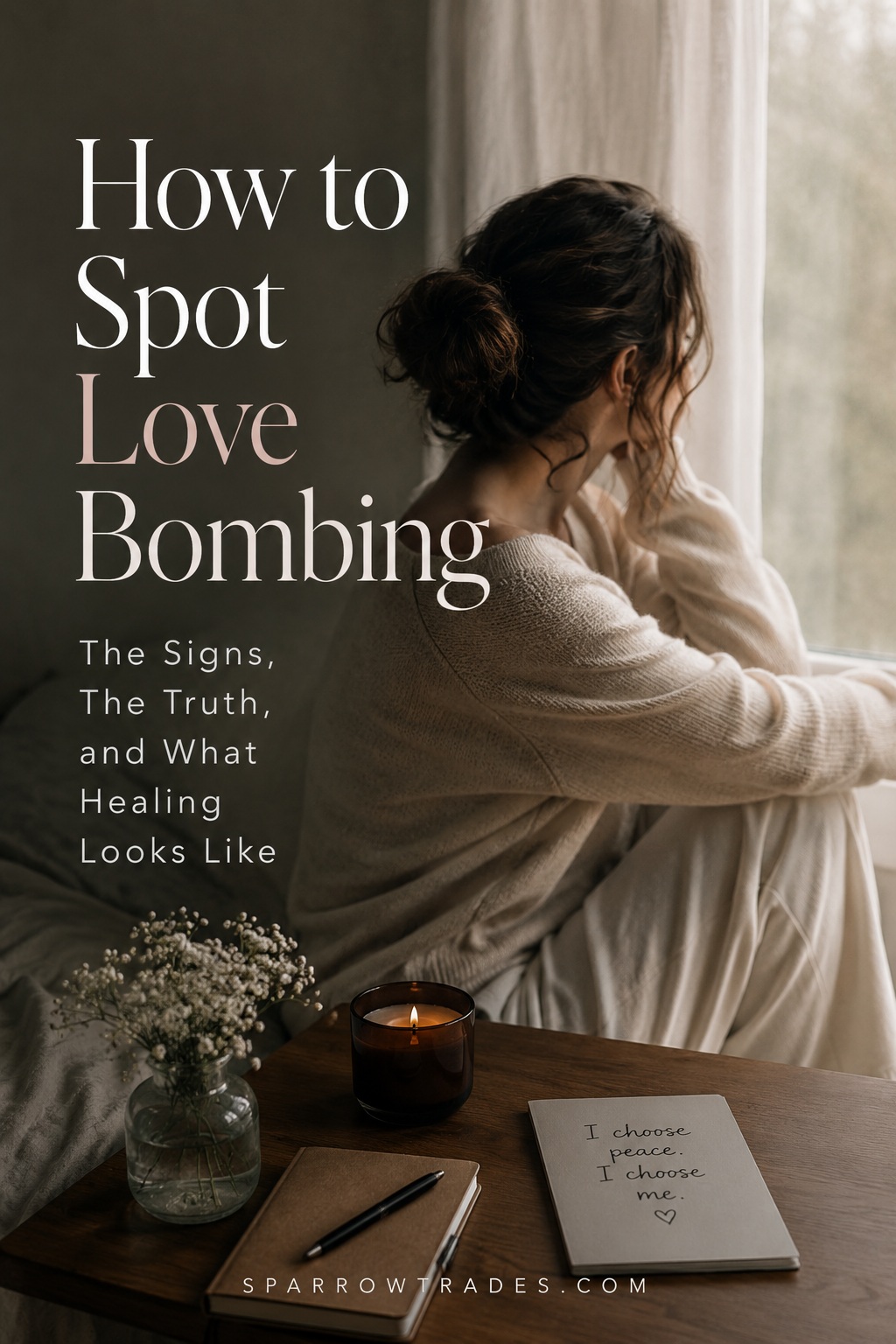

Where softness, self-awareness, and emotional healing are allowed to coexist. Through reflective writing, grounding rituals, and intentional beauty, Sparrow Trades offers gentle support for sensitive souls learning to reconnect with themselves.