
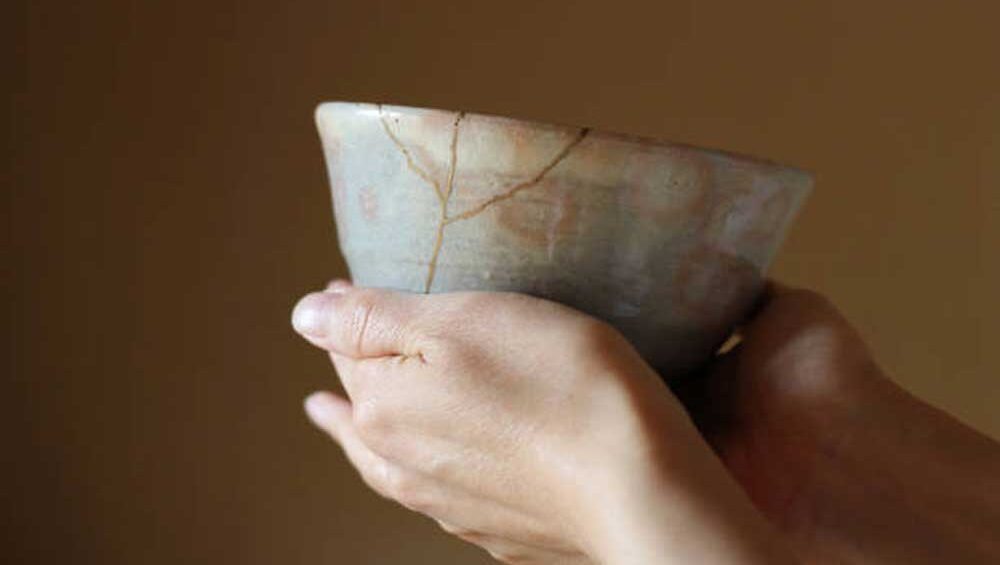
In a digital age fueled by filters, hyper-curated lifestyles, and polished perfection, it’s easy to forget that life’s deepest beauty often lies in the cracks. Not the seamless. Not the shiny. But the weathered edges and the faded pages—these are the moments where the soul breathes.
This is where wabi-sabi lives.
Born from ancient Japanese philosophy, wabi-sabi gently invites us to embrace imperfection, incompleteness, and the fleeting nature of everything. It’s not a trend. It’s not a design scheme. It’s a way of seeing—a quiet rebellion against the noise of “more” and “better.”
The Origins: From Solitude and Aging to Reverence and Grace
Wabi-sabi is more than an aesthetic—it’s a worldview. The words themselves once held solitary meanings:
Wabi: the rustic simplicity or quietness, a solitary life in nature.
Sabi: the beauty that comes with age, wear, and time.
Over centuries, their fusion created something sacred. Influenced by Zen Buddhism, this philosophy took root in Japanese tea ceremonies, where cracked bowls were cherished, and silence was part of the ritual. Each imperfection told a story—an invitation to presence rather than perfection.
Wabi-Sabi as a Way of Seeing
To live with wabi-sabi is to slow down, to notice the irregular grain in your wooden floor, the frayed pages of a well-loved book, the way your morning coffee cools a little faster than you’d like.
It’s the patina on your grandmother’s ring. The crinkle of your smile lines. The cup that chipped but you kept anyway.
Wabi-sabi says:
“You’re allowed to be a little broken and still be beautiful.”
Simplicity Over Perfection
Wabi-sabi holds space for:
The unfinished
The evolving
The subtle and subdued
Instead of pristine surfaces and straight lines, it celebrates natural asymmetry, earthy textures, and materials that grow more beautiful as they weather—wood, clay, stone, linen.
In this worldview, perfection is a wall. But imperfection? It’s a doorway. And the key is authenticity.
Wabi-Sabi in Everyday Life
You don’t need to be in Kyoto to live wabi-sabi. You just need to start noticing:
A worn staircase that creaks just right.
The scent of rain on warm soil.
A hand-thrown mug with a slight wobble.
A friendship that’s held together by shared vulnerability.
The practice is personal. It doesn’t require renovation—only reverence. The smallest crack can hold the greatest meaning when viewed through a wabi-sabi lens.
In Home and Design: Honest Materials, Real Lives
Forget fast furniture. Wabi-sabi design honors the truth of materials and the story of use.
Wood that fades under the sun is not ruined; it’s ripened.
Stone that chips from wear is not damaged; it’s lived in.
Linen that softens with every wash is not tired; it’s loved.
You don’t decorate with wabi-sabi—you curate a space that breathes.
That favorite chair with a faded armrest? That’s where comfort lives.
The pottery that didn’t survive the kiln perfectly? That’s your new favorite piece.
Wabi-Sabi in Nature: Lessons from the Earth
The trees don’t apologize for shedding their leaves. The moon doesn’t hide her craters. The ocean never pretends to be still.
Nature teaches us wabi-sabi constantly—how to be beautiful without being flawless. How to embrace our seasons. How to rest, bloom, and fade.
Let yourself be a little wild. Let your beauty be untamed.
Emotional and Mental Resilience Through Wabi-Sabi
This philosophy isn’t just about aesthetics. It’s deeply emotional.
Perfectionism breaks people. Wabi-sabi heals.
It asks you to sit with yourself as you are—not as you “should” be.
It gives you permission to outgrow, to age, to rest, to repair.
By letting go of the pressure to constantly improve, you give yourself space to just be. That’s not lazy. That’s love.
Mindfulness and Wabi-Sabi: Meeting in the Present
Mindfulness says “be here now.” Wabi-sabi adds: “and love it as it is.”
Together, they become a balm. A breath. A way back to yourself.
Try this:
Next time you eat, notice the scratches on your plate.
Next time you journal, feel the texture of the paper.
Next time you sit in silence, listen to the hum of your space.
These are the wabi-sabi moments—the quiet miracles hiding in plain sight.
Kintsugi: Cracks of Gold, Stories of Strength
Perhaps the most poetic metaphor for wabi-sabi is kintsugi—the Japanese art of repairing broken pottery with gold. Instead of disguising the cracks, they are illuminated.
Imagine if we treated ourselves the same way.
What if your heartbreak, your aging, your recovery… were not things to hide—but to highlight?
What if your cracks were where the gold could shine through?
Final Reflection: Let It Be Beautifully Unfinished
Life doesn’t need to be tied in a bow to be worth cherishing. Wabi-sabi whispers that you are enough—not when you’re fixed, not when you’re polished, but right now, in your glorious, unfiltered, weathered form.
Your mess is meaningful.
Your softness is strength.
Your cracks are the places light pours in.
So let yourself be unfinished. Let your life be a little undone. And find peace in the imperfect moments that define you.

Where softness, self-awareness, and emotional healing are allowed to coexist. Through reflective writing, grounding rituals, and intentional beauty, Sparrow Trades offers gentle support for sensitive souls learning to reconnect with themselves.