
There is a kind of tiredness that comes from feeling too much, too quickly, for too long.
It is not always obvious from the outside. You may look capable, responsive, warm, funny, even composed. You may be the person who notices the shift in someone’s voice before anyone else does, who can sense tension in a room before words are exchanged, who replays a conversation for hours because one small expression felt heavier than it should have. And if you live with ADHD, that emotional openness can sometimes feel even more intense, because your mind may not simply notice feelings — it may chase them, amplify them, loop them, and struggle to set them down.
This is where empathy and ADHD can become deeply complicated. Empathy may feel like a gift when it helps you connect, understand, forgive, and care. But it can also feel like an open door with no lock. Someone else’s sadness can move through your body as if it belongs to you. A friend’s silence can feel like rejection. A crowded room can leave you emotionally flooded before you know why. You may absorb tone, energy, facial expressions, needs, and expectations so quickly that you only realize later how far you drifted from yourself.
For some people, this overlaps with what it means to be an empath — not as a perfect identity label, but as a lived experience of being unusually affected by other people’s emotional states. For others, it feels less spiritual and more nervous-system-based: sensitivity, overstimulation, emotional urgency, and difficulty filtering what matters from what merely feels loud.
Neither experience means you are weak. It does not mean you are “too much.” It means your inner world may need more care, more recovery time, and more compassionate structure than you were taught to give it.
When empathy and ADHD meet, the goal is not to become less feeling. The goal is to stop abandoning yourself inside everything you feel.
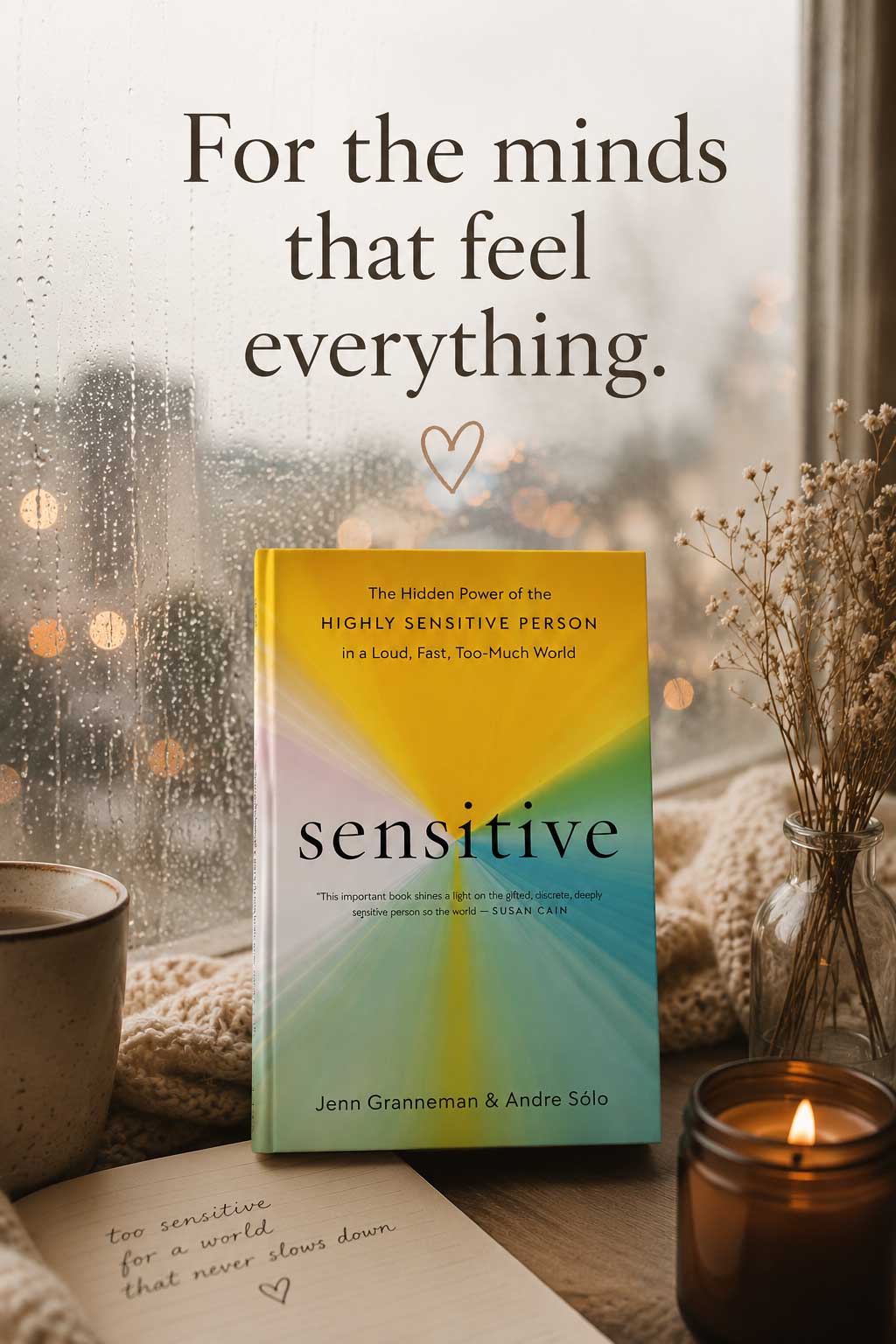
Why Empathy Can Feel So Intense With ADHD
ADHD is often described through attention, focus, distraction, or productivity, but for many people, the emotional side is what feels most exhausting. You may not just lose track of time; you may lose track of your own emotional center. You may enter a conversation feeling grounded and leave carrying someone else’s disappointment, anxiety, excitement, or irritation as if it has been placed directly in your chest.
This can happen because emotional input may feel immediate and urgent. A small change in tone can become a story. A delayed reply can become a fear. A loved one’s stress can become a problem your mind tries to solve before you have even checked whether you have the capacity to help.
That intensity can make empathy feel less like gentle understanding and more like emotional impact. You do not simply care that someone is upset. You may feel responsible for regulating the room. You may try to soften yourself, explain yourself, fix things quickly, or become whoever the moment seems to require.
Over time, this can blur the line between compassion and self-loss. You may start organizing your day around other people’s moods. You may become highly skilled at reading subtle cues while struggling to hear your own needs. This is why emotional wellness foundations matter so much for sensitive ADHD minds: not because you need to become tougher, but because you need a steadier place inside yourself to return to.
The intensity is real. But it is not a life sentence. Emotional sensitivity can become less overwhelming when it is paired with rhythm, boundaries, rest, and language that helps you name what is happening without shaming yourself for it.
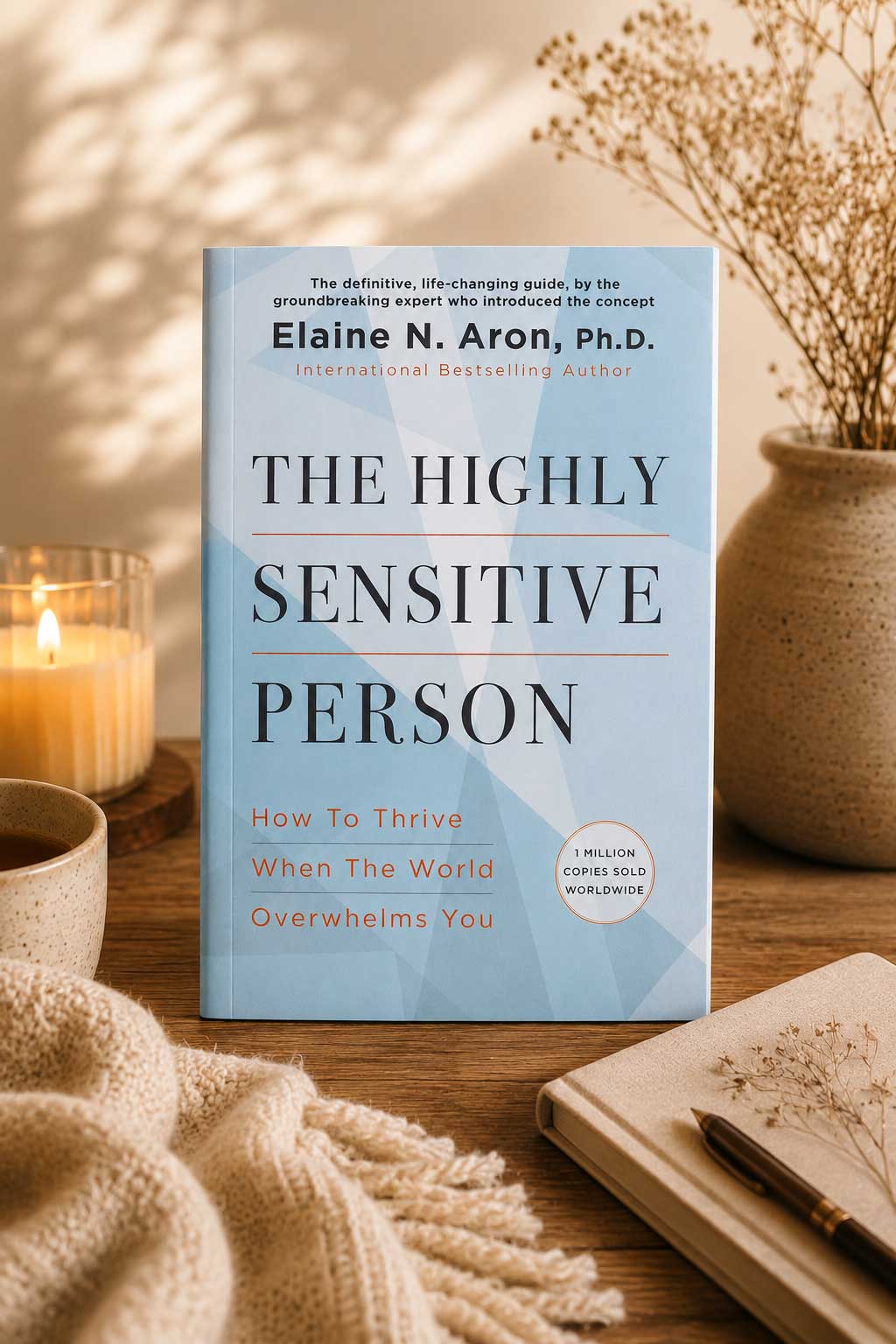
The Difference Between Empathy and Emotional Absorption
Empathy allows you to feel with someone. Emotional absorption makes it feel like you are becoming responsible for what they feel.
That difference can be hard to notice in the moment. You may think you are being loving, loyal, intuitive, or supportive, when your body is actually bracing, scanning, and taking on more than it can hold. You might leave a conversation feeling heavy, foggy, or strangely guilty, even if nothing directly happened to you. You might feel the urge to text again, apologize again, explain again, or make sure everyone is okay before you allow yourself to rest.
For ADHD minds, emotional absorption can be especially sticky because the brain may keep returning to unresolved emotional signals. A facial expression. A pause. A vague message. A moment where someone seemed “off.” Your attention may lock onto the uncertainty, and your empathy may rush in to fill the gaps.
This is where stopping emotional absorption from others becomes a form of self-protection, not emotional withdrawal. You can care about someone without carrying their entire inner weather. You can notice pain without turning it into your assignment. You can be present without making your nervous system the container for every feeling in the room.
A helpful question is: “Am I connecting, or am I merging?” Connection leaves room for both people. Merging makes your body feel responsible for restoring peace. If your empathy regularly leaves you depleted, resentful, overstimulated, or unsure where you end and others begin, it may be time to rebuild the boundary between compassion and absorption.
Emotional Overwhelm Is Not a Character Flaw
Many sensitive people with ADHD grow up believing their reactions are the problem. They are told they are dramatic, reactive, distracted, intense, emotional, or hard to reassure. After hearing that enough times, they may begin to distrust their own inner signals. They may apologize for needing clarity. They may hide overwhelm until it spills out sideways. They may become experts at appearing okay while feeling internally flooded.
But emotional overwhelm is not proof that you are failing. It is often a sign that your system has been taking in too much without enough recovery. For some people, when empathy becomes emotional exhaustion is the moment they realize their compassion has been running without a pause button.
ADHD can make this harder because transitions, sensory input, emotional ambiguity, and unfinished social moments may linger. You might need more time to come down after conflict. You might feel flooded after a busy room, even if you enjoyed being there. You might feel emotionally bruised by a conversation that someone else forgets in ten minutes.
This does not make you fragile. It means your system may need more intentional decompression. It may need quiet after intensity, body-based soothing after social strain, and permission to stop processing everyone else before checking in with yourself.
The more you shame overwhelm, the more overwhelming it becomes. The more gently you name it, the more space you create around it.
Returning to the Body When Feelings Get Too Loud
When empathy and ADHD create emotional flooding, thinking your way out often does not work. The mind wants certainty. The body wants safety. If the body does not feel safe, every thought may become louder.
This is why nervous system regulation techniques can be so helpful. Regulation is not about forcing calm. It is about giving your body enough cues of safety that your emotions no longer have to scream for your attention.
Sometimes that begins with something very small: unclenching your jaw, softening your shoulders, placing your feet on the floor, lowering the brightness in the room, drinking water, stepping outside, or letting yourself breathe before responding. These gestures may seem too simple, but a sensitive system often heals through repeated signals that the present moment is survivable.
For ADHD minds, body-based practices can also interrupt emotional loops. When your thoughts keep circling around what someone meant, whether you upset them, or why you feel so affected, the body can become a doorway back to now. somatic self-soothing practices help because they do not require you to solve the emotion before you tend to it.
You do not have to understand every feeling before you care for yourself. Sometimes the most healing sentence is simply: “Something in me feels activated, and I can be gentle with that.”
Boundaries Help Empathy Stay Kind
Without boundaries, empathy can become self-erasure. You may say yes because someone sounds disappointed. You may overexplain because silence feels unsafe. You may stay emotionally available long after your body has begun asking for rest.
Boundaries can feel especially hard when ADHD already makes emotional consequences feel immediate. The thought of disappointing someone may feel unbearable in the moment, even if saying yes will cost you later. You may know you need space, but the discomfort of asking for it may feel more intense than the exhaustion of overgiving.
This is why emotional boundaries and respect are not cold or selfish. They are what allow care to remain honest. A boundary says, “I can love you without disappearing.” It says, “Your feelings matter, and so do mine.” It says, “I am allowed to pause before I respond.”
For sensitive ADHD adults, a boundary may need to be simple and repeatable. “I need time to think.” “I can’t process this right now.” “I care, but I don’t have the capacity tonight.” “I want to respond when I can be present.” These are not rejections. They are bridges back to self-trust.
And when guilt rises, it may help to remember that guilt is not always a sign you have done something wrong. Sometimes guilt is just the feeling that appears when you stop abandoning yourself.
Learning to Trust Your Own Emotional Signals
When you feel everything deeply, it can be hard to know which feelings belong to intuition, which belong to fear, and which belong to overstimulation. ADHD can make this even blurrier because emotions may arrive quickly and with force. A feeling can feel true because it feels urgent.
This is where learning to trust your emotions again becomes a gentle practice rather than a single decision. Trust does not mean believing every emotion without question. It means listening without immediately obeying, dismissing, or shaming what comes up.
You might ask: “Is this feeling asking for action, or is it asking for care?” A fear of rejection may not mean you have been rejected. Anger may not mean you need to confront someone immediately. Sadness may not mean something is wrong with you. Sometimes emotions are messengers. Sometimes they are weather. Sometimes they are old alarms ringing in a new room.
A sensitive ADHD mind often needs space between feeling and interpretation. That space can be created through daily emotional check-in prompts, journaling, movement, or simply waiting before deciding what a feeling means.
You are allowed to take your emotions seriously without letting them drive every response. You are allowed to believe that your feelings matter while also giving them time to settle into clarity.
Grounding When Empathy Becomes Overstimulating
There are moments when empathy feels less like tenderness and more like too many open tabs in the nervous system. Someone is upset. The room is noisy. Your phone keeps lighting up. You have not eaten enough. A conversation from earlier keeps replaying. Suddenly, everything feels personal, urgent, and impossible to sort.
In those moments, grounding practices for emotional sensitivity can help bring your attention back into your own body and environment. Grounding is not about pretending you are fine. It is about locating yourself again when emotion has pulled you outward.
You might name five things you can see. You might press your feet into the floor. You might hold something textured. You might step away from the conversation and let your eyes rest on something still. If your thoughts are racing, emotional grounding can help you separate the feeling from the story attached to it.
For ADHD, grounding may need to be sensory enough to hold attention. Quiet breathing alone may not always work. You may need movement, pressure, sound, temperature, or a physical object that helps your brain return to the present. After a hard interaction, grounding after emotional overload can be the difference between spiraling for hours and slowly coming back to yourself.
The goal is not instant peace. The goal is reconnection.
When Rejection Sensitivity Gets Mixed With Empathy
One of the hardest parts of empathy and ADHD is how quickly care can turn into fear. You may sense someone pulling away and immediately feel a drop in your stomach. You may worry you said the wrong thing. You may replay your tone, your timing, your facial expression, your entire history with that person.
This can be especially painful when empathy overlaps with rejection sensitivity. You may feel other people’s discomfort so sharply that you assume it must be your fault. You may become hyperaware of emotional shifts and treat them as warnings. You may try to repair things before you even know whether something is broken.
This is why rejection sensitive dysphoria and empathy deserves its own language. The pain is not imaginary just because the threat may be unclear. Your body may be responding to the possibility of disconnection as if it is already happening.
In those moments, it can help to slow the story down. “I noticed a shift” is different from “They are mad at me.” “I feel scared” is different from “I did something wrong.” “I want reassurance” is different from “I must fix this immediately.”
Empathy becomes safer when it is paired with discernment. Not every emotional change is a crisis. Not every silence is rejection. Not every feeling in the room is yours to solve.
Masking, People-Pleasing, and the Cost of Being Easy to Love
Many people with ADHD learn to mask early. They learn to seem less scattered, less sensitive, less intense, less needy, less affected. If they are also highly empathetic, they may become especially good at becoming what other people seem to want.
They may laugh when they are overwhelmed. Say yes when they are tired. Stay available when they need quiet. Anticipate needs before anyone asks. Smooth over conflict before they have named their own hurt. This can look like kindness from the outside, but inside it can become loneliness.
Over time, high-masking ADHD and emotional exhaustion can leave a person unsure which version of themselves is real. The pleasant version? The helpful version? The one who never makes things awkward? The one who can feel everyone else but does not know how to be felt in return?
If this is familiar, the healing path is not to become careless. It is to become more honest. You can still be loving without performing emotional ease. You can still be thoughtful without managing everyone’s comfort. You can still be empathetic without making yourself disappear.
Being easy to love should not require becoming hard for yourself to reach.
Gentle Practices for Sensitive ADHD Minds
Support for empathy and ADHD works best when it is realistic. Long, perfect routines may feel inspiring for a day and impossible the next. What often helps more is a small set of practices that can meet you in real life.
A short pause before replying. A note on your phone that says, “Is this mine to carry?” A sensory reset after emotionally intense conversations. A two-minute journal entry before bed. A walk without headphones. A hand on your chest when you feel yourself spiraling. journaling for nervous system safety can help when your thoughts need somewhere to land without becoming a debate you have to win.
Breath can also be supportive when it stays gentle. conscious breathing for nervous system regulation can create a small rhythm inside emotional intensity, especially when you are tempted to respond from panic or guilt.
If you tend to become flooded by other people’s needs, grounding boundaries for empaths can help you practice staying connected without becoming consumed. And when your capacity feels especially narrow, emotional window of tolerance can remind you that regulation grows through gentleness, not pressure.
You do not need to become a perfectly calm person. You need enough support to remain with yourself when life feels loud.
FAQ About Empathy and ADHD
Can ADHD make empathy feel stronger?
ADHD can make emotional experiences feel more immediate, intense, and difficult to filter. For some people, that means empathy feels stronger because they notice emotional cues quickly and have a hard time setting them down. They may deeply feel another person’s mood, become preoccupied with relational tension, or struggle to move on after an emotionally charged interaction.
This does not mean every person with ADHD experiences empathy the same way. Some may feel emotionally flooded. Others may care deeply but struggle to express it in expected ways. The key is understanding your own pattern without turning it into shame.
Why do I absorb other people’s emotions so easily?
You may absorb emotions easily because your attention, sensitivity, and nervous system are all responding at once. If you are highly tuned to tone, facial expression, or relational shifts, your body may react before your mind has time to decide whether the emotion belongs to you.
This can be intensified by stress, past invalidation, people-pleasing, rejection sensitivity, or not having enough recovery time. Absorption often grows when you feel responsible for keeping peace. It softens when you learn to notice emotions without automatically carrying them.
Is empathy and ADHD the same as being an empath?
Not necessarily. Some people use the word empath because it describes their lived experience of deep emotional sensitivity. Others prefer ADHD-related language such as emotional dysregulation, sensory sensitivity, rejection sensitivity, or nervous system overwhelm.
Both frameworks can be meaningful if they help you understand yourself with compassion. The important thing is not the label. The important thing is whether the language helps you care for your sensitivity without losing your sense of self.
How can I stop feeling responsible for everyone’s emotions?
Start by noticing the moment responsibility enters your body. It may feel like urgency, guilt, tightness, panic, or a need to fix the mood quickly. Instead of acting immediately, pause and ask, “Did they ask me to hold this, or did I assign it to myself?”
You can care without rescuing. You can listen without solving. You can be kind without becoming emotionally available at all times. Responsibility becomes healthier when it is chosen consciously, not triggered automatically.
What helps after emotional overstimulation?
After emotional overstimulation, your system usually needs simplicity. Lower sensory input if possible. Drink water. Eat something grounding. Step away from screens. Let your body move or rest. Avoid forcing yourself to analyze every feeling right away.
If your mind keeps replaying the situation, try writing one sentence: “The feeling I am carrying is…” Then write one more: “What I need right now is…” This can help your brain stop looping and begin orienting toward care.
Can empathy and ADHD improve with self-awareness?
Yes, the experience can become easier to live with when self-awareness grows. You may still feel deeply, but you can learn the difference between intuition and anxiety, compassion and over-responsibility, connection and emotional absorption.
Self-awareness does not make you less sensitive. It helps you become less lost inside your sensitivity. Over time, you can learn to pause, name what is happening, protect your energy, and return to yourself with more trust.
Conclusion: You Are Allowed to Feel Deeply and Still Belong to Yourself
Empathy and ADHD can make the world feel incredibly close. Other people’s moods may reach you quickly. Unspoken tension may take up space in your body. A small moment of disconnection may echo longer than you want it to. Some days, it may feel like your heart has no skin.
But sensitivity does not have to mean self-abandonment. You can honor how deeply you feel while still learning how to come back to yourself. You can care about people without becoming responsible for every shift in their emotional weather. You can listen to your feelings without letting urgency make every decision.
The work is not to shut down your empathy. The work is to give it a home inside a regulated, respected, protected self.
You are allowed to pause. You are allowed to need quiet. You are allowed to ask whether a feeling is yours before carrying it any farther. You are allowed to practice mindfulness for anxiety without turning healing into another performance. You are allowed to move slowly enough to hear your own needs.
A sensitive ADHD mind is not broken because it feels so much. It may simply need more tenderness, more structure, and more permission to stop living as an emotional antenna for everyone else.
You can be empathetic and boundaried. Soft and steady. Deeply feeling and still your own.


Where softness, self-awareness, and emotional healing are allowed to coexist. Through reflective writing, grounding rituals, and intentional beauty, Sparrow Trades offers gentle support for sensitive souls learning to reconnect with themselves.