
Empathy is often described as the ability to understand how someone else feels, but its role in emotional wellness goes much deeper than simple understanding. At its healthiest, empathy helps create connection, trust, emotional safety, and a sense of belonging. It reminds us that we are not alone in our experiences and that our emotions matter.
Many people come to emotional wellness foundations after spending years feeling disconnected from themselves. Some learned to ignore their feelings to avoid conflict. Others were taught that their emotions were too much, too sensitive, or somehow inconvenient. Over time, this can create a painful gap between what a person truly feels and what they allow themselves to acknowledge.
Empathy helps bridge that gap.
When someone responds to our emotions with understanding rather than judgment, our nervous system often recognizes that safety before our minds do. The body begins to soften. Defenses lower. We feel less pressure to explain, justify, or hide our emotional experiences. This is one reason empathy can be so healing.
Yet empathy is not only something we receive from others. Emotional wellness also depends on our ability to offer empathy to ourselves. Self-empathy allows us to meet difficult emotions with curiosity rather than criticism. Instead of asking, “What is wrong with me?” we begin asking, “What am I experiencing right now, and why might that make sense?”
This shift may seem subtle, but it can transform the way we relate to ourselves.
Empathy also plays an important role in healthy relationships. It strengthens communication, deepens trust, and reduces emotional isolation. When empathy is present, people feel seen rather than judged. Conversations become less about winning and more about understanding.
At the same time, empathy requires balance. Highly empathetic people sometimes absorb the emotions of others so deeply that they lose touch with their own needs. Emotional wellness is not about carrying everyone else’s pain. It is about maintaining connection without sacrificing your own well-being.
Developing empathy for emotional wellness means learning how to understand emotions—your own and others’—while staying grounded in your own experience. It means creating space for compassion without abandoning boundaries. It means recognizing that emotional healing often happens through connection, but sustainable healing also requires self-awareness and self-care.
The journey toward emotional wellness is rarely about becoming someone new. More often, it is about reconnecting with the parts of yourself that deserve understanding, kindness, and acceptance. Empathy can become one of the most powerful tools for that journey.
Why Empathy Supports Emotional Wellness
Human beings are wired for connection. From childhood onward, our emotional development is shaped by whether we feel understood, accepted, and emotionally safe. When those experiences are consistent, we often develop a stronger sense of self-worth and emotional stability. When they are absent, emotional wellness can become more difficult to maintain.
Empathy helps create the conditions that emotional wellness needs to thrive.
When someone listens without immediately offering advice, criticism, or solutions, it sends a powerful message: your experience matters. That experience of being understood can reduce feelings of isolation and emotional overwhelm. Many people discover that difficult emotions become easier to process when they no longer feel alone with them.
Empathy also supports emotional regulation. When we feel emotionally connected, our nervous systems often become less reactive. This is one reason compassionate relationships can feel calming during stressful times. Understanding does not remove pain, but it can make pain feel more manageable.
The same principle applies internally. Offering yourself empathy during difficult moments can reduce shame and self-criticism. Rather than fighting your emotions, you learn to acknowledge them. Rather than judging your reactions, you begin exploring them.
This compassionate approach often works hand in hand with practices that strengthen emotional awareness, such as mindfulness for emotional wellness and learning to trust your emotions again. Both encourage a deeper relationship with your inner experience rather than avoidance of it.
Empathy does not eliminate challenges. It creates the emotional conditions that allow healing, growth, and resilience to emerge.
The Difference Between Empathy and Emotional Absorption
Many sensitive people assume empathy means feeling everything other people feel. While empathy involves emotional understanding, it is not the same as emotional absorption.
Healthy empathy allows you to recognize another person’s experience while remaining connected to your own. Emotional absorption occurs when another person’s emotions begin to overwhelm your own awareness.
The difference can be subtle.
You may walk into a room and notice someone is upset. Empathy allows you to recognize their distress and respond with compassion. Emotional absorption may cause you to take on that distress as if it were your own.
Over time, this pattern can lead to exhaustion, confusion, and emotional depletion.
People who identify as highly sensitive or empathic often struggle with this distinction. They may feel responsible for managing other people’s emotions or believe that emotional closeness requires emotional merging. Unfortunately, this can create significant stress on the nervous system.
Maintaining emotional wellness requires learning how to stay connected without becoming consumed. For many sensitive people, the turning point begins when they can gently notice how to stop absorbing other people’s emotions without blaming themselves for having a tender emotional system.
This is where emotional boundaries become essential. Healthy boundaries allow compassion to exist alongside self-respect. They help you remain caring without becoming emotionally overwhelmed.
For many people, emotional grounding becomes a valuable support during this process. Grounding helps reconnect attention to the present moment, making it easier to recognize where your emotions end and another person’s emotions begin.
Empathy becomes sustainable when it is balanced with awareness, boundaries, and self-care.
Self-Empathy: The Foundation of Emotional Healing
While empathy toward others is important, emotional wellness often begins with empathy toward ourselves.
Many people extend understanding and compassion freely to others while withholding those same qualities from themselves. They offer patience to friends but respond to their own struggles with harsh criticism. They accept the emotions of others but question the validity of their own.
Self-empathy invites a different approach.
Instead of immediately judging your reactions, self-empathy encourages curiosity. Rather than asking why you cannot simply “get over it,” you begin asking what your emotions may be trying to communicate.
Emotions are not character flaws. They are information.
Fear may signal a need for safety. Anger may reveal a boundary violation. Sadness may reflect grief, disappointment, or unmet needs. When we approach emotions with empathy, we become more capable of understanding the messages beneath them.
This process often strengthens emotional self-trust. As you become more willing to listen to your emotional experience, you develop greater confidence in your ability to navigate life’s challenges. A gentle tool like the emotional self-trust tracker can support this kind of inner listening without turning healing into another place to perform.
Self-empathy also reduces the internal conflict that many people experience during healing. Instead of fighting yourself, you begin working with yourself. That shift often deepens self-awareness in emotional healing, because you are no longer trying to understand yourself from a place of shame.
This does not mean agreeing with every emotional reaction or remaining stuck in difficult feelings. It means acknowledging your humanity while creating space for growth.
Healing rarely happens through self-rejection. More often, healing begins when we feel safe enough to understand ourselves.
Empathy, Boundaries, and Healthy Relationships
Empathy is one of the strongest foundations of healthy relationships, but it cannot thrive without boundaries.
Many people mistakenly view empathy and boundaries as opposites. In reality, they support one another. Boundaries help preserve the energy and emotional clarity needed for empathy to remain genuine and sustainable.
Without boundaries, empathy can become overextension.
You may find yourself constantly available, endlessly accommodating, or carrying emotional burdens that were never yours to hold. Over time, resentment, exhaustion, and emotional depletion can emerge.
Healthy empathy respects both people in a relationship.
It allows space for understanding while recognizing that each person remains responsible for their own emotions, choices, and healing journey.
Boundaries also improve communication. When people feel safe expressing their needs honestly, relationships become more authentic. Conversations shift from people-pleasing and emotional suppression toward mutual understanding.
For individuals recovering from emotional invalidation, manipulation, or difficult family dynamics, learning to combine empathy with boundaries can be especially transformative. setting emotional boundaries can feel especially tender when you were taught that love meant self-abandonment, but boundaries can become a way of protecting connection rather than rejecting it.
Empathy is not measured by how much pain you can carry for someone else. It is measured by your ability to remain present, understanding, and connected while also honoring your own emotional needs.
When Empathy Becomes Exhausting
Empathy can become painful when it is practiced without rest, discernment, or self-protection. This is especially true for people who have spent years scanning other people’s moods in order to stay safe.
For some, empathy is not simply a gift. It became a survival skill. They learned to read facial expressions, notice tone shifts, anticipate disappointment, and adjust themselves before conflict could happen. Over time, this kind of emotional vigilance can feel like compassion, even when it is actually nervous-system protection.
This does not make the empathy false. It simply means the body may need gentleness.
When empathy becomes tied to fear, guilt, or responsibility, it can leave a person feeling emotionally drained. You may care deeply about others while also feeling resentful, foggy, or unable to tell what you need. You may feel pulled toward everyone’s pain and still feel unseen in your own.
This is often where when empathy becomes emotional exhaustion becomes an important emotional turning point. Exhaustion does not mean you lack compassion. It may mean your compassion has been operating without enough space, grounding, or reciprocity.
Empathy needs rhythm. It needs moments of giving and moments of returning to yourself. It needs relationships where your emotions matter too.
Supportive practices like meditation for emotional wellness and journaling for emotional wellness can help you notice when empathy is beginning to shift into overwhelm. These practices create quiet places where your own feelings can become audible again.
Healthy empathy does not ask you to disappear. It allows you to care while still existing fully inside your own life.
How to Practice Empathy Without Losing Yourself
Practicing empathy without losing yourself begins with slowing down. Many empathetic people respond quickly to others because they feel an immediate pull to soothe, fix, explain, or rescue. The pause is where emotional choice returns.
Before responding to someone else’s emotions, it can help to notice what is happening inside your own body. Are your shoulders tight? Is your chest heavy? Are you feeling pressure to make the other person okay? Are you afraid they will be upset if you do not absorb their feelings?
These questions are not meant to create distance from others. They help you return to yourself before reaching outward.
One simple practice is to silently name what belongs to you and what may belong to the other person. You might think, “I care about their sadness, and I also notice my own tension.” This creates separation without coldness. It allows compassion to stay present without becoming emotional merging.
For people who often feel flooded by others, how to tell if an emotion is yours or someone else’s can become a deeply validating part of emotional wellness. Sometimes the most compassionate thing you can do is recognize that not every feeling in your body began with you.
Empathy also becomes healthier when paired with restorative care. energetic self-care for empaths can help sensitive people return to their own center after emotionally intense conversations, crowded spaces, or relationships that require a lot of presence.
And when the nervous system has been carrying too much for too long, empath nervous system overwhelm recovery can support a gentler return to balance.
You do not have to become less caring to become more whole. You only need enough inner space to include yourself in your own compassion.
FAQ: Empathy for Emotional Wellness
Can empathy improve emotional wellness?
Yes. Empathy can improve emotional wellness by strengthening connection, reducing emotional isolation, and encouraging emotional understanding. Both receiving empathy from others and offering empathy to yourself can support emotional healing and resilience.
What is the difference between empathy and sympathy?
Empathy involves understanding and connecting with another person’s emotional experience. Sympathy often involves feeling concern for someone without necessarily understanding their experience from their perspective. Empathy tends to create deeper emotional connection.
Can you have too much empathy?
Empathy itself is not harmful, but a lack of boundaries can lead to emotional overwhelm. When empathy becomes emotional absorption or chronic self-sacrifice, emotional wellness may suffer. Healthy empathy includes self-awareness and emotional boundaries.
How can I develop more self-empathy?
Self-empathy begins by noticing your emotions without immediately judging them. Practicing mindfulness, journaling, emotional reflection, and compassionate self-talk can help strengthen your ability to respond to yourself with understanding rather than criticism.
Why do empathetic people become emotionally exhausted?
Highly empathetic people sometimes absorb the emotions of others, neglect their own needs, or struggle with boundaries. Over time, this can create emotional fatigue. Developing grounding practices, self-care routines, and healthy boundaries can help prevent burnout.
Is empathy important for healthy relationships?
Yes. Empathy helps people feel seen, heard, and understood. It improves communication, strengthens trust, and encourages emotional safety within relationships. Combined with healthy boundaries, empathy becomes one of the most valuable relationship skills.
Conclusion
Empathy for emotional wellness is about far more than understanding other people. It is about creating a relationship with emotions that is grounded in compassion, curiosity, and connection.
When empathy is present, healing often feels less lonely. We begin to understand that our emotions deserve attention rather than judgment. We learn that emotional wellness is not achieved by suppressing feelings but by developing a healthier relationship with them.
Empathy also teaches balance. It reminds us that caring for others does not require abandoning ourselves. Compassion and boundaries can coexist. Understanding and self-protection can work together.
Whether empathy comes from a trusted friend, a supportive relationship, or your own growing self-awareness, it creates conditions that allow emotional healing to unfold more naturally.
The goal is not perfection. The goal is connection.
By practicing empathy toward yourself and others, you create space for emotional resilience, deeper relationships, and a stronger sense of inner trust. Over time, those small moments of understanding can become the foundation of lasting emotional wellness.
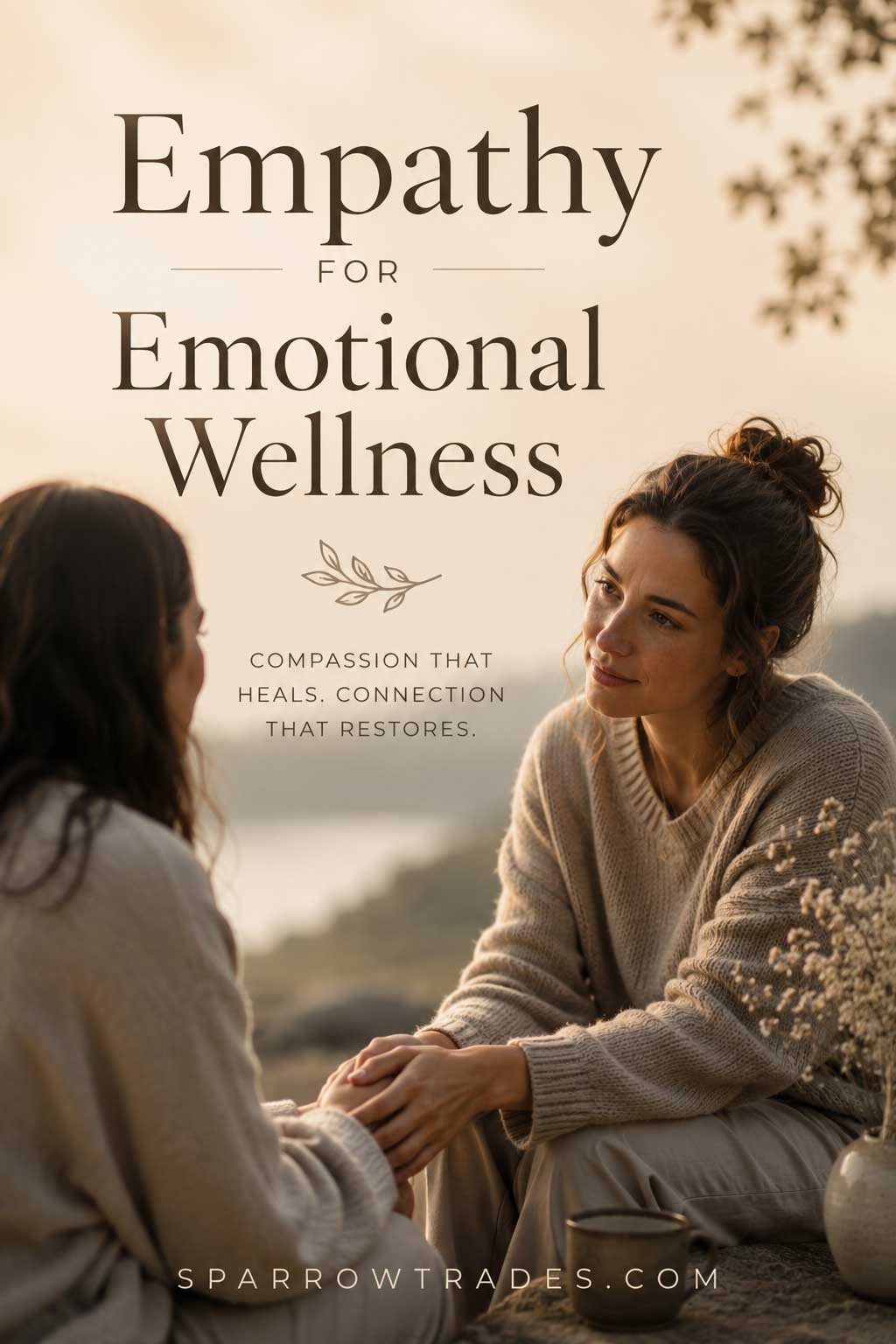

Where softness, self-awareness, and emotional healing are allowed to coexist. Through reflective writing, grounding rituals, and intentional beauty, Sparrow Trades offers gentle support for sensitive souls learning to reconnect with themselves.