
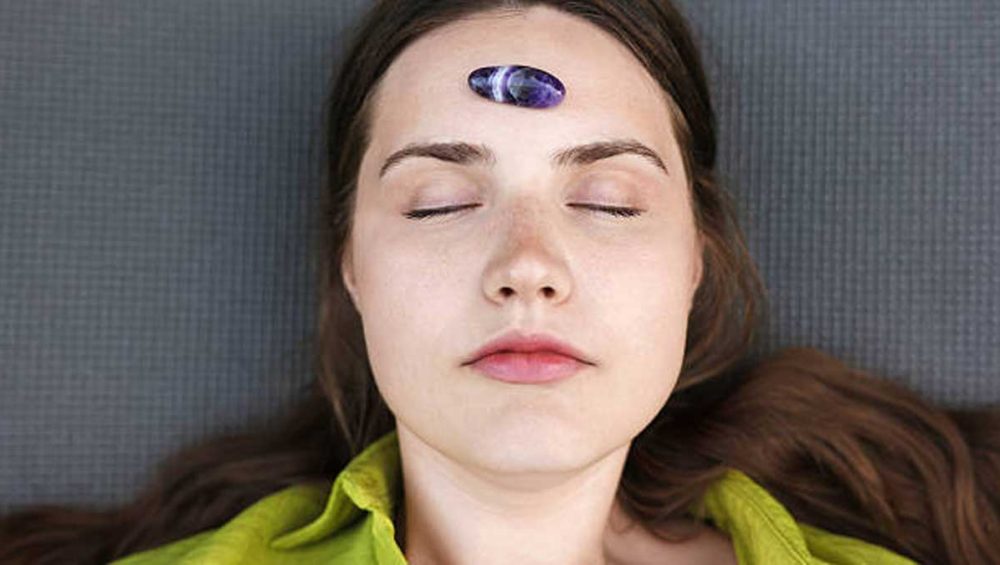
There are moments when your energy doesn’t feel “blocked” so much as overwhelmed. You might feel mentally overstimulated, emotionally porous, or unable to land fully in your body. For many people, this isn’t a failure of will or focus — it’s a sign that the nervous system has been living in alert mode for too long.
Amethyst often enters people’s lives during these seasons. Not because it promises instant awakening or dramatic transformation, but because it offers something gentler: permission to soften without losing clarity.
When people talk about amethyst and chakras, the conversation sometimes jumps straight to diagrams or placements. But lived experience tends to be quieter. Amethyst doesn’t push energy upward. It steadies what’s already there. It helps create enough internal safety for awareness to return naturally — especially when your system has learned to stay guarded.
In the broader language of chakras & energy, amethyst is less about activation and more about coherence. It supports the parts of the energetic system responsible for perception, intuition, and integration — not by amplifying sensation, but by calming excess noise.
This is why amethyst is often chosen by people who feel mentally busy, emotionally sensitive, or spiritually curious but easily overwhelmed. It doesn’t demand belief. It meets you where you are.
Rather than forcing alignment, amethyst invites it — slowly, safely, and with respect for the nervous system’s pace. And if you’ve ever felt hesitant around energy practices because they were too intense, too fast, or too “big,” that hesitation makes sense. An overwhelmed system doesn’t need more activation. It needs steadiness. It needs gentleness that still feels real.
That’s the quiet promise of amethyst chakras work: you don’t have to push yourself into enlightenment. You can return to yourself one breath at a time, one small moment of clarity at a time — and let alignment be something your body recognizes, not something your mind has to force.
How Amethyst Interacts With the Chakra System
Amethyst is most often associated with the upper energy centers, particularly the third eye and crown. But that association can be misleading if it’s framed as “higher is better.” In reality, these chakras are less about transcendence and more about integration — how meaning, awareness, and perception settle into the body.
Within a chakra crystals guide, amethyst functions as a stabilizer. It doesn’t flood the system with sensation. Instead, it creates an environment where subtle awareness can emerge without tipping the nervous system into overload.
People often describe amethyst as helping thoughts slow down, emotions feel less jagged, or inner listening become easier. That’s not because it silences anything — it simply reduces internal static.
Unlike stones that energize or ground aggressively, amethyst holds a middle ground. It supports awareness without dissociation and calm without numbing. For those who have learned to stay hyper-alert as a form of self-protection, this balance matters deeply.
If you’re newer to chakra language, it can help to start with what are chakras so the framework feels supportive instead of abstract. When the system makes sense, you can approach it with curiosity instead of pressure.
Amethyst’s relationship to the chakra system is best understood through lived regulation rather than theory. When the mind feels less crowded, intuition becomes clearer. When intuition feels safer, trust follows. And when trust is present, the body stops bracing for the next emotional hit.
Amethyst and the Third Eye Chakra: Clarity Without Overstimulation
The third eye chakra is often described as the center of intuition, perception, and insight. But for many people — especially those who are emotionally sensitive or trauma-aware — this center can feel overstimulated rather than blocked. You might notice racing thoughts, constant meaning-making, or an inability to “turn off” your mind even when your body is exhausted.
Amethyst supports the third eye by softening intensity, not increasing it. Instead of pushing awareness outward, it helps awareness settle inward. This is why it’s frequently chosen for quiet practices, like journaling or meditation, where the goal is presence rather than performance.
In the context of amethyst healing, this stone is valued for its calming influence on mental loops and intrusive thoughts. It doesn’t eliminate thinking — it creates enough space between thoughts for choice to return.
For those exploring third eye chakra activation practices, amethyst can act as a buffer, ensuring that intuitive work remains grounded and emotionally safe. Activation without regulation often leads to exhaustion. When insight comes too fast, the nervous system can interpret it as threat.
Sometimes the most meaningful “third eye” moment isn’t a vision — it’s a simple realization like, “I can breathe again,” or, “I don’t have to solve everything today.” Amethyst tends to support that kind of clarity: the kind that returns you to your life instead of pulling you away from it.
If you want a gentle practice that feels stabilizing rather than intense, you might pair amethyst with chakra alignment meditation and keep the intention simple: presence, steadiness, and ease.
Amethyst and the Crown Chakra: Integration Rather Than Escape
The crown chakra is commonly framed as a gateway to higher consciousness. But when approached without grounding, it can become a site of spiritual bypassing — a place people go to avoid feeling. If you’ve ever tried to “rise above” your pain and found yourself feeling more disconnected, that’s not failure. That’s your system asking for integration, not escape.
Amethyst’s relationship with the crown chakra is different. Rather than lifting awareness away from the body, it encourages integration — the ability to hold insight while remaining present.
Within the wider field of crystal healing guide, amethyst is often chosen by people who want spiritual connection without losing emotional stability. It supports reflection, meaning-making, and quiet presence — not dissociation.
This makes it especially useful for those navigating healing work, identity shifts, or life transitions. The crown doesn’t need to be “opened.” It needs to feel safe enough to stay connected to the rest of the system.
Sometimes crown support looks like softness in the shoulders. Sometimes it looks like a quieter inner voice. Sometimes it looks like the ability to hold a bigger perspective without invalidating your own feelings. That’s integration. And that’s where amethyst tends to shine.
Using Amethyst With Chakras in a Trauma-Informed Way
Many people hesitate to work with chakra stones because previous experiences felt overwhelming or intrusive. That hesitation is valid. Energy work without consent — even self-directed — can recreate patterns of pressure or override.
A trauma-informed approach honors pacing, choice, and bodily signals. Rather than focusing on placement or technique, it centers on how the experience feels. If your system says “too much,” that’s not resistance — it’s information.
Supportive guidance like trauma-informed crystal care emphasizes listening over doing. With amethyst, this might mean holding the stone nearby rather than on the body, or simply placing it in your environment as a quiet presence.
It can also help to keep the nervous system in the conversation. If you’re working with amethyst for chakras and you notice anxiety, numbness, or a “floaty” feeling, you might ground the moment with nervous system regulation techniques before you continue. Regulation is not an add-on — it’s the foundation that makes energetic awareness feel safe.
There is no requirement to meditate, visualize, or “activate” anything. Amethyst works best when it’s allowed to be what it is — steady, receptive, and non-directive. If your system feels tired, anxious, or emotionally porous, amethyst can support regulation simply by being close. That alone is enough.
And if you’re someone who has learned to monitor yourself constantly — scanning for danger, scanning for what’s “wrong” — chakra work can accidentally turn into another form of self-surveillance. A softer approach is to set a gentle intention and let your body lead. Practices like gentle intention-setting practices can help you stay emotionally present while you work with subtle energy.
In the deepest sense, trauma-informed chakra work is not about fixing yourself. It’s about returning to the parts of you that learned to disappear. Amethyst can be a companion in that return — not as a cure, but as a steadying presence that makes coming home feel possible.
Wearing Amethyst for Chakra Support in Daily Life
For some people, wearing amethyst feels more accessible than ritual or meditation. Jewelry allows the stone’s presence to integrate into daily rhythms without requiring focused effort — which can be a relief if your life is already full, your mind is already busy, or your body is already tired.
When chosen intentionally, amethyst jewelry with intention can act as a reminder rather than a tool — a gentle cue toward calm awareness throughout the day.
Amethyst bracelets, in particular, are often chosen by those seeking steady support. Amethyst bracelets for spiritual connection can feel like continuity — something you return to again and again. The goal isn’t to “stay aligned” perfectly. The goal is to have a touchstone that helps you notice when you’ve drifted into bracing or rushing.
If you’re drawn to a broader selection for your practice or gifting, amethyst jewelry can support that in a way that feels personal rather than prescriptive. What matters most is whether wearing it feels like support — not obligation.
And for those who connect more deeply through symbolism or spellwork, amethyst witchcraft offers another layer of meaning, though it’s not required for chakra work. Amethyst’s energy can be effective even without formal frameworks.
Jewelry works when it feels intimate and true. The stone doesn’t need to “do” anything dramatic. Its value lies in how it supports your relationship with yourself — especially on days when your inner world feels loud.
Caring for Amethyst Used in Chakra Work
Stones used for energetic support often absorb emotional residue — not because they’re burdened, but because they’re present. Care ensures that presence remains clear. And care can be a form of nervous-system kindness: a way of saying, “We don’t have to carry everything without pause.”
Many people prefer gentle methods, especially if water or sunlight feels disruptive. Approaches like crystal cleansing without water offer alternatives that respect both the stone and the nervous system.
Timing matters too. Rather than cleansing on a rigid schedule, it can help to follow your felt sense. Guidance like how often to cleanse crystals supports a more intuitive rhythm — one that doesn’t turn spiritual care into another task you have to do “right.”
Equally important is rest. Just as people need downtime, stones benefit from pauses. Learning to recognize signs your crystal needs rest helps maintain a reciprocal relationship rather than one based on extraction.
And if you want to go deeper into the feeling of care, resting crystals intentionally can help you build a practice that feels like devotion instead of maintenance.
Amethyst thrives in quiet. Giving it space restores its steadiness — and by extension, yours. Sometimes the act of caring for a stone is also the act of caring for your own pace.
Frequently Asked Questions About Amethyst and Chakras
Which chakras does amethyst work with most?
Amethyst is most commonly associated with the third eye and crown chakras. It’s often used to support clarity, perception, and integration, especially when you want calm awareness rather than intense activation.
Can amethyst overstimulate the third eye?
For most people, amethyst is calming rather than overstimulating. It’s frequently chosen to soften mental noise and reduce intuitive overwhelm. If you’re very sensitive, starting with the stone nearby instead of on the body can feel gentler.
Do I need to place amethyst directly on a chakra?
No. Proximity is often enough. Many people prefer keeping amethyst near them, wearing it, or placing it in their environment. A trauma-informed approach emphasizes comfort and choice over strict placement.
Is amethyst safe for trauma-informed energy work?
Yes, when approached gently. Amethyst is often experienced as stabilizing and supportive. Trauma-informed practice means pacing yourself, watching for overwhelm, and prioritizing nervous-system safety over technique.
Can I wear amethyst jewelry for chakra balance?
Yes. Wearing amethyst can offer steady support throughout the day without requiring formal practices. Many people find jewelry helps them return to calm awareness in everyday moments.
How often should I cleanse amethyst used for chakra work?
There isn’t one perfect schedule. Many people cleanse when the stone feels dull, heavy, or less supportive. Gentle cleansing methods and intentional rest can help you maintain a clear, respectful relationship with the stone.
Conclusion: Alignment That Respects Your Pace
Amethyst doesn’t demand transformation. It offers companionship — a steady presence that supports clarity without pressure and awareness without overwhelm.
In chakra work, this matters. Alignment isn’t about forcing energy into shape. It’s about creating enough safety for the system to organize itself naturally. When you feel safe, your awareness becomes honest. When your awareness is honest, your choices become kinder.
Whether you connect with amethyst through quiet presence, jewelry, or gentle reflection, its role remains the same: to remind you that insight doesn’t have to hurt, and awareness doesn’t require strain.
Sometimes, the most powerful alignment is simply feeling at ease inside yourself again — not because you fixed everything, but because you stopped abandoning yourself while you tried.

Where softness, self-awareness, and emotional healing are allowed to coexist. Through reflective writing, grounding rituals, and intentional beauty, Sparrow Trades offers gentle support for sensitive souls learning to reconnect with themselves.