
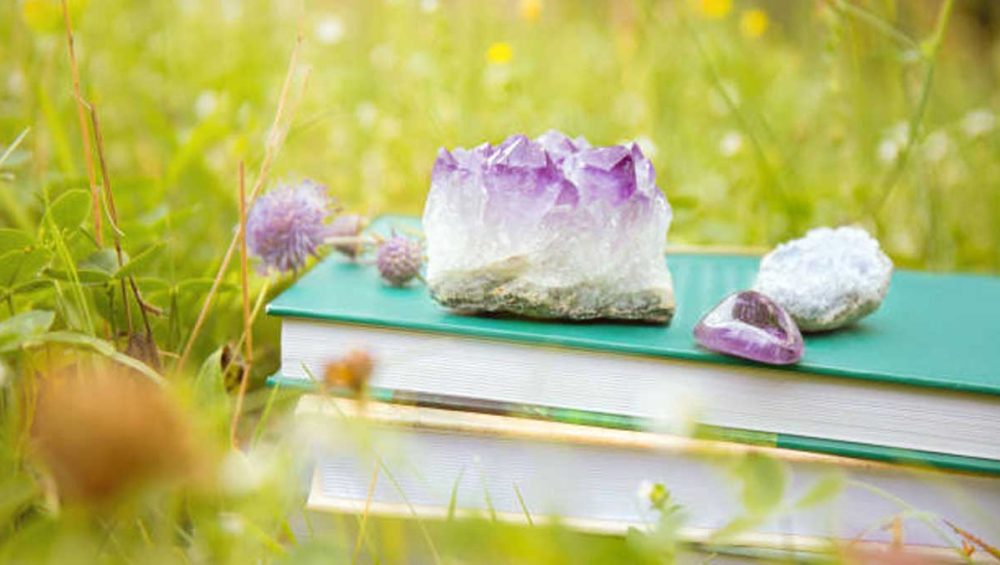
There’s a reason amethyst tends to find people during moments of transition. Sometimes it shows up after a long stretch of emotional holding. Sometimes it appears during burnout, grief, or a quiet sense that something inside needs gentleness rather than force. Unlike stones associated with momentum or manifestation, amethyst doesn’t push. It steadies.
For many people, discovering amethyst isn’t about belief systems or spiritual labels—it’s about noticing how the body responds. The breath slows. The jaw softens. Thoughts feel less jagged. That response is often the first clue to understanding amethyst uses: this is a stone that works by creating internal space.
To understand how amethyst supports emotional and energetic balance, it helps to start with what the stone actually is—not symbolically, but in essence. Knowing what amethyst is grounds its uses in something tangible rather than mystical abstraction. Amethyst is a form of quartz shaped by time, pressure, and mineral interaction. Its structure matters. Stability is built into it.
Emotionally, amethyst is often chosen during periods of overstimulation. When the nervous system has been on high alert—through caregiving, trauma recovery, chronic stress, or emotional labor—people tend to reach for tools that don’t demand effort. Amethyst supports without asking you to “do” anything right.
Its deeper significance lives in amethyst crystal meaning which centers on clarity, protection, and inner steadiness. But meaning alone doesn’t explain why people place amethyst on nightstands, wear it daily, or keep it nearby during difficult conversations. Those choices come from lived experience.
Many of amethyst’s most common uses fall under the umbrella of energetic support rather than transformation. Within the broader framework of crystal healing guide amethyst is considered a regulating stone. It helps the system return to baseline rather than push beyond it. That makes it especially resonant for people whose emotional safety has been disrupted in the past.
Amethyst is also closely connected to awareness and perception through chakras & energy systems, particularly those associated with insight and emotional processing. But its real-world uses extend far beyond chakra language. People use amethyst to sleep more deeply, think more clearly, feel less reactive, and stay present during emotional moments that would otherwise overwhelm.
This article explores amethyst uses not as promises, but as possibilities—ways people integrate this stone into daily life, emotional care, and personal rituals without pressure or performance.
Emotional and Nervous System Uses of Amethyst
One of the most common reasons people reach for amethyst is emotional overload. When everything feels loud—internally or externally—amethyst often becomes a quiet anchor.
Within the context of amethyst healing the stone is associated with calming mental loops and reducing emotional reactivity. But that calming effect isn’t about numbing. It’s about creating enough internal space to respond instead of react.
People who live with anxiety, emotional sensitivity, or trauma histories often describe amethyst as “cooling.” Not emotionally distant—cooling in the way a shaded room feels after heat. This makes it a natural companion during grounding routines like grounding rituals for emotional safety where the goal is to help the body feel safe enough to rest.
Amethyst is also frequently used during meditation or quiet reflection. Unlike stimulating stones, it supports inward attention without intensity. Many people pair it with breathwork, journaling, or stillness practices supported by crystals for meditation because it encourages sustained focus without mental strain.
For those navigating emotional healing, amethyst often becomes part of a larger ecosystem of care. It works alongside practices found in crystal healing practices rather than standing alone as a solution. The stone doesn’t fix emotional pain—it supports the conditions needed for processing it.
Amethyst’s emotional uses also intersect with intention. When chosen intentionally—rather than reactively—it aligns with frameworks like crystals by intention which emphasize listening to what the body needs rather than imposing goals onto it.
Emotional and Nervous System Uses of Amethyst
Another way people use amethyst emotionally is as a boundary stone. Not in an aggressive sense, but as a buffer. During emotionally demanding interactions, having amethyst nearby can help reduce energetic absorption—especially for empathic or highly attuned individuals.
This buffering quality becomes more apparent when amethyst is used in trauma-aware contexts such as trauma-informed crystal care where stones are treated as supports rather than spiritual obligations. The emphasis is on consent—both emotional and physical.
Amethyst is also commonly placed in rest spaces. Bedrooms, reading corners, or recovery areas are frequent locations. Over time, people notice subtle associations forming: the body begins to recognize amethyst as a cue for rest. That conditioning works best when paired with proper care practices like crystal cleansing without water which are gentler and safer for sensitive systems.
Knowing how often to cleanse crystals also matters. Over-cleansing can disrupt the sense of familiarity people build with their stones. Amethyst tends to benefit from less frequent, more intentional resets.
Some people even notice when their amethyst feels “off” or less supportive. That awareness aligns with signs your crystal needs rest and supports practices like resting crystals intentionally which emphasize reciprocity rather than extraction.
Spiritual and Awareness-Based Uses of Amethyst
Spiritually, amethyst is often associated with insight rather than answers. It doesn’t tell you what to believe—it helps you hear yourself more clearly.
Within chakra-based systems, its role is explored through amethyst chakras particularly in relation to perception and intuitive awareness. But even without chakra language, many people experience amethyst as a clarifying presence.
This clarity shows up during decision-making, emotional processing, and moments where inner truth feels difficult to access. Over time, some people begin using amethyst during moments of reflection or journaling to support intuitive discernment—an experience that naturally extends into future explorations like
amethyst for intuition and decision-making.
Amethyst’s spiritual uses are often subtle. Rather than producing visions or intense experiences, it supports steadiness. This makes it accessible for people who feel overwhelmed by more intense spiritual tools.
Everyday and Wearable Uses of Amethyst
Amethyst is also widely used in wearable form. Jewelry allows the stone to stay within the body’s field throughout the day, which many people find grounding.
Pieces chosen through amethyst jewelry with intention are often worn during emotionally demanding periods, creative work, or times of transition. The key is intention—not performance.
For those who prefer subtle support, amethyst bracelets for spiritual connection are commonly chosen because they stay physically close without drawing attention.
Some people use wearable amethyst specifically during rest cycles, leading into practices like amethyst for sleep and rest rituals which focus on nervous system recovery rather than productivity.
Frequently Asked Questions About Amethyst Uses
What are the most common uses of amethyst?
Amethyst is commonly used for emotional calming, mental clarity, meditation support, sleep routines, and gentle spiritual awareness. Many people integrate it into daily life as a steadying presence rather than a transformational tool.
Can amethyst help with stress or anxiety?
While amethyst isn’t a medical treatment, many people find it supportive during stress because of its association with calming and emotional regulation. Its use often complements grounding and nervous system practices.
How do people use amethyst at home?
Common placements include bedrooms, meditation spaces, desks, and reading areas. Over time, these placements can help the body associate the stone with rest or reflection.
Is amethyst better worn or kept nearby?
That depends on personal preference. Wearing amethyst provides continuous contact, while keeping it nearby allows for intentional use during specific moments.
Does amethyst need regular cleansing?
Amethyst generally benefits from gentle, infrequent cleansing. Many people prefer non-water methods and allow the stone to rest periodically.
Can amethyst be used during emotional healing?
Yes, many people include amethyst as part of emotional healing routines. It often works best alongside journaling, grounding, or therapeutic practices rather than as a standalone solution.
Conclusion
Amethyst uses aren’t about outcomes—they’re about support. This stone doesn’t promise transformation or clarity on demand. Instead, it offers steadiness, softness, and space.
For people navigating emotional intensity, nervous system healing, or spiritual curiosity without overwhelm, amethyst often becomes a quiet companion. Its value lies in what it doesn’t demand. No urgency. No effort. Just presence.
Over time, the ways people use amethyst evolve. What starts as a calming stone might become part of rest rituals, intuitive practices, or emotional boundaries. That evolution is personal—and that’s where amethyst’s real power lives.

Where softness, self-awareness, and emotional healing are allowed to coexist. Through reflective writing, grounding rituals, and intentional beauty, Sparrow Trades offers gentle support for sensitive souls learning to reconnect with themselves.