There are some stones that feel bright and energizing the moment you notice them. Lepidolite usually does something quieter. It tends to meet people in the moments when they are already tired, already overstimulated, already carrying too much inside their body to name easily. If you have ever reached for softness instead of intensity, or felt yourself wanting comfort more than motivation, lepidolite often makes immediate emotional sense.
For many people, the first encounter with this stone is visual. The soft lavender, lilac, gray, or pinkish tones can feel gentle before you know anything about its mineral structure. But the deeper reason people stay interested in it is not just beauty. It is the feeling of exhale. The feeling of wanting the day to stop pressing so hard against your chest. The feeling of needing something that supports steadiness without asking you to become a different person first.
That is part of why lepidolite belongs so naturally inside wider conversations about gemstone meanings. People are rarely drawn to a stone in a vacuum. Usually there is something happening in their life. Sleep has been thin. Their thoughts feel noisy. Their emotions have become harder to hold. They are trying not to absorb every shift in the room. They are craving calm, but not the kind that sounds performative or unreachable. They want something that feels safe enough to touch when their nervous system is asking for less stimulation, not more.
In that way, lepidolite often sits close to practices of crystal healing. Not because a stone has to “fix” everything, and not because comfort should ever be sold as certainty, but because rituals of care can matter. Sometimes healing starts with what helps your body soften by one degree. Sometimes it starts with what gives your hand somewhere to land when your mind is moving too fast. Sometimes it starts with choosing something beautiful and reassuring to keep near you during a hard season.
Lepidolite also tends to resonate with people who are navigating inner overload and trying to create more space between feeling and flooding. If you have already been drawn toward emotional wellness foundations, mindfulness, grounding, or gentler ways of regulating yourself, this stone may feel like a natural extension of that path. It does not carry the emotional tone of urgency. It feels more like permission. Permission to slow down. Permission to settle. Permission to stop treating your sensitivity as a problem that needs to be erased.
So when we ask what lepidolite is, the answer is more than a mineral definition. Yes, it is a lithium-rich mica known for its soft violet tones and flaky, shimmering structure. But emotionally, it has also become known as a stone people reach for when they want support around stress, transitions, emotional heaviness, and the need for inner quiet. It is a stone often associated with gentleness, not force. And for many people, that alone is enough to understand why it matters.
What Lepidolite Is and Why People Feel Drawn to It
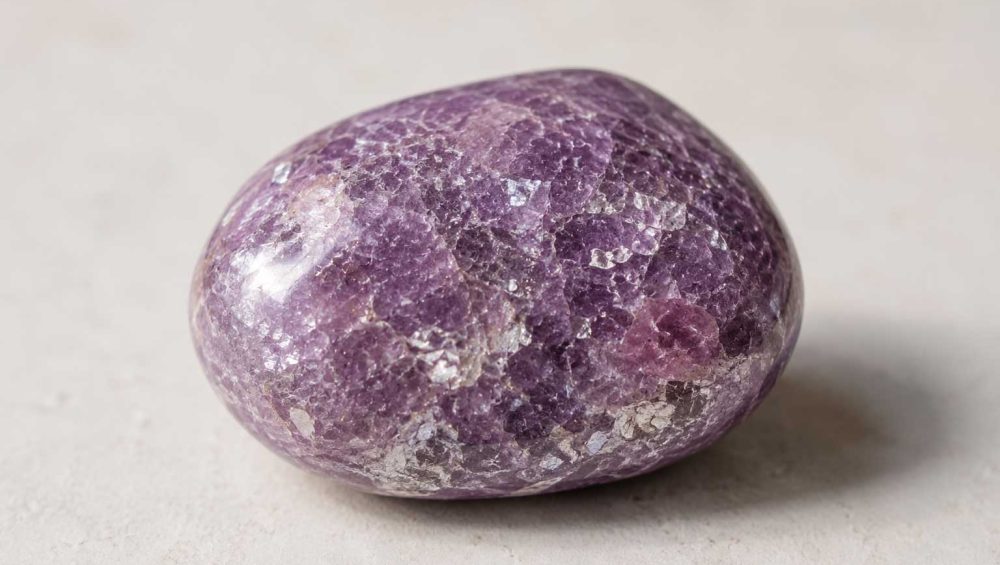
Lepidolite is a mica mineral, which means it often has a layered, flaky structure and a soft shimmer that catches light in a subtle way. It can appear in lavender, pale purple, rose-lilac, gray, and sometimes almost smoky tones. Some pieces look dreamy and polished, while others feel more raw and textured, as if the stone itself is not trying to hide its fragility. That visual softness is part of its appeal.
But people are usually drawn to lepidolite for more than appearance. They are drawn to how it feels symbolically. This is a stone that often enters someone’s life during periods of emotional strain, life change, burnout, or inner restlessness. It is commonly associated with calm, balance, and emotional support. In the broader landscape of benefits of healing crystals, lepidolite is often seen as one of the gentler companions for people who need less noise and more reassurance.
Its reputation also comes from the way people experience it in daily life. Lepidolite is not usually the stone people choose when they want intensity, ambition, or sharp activation. It is more often chosen when someone wants to soften the edges of the day. When they want a bedtime stone, a meditation stone, a comfort stone, or something to hold during emotionally tender moments. It often belongs beside crystals for calm and clarity because its emotional role is not dramatic. It is stabilizing in a quieter way.
For some, that makes lepidolite feel immediately trustworthy. There is no emotional pressure in it. It does not seem to ask for performance, spiritual perfection, or constant optimism. It feels more like something you keep nearby when your inner world is asking for softness. And that is often why people continue returning to it.
Lepidolite Meaning: Emotional Balance, Softness, and Inner Permission
The meaning of lepidolite is often tied to emotional balance, peace, transition, and release. Many people think of it as a stone for moments when your inner world has become too crowded. Not because it erases pain, but because it symbolizes gentleness in the presence of pain. It reminds many people that calm does not have to be earned by pushing harder.
That emotional tone matters. Some forms of wellness language can accidentally make people feel like they are failing at being okay. Lepidolite tends to move in the opposite direction. Its symbolism is not “rise above everything.” It is closer to “you are allowed to come back to yourself slowly.” That makes it especially meaningful for people who are trying to rebuild trust with their body, their emotions, or their own need for rest.
This is also why lepidolite can fit naturally into daily rituals with crystals. Its meaning is most powerful when it is lived, not just admired. It can sit beside a journal, rest near your pillow, be held during a hard conversation, or become part of the small routines that tell your nervous system you are safe enough to soften. Sometimes meaning becomes real through repetition. The same way a comforting song matters because of when you play it, a stone’s symbolism deepens through the moments you return to it.
For readers who want to go deeper into the emotional symbolism, lepidolite meaning creates a natural next layer. And for those who choose stones based on felt intention, lepidolite also belongs within crystals by intention, especially around calm, stress support, emotional steadiness, and rest.
Lepidolite Healing Properties and Everyday Uses
When people talk about lepidolite’s healing properties, they are usually referring to its emotional associations rather than a promise of instant change. Lepidolite is often connected with soothing stress, supporting emotional regulation, easing overwhelm, and encouraging rest. It is one of those stones people often reach for when their thoughts feel too loud or when they need their environment to feel less emotionally sharp.
That makes it especially meaningful in seasons of transition. Moves, endings, grief, uncertainty, burnout, and relationship strain all create a kind of internal friction. In those moments, many people want something steady but not heavy. Lepidolite often fills that role. It can feel like a reminder to unclench. To come back into the body. To stop asking yourself to be “fine” before you are ready.
In practice, people use lepidolite in simple ways. They hold it during meditation. They keep it on a nightstand. They carry it in a pocket. They place it near a bath, a journal, or a space where they breathe and decompress. It also belongs naturally with crystals for meditation because it tends to support quieter inward experiences rather than intense spiritual stimulation.
If your care practices already include mindfulness for anxiety, or if you are working on nervous system regulation techniques, lepidolite can feel like a tactile extension of those efforts. Not a replacement for them, but a gentle companion inside them.
People also often want a more focused breakdown of lepidolite healing properties and lepidolite uses, especially when deciding whether this is a stone for sleep rituals, meditation, emotional support, or daily carrying.
Lepidolite and the Chakras: Why It Feels Soothing
Lepidolite is often associated with the heart chakra, third eye chakra, and crown chakra, though different traditions emphasize different placements. What matters most is not memorizing a perfect correspondence. What matters is noticing why those associations make emotional sense. Lepidolite tends to be linked with the places in us that need peace, perspective, compassion, and spaciousness.
Within broader conversations about chakras and energy, lepidolite often feels like a stone for emotional softening rather than intense activation. If the heart chakra relates to emotional openness and tenderness, lepidolite can support a gentler relationship with feeling. If the third eye and crown relate to awareness and inner spaciousness, lepidolite can symbolize quieting mental clutter so insight can emerge without force.
For people who are newer to this language, what are chakras can help ground the experience without making it abstract. And if you already work with chakra crystals guide, lepidolite makes sense among stones chosen for soothing, emotional integration, and inner quiet.
This is also where emotional phrasing matters. Lepidolite is not a stone that feels harsh or confrontational. Its chakra associations often resonate most for people who want to feel less fragmented inside themselves. Less split between mind and body. Less trapped in cycles of overthinking. Lepidolite chakra is a natural continuation for readers who want to explore those energetic connections in a more dedicated way.
Lepidolite Jewelry: Wearing Calm Every Day
There is something deeply different about wearing a stone versus keeping it on a shelf. A stone in your home can shape a room. A stone on your body can shape a moment. That is why lepidolite jewelry feels like such a natural extension of this conversation.
When lepidolite is worn as jewelry, its meaning becomes more personal and more continuous. Instead of only reaching for calm when you remember to sit down and create ritual, you carry a reminder of softness into ordinary life. Into workdays, transitions, social spaces, commutes, grief waves, overstimulating environments, and the small emotional moments that do not always announce themselves in advance. Wearing a stone can become a quiet agreement with yourself: I do not have to abandon my own steadiness just because the day becomes loud.
This is especially true for people who feel emotionally porous. If your body tends to absorb stress quickly, or if you often need tactile reminders to slow down, jewelry can help translate intention into lived practice. It belongs naturally beside grounding jewelry meaning and protective jewelry meaning, even though lepidolite’s emotional signature is less about hardness and more about soothing support.
It can also live inside daily care in the same spirit as gentle intention-setting practices—not as pressure to perform a ritual perfectly, but as a way to stay connected to what you need. For some people, a lepidolite bracelet or necklace becomes meaningful precisely because it is unobtrusive. It does not ask for attention. It just stays with you.
Caring for Lepidolite Gently
Lepidolite has a softer, more delicate structure than many people expect, and that matters when you care for it. Because it belongs to the mica family, it can be more fragile and should be treated with gentleness. This is not a stone that benefits from rough handling or overly aggressive cleansing methods. In a strange way, that delicacy fits its symbolism. Lepidolite teaches care through the way it needs to be cared for.
If you work with crystals regularly, this is where how often to cleanse crystals becomes relevant. Cleansing does not have to be constant to be meaningful. Sometimes a quieter rhythm is better, especially for a stone associated with rest and softness. Because of lepidolite’s structure, many people also prefer methods aligned with crystal cleansing without water.
Gentleness matters in another sense too. Not every stone needs to be “working” all the time. Some need pauses, and some relationships with stones do too. If you notice that a ritual starts feeling forced, it may help to reconnect with signs your crystal needs rest or resting crystals intentionally. Rest can be part of care. That is true for people, and it is a lovely principle to carry into spiritual practice as well.
Lepidolite FAQ
Is lepidolite a good crystal for anxiety?
Many people are drawn to lepidolite when they are experiencing stress, emotional overload, or anxious energy because it has a reputation for calm and softness. It is often chosen by people who do not want something intense or stimulating. Instead, they want a stone that feels emotionally reassuring. That said, a stone is not a replacement for support, treatment, or regulation practices that help you feel safer in your body. It can be a companion to those things. For readers wanting a more specific emotional lens, lepidolite for anxiety would be the most natural next step.
What chakra is lepidolite connected to?
Lepidolite is most often associated with the heart chakra, third eye chakra, and crown chakra. Different people resonate with different connections depending on how they use the stone. Some feel it most strongly through emotional tenderness and heart-centered softness, while others connect with its ability to quiet mental noise and create spaciousness. The most important thing is not picking a “correct” answer but noticing where the stone feels supportive in your own life.
Can lepidolite go in water?
Because lepidolite is a softer mica mineral, water is usually not the best choice for cleansing or soaking it. Its delicate structure makes gentler methods feel more appropriate. If you want to care for it well, dry cleansing methods, moonlight, sound, or simply setting intention with care may feel safer and more aligned than water-based approaches.
What is the difference between lepidolite and amethyst?
Both stones are often associated with calm, but they have different emotional textures. Amethyst can feel spiritually clarifying, protective, and intuitively awakening. Lepidolite usually feels softer, more emotionally soothing, and more closely tied to rest and nervous-system gentleness. If amethyst can feel like a clear night sky, lepidolite can feel like the blanket you reach for underneath it. Some people prefer one over the other depending on whether they need clarity or comfort. Others keep both nearby. lepidolite vs amethyst would be a natural place to explore that difference more fully.
Is lepidolite good for sleep?
Many people keep lepidolite near the bed or include it in nighttime rituals because it is associated with relaxation and emotional decompression. It often appeals to those whose difficulty with sleep is tied to mental noise, emotional heaviness, or overstimulation. Its gentle presence can feel supportive during winding-down rituals, especially alongside breathwork, journaling, or a quieter evening environment.
Can you wear lepidolite every day?
Yes, many people choose to wear lepidolite daily, especially when they want an ongoing reminder of calm, softness, or emotional steadiness. The main thing to keep in mind is that lepidolite is a softer stone, so jewelry should be cared for mindfully. But emotionally, daily wear can be one of the most meaningful ways to stay connected to its energy, because it brings that sense of reassurance into ordinary life rather than keeping it separate from the day.
Conclusion: A Stone for the Moments You Need Gentleness
Lepidolite is not the kind of stone that asks you to become brighter, faster, tougher, or more evolved than you are. That may be exactly why so many people love it. It meets you where the day has already been too much. It meets you where your mind feels crowded, where your chest feels tight, where your emotions are asking not to be fixed but to be held more gently.
That is the heart of what lepidolite is. Yes, it is a lavender-toned mica mineral with a soft shimmer and a long-standing place in spiritual and crystal traditions. But emotionally, it has become something more intimate than a definition. It has become a symbol of permission. Permission to soften. Permission to regulate slowly. Permission to create small rituals that support your life without demanding perfection from it.
Whether you are drawn to it for meditation, sleep, emotional balance, chakra work, or wearable support, lepidolite tends to carry the same underlying message: calm can be quiet, and healing can be gentle. Not every form of support needs to arrive with force. Some forms arrive softly enough that your body is willing to receive them. And sometimes, especially in tender seasons, that is exactly the kind of help you are looking for.

Where softness, self-awareness, and emotional healing are allowed to coexist. Through reflective writing, grounding rituals, and intentional beauty, Sparrow Trades offers gentle support for sensitive souls learning to reconnect with themselves.