There are seasons when the mind feels too full to settle. Thoughts stack on top of each other. Feelings arrive faster than the body can process them. You sit down hoping for peace, but your shoulders stay tense, your jaw stays tight, and your breath never quite reaches the bottom of your lungs. A lot of people come to meditation from exactly that place. Not from perfect serenity, but from overstimulation, emotional fatigue, and a quiet longing to feel less scattered inside.
That is part of why so many people are drawn to amethyst. The stone carries an emotional atmosphere that feels soft rather than demanding. Its purple tones suggest spaciousness, reflection, and stillness. Even before any spiritual interpretation enters the picture, the experience of holding it can feel like a gentle cue to slow down. For a nervous system that has been moving too fast for too long, that cue can matter.
Many people first become curious about using crystals in meditation after exploring crystals for meditation. They are not always looking for something dramatic. Often they are looking for support that feels tactile and simple. A crystal can become a focal point when attention slips, a small object that helps the body remember it is safe enough to return to the present moment.
When people begin practicing meditation, they sometimes imagine that success means silencing every thought. In real life, meditation is rarely that clean. It can be messy, emotional, and deeply human. Thoughts wander. Grief rises. Restlessness shows up. The practice is not about becoming blank inside. It is about noticing what is there without gripping it so tightly. Amethyst can support that process by giving the mind a quieter place to land.
Its place within traditions of crystal healing also helps explain why it remains such a trusted meditation stone. People have long associated crystals with symbolic emotional qualities, and amethyst is often linked with calm, clarity, and inner perspective. Whether someone approaches those qualities spiritually, intuitively, or simply through ritual, the experience can still be meaningful.
Amethyst is also frequently connected with the crown and third-eye centers in teachings around chakra crystal healing. For some readers, that language will feel spiritual. For others, it may simply offer another way of describing awareness, intuition, and perspective. Either way, the underlying experience is familiar: when the mind softens, insight often becomes easier to hear.
It makes sense, then, that amethyst appears so often within collections of crystals by intention. People are not only choosing a crystal. They are naming the kind of inner space they want to cultivate. Some reach for grounding. Some reach for protection. Some reach for courage. And many reach for the kind of calm clarity that lets them feel present without feeling overwhelmed.
That emotional dimension is part of what gives the stone its lasting power. The language surrounding gemstone meanings is often really a language of felt experience. It is a way of saying, “This is what I hope to feel more of. This is what I need help returning to.” For people who meditate with amethyst, that felt experience is often one of softening, perspective, and inner quiet that does not feel forced.
Meditation will not erase pain, trauma, or emotional confusion in a single sitting. It does not ask the nervous system to perform healing on command. What it can do is create a small pocket of safety where the body begins to loosen its grip. Sometimes that pocket begins with a breath. Sometimes it begins with a hand resting over the heart. And sometimes it begins with a purple crystal resting quietly in your palm, asking nothing from you except presence.
Why Amethyst Feels So Supportive During Meditation
Most people do not choose amethyst for meditation because they want something flashy. They choose it because it feels steady. The stone has a visual softness that often matches the emotional tone people hope to create in meditation: less pressure, less noise, more room to notice what is happening inside. When the inner world feels chaotic, even a small sense of steadiness can feel deeply reassuring.
This is one reason the language around amethyst healing properties so often circles back to emotional calm and mental clarity. Amethyst is not usually framed as an aggressive or highly activating stone. Instead, it is often associated with easing mental clutter, supporting reflection, and making it easier to settle into a more spacious internal rhythm. That emotional reputation fits meditation naturally.
For people with anxious or overstimulated nervous systems, meditation can feel surprisingly vulnerable. Closing the eyes and turning inward can make everything louder at first. Racing thoughts become more noticeable. Body sensations feel stronger. Unprocessed feelings may rise. In those moments, having something physical to hold can help create a sense of orientation. A crystal does not remove discomfort, but it can offer a simple sensory anchor while discomfort moves through.
Amethyst also carries a long relationship with symbolism around perspective and wisdom, which is reflected in discussions of amethyst crystal meaning. In practice, that often looks less like mystical perfection and more like emotional spaciousness. You notice a thought without immediately believing it. You feel an emotion without becoming swallowed by it. You witness your inner state with a little more gentleness than before.
That shift matters because meditation is not only about calming down. It is also about changing the quality of your relationship with what arises inside you. Amethyst seems to support that gentler quality. The stone invites less forcing and more listening. It allows the practice to feel companioned, especially for people who are learning how to sit with themselves without judgment.
There is also an intuitive reason many people stay with amethyst over time: it feels emotionally safe. Its energy, symbolism, and physical presence rarely push the nervous system too hard. Instead, it tends to meet meditation with the same soft steadiness that many people are trying to build within themselves.
How to Use Amethyst in a Meditation Practice
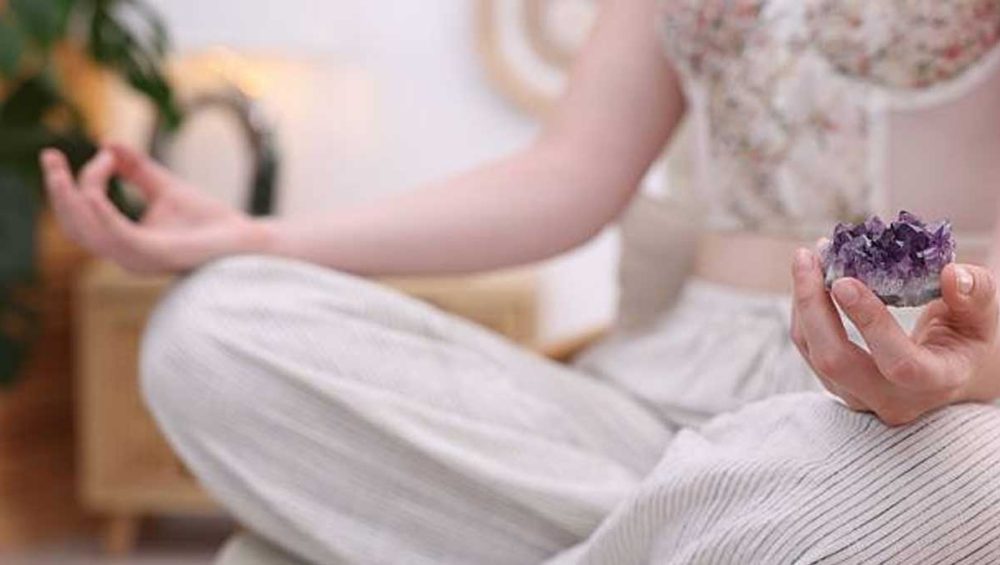
The simplest way to meditate with amethyst is to let it be close to your body. You can hold it in one hand, rest it in your lap, or place it beside you where your eyes can return to it gently. The point is not to “use it correctly” in some perfect sense. The point is to let it become part of the emotional rhythm of your practice.
For some people, the most supportive approach is extremely simple: sit comfortably, soften the shoulders, hold the crystal, and follow the breath. Each time the mind wanders, return to the breath and the feel of the stone in your hand. That physical point of contact can make meditation feel more embodied, especially for people whose thoughts tend to pull them away from the present.
Others like to build more ritual around the experience through daily rituals with crystals. Lighting a candle, taking three slower breaths, or sitting in the same corner each day can help the body recognize that it is entering a quieter state. Ritual is not about performance. It is about predictability, and predictability can be profoundly regulating for a stressed nervous system.
Amethyst also pairs naturally with reflective practices rooted in gentle intention-setting practices. Before beginning, you might name a simple intention such as “clarity,” “softness,” or “I want to hear myself more clearly.” This can help meditation feel less abstract. Instead of trying to force a particular result, you are giving your awareness a tender direction.
If you are new to the practice, it helps to remember that meditation does not need to be long to be real. Five quiet minutes can matter. A single exhale that feels more complete than the ones before it can matter. That is why amethyst is such a natural fit for people exploring best crystals for beginners in meditation. It supports a gentle beginning rather than a demanding one.
You may also notice that some days amethyst helps you feel more focused, while on other days it simply helps you stay with yourself long enough to notice what hurts. Both experiences count. Meditation is not only for calm days. Sometimes it is a quiet container for grief, uncertainty, or emotional fatigue. In those moments, the crystal becomes less of a tool and more of a witness.
Amethyst, Chakras, and Inner Awareness
For readers who are drawn to chakra language, amethyst is often associated with the upper energy centers, especially in teachings about amethyst chakras. The third eye is commonly linked with intuition and perception, while the crown is associated with spiritual awareness, connection, and a sense of spacious understanding. Whether you interpret those ideas literally or symbolically, they describe states many meditators recognize.
There are times in meditation when clarity does not arrive as an answer. It arrives as quiet. The mind stops grasping quite so hard. The body stops bracing quite so much. A little more space opens between what you feel and how quickly you react to it. That kind of spaciousness is part of why amethyst is often used in practices connected to the upper chakras.
Some people weave amethyst into chakra alignment meditation, where awareness moves through the body slowly and intentionally. Others are drawn to more focused upper-center work through meditation crystals for crown chakra, especially when they are seeking perspective, calm, or spiritual openness without harsh intensity.
The same is true of practices related to third eye chakra activation practices. At its healthiest, this kind of work is not about chasing visions or dramatic experiences. It is about learning to trust subtle knowing, gentle discernment, and the quieter truths that surface when your mind is less crowded. Amethyst fits well here because it supports awareness that feels patient rather than forceful.
If crown-centered meditation feels especially resonant, teachings about how to balance the crown chakra often mirror what many people are already seeking emotionally: steadiness, openness, and a softer relationship to the unknown. In that sense, chakra language can function less as rigid doctrine and more as a compassionate map for inner experience.
Even if you do not personally work with chakras, the emotional truth underneath these associations can still speak to you. Amethyst tends to support meditation that feels spacious, reflective, and clear. It helps many people stay with themselves long enough to hear what their deeper inner life has been trying to say.
Amethyst as a Companion for Rest, Intuition, and Spiritual Softening
Meditation does not always end when you open your eyes. The tone you create in practice often follows you into the rest of the day. If meditation with amethyst helps you breathe more deeply, think more gently, or meet your own feelings with less fear, that influence can continue long after the sitting itself is over.
That is part of why amethyst often appears in conversations about amethyst for sleep and rest rituals. Rest and meditation are not identical, but they often ask for similar inner conditions: safety, softness, and a willingness to let the nervous system downshift. Many people find that evening meditation with amethyst becomes less about “doing a spiritual practice” and more about gently letting the body know the day can end.
The stone is also frequently connected with subtle insight, which is reflected in themes around amethyst for intuition and decision-making. In lived experience, this often means meditation becomes a space where confusion settles enough for truth to feel more recognizable. Not louder, necessarily. Just clearer.
For some people, that clarity feels spiritual. For others, it feels psychological or emotional. Either way, the result can be deeply supportive. You leave meditation feeling a little less entangled, a little less fragmented, and a little more able to hear your own inner knowing without panic drowning it out.
This is also why some readers feel drawn toward themes like amethyst for spiritual awakening. At its most grounded, spiritual awakening is not about escaping reality. It is about becoming more present to it. It is about seeing yourself more clearly, responding with more honesty, and feeling less cut off from your own depth. Amethyst can become part of that process because it supports inner listening without aggression.
Over time, meditating with amethyst can become less about the crystal itself and more about the relationship you build with your own presence. The stone helps you arrive, but what matters most is the quality of the arrival: slower breath, softer gaze, less self-abandonment, more room to be with what is true.
FAQ: Amethyst for Meditation
Is amethyst good for meditation?
Yes. Amethyst is widely used for meditation because it is often associated with calm, clarity, and reflective awareness. Many people find that holding or sitting near amethyst gives them a simple point of focus, which can help the mind settle more gently during practice.
How do you use amethyst during meditation?
You can hold amethyst in your hand, place it in your lap, or keep it nearby while you meditate. Some people also include it in a small ritual before they begin, such as taking a few slow breaths or setting a quiet intention. The most helpful method is the one that feels steady and natural to your body.
Can beginners meditate with amethyst?
Absolutely. Amethyst is often considered one of the gentlest crystals for beginners because it supports a calm, low-pressure approach to meditation. It can help new meditators feel more anchored when thoughts wander or emotions rise during practice.
What chakra is amethyst connected to in meditation?
Amethyst is most often connected with the third eye and crown chakras. In meditation, these associations are linked with intuition, perspective, spiritual openness, and inner clarity. Even for people who do not actively work with chakras, these themes often match the kind of awareness they hope to cultivate.
Can amethyst help with anxious thoughts during meditation?
It can be supportive for many people. Amethyst does not make thoughts disappear, but it can offer a calming sensory anchor and an emotional atmosphere that feels less stimulating. This can make it easier to stay present when the mind is busy or the nervous system feels unsettled.
When is the best time to meditate with amethyst?
There is no single best time. Some people prefer morning meditation for clarity and intention, while others use amethyst in the evening to help the body unwind before rest. The best time is the one that fits your nervous system and allows the practice to feel steady rather than forced.
Conclusion
Meditation is not always peaceful in the way people imagine. Sometimes it is peaceful. Sometimes it is restless. Sometimes it is the first place where you notice how tired you really are. That does not mean the practice is failing. It means you are meeting yourself honestly.
Amethyst supports that honesty with softness. It offers a gentle focal point for the moments when your thoughts feel crowded, your emotions feel close to the surface, or your body needs a quieter way back to itself. The crystal does not ask for perfection. It does not demand spiritual certainty. It simply helps create an atmosphere where presence feels a little more possible.
Over time, that can become its real gift. Not magical escape, but companionship. Not intensity, but steadiness. Not pressure to transcend your humanity, but permission to sit inside it with more calm and less fear. In that sense, amethyst for meditation is not only about spiritual symbolism. It is about learning how to stay with yourself more gently.
And for many people, that gentleness is where real clarity begins.

Where softness, self-awareness, and emotional healing are allowed to coexist. Through reflective writing, grounding rituals, and intentional beauty, Sparrow Trades offers gentle support for sensitive souls learning to reconnect with themselves.