
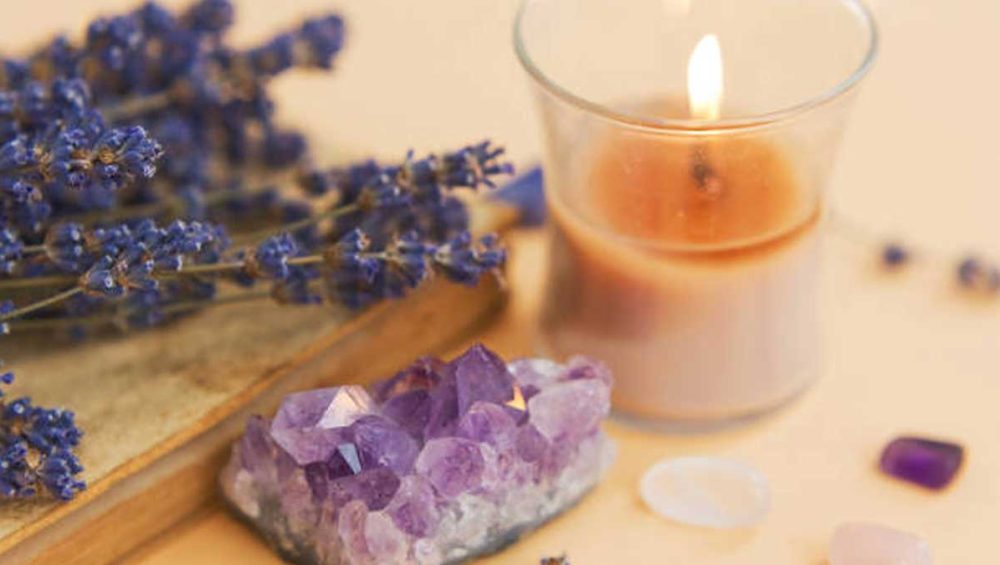
Some nights feel emotionally noisy long after the day is over. Your body may be in bed, your lights may be off, and yet part of you is still carrying unfinished conversations, overstimulation, or an ache you could not name while the sun was up. In those moments, sleep can feel less like surrender and more like a negotiation. Many people are drawn to crystals during seasons like this not because they want to force a mystical experience, but because they want a gentler threshold into rest. That is part of why amethyst keeps returning in conversations about dreaming, intuition, and nighttime peace.
Amethyst has long been associated with calm awareness, spiritual reflection, and inner clarity. For some, it feels like a steadying presence on the bedside table. For others, it becomes part of a bedtime ritual that helps the mind unclench before sleep. The connection between amethyst and dreams is not really about commanding the subconscious or trying to manufacture profound symbolism on demand. It is more intimate than that. It begins in the small human hope that the night might hold softness, insight, or emotional release.
When people speak about working with crystals at bedtime, they are often entering a wider world of crystal healing that centers intention, symbolism, and self-awareness. In that world, crystals are not substitutes for emotional care or nervous system support. They are companions. They help mark a transition. They give shape to a quiet inward turn. They can become physical reminders that rest is allowed, that reflection is safe, and that the subconscious does not have to be feared.
That is especially true with amethyst, a stone whose color and symbolism have made it a natural part of dreamwork for generations. Violet has long been linked to mystery, contemplation, and the space between worlds: day and night, thought and intuition, surface awareness and deeper knowing. Even people who do not identify as especially spiritual often describe amethyst as calming. It can feel like a visual exhale.
Within the larger language of gemstone meanings, amethyst often carries associations with insight, purification, inner listening, and emotional steadiness. Those themes matter because dreams rarely arrive as neat explanations. They come through symbols, moods, fragments, and felt truths. Sometimes they mirror what we already know but have not admitted. Sometimes they give shape to grief, longing, uncertainty, or hope. Sometimes they simply help the mind finish feeling what the day interrupted.
For readers moving through emotional transition, amethyst can be especially resonant because dreamwork is often less about prediction than integration. The night lets the mind process what daylight kept moving past. The body softens. Defenses loosen. Meaning begins to rise in images rather than arguments. That is why the bond between amethyst and dreams continues to matter. It is not just beautiful. It meets people where they actually are: tired, searching, tender, and wanting the dark to feel a little less heavy.
Why amethyst feels so connected to the dream state
Dreams tend to deepen when the mind is not fighting itself. If you go to sleep overstimulated, guarded, or emotionally flooded, your dreams may feel fractured, stressful, or impossible to remember by morning. But when your inner world feels a little safer, the dream state often becomes more coherent. Images linger. Emotional themes surface with less chaos. The night begins to feel less like a blur and more like a conversation.
That is one reason amethyst is frequently included in discussions of the benefits of healing crystals. People often reach for it when they want calm without numbness and stillness without emotional shutdown. The stone is traditionally linked with mental quieting, spiritual sensitivity, and clearer perception. Whether someone experiences that in overtly mystical terms or in a more reflective, psychological way, the felt effect is often the same: less internal static.
This symbolic quiet is part of what gives amethyst its reputation as a dream stone. In the world of amethyst crystal meaning, it is often connected with insight, intuition, and the ability to look inward without becoming swallowed by what you find there. That matters at night. Dreams can bring forward vulnerable material. A stone associated with calm perception can feel emotionally protective without feeling closed off.
Many people also notice that dreamwork becomes more meaningful when it is approached with less pressure. Amethyst supports that softer posture. It does not have to be used like a command. It can simply sit nearby as you rest, reminding the nervous system that not every form of depth needs urgency. Some truths only arrive when you stop chasing them.
This is also why dream experiences with amethyst are so varied. One person may notice vivid imagery. Another may wake with a clearer emotional understanding of something they had been avoiding. Someone else may simply sleep more peacefully and remember one line from a dream that feels quietly important. The point is not spectacle. The point is receptivity.
How to create a gentle bedtime ritual with amethyst
If amethyst supports dreams, it often does so through rhythm rather than intensity. A consistent bedtime ritual signals to the body that the day is ending and that inwardness is welcome. This can be as simple as dimming the lights, placing your phone farther away, taking three slower breaths, and setting amethyst near the bed before you lie down. The ritual does not need to impress anyone. It only needs to feel believable to your own body.
For some people, dreamwork begins with the kind of softness found in daily rituals with crystals. Repetition matters. When the same objects and gestures appear night after night, the nervous system starts to associate them with settling. Amethyst becomes part of a recognizable emotional pattern. It says, in its own symbolic way, you do not have to carry the whole day into sleep.
You might also pair the stone with gentle intention-setting practices by holding it for a moment and naming what you need most from the night. Not answers. Not certainty. Just something honest. “Let me rest.” “Let me remember what matters.” “Let me wake with more clarity than I had tonight.” Intentions like these do not strain the psyche. They soften it.
Some readers find it helpful to place amethyst beside a journal and write a few lines before bed. Others tuck the crystal under a pillowcase or leave it on a bedside tray with a candle, a glass of water, or another object that marks the space as restful. If you want the ritual to hold into the next morning, it can also connect with morning affirmation rituals with crystals, allowing dreams to become part of the emotional tone of the day rather than something lost the moment you get up.
What matters most is emotional safety. If a ritual feels performative, complicated, or too loaded with expectation, it may work against the very calm you are trying to invite. The most supportive dream rituals are often the least dramatic. They are simple enough to repeat and gentle enough that your body does not resist them.
Amethyst, intuition, and the meanings dreams sometimes carry
Dreams rarely speak in direct language. They lean toward metaphor because emotion often lives there first. A staircase, an old house, a missed train, a dark ocean, a child version of yourself: all of these may carry meaning without behaving like riddles that need to be solved perfectly. Amethyst is often paired with dreams because it resonates with this non-literal mode of knowing. It is a stone many people associate with intuitive perception rather than strict analysis.
That thread becomes clearer in amethyst for intuition, where the stone is connected with inner listening and subtle awareness. Intuition is not always dramatic. Sometimes it is simply the ability to recognize what your body, dreams, or emotions have been trying to say before your rational mind catches up. Dreamwork can become a place where that recognition happens gently.
The same is true of amethyst for intuition and decision-making. People often dream more intensely during seasons of uncertainty, grief, transition, or emotional conflict. The dream state can hold possibilities the waking mind keeps postponing. It may reveal what feels unsafe, what feels unfinished, or what part of you is asking to be heard. Amethyst does not make those revelations happen on command, but it can become a stabilizing symbol while you receive them.
For readers who resonate with chakra language, dream symbolism may also intersect with amethyst chakras and the subtle awareness often associated with higher perception. Not everyone relates to that framework, and it does not need to be the main lens. But for some, it provides language for why dreams with amethyst feel especially vivid, intuitive, or spiritually charged.
The important thing is not to over-interpret every image. Dreams deserve curiosity, not domination. Amethyst supports that slower, more trusting pace. It invites you to notice patterns without forcing conclusions. Sometimes the meaning of a dream arrives immediately. Sometimes it unfolds days later when a feeling, memory, or realization suddenly clicks into place.
Sleep quality, emotional rest, and dream recall
Dreams do not happen apart from the body. They are influenced by sleep quality, emotional regulation, and the degree of safety your nervous system feels as it lets go. If your evenings are full of activation, even a spiritually meaningful practice may not be enough to create restful sleep. That is why the relationship between amethyst and dreams works best when it includes compassion for the body, not just fascination with symbolism.
Many people exploring dreamwork eventually realize they also need sleep & circadian basics to support the physical side of rest. A regular sleep window, softer lighting, reduced stimulation, and a predictable wind-down all make dream recall more likely because they support deeper, steadier sleep. Amethyst can complement that rhythm, but it cannot replace it.
This is one reason the stone is also tied to amethyst for sleep and rest rituals. Nighttime peace is not only about what happens in dreams. It is also about whether the body feels allowed to unclench enough for meaningful dreaming to occur. For trauma-surviving or highly sensitive readers, that distinction matters. Rest may have to be rebuilt slowly. Bedtime may need gentleness more than intensity.
That same gentleness can extend into crystal care. If a stone begins to feel emotionally heavy, overly “worked,” or simply less resonant, it can help to practice resting crystals intentionally. Dream rituals do not need to be rigid. Sometimes care includes pause. Sometimes your nervous system needs fewer inputs, not more.
You may also find that amethyst feels more supportive when your wider evening environment reflects calm. A soft lamp, less screen glare, a stable bedtime, and a few quiet moments of breath can all make a difference. In that context, the crystal becomes part of an ecosystem of rest rather than a lone object carrying impossible expectations.
FAQ: Amethyst and dreams
Can amethyst help with dream recall?
Many people believe it can. Amethyst is often used during bedtime rituals because it is associated with calm, intuition, and inner clarity. While experiences vary from person to person, some people find that sleeping near amethyst helps them wake with dream fragments that feel easier to remember. Dream recall usually improves most when the crystal is paired with a gentle routine and a journal kept close to the bed.
Where should I place amethyst when sleeping?
Common placements include a bedside table, a pillowcase pocket, or a small tray near the headboard. The best place is the one that feels calming and physically comfortable. If placing a crystal under the pillow feels distracting or disruptive, keeping it beside the bed is usually a better choice. Dreamwork should support rest, not interfere with it.
Does amethyst cause vivid dreams?
Some people report more vivid dreams when working with amethyst, especially if they are also becoming more intentional about rest and reflection. That does not mean the stone works the same way for everyone. Sometimes the effect is not dramatic imagery but a stronger emotional sense of what a dream meant when you wake up. The experience is often subtle rather than sensational.
Is amethyst connected to spiritual dreams?
For many people, yes. Amethyst is commonly associated with spiritual reflection, intuitive awareness, and inner vision, which is why it is often included in dreamwork practices. Spiritual dreams do not always mean prophetic dreams. Often they simply feel more symbolic, emotionally meaningful, or connected to a deeper sense of guidance than ordinary dream fragments.
How do I cleanse amethyst used for dreamwork?
A gentle approach is usually best. Many people prefer crystal cleansing without water if they want a simple and low-pressure practice. Others find it helpful to revisit how often to cleanse crystals so cleansing remains intentional rather than compulsive. The goal is not perfection. It is simply to keep the ritual feeling clear, calm, and supportive.
Can I pair amethyst with jewelry or other dream practices?
Yes. Some people like to carry the stone during the day and transition into sleep with amethyst jewelry with intention, especially when they want the emotional tone of the ritual to begin before bedtime. Others naturally combine dreamwork with future practices like how to remember dreams with crystals or deeper symbolic work around crystals for lucid dreaming. The best combinations are the ones that deepen calm and clarity rather than making the practice feel crowded.
Conclusion
The relationship between amethyst and dreams is ultimately a relationship with softness. It is about making the night feel a little more trustworthy. It is about recognizing that the subconscious does not always open in response to pressure, but often does respond to care. A stone by the bed will not solve everything. It will not replace real rest, emotional support, or the slow work of feeling what you have had to postpone. But it can become part of a ritual that reminds you that inner life deserves tenderness too.
Amethyst matters to dreamwork because it sits at a meaningful threshold. It belongs to the world of symbolism, intuition, and reflective rest, yet it also belongs to ordinary human evenings: the quiet before sleep, the hand reaching for a journal, the hope that tomorrow might make more sense than today did. That is why so many people keep returning to it. Not because it promises spectacle, but because it dignifies the quiet.
If your dreams have felt scattered, emotionally loaded, or just out of reach, beginning with gentleness may be more powerful than beginning with intensity. Let the ritual be small. Let the room be soft. Let the crystal be a companion rather than a demand. Over time, you may find that the night becomes less opaque. A feeling stays with you after waking. A symbol returns with clearer edges. A dream you would once have dismissed begins to feel like part of your own deeper language.
And if that happens, amethyst has already done something meaningful. Not by controlling the dream, but by helping create the kind of stillness in which your inner world feels safe enough to speak.

Where softness, self-awareness, and emotional healing are allowed to coexist. Through reflective writing, grounding rituals, and intentional beauty, Sparrow Trades offers gentle support for sensitive souls learning to reconnect with themselves.