
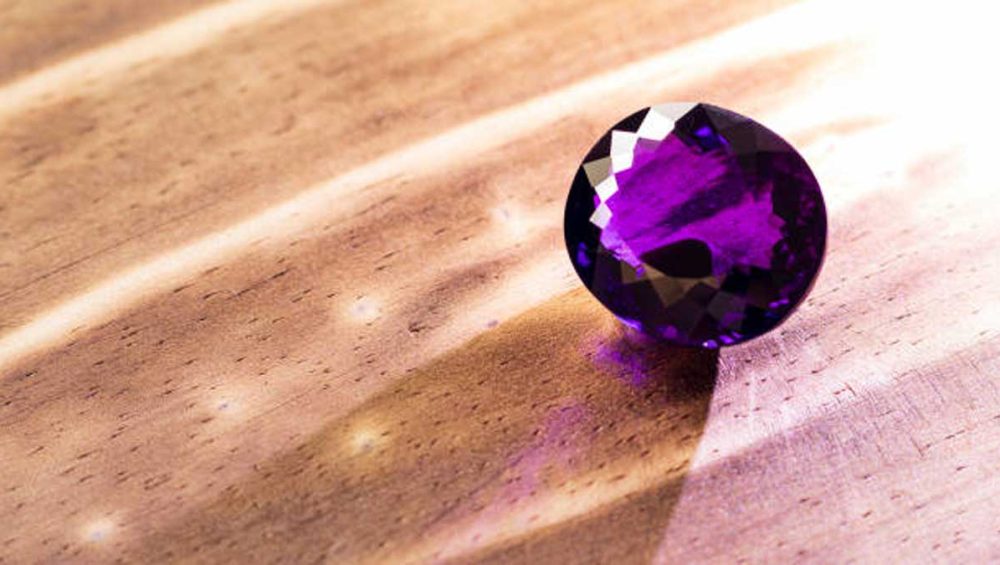
Introduction: when a birthstone feels like a mirror
Some birthstones feel decorative.
Amethyst rarely does.
For many people born under its influence, amethyst feels less like an accessory and more like a quiet companion — something that reflects inner depth rather than external shine. It’s the stone people return to during periods of overwhelm, questioning, or emotional recalibration. And that’s not accidental.
The amethyst birthstone has long been associated with clarity, intuition, and inner steadiness, but its meaning runs deeper than symbolism alone. Across cultures and eras, amethyst has been linked to protection of the mind, emotional sobriety, and spiritual discernment — qualities that become especially important during moments of transition, sensitivity, or growth.
If you’ve ever felt like you “see too much,” feel things before you can explain them, or need space to process your inner world, amethyst often resonates on a nervous-system level rather than an intellectual one. It doesn’t demand attention. It offers steadiness.
Historically, amethyst was believed to guard against excess — not just intoxication, but emotional overwhelm and mental fragmentation. That belief still echoes today in how people experience the stone: as grounding for the mind without dulling perception, calming without silencing intuition.
Understanding the amethyst birthstone isn’t about memorizing properties. It’s about recognizing why this stone tends to find people who need gentleness with depth — people who are learning how to hold awareness without burning out.
To understand that fully, it helps to start with amethyst crystal meaning, where symbolism, history, and energetic themes converge into a shared language of clarity and calm.
This article explores the amethyst birthstone not as a trend or talisman, but as an emotional and spiritual ally. We’ll look at why it’s associated with February, how its symbolism connects to lived experience, and how its energy is often felt rather than analyzed.
If amethyst keeps appearing in your life — in jewelry, imagery, or quiet curiosity — there’s usually a reason. And it’s rarely superficial.
The amethyst birthstone and emotional clarity
Amethyst is often described as calming, but that word doesn’t quite capture its role. Calm isn’t the absence of feeling — it’s the ability to stay present with what’s happening inside you without becoming overwhelmed.
That’s where the amethyst birthstone tends to work best.
People drawn to amethyst frequently describe a need for emotional clarity rather than emotional suppression. They don’t want to feel less; they want to understand what they’re feeling without drowning in it. Amethyst supports that middle ground — where awareness and regulation coexist.
This quality is closely tied to how amethyst interacts with the body’s subtle energy systems. It’s commonly associated with amethyst chakras, particularly those related to perception and inner knowing. Rather than activating intensity, it encourages spaciousness — the kind that allows insight to surface gently.
Emotionally, amethyst is often felt as a stabilizer during periods of mental overactivity, grief, or decision fatigue. It doesn’t push solutions forward. It slows the internal noise enough for clarity to emerge on its own.
This is why amethyst is so often paired with reflective practices like meditation, journaling, or quiet contemplation. It naturally aligns with crystals for meditation, not because it forces focus, but because it softens distraction.
If you’ve ever had a moment where your body felt tense even though nothing “bad” was happening, you’re not alone. Sometimes the nervous system stays on alert long after the mind has moved on. When that happens, returning to simple regulation can feel like coming home — the kind of gentle steadiness described in nervous system regulation techniques.
For people who are sensitive, intuitive, or deeply empathetic, amethyst can feel like permission to pause. It reminds the nervous system that awareness doesn’t have to mean vigilance.
That emotional permission is part of why amethyst remains such a meaningful birthstone — it reflects not just personality traits, but emotional needs that evolve over time.
Why amethyst is the February birthstone
Birthstones are often explained astrologically, but their emotional relevance usually comes from seasonal resonance. February sits at a quiet threshold — after the intensity of winter, before the movement of spring. It’s a time associated with introspection, endurance, and subtle renewal.
Amethyst fits that space naturally.
Historically, amethyst was associated with restraint and clarity during times of excess, which made it symbolically appropriate for late winter — a period when energy is conserved rather than expressed outwardly. Emotionally, this mirrors the inner work many people experience during this season: reflection, recalibration, and gentle preparation for change.
The stone’s deep violet color has long been linked to wisdom, spiritual insight, and inner authority. But unlike brighter or more activating stones, amethyst’s energy is quiet. It supports the kind of growth that happens internally before it becomes visible.
That’s why amethyst is so often referenced within broader discussions of gemstone meanings. It represents an archetype of calm discernment — knowing when to act and when to rest.
As a February birthstone, amethyst doesn’t symbolize force or momentum. It symbolizes steadiness during transition — the ability to remain connected to yourself when external conditions are uncertain.
If your February seasons have ever carried a particular emotional weight — loneliness, decision fatigue, the sense that you’re holding more than others can see — it can help to remember that steadiness isn’t numbness. It’s a regulated presence. Some people find support in practices like conscious breathing, especially when the mind is racing but the body needs reassurance.
For many, amethyst’s symbolism becomes more meaningful with age. What once felt like a beautiful stone becomes a reminder to protect inner clarity, especially during emotionally demanding seasons of life.
Spiritual symbolism without overwhelm
One of amethyst’s most enduring qualities is its refusal to overwhelm. Spiritually, it’s associated with intuition, protection, and higher awareness — but it doesn’t demand ritual or intensity to be effective.
This makes amethyst particularly accessible for people who are spiritually curious but nervous-system sensitive.
Rather than amplifying sensation, amethyst creates a sense of containment. It supports clarity without forcing revelation, and insight without urgency. This quality is why it’s often recommended within broader frameworks of crystal healing practices, where intention and consent matter as much as outcome.
Spiritually, amethyst is less about “opening” and more about listening. It encourages inward attention without dissociation, and awareness without pressure.
That same quality is reflected in how people care for the stone. Many prefer approaches rooted in trauma-informed crystal care, choosing methods that respect emotional boundaries rather than overriding them.
Even cleansing practices often avoid intensity, favoring crystal cleansing without water, which aligns with amethyst’s gentle, non-invasive energy.
And if you’ve ever felt guilty for needing breaks — from people, from stimulation, from being “on” — you might recognize how healing it is to normalize rest. Some crystal care traditions name that directly through resting crystals intentionally, which mirrors the human truth that not everything needs to be charged all the time.
Spiritually, amethyst doesn’t ask you to change. It asks you to notice.
And for many, that’s where real transformation begins.
How amethyst supports intuition and decision-making
Intuition isn’t always dramatic. Sometimes it’s quiet, practical, and almost annoyingly subtle — a “no” that arrives before you can justify it, or a heaviness that shows up when you’re about to override your own needs.
Amethyst is often associated with intuition because it supports discernment: the ability to tell the difference between inner knowing and anxious projection. That distinction matters, especially for people who have spent years second-guessing themselves or reading rooms for safety.
If your nervous system learned to scan for threat, intuition can get tangled with hypervigilance. You might feel “sure” about something because your body is bracing, not because your deeper self is aligned. This is where gentleness matters. The steadier you feel, the clearer your insight becomes.
Some readers find that exploring amethyst for intuition and decision-making helps name this experience in a grounded way — not as magical certainty, but as an internal relationship built on clarity and trust.
In everyday life, amethyst’s symbolism can feel like a boundary reminder: pause before you commit, breathe before you explain, give yourself room to feel what’s true before you perform what’s expected.
And when you’re learning to trust yourself again, it can be supportive to reconnect with the inner capacity described in learning to trust your emotions again, because intuition often lives in emotion long before it reaches language.
Wearing amethyst as a birthstone
Wearing a birthstone isn’t just symbolic — it’s relational. The way amethyst is worn often reflects how someone wants to feel rather than how they want to appear.
Amethyst jewelry tends to appeal to people seeking calm presence, emotional grounding, or quiet confidence. That’s why discussions around amethyst jewelry meaning focus less on status and more on intention.
Different forms of amethyst jewelry offer different emotional experiences. Some people gravitate toward amethyst bracelets for spiritual connection, which are felt continuously through touch and movement. Others prefer amethyst necklaces, where the stone rests close enough to feel intimate, but not so constant that it becomes “work.”
For many, the real shift happens when the stone becomes a cue — not a fix. The intention isn’t “amethyst will make me calm.” It’s “amethyst will remind me to come back to myself.” That kind of relationship is often named through amethyst jewelry with intention.
As part of broader amethyst jewelry, birthstone pieces are often chosen during moments of transition — birthdays, healing periods, new beginnings, or the quiet decision to stop abandoning your own inner life.
If you’re in a season where your nervous system feels tender, it can help to choose symbolism that matches what you’re actually living. Sometimes that’s exactly what’s held inside choosing jewelry by emotional season.
What matters most isn’t the style, but the relationship. Amethyst works best when it’s worn as a reminder rather than a tool — a cue to return to clarity, boundaries, and inner steadiness.
Everyday spiritual benefits that stay human
The most meaningful spiritual benefits are the ones that don’t pull you away from your life — they bring you back into it. Amethyst is often associated with calming the mind, protecting energy, and deepening awareness, but what many people actually experience is simpler: less internal noise, more internal honesty.
In practice, that can look like choosing your words with more care, ending a conversation sooner, or noticing the moment you start explaining yourself too much. It can look like reaching for stillness instead of stimulation.
Sometimes, the benefit isn’t even “calm.” It’s containment: the feeling that your emotions can move without taking over your whole day. If you’ve ever needed a reset after stress, you may recognize the relief described in how to reset your nervous system after stress.
Amethyst also tends to be woven into broader frameworks of healing and meaning-making, including crystal healing guide and amethyst healing. Not because you need more information, but because sometimes language helps you validate what your body already knows.
And when you’re trying to build steadiness in a world that constantly pulls you outward, it can help to keep your spiritual practices gentle and human. The smallest supportive rituals — the kind named in daily rituals with crystals — often do more for emotional continuity than anything intense or perfectionistic.
Amethyst birthstone questions answered
Is amethyst a powerful birthstone?
Amethyst is considered powerful in a stabilizing sense. Rather than amplifying energy, it supports clarity, emotional regulation, and intuitive awareness.
What does the amethyst birthstone symbolize?
It symbolizes calm discernment, inner wisdom, and protection of mental and emotional space.
Who should wear amethyst as a birthstone?
People who value introspection, emotional depth, and intuitive understanding often resonate strongly with amethyst.
Is amethyst connected to intuition?
Yes. Amethyst is frequently associated with intuitive awareness and inner perception, especially when emotional clarity is needed.
Can amethyst help with emotional stress?
Many people experience amethyst as calming during periods of stress, overthinking, or emotional fatigue.
Does amethyst need special care?
Amethyst benefits from gentle care approaches that respect both the stone and the wearer’s emotional boundaries.
Conclusion: a birthstone that honors inner life
The amethyst birthstone isn’t about spectacle. It’s about steadiness.
Its meaning unfolds slowly, often becoming more relevant as life grows more complex. For those who feel deeply, think expansively, or need space to integrate experience, amethyst offers something rare — permission to remain gentle without becoming fragile.
Whether worn as jewelry, kept as a touchstone, or simply understood symbolically, amethyst reflects an inner orientation toward clarity, balance, and self-trust. It doesn’t promise transformation. It supports presence.
And for many, that’s the most meaningful gift a birthstone can offer.
Where softness, self-awareness, and emotional healing are allowed to coexist. Through reflective writing, grounding rituals, and intentional beauty, Sparrow Trades offers gentle support for sensitive souls learning to reconnect with themselves.