
There are moments when empathy feels less like a personality trait and more like a way of moving through the world with your skin turned inside out.
You walk into a room and immediately sense tension before anyone speaks. Someone says they are “fine,” but something inside you tightens because you can feel the grief underneath their words. You absorb atmospheres without trying. Loud spaces exhaust you. Conflict lingers in your body long after it ends. Sometimes you even carry emotions that never belonged to you in the first place.
For many sensitive people, spirituality begins there.
Not with certainty.
Not with rituals.
Not with answers.
But with the quiet realization that emotional experience seems deeper, wider, and more interconnected than other people appear to notice.
For some, that realization feels beautiful. For others, it feels overwhelming.
Many empathetic people spend years believing something is wrong with them before understanding their sensitivity may actually be connected to how they experience meaning, intuition, relationships, and inner awareness. The problem is that empathy without grounding can become emotional flooding. Spirituality without nervous system safety can become dissociation disguised as transcendence.
That is why so many people eventually find themselves searching for language that helps them feel less alone inside their sensitivity.
Sometimes that search leads toward meditation. Sometimes it leads toward grief work. Sometimes it leads toward stillness, nature, prayer, energy healing, or the slow rebuilding of emotional trust after years of emotional invalidation.
And sometimes it simply begins with recognizing that sensitivity is not weakness.
“The deeper you feel, the deeper you notice what others try to hide.”
Empathy and spirituality often become intertwined because both involve connection beyond surface-level experience. Empathy asks us to feel beyond ourselves. Spirituality asks us to witness life beyond ego, performance, and emotional numbness.
But that connection is delicate.
Many emotionally sensitive people were taught to abandon themselves early in life. They became hyperaware of other people’s emotions because it once helped them stay emotionally safe. Over time, that survival pattern can start to feel spiritual because it creates heightened awareness. Yet not every intense emotional experience is intuition. Not every emotional absorption is wisdom.
This is where nervous system awareness matters.
People who constantly override their emotional boundaries often confuse depletion with compassion. They confuse self-erasure with love. They confuse emotional hypervigilance with spiritual awakening.
That confusion can quietly disconnect someone from themselves.
The healthiest relationship between empathy and spirituality is not built on emotional martyrdom. It is built on emotional honesty, grounded awareness, and the ability to remain connected to yourself while still caring deeply for others.
That is why so many sensitive people eventually begin searching for emotional wellness foundations that help them feel emotionally safe inside their own sensitivity instead of consumed by it.
Why Empathy Often Feels Spiritual
Empathy changes the way people experience emotional reality.
Sensitive people often notice emotional subtleties others miss entirely. They sense discomfort beneath politeness. They recognize shifts in energy before conversations change. They instinctively absorb emotional atmospheres in families, friendships, workplaces, and public spaces.
Over time, this heightened awareness can create a feeling of interconnectedness that naturally overlaps with spirituality.
Not because empathy is magical. But because deep emotional perception changes how reality feels.
Many people who identify with spirituality describe moments where they suddenly realize how emotionally connected human beings truly are. A stranger’s pain moves them unexpectedly. Nature feels emotionally restorative. Silence becomes meaningful instead of empty. Compassion begins feeling less performative and more instinctive.
For emotionally sensitive people, these experiences can feel deeply familiar.
But empathy becomes unhealthy when people lose their own emotional center inside everyone else’s feelings.
This is why so many people eventually discover the importance of emotional boundaries after years of believing love meant endless emotional availability.
Without boundaries, spirituality can become another way to ignore exhaustion.
Some people become so focused on helping, healing, understanding, or emotionally carrying others that they disconnect from their own nervous system completely. They begin spiritualizing self-abandonment. They convince themselves that depletion proves compassion.
But emotional depletion is not proof of spiritual depth.
In reality, many people who struggle with chronic emotional overwhelm are quietly experiencing patterns connected to when empathy becomes emotional exhaustion without realizing how deeply their nervous system has been stretched beyond capacity.
True spirituality does not require emotional self-destruction.
It asks for presence. Awareness. Compassion. Honesty.
And most importantly, it asks us to remain connected to ourselves while staying open to others.
That balance is where emotional safety begins to return.
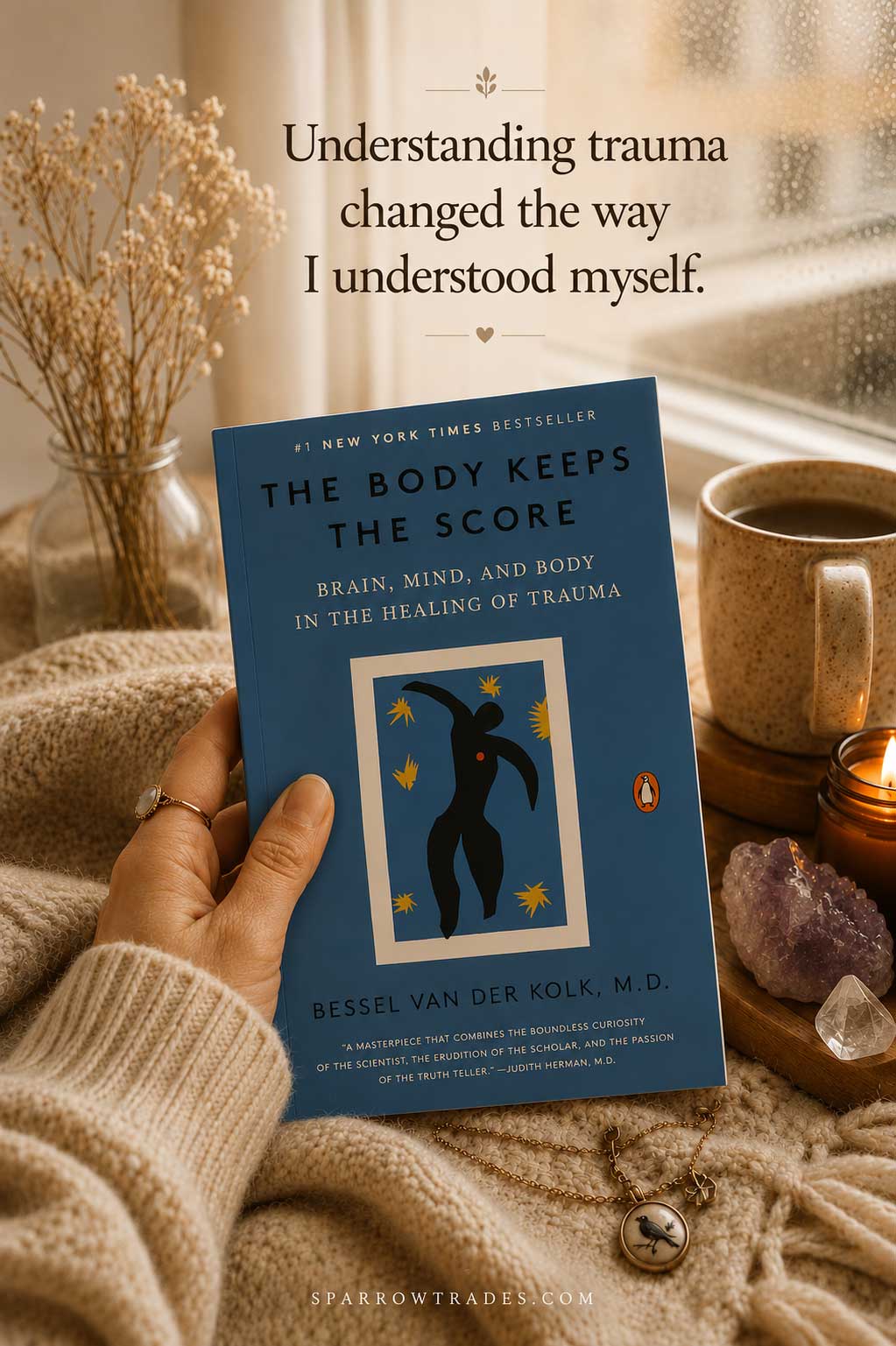
The Difference Between Intuition and Emotional Absorption
One of the hardest things sensitive people learn is that not every intense emotional experience is intuition.
Sometimes it is anxiety. Sometimes it is trauma memory. Sometimes it is hypervigilance. Sometimes it is emotional absorption.
People who grew up around unpredictability often became extremely skilled at reading emotional environments for survival. They learned to monitor tone changes, facial expressions, silence, tension, and emotional shifts before conflict emerged.
Over time, that survival mechanism can start feeling spiritual because it creates heightened awareness.
But constantly scanning other people’s emotions can leave someone deeply disconnected from themselves.
This is why emotionally sensitive people often struggle with how to tell if an emotion is yours or someone else's especially after years of emotional enmeshment or chronic people-pleasing.
Healthy intuition usually feels calm, grounded, and clear.
Emotional absorption feels urgent. Heavy. Confusing. Overstimulating.
The body often knows the difference before the mind does.
Intuition tends to arrive quietly. Emotional overwhelm floods the nervous system.
Many people begin rebuilding trust in themselves only after reconnecting with learning to trust your emotions again instead of automatically prioritizing everyone else’s emotional reality first.
This distinction matters deeply in spiritual spaces because emotionally sensitive people are often vulnerable to believing they must remain endlessly open in order to stay spiritually connected.
But openness without grounding becomes unsustainable.
This is why practices connected to grounding rituals for emotional safety can feel life-changing for people who have spent years emotionally flooded by other people’s pain.
Grounding does not disconnect you from spirituality.
It helps you stay present enough to experience it safely.
Spirituality Should Feel Safe in the Body
Many people approach spirituality from the mind while ignoring the nervous system completely.
But the body always participates in emotional experience.
A spiritual practice that constantly leaves someone dysregulated, dissociated, emotionally flooded, or physically depleted is not creating deeper healing. It may actually be bypassing emotional safety altogether.
This is especially important for people with trauma histories, chronic emotional invalidation, or patterns of hypervigilance.
Sensitive people often mistake emotional intensity for transformation because intensity feels familiar.
But safety can feel unfamiliar at first.
That is why many emotionally aware people eventually gravitate toward nervous system-safe spiritual practices that prioritize emotional regulation alongside spiritual exploration.
Spirituality should not require abandoning the body to feel connected.
In many cases, healing begins when people slowly reconnect with their bodies again through practices like somatic self-soothing practices instead of constantly trying to transcend emotional discomfort.
Sometimes the most spiritual experience is not transcendence at all.
Sometimes it is finally feeling safe enough to remain present inside yourself.
People who have spent years emotionally overwhelmed often discover that simple grounding practices feel more healing than dramatic spiritual experiences ever did.
Breathing slowly. Walking outside. Touching the earth. Listening to the body. Resting without guilt.
These moments rebuild internal safety.
Many sensitive people quietly carry patterns connected to emotional grounding because emotional overwhelm has become normalized in their lives for so long.
Spirituality becomes healthier when emotional regulation is treated as sacred instead of secondary.
Because a regulated nervous system does not make someone less spiritual.
It often allows them to experience connection more clearly.
The Emotional Loneliness Sensitive People Carry
One of the quietest forms of pain emotionally sensitive people experience is the feeling of being misunderstood almost everywhere they go.
People tell them they are “too sensitive.” Too emotional. Too intense. Too affected by things.
Over time, many sensitive people start minimizing themselves just to remain emotionally acceptable to others.
They stop trusting their perceptions. They question their feelings. They apologize for needing rest. They suppress emotional truth to avoid making others uncomfortable.
This emotional shrinking often creates profound loneliness.
Especially when someone’s inner emotional world feels deeply alive while the people around them dismiss or minimize emotional depth altogether.
That is why so many people resonate with being called sensitive is manipulation because emotional invalidation slowly teaches people to distrust themselves.
For some, spirituality becomes the first space where their sensitivity feels meaningful instead of defective.
But even spiritual communities can unintentionally reinforce self-erasure if people are taught to endlessly forgive, endlessly give, or endlessly tolerate emotional harm in the name of compassion.
Real healing often begins when someone realizes compassion includes themselves too.
Many emotionally sensitive people are still recovering from healing after being emotionally invalidated without fully recognizing how deeply emotional dismissal shaped their nervous system.
Spirituality becomes healthier when it supports emotional truth instead of emotional suppression.
Sometimes the most healing realization is understanding that your sensitivity was never the problem.
The absence of emotional safety was.
FAQ About Empathy and Spirituality
Is empathy connected to spirituality?
For many people, yes. Empathy and spirituality often overlap because both involve deeper emotional awareness, interconnectedness, compassion, and sensitivity to emotional environments. However, empathy itself is not automatically spiritual. Emotional awareness becomes healthier when it is grounded in emotional boundaries and nervous system safety rather than emotional self-sacrifice.
Can empathy become emotionally overwhelming?
Absolutely. Many sensitive people struggle with chronic emotional exhaustion because they absorb emotions without realizing it. Over time, this can create anxiety, burnout, hypervigilance, or emotional numbness. Practices connected to how to stop absorbing other people's emotions can help sensitive people reconnect with emotional balance.
What is the difference between empathy and intuition?
Empathy involves emotionally sensing or resonating with other people’s feelings. Intuition is often quieter and more internally grounded. Emotional absorption tends to feel chaotic or overwhelming, while healthy intuition usually feels calm, clear, and steady. Learning the difference often requires emotional grounding and nervous system awareness.
Why do sensitive people feel spiritually disconnected after burnout?
Emotional burnout can disconnect people from themselves entirely. When someone is chronically overwhelmed, their nervous system shifts into survival mode, making presence and emotional clarity much harder to access. Many people eventually realize they need empath nervous system overwhelm recovery before spirituality starts feeling emotionally restorative again.
Can spirituality help emotional healing?
It can, especially when spirituality supports emotional honesty rather than emotional avoidance. Practices rooted in grounding, mindfulness, compassion, and self-awareness can help people reconnect with themselves gently. Many people also find comfort in mindfulness for anxiety because it encourages emotional presence without forcing emotional suppression.
How can sensitive people stay emotionally grounded?
Grounding practices help sensitive people reconnect with their bodies and emotional center. This can include breathwork, journaling, rest, sensory grounding, movement, nature, and emotional boundaries. Some people also feel emotionally supported through grounding with air and breath when emotional overwhelm starts building internally.
Finding Spirituality Without Losing Yourself
The healthiest form of spirituality does not ask people to disappear inside everyone else’s pain.
It does not require endless emotional labor. It does not reward self-erasure. It does not glorify exhaustion.
Instead, it invites people back into relationship with themselves.
For emotionally sensitive people, that journey can feel deeply emotional because many spent years believing their feelings were burdens instead of signals. They learned to emotionally shape-shift for safety. They learned to overgive before receiving. They learned to disconnect from their own bodies while remaining hyperaware of everyone else’s emotional needs.
Healing often begins when sensitivity stops being treated like a flaw.
Empathy is not weakness. Sensitivity is not failure. Needing boundaries is not selfishness.
Sometimes spirituality is not about becoming “higher” at all.
Sometimes it is about becoming more honest. More grounded. More emotionally present.
Many people slowly rebuild emotional safety through daily emotional check-in prompts that help them notice what they are truly feeling beneath emotional overwhelm.
Others reconnect with themselves through gentle intention-setting practices that create emotional steadiness instead of pressure or perfectionism.
And many eventually discover that true connection requires staying emotionally connected to themselves first.
Because spirituality without self-connection becomes performance.
But empathy grounded in emotional safety can become something profoundly healing: a way of moving through the world with compassion while still remaining fully present inside your own life.

Where softness, self-awareness, and emotional healing are allowed to coexist. Through reflective writing, grounding rituals, and intentional beauty, Sparrow Trades offers gentle support for sensitive souls learning to reconnect with themselves.