There are seasons in life when emotions feel difficult to express. You may know something is weighing on your heart, yet finding the words feels almost impossible. Conversations become rehearsed in your mind but never spoken aloud. You carry feelings quietly, hoping they will eventually soften on their own.
Many people are drawn to turquoise during these moments—not because a gemstone can solve life’s challenges, but because certain symbols help us slow down, reconnect with ourselves, and approach our emotions with greater intention. Throughout history, turquoise has represented protection, wisdom, honest communication, and emotional balance. Its calming blue-green color often reminds people of open skies and peaceful water, inviting a sense of spaciousness when life feels emotionally crowded.
If you’re exploring turquoise for emotional wellness, it’s helpful to think of the stone as a meaningful companion rather than a cure. Emotional wellness grows through self-awareness, supportive relationships, healthy habits, and, when appropriate, professional care. A gemstone can become part of that journey by serving as a gentle reminder of the qualities you hope to cultivate.
Many people begin by exploring emotional wellness itself before discovering how gemstones can complement their personal practices. Emotional wellness isn’t about feeling happy all the time. Instead, it’s the ongoing ability to recognize your emotions, respond to them with compassion, and move through life’s challenges without becoming disconnected from yourself.
Within that journey, many are naturally drawn toward gemstones for emotional wellness because gemstones offer something beautifully simple: a physical reminder of an intention. Holding a stone before a difficult conversation, wearing meaningful jewelry throughout the day, or pausing to reflect while looking at its colors can become small rituals that encourage presence instead of reactivity.
Turquoise has held this symbolic role across many cultures for centuries. While traditions differ, it has often been associated with courage, truthful communication, emotional protection, and inner harmony. Those qualities continue to resonate with people navigating stress, uncertainty, personal growth, or significant life transitions.
As you read, remember that your relationship with a gemstone is deeply personal. There is no correct way to connect with turquoise. You may simply appreciate its beauty, feel comforted by its symbolism, or incorporate it into mindfulness practices that help you feel more grounded throughout the day.
Whether you’re beginning your emotional wellness journey or expanding an existing crystal practice, turquoise offers an invitation to pause, breathe, and reconnect with your own voice.
What Is Turquoise?
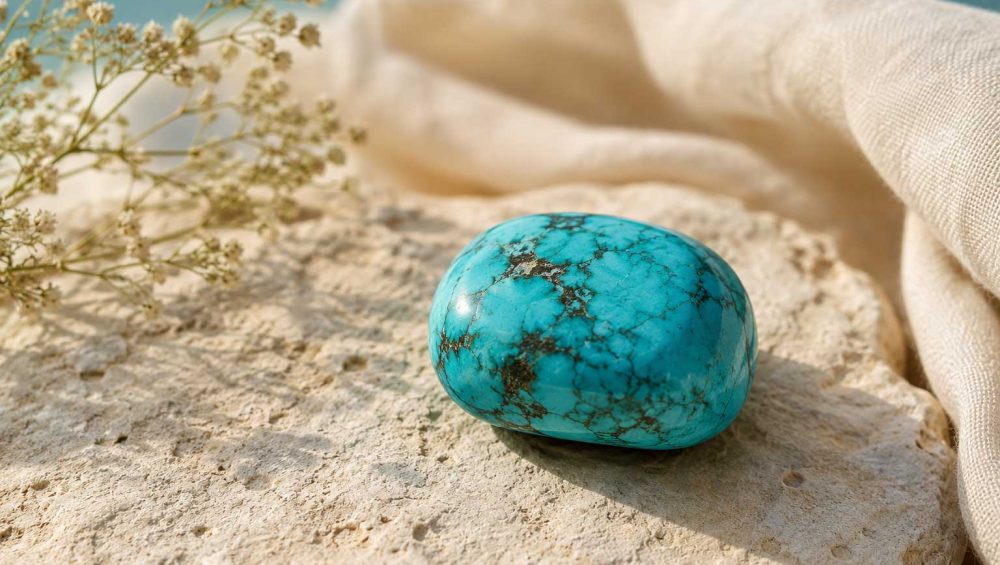
Turquoise is one of the world’s oldest and most recognizable gemstones, admired for thousands of years for both its striking beauty and its cultural significance. Its distinctive blue-green color comes from natural minerals within the stone, creating shades that range from soft sky blue to rich green with delicate matrix patterns that make every piece unique.
If you’re new to gemstones, understanding turquoise provides a helpful foundation before exploring its emotional symbolism. Learning about a stone’s history, formation, and cultural importance often creates a deeper appreciation than focusing only on modern metaphysical interpretations.
Across civilizations, turquoise has appeared in jewelry, ceremonial objects, and protective talismans. Ancient Egyptians, Persian artisans, Tibetan cultures, and many Indigenous peoples of North America have all treasured turquoise for generations. While each tradition understood the stone differently, many shared themes of protection, wisdom, connection, and truthful living.
Today, many people continue wearing turquoise not because they expect it to change their lives overnight, but because it reminds them of the qualities they want to practice every day. A meaningful object can become an anchor—something that gently redirects attention toward calm breathing, honest conversations, and emotional presence whenever life feels overwhelming.
Rather than viewing turquoise as something that creates emotional wellness, it may be more helpful to see it as something that reflects your intentions back to you.
The Emotional Symbolism of Turquoise
Every gemstone develops a symbolic language over time. For turquoise, that language often centers around emotional openness, authenticity, courage, and peaceful communication.
There are moments when emotions become trapped inside us—not because we want to hide them, but because we fear misunderstanding, conflict, or vulnerability. Over time, those unspoken feelings can create emotional tension that affects both our relationships and our inner sense of peace.
Many people find themselves exploring crystal healing as a way to introduce more intentional reflection into daily life. Whether viewed symbolically or spiritually, crystals often encourage moments of mindfulness that might otherwise be overlooked. Turquoise, in particular, has become associated with expressing emotions honestly while remaining compassionate toward ourselves and others.
Its calming color naturally evokes images of expansive skies and quiet water. These landscapes often remind our nervous system that there is space to slow down, breathe deeply, and respond thoughtfully instead of reacting from stress or fear.
For some, turquoise represents the courage to speak difficult truths with kindness. For others, it symbolizes learning to listen—not only to those around them but also to the quieter voice within themselves.
This symbolism can become especially meaningful during periods of transition, grief, healing, or personal growth. If this feels like your current season, healing for emotional wellness may offer a gentle next step for understanding emotional growth without rushing yourself.
Sometimes emotional healing begins not with finding answers, but with creating enough calm to ask better questions.
Turquoise and Emotional Balance
Emotional balance doesn’t mean never feeling anxious, frustrated, or overwhelmed. It means allowing emotions to move through you without becoming consumed by them.
Many people discover that emotional balance develops gradually through consistent practices rather than dramatic breakthroughs. Rest, movement, supportive relationships, journaling, mindfulness, and nervous system regulation all play important roles.
Within that broader picture, symbolic objects like turquoise can serve as gentle reminders of the emotional qualities you’re intentionally cultivating.
You may notice yourself reaching for turquoise jewelry before an important conversation, carrying a polished stone during periods of uncertainty, or simply appreciating its calming colors during moments of reflection. None of these practices replace emotional work—but they can become meaningful rituals that reinforce it.
If this feels like your current season, you may also appreciate exploring mindfulness for emotional wellness. Mindfulness encourages observing emotions without immediately trying to fix or judge them, creating the space where genuine emotional balance often begins.
For readers who feel easily flooded or reactive, emotional regulation for emotional wellness can also support the deeper nervous-system work behind calm, steady emotional responses.
For many people, turquoise becomes less about the stone itself and more about the pause it creates—a small moment of awareness before responding to life’s challenges with greater intention.
Turquoise and the Throat Chakra
Across many spiritual traditions, turquoise is closely associated with honest communication and authentic self-expression. This is why it is often connected with the throat chakra, the energy center traditionally linked to speaking your truth, active listening, and expressing your inner world with clarity.
If you’re curious about this connection, lapis lazuli for throat chakra explores another gemstone that has long been associated with courageous communication and authentic expression. While lapis lazuli and turquoise each carry their own symbolism, both invite us to approach conversations with greater honesty and compassion.
Emotional wellness often improves when we learn that speaking our truth doesn’t have to sound loud or confrontational. Sometimes it looks like calmly expressing a boundary. Other times it means admitting we need help, asking for clarification, or simply saying, “I’m not sure how I feel yet.”
Many of us learned to suppress emotions in order to avoid conflict or disappointment. Over time, that habit can create distance between our inner experiences and the way we present ourselves to the world.
Turquoise gently symbolizes bringing those two realities closer together.
Instead of asking, “How do I avoid uncomfortable emotions?” it encourages a different question: “How can I honor what I’m feeling while communicating with kindness?”
That subtle shift often creates far more lasting emotional balance than trying to ignore difficult feelings altogether.
Using Turquoise as Part of an Emotional Wellness Practice
There is no single right way to incorporate turquoise into your daily life. Its greatest value often comes through consistency rather than complexity.
Some people enjoy carrying a small polished stone in a pocket as a tactile reminder to pause before reacting emotionally. Others wear turquoise jewelry throughout the day because seeing it periodically helps them reconnect with their intentions. Still others place turquoise near a journal, meditation space, or favorite reading chair where it becomes part of a quiet daily ritual.
What matters most isn’t the specific practice. It’s the awareness the practice creates.
Many people pair turquoise with intentional reflection, gratitude, or breathing exercises. A few slow breaths while holding a meaningful object can create a transition between the stress of the outside world and the calmer internal space you’re trying to cultivate.
If this approach resonates with you, daily rituals with crystals offers additional ideas for incorporating gemstones into everyday moments without turning them into rigid routines.
You might also appreciate morning affirmation rituals with crystals if you want a simple way to begin the day with emotional clarity, intention, and a softer inner tone.
Rather than asking turquoise to change your emotions, consider allowing it to remind you of how you hope to respond to them—with patience, curiosity, honesty, and compassion.
Turquoise Compared With Other Emotional Wellness Gemstones
One of the beautiful aspects of gemstone symbolism is that no single stone represents every emotional experience. Different gemstones tend to resonate during different seasons of life.
If your focus is developing emotional openness and compassionate communication, turquoise may feel especially meaningful.
As your emotional needs change, it’s natural for different gemstones to resonate at different times.
If you’re seeking greater inner reflection and spiritual clarity, you may find yourself naturally drawn toward amethyst healing, a stone often associated with wisdom, peaceful contemplation, and quiet awareness.
If your heart feels tender after disappointment or relationship challenges, many people connect with rose quartz healing because of its enduring symbolism around love, compassion, and emotional gentleness.
Those hoping to cultivate honest communication and emotional truth may also appreciate lapis for emotional clarity and truth, another gemstone frequently associated with speaking authentically while remaining grounded in wisdom.
Rather than searching for the best gemstone, consider asking which emotional quality you most want to nurture right now.
Often, the answer to that question points naturally toward the stone that feels most meaningful.
Wearing Turquoise Jewelry with Intention
Jewelry often carries significance beyond its appearance.
A necklace worn every day can become associated with resilience after a difficult season. A bracelet might remind you of a promise you’ve made to yourself. A ring can symbolize a meaningful milestone or personal transformation.
Turquoise jewelry is no different.
Many people choose to wear turquoise not because they expect the stone to change their circumstances, but because it quietly reinforces qualities they hope to embody throughout the day.
Looking down at a bracelet before a challenging meeting may become a reminder to speak calmly.
Touching a pendant during an anxious moment might encourage one slow breath before responding.
These small moments of awareness often have more lasting impact than we realize.
If you’re interested in incorporating turquoise into your daily life, exploring turquoise jewelry can be a thoughtful next step. Whether you prefer a simple pendant, delicate bracelet, or timeless earrings, the piece that resonates most is often the one that naturally invites you back to your intentions again and again.
Jewelry becomes meaningful not because of what it promises—but because of what it helps you remember.
Turquoise as a Gentle Companion, Not a Solution
In today’s world it’s easy to search for quick answers to emotional pain.
We want the right book. The right practice. The right routine. The right gemstone.
But emotional wellness rarely grows from finding one perfect answer.
Instead, it develops through hundreds of small moments of self-awareness practiced over time.
Turquoise can certainly become part of that journey. It may remind you to pause before reacting, speak more honestly, breathe more deeply, or reconnect with your values when life feels noisy.
Those are meaningful gifts.
But they arise because of your willingness to engage with your own emotional growth—not because the stone is doing the work for you.
Many people find themselves collecting gemstones over time because each represents a different intention or season of life. Exploring crystals by intention can help you discover other stones that align with the emotional qualities you’re hoping to cultivate, whether that’s grounding, compassion, resilience, clarity, or courage.
Sometimes the greatest healing comes not from finding something outside ourselves, but from remembering what has always been quietly waiting within.
Frequently Asked Questions
Can turquoise really improve emotional wellness?
Turquoise should not be viewed as a treatment or replacement for mental health care. Instead, many people use it as a meaningful symbol that supports intentional practices such as mindfulness, journaling, meditation, or self-reflection. Emotional wellness develops through healthy relationships, self-awareness, supportive habits, and, when needed, professional guidance. Turquoise can simply become a reminder of the emotional qualities you wish to strengthen, such as honesty, calm, and resilience.
What emotions is turquoise traditionally associated with?
Across many cultures, turquoise has been associated with peace, protection, courage, wisdom, and authentic communication. While these meanings vary between traditions, many people today are drawn to turquoise during seasons when they want to feel more emotionally balanced or express themselves more openly.
Rather than changing emotions directly, turquoise often serves as a reminder to approach difficult feelings with greater curiosity and compassion.
Is turquoise connected to a chakra?
Yes. In many modern crystal traditions, turquoise is associated with the throat chakra because of its symbolism around truthful communication, self-expression, and authentic connection.
This doesn’t mean wearing turquoise automatically balances the throat chakra. Instead, many people use the stone as a personal reminder to communicate honestly, listen with empathy, and express emotions thoughtfully.
How can I use turquoise every day?
The simplest practices are often the most meaningful.
- Wear turquoise jewelry throughout the day.
- Carry a polished stone in your pocket.
- Place it beside your journal.
- Hold it during meditation or quiet reflection.
- Keep it on your desk as a reminder to pause before stressful conversations.
The goal isn’t to perform a perfect ritual. It’s to create small moments that gently bring your attention back to yourself.
Is turquoise better than other emotional wellness gemstones?
Not necessarily.
Every gemstone carries different symbolism, and what resonates most often depends on your current season of life.
Someone navigating emotional vulnerability may naturally connect with rose quartz. Another person seeking clarity may gravitate toward amethyst. Someone focusing on communication and authenticity may feel especially drawn to turquoise.
Rather than asking which gemstone is best, it can be more helpful to ask which emotional quality you’re hoping to cultivate right now.
Can I wear turquoise every day?
Absolutely. Turquoise has been worn as jewelry for centuries and is appreciated both for its beauty and its symbolism.
Many people choose to wear it daily because repeated exposure helps reinforce a personal intention. Looking at a familiar bracelet or pendant throughout the day can become a quiet reminder to breathe, speak honestly, or reconnect with your emotional values.
The meaning doesn’t come from how expensive the jewelry is.
It comes from the intention you bring to wearing it.
Conclusion
There is something quietly comforting about turquoise.
Its calming blue-green tones remind many people of open skies, still water, and the kind of spaciousness that can feel difficult to find during emotionally demanding seasons. While a gemstone cannot resolve life’s challenges, it can become a meaningful companion—one that gently encourages you to slow down, notice what you’re feeling, and respond with greater intention.
If you’re exploring turquoise for emotional wellness, perhaps the greatest invitation isn’t to seek perfection but to practice presence. Emotional wellness rarely arrives through dramatic breakthroughs. More often, it grows through countless ordinary moments: choosing honesty over avoidance, compassion over self-criticism, curiosity over judgment, and connection over isolation.
Turquoise beautifully symbolizes those quiet choices.
Whether you carry a polished stone, wear turquoise jewelry, or simply appreciate the rich history and symbolism behind this remarkable gemstone, let it serve as a reminder that emotional growth happens one conversation, one breath, and one intentional moment at a time.
As your journey continues, you may also find yourself drawn toward other gemstone meanings that reflect different seasons of life. Each stone tells its own story, but the most important story will always be your own—the one you continue writing with patience, courage, and compassion.

Where softness, self-awareness, and emotional healing are allowed to coexist. Through reflective writing, grounding rituals, and intentional beauty, Sparrow Trades offers gentle support for sensitive souls learning to reconnect with themselves.