
There are seasons in life when emotions feel louder than thoughts. You may wake up already carrying tension in your chest, struggle to quiet an anxious mind before bed, or find yourself emotionally exhausted after simply making it through another day. During these moments, many people begin searching for small practices that create a greater sense of steadiness—not because they expect a quick fix, but because they long for something that helps them feel a little more grounded.
For some, that search leads to lepidolite.
Lepidolite is often appreciated for its soft lavender hues and shimmering appearance, but many people are drawn to it for something deeper. Within crystal traditions, it has become associated with emotional calm, gentle transitions, and creating space for rest after periods of overwhelm. While these symbolic meanings are meaningful to many, it is important to remember that crystals are not medical treatments and should never replace professional mental health care when it is needed.
Instead, many people view lepidolite as a quiet companion—something that reminds them to pause, breathe, and reconnect with themselves.
If you are new to gemstones for emotional wellness, you may notice that each stone carries its own symbolic themes. Some are associated with grounding, others with confidence, clarity, compassion, or emotional protection. Lepidolite tends to be chosen during seasons when life feels emotionally full, when constant responsibility leaves little room for rest, or when someone simply wants to approach themselves with greater gentleness.
Its symbolism naturally pairs with practices like mindfulness, journaling, meditation, and creating moments of emotional stillness. Rather than asking us to push through difficult feelings, lepidolite invites us to acknowledge them with patience and curiosity.
This article explores why lepidolite has become such a meaningful stone within emotional wellness traditions, how people thoughtfully incorporate it into daily life, and how it fits into a broader journey of caring for your emotional well-being. Whether you are simply curious about its meaning or considering adding it to your personal rituals, the goal is not to promise transformation—but to offer understanding, perspective, and a gentle place to begin.
What Is Lepidolite?
Before exploring its emotional symbolism, it helps to understand lepidolite itself.
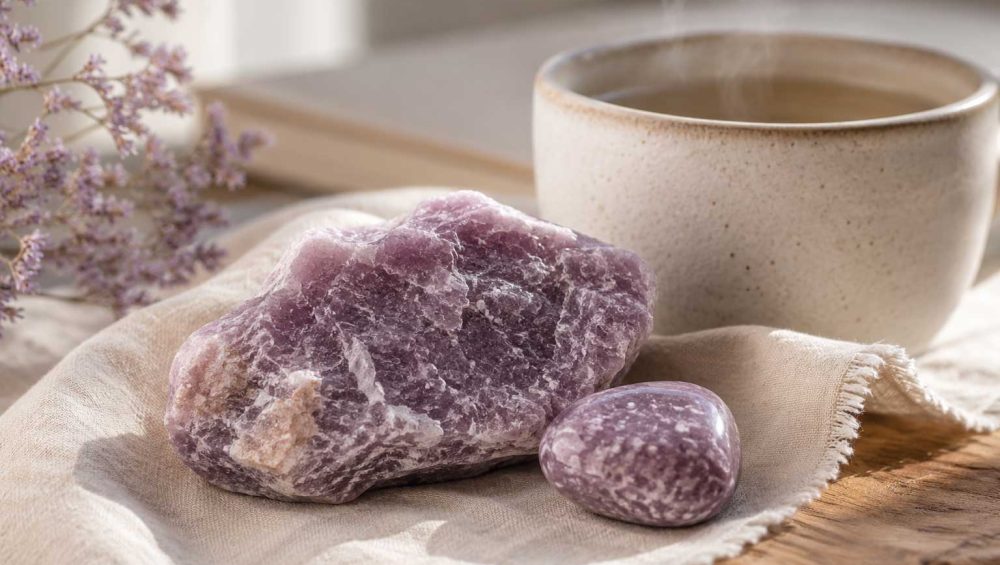
Lepidolite is a naturally occurring lithium-rich mica mineral known for its delicate shades of lavender, lilac, pink, and soft purple. Its shimmering appearance comes from tiny layered flakes that reflect light, giving the stone a calm, almost velvety glow. Because of its softness, raw pieces often have a slightly flaky texture, while polished stones reveal beautiful marbled patterns of purple, white, and gray.
Throughout modern crystal traditions, lepidolite has gradually become one of the gemstones most frequently associated with emotional balance. Unlike stones traditionally connected with strength or protection, lepidolite is often described using gentler language—comfort, acceptance, release, and emotional restoration.
That symbolism may resonate with people experiencing periods of transition. Life rarely changes all at once; instead, stress often accumulates quietly through caregiving, career shifts, grief, uncertainty, or simply carrying responsibilities for too long. During those seasons, people often seek reminders that slowing down is not weakness but part of healing.
This emotional symbolism is what has made lepidolite especially popular among those interested in crystal healing. Rather than viewing crystals as solutions, many people appreciate them as physical reminders of intentions they want to practice every day—whether that is becoming more patient with themselves, allowing difficult emotions to exist without judgment, or creating a little more calm within busy routines.
How Lepidolite Supports Emotional Wellness
Emotional wellness is not about feeling happy all the time.
It is about developing the ability to notice your emotions without becoming completely overwhelmed by them. Some days that means finding joy. Other days it means recognizing sadness, disappointment, frustration, or fear while remembering those emotions do not define who you are.
Many people who are drawn to lepidolite describe it as symbolizing this gentler relationship. Instead of representing dramatic transformation, it represents emotional permission—the permission to pause, to breathe, and to move through difficult seasons without constantly demanding immediate answers.
Within crystal traditions, lepidolite is commonly associated with:
- Emotional balance during stressful seasons
- Creating moments of inner calm
- Supporting emotional reflection
- Encouraging self-compassion
- Letting go of emotional tension
- Moving through periods of transition with greater patience
These symbolic associations naturally fit alongside practices that already support emotional health. Someone might keep lepidolite nearby while writing in a journal, practicing breathing exercises, or spending a few quiet moments reflecting before bed. The crystal itself is not creating those changes. Instead, it becomes part of an intentional environment that encourages slowing down and paying attention to emotional needs.
Many people also find themselves exploring crystals by intention as their emotional needs evolve. While one season may call for calm, another may call for grounding, clarity, confidence, or emotional resilience. Choosing a stone often becomes less about finding the “right” crystal and more about recognizing what feels emotionally supportive in the present moment.
If you are still learning how different stones carry different symbolic themes, gemstone meanings can offer a gentle next step into the wider emotional language of crystals.
Lepidolite and the Nervous System
When life feels overwhelming, the nervous system often notices before the mind does.
You may feel your shoulders remain tense throughout the day. Your thoughts become difficult to organize. Sleep feels lighter. Small frustrations suddenly seem much bigger than they normally would. None of these experiences necessarily mean something is wrong—they may simply reflect that your body has been carrying stress for longer than it realizes.
While lepidolite is often associated with calm within crystal traditions, it is important to distinguish symbolism from physiology.
No research demonstrates that simply holding a crystal changes nervous system function. However, rituals that encourage slowing down—intentional breathing, mindful reflection, creating quiet environments, and allowing yourself moments of stillness—can become meaningful parts of emotional self-care. Many people choose to include lepidolite in those rituals because its symbolism reminds them to approach themselves with greater gentleness.
If supporting your body feels especially important right now, nervous system regulation for emotional wellness may meet you with language that feels practical, body-aware, and emotionally steady. Building emotional steadiness often begins with helping the body recognize moments of safety, rest, and restoration.
Similarly, mindfulness for emotional wellness offers another gentle companion practice. Learning to notice thoughts and emotions without immediately reacting to them can gradually create more space between emotional experiences and our responses.
Rather than asking us to suppress difficult emotions, both mindfulness and lepidolite encourage something much quieter: staying present with ourselves exactly as we are, while trusting that difficult seasons eventually change.
That gentle philosophy may be one of the reasons lepidolite continues to resonate with so many people searching for calm—not because it promises certainty, but because it reminds us that healing often begins with simply slowing down.
Practical Ways to Use Lepidolite in Everyday Life
One of the reasons lepidolite resonates with so many people is that it does not ask for elaborate rituals or perfect routines. Instead, it can become a quiet reminder to slow down and reconnect with yourself during ordinary moments.
People who enjoy working with crystals often choose practices that help them become more intentional rather than more productive. A small pause before beginning the day or a few mindful minutes before bed can become opportunities to check in with your emotions instead of pushing them aside.
Some gentle ways people incorporate lepidolite into daily life include:
- Holding the stone while practicing slow, intentional breathing
- Keeping it nearby during journaling sessions
- Using it as a visual reminder during meditation
- Placing it beside a favorite reading chair or peaceful corner
- Carrying a small polished stone throughout the day as a personal reminder to pause
These practices are meaningful not because the crystal itself changes your emotional state, but because it helps create moments where you intentionally care for yourself.
If you are interested in developing a consistent reflective practice, journaling for emotional wellness offers a gentle way to notice emotional patterns without judgment. Many people also enjoy exploring different lepidolite uses, discovering which practices feel most natural within their own daily routines rather than following rigid rules.
The goal is never perfection. The goal is creating a little more space between life’s demands and your own emotional needs.
Wearing Lepidolite as a Daily Reminder
For some people, jewelry carries meaning beyond its appearance.
A necklace worn every morning, a bracelet touched during stressful meetings, or a favorite ring that quietly accompanies daily life can become symbols of values, memories, or intentions. Rather than serving as decoration alone, jewelry often becomes part of a personal story.
The same is true for many people who choose lepidolite jewelry.
Rather than expecting the stone to change circumstances, they wear it as a reminder of how they want to move through those circumstances—with patience, self-compassion, and emotional steadiness. During challenging conversations or overwhelming days, simply noticing a familiar piece of jewelry can become a cue to pause, breathe, and return to the present moment.
If this feels like your current season, you may find yourself drawn toward lepidolite jewelry, where the stone’s natural beauty can become part of a daily ritual of remembrance, steadiness, and emotional presence.
Whether chosen as a meaningful gift or as a personal keepsake, many people appreciate jewelry because it allows those symbolic reminders to remain close throughout everyday life.
When Lepidolite May Feel Especially Meaningful
No single gemstone fits every emotional experience.
The stones people connect with often reflect what they need most in a particular season of life. Someone navigating uncertainty may naturally seek grounding. Someone rebuilding confidence may feel drawn toward empowerment. Others simply long for a little more quiet inside their own minds.
Lepidolite often resonates during experiences such as:
- Periods of emotional transition
- Feeling mentally overwhelmed by constant responsibilities
- Establishing healthier self-care routines
- Creating more intentional moments of rest
- Building habits that encourage emotional reflection
Many readers first discover lepidolite because they are specifically searching for support during anxious seasons. If that is what brought you here, lepidolite for anxiety may feel like a natural next step, especially if you want to understand why this gemstone has become closely associated with emotional calm within crystal traditions.
Others become curious about its symbolism and eventually explore its broader lepidolite healing properties, its emotional meaning, or its connection to different chakras. Each perspective reinforces the same central idea: crystals are best understood as companions to intentional emotional practices—not replacements for professional care or evidence-based treatment.
Over time, you may even discover that your favorite gemstone changes as your life changes. That flexibility reflects emotional growth rather than inconsistency.
Frequently Asked Questions
Does lepidolite really help with emotional wellness?
Many people associate lepidolite with emotional calm, self-compassion, and peaceful reflection because of longstanding crystal traditions. These symbolic meanings can make the stone feel personally meaningful, especially when incorporated into practices like mindfulness, journaling, or meditation.
However, there is no scientific evidence showing that lepidolite itself directly improves emotional wellness or treats mental health conditions. Instead, many people appreciate it as a tangible reminder of the emotional habits they wish to cultivate, such as slowing down, checking in with themselves, and responding to stress with greater gentleness.
Why is lepidolite associated with calm?
Within crystal traditions, lepidolite has gradually earned a reputation as a calming stone because of its gentle symbolism and soft lavender appearance. Many people naturally associate those colors with relaxation, peace, and emotional restoration.
Its popularity has also grown because it is frequently discussed alongside practices centered on rest, reflection, and emotional balance rather than intensity or transformation.
While these meanings are symbolic rather than scientific, they continue to resonate with people seeking supportive rituals for emotional well-being.
Can I sleep with lepidolite nearby?
Many people enjoy placing lepidolite on a bedside table or incorporating it into an evening wind-down routine. Rather than expecting the crystal to improve sleep directly, they often appreciate it as part of an environment intentionally designed for relaxation.
A calming bedtime ritual might include dim lighting, gentle breathing, reading, journaling, or quiet reflection alongside a meaningful object such as lepidolite.
If restful evenings are your focus, sleeping with lepidolite for anxiety may feel like a gentle next step into nighttime routines and emotional calm.
Is lepidolite a substitute for therapy or mental health care?
No. Crystals should never be viewed as medical treatments or replacements for qualified mental health care. If you are experiencing persistent anxiety, depression, trauma, or emotional distress that interferes with daily life, reaching out to a licensed healthcare professional is an important step.
Many people choose to combine meaningful personal rituals with evidence-based care, finding that symbolic practices help reinforce emotional habits alongside professional support.
What makes lepidolite different from other calming gemstones?
Many gemstones are associated with calm, but each carries its own symbolic focus within crystal traditions.
Lepidolite is often connected with emotional softness, acceptance, and moving gently through change. In contrast, stones like amethyst are commonly associated with reflection and spiritual awareness, while howlite is often linked to patience and quieting an overactive mind.
There is not a single best calming crystal. Instead, many people choose the stone whose symbolism resonates most with what they are experiencing right now. You may even find yourself drawn to different gemstones as different seasons of life unfold.
How do I choose the right lepidolite stone?
There is not a perfect piece of lepidolite.
Some people naturally prefer raw stones because they feel organic and untouched, while others enjoy polished pieces that fit comfortably in a pocket or hand. Others choose jewelry that allows the stone to become part of their everyday routine.
Rather than searching for the “most powerful” crystal, many people simply notice which piece they feel connected to. That emotional connection often becomes more meaningful than size, shape, or appearance.
The most important part is not finding the perfect crystal—it is creating intentional moments to reconnect with yourself.
Can lepidolite be combined with other crystals?
Yes. Many people enjoy combining crystals based on symbolic intention.
For example, someone may pair lepidolite with grounding stones during stressful seasons or combine it with stones associated with clarity, compassion, or mindfulness. There are no universal rules for these combinations, and personal meaning often matters more than following a specific formula.
Choosing crystals that reflect your current emotional needs can become a thoughtful way of creating rituals that evolve alongside your own growth.
A Gentle Reminder About Emotional Wellness
Emotional wellness is not measured by how rarely you struggle.
It is reflected in how gently you learn to respond when life inevitably becomes difficult.
There will always be seasons that feel uncertain. Days when your emotions arrive faster than your thoughts. Moments when rest feels unfamiliar because you have spent so long taking care of everyone else or simply trying to keep moving forward.
Lepidolite has become meaningful to many people because it symbolizes something surprisingly simple: permission to slow down.
Not permission to stop feeling.
Not permission to avoid difficult experiences.
But permission to acknowledge your emotions without believing you have to solve everything immediately.
Whether that reminder comes through a quiet morning meditation, a few thoughtful journal pages, a favorite piece of jewelry, or simply noticing a beautiful stone resting nearby, these small rituals can gradually become invitations to return to yourself with greater kindness.
If this feels like the beginning of your journey, you may enjoy continuing to explore the world of gemstones for emotional wellness, where different stones reflect different emotional seasons and intentions. You might also find yourself drawn toward crystals by intention, allowing your next discovery to emerge naturally from what your heart needs today.
Above all, remember that emotional wellness is rarely built through dramatic moments of transformation. More often, it grows through small, consistent acts of self-awareness, compassion, and presence.
Perhaps that is why lepidolite continues to resonate with so many people.
Not because it promises to change who you are.
But because it quietly reminds you that caring for yourself is always a journey worth returning to, one gentle moment at a time.

Where softness, self-awareness, and emotional healing are allowed to coexist. Through reflective writing, grounding rituals, and intentional beauty, Sparrow Trades offers gentle support for sensitive souls learning to reconnect with themselves.