

There are moments when life feels like it is happening faster than you can keep up with. The day moves forward, conversations come and go, responsibilities pile up, and somehow you arrive at evening with the quiet feeling that you were present for all of it and none of it at the same time.
You may have answered the messages, completed the errands, shown up for the people who needed you, and still felt strangely far away from yourself. Your body was there. Your mind was already three steps ahead. Your emotions were somewhere underneath the surface, waiting for a moment spacious enough to be heard.
Journaling for mindfulness offers that moment. It is not about writing perfectly, sounding wise, or turning your inner life into something polished. It is the simple practice of slowing down with a page in front of you and asking, gently, “What is actually happening inside me right now?”
For many people, mindfulness feels difficult when it stays abstract. Being told to “stay present” can feel frustrating when your thoughts are racing, your nervous system is braced, or your emotions are asking for more care than silence alone can provide. Writing gives presence somewhere to land. It lets you notice your thoughts without becoming lost inside them. It lets feelings become visible without demanding that they explain themselves immediately.
This is why mindful journaling can become such a steady part of emotional wellness foundations. It gives you a place to listen inward without pressure, to witness your experience without turning it into a problem, and to build a more compassionate relationship with your inner world.
Mindfulness is not about escaping the moment. It is about meeting the moment with enough gentleness to stay.
You do not need a perfect routine to begin. You do not need a beautiful notebook, a quiet life, or a clear mind. You only need a few honest minutes and the willingness to notice what is already here.
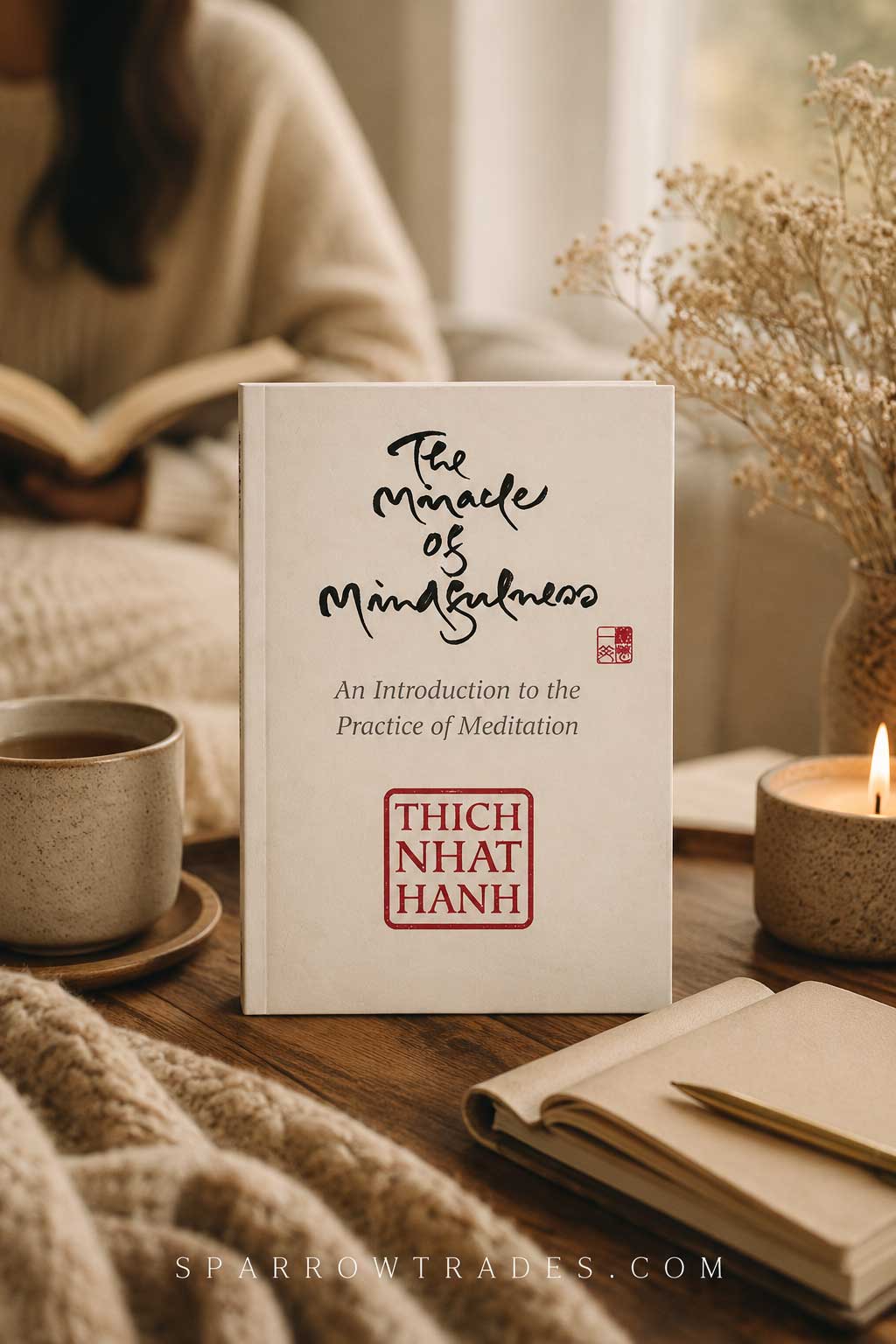
What Journaling for Mindfulness Really Means
Journaling for mindfulness is the practice of using writing to become more aware of your present-moment experience. Instead of using the page only to record what happened, you use it to notice what is happening now: the thoughts moving through your mind, the emotions living in your body, the sensations you usually rush past, and the subtle truths that often get buried under daily noise.
This kind of journaling is not the same as venting, although venting may sometimes be part of it. It is not the same as analyzing yourself, although insight may naturally appear. Mindful journaling is quieter than that. It asks you to observe before you interpret. To describe before you judge. To notice before you decide what everything means.
That is why it pairs so naturally with mindfulness for beginners. If sitting still with your thoughts feels overwhelming, writing can make awareness feel more grounded and approachable. The page becomes a soft container. You are not trying to stop your mind. You are learning how to sit beside it.
You might begin with one sentence: “Right now, I notice…” From there, you can name whatever is present. Tightness in your chest. Restlessness in your hands. A memory from earlier in the day. A feeling you do not fully understand yet. Nothing has to be dramatic to matter. Mindfulness often begins with small noticing.
Over time, this practice can deepen self-awareness in emotional healing because the journal becomes a mirror you return to again and again. Not a mirror that criticizes. A mirror that reflects. It helps you see the difference between what you are feeling, what you are fearing, what you are assuming, and what is actually happening in the moment.
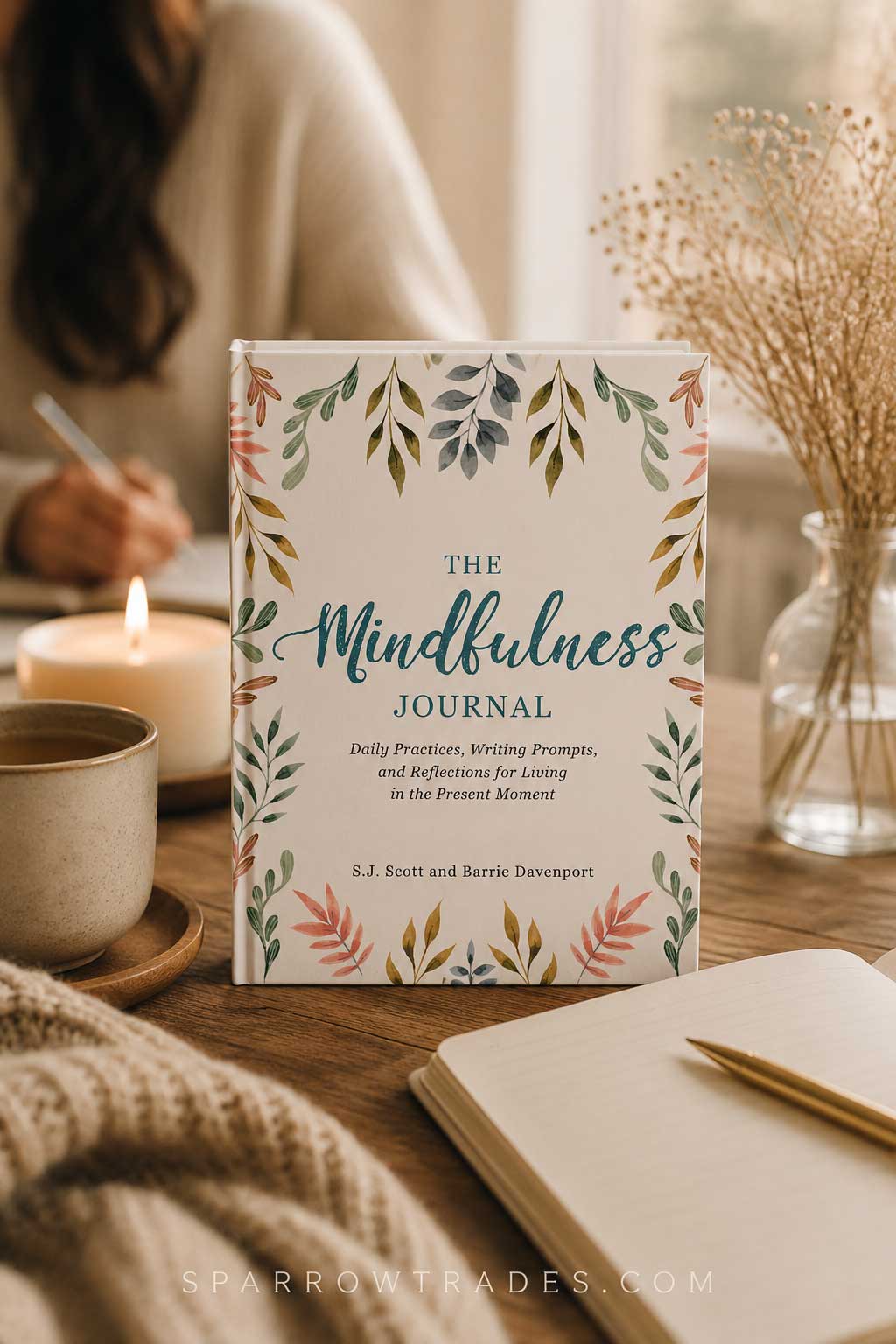
Why Mindful Journaling Can Feel So Emotionally Grounding
Many people move through life carrying emotions they have not had time to feel. Stress gets tucked behind productivity. Sadness hides behind responsibility. Anger becomes exhaustion. Anxiety disguises itself as planning. By the time there is finally a quiet moment, the body may feel full of sensations that are hard to name.
Creating space to notice those emotions without immediately judging them is one reason so many people turn to journaling for emotional wellness. The practice encourages a gentler relationship with your inner world and helps make emotional awareness part of everyday life.
Mindfulness journaling gives those sensations language without forcing them into a neat conclusion. You are not writing to fix yourself. You are writing to stay with yourself. That distinction matters, especially if you have spent years believing your emotions were too much, inconvenient, irrational, or unsafe to express.
For readers rebuilding inner confidence, this practice often supports learning to trust your emotions again. The more you make space for your emotional experience without dismissing it, the more your inner world begins to feel less like an enemy and more like a source of information.
Sometimes the page helps you notice that you are not actually angry; you are hurt. Sometimes it reveals that your anxiety is trying to protect you from uncertainty. Sometimes it shows you that numbness is not emptiness, but a sign that your nervous system has been holding too much for too long.
In this way, mindful journaling can work alongside an emotional self-trust tracker because both practices reinforce a simple truth: your inner experience deserves attention before it becomes overwhelming. You do not have to wait until you are breaking down to check in with yourself.
The grounding comes from being witnessed, even if the only witness is you. Each entry says, “I am here. I am listening. I do not have to abandon myself to get through this moment.”
How to Begin a Mindfulness Journaling Practice
Starting a mindfulness journaling practice can be beautifully simple. Choose a time when you are least likely to feel rushed, even if it is only five minutes. Sit somewhere that allows your body to soften a little. Before writing, pause long enough to notice your breath, your posture, and the space around you.
Some people find it helpful to begin with conscious breathing for nervous system regulation. A few slow breaths can signal to the body that this is not another task to perform. It is a moment of return.
Then write from what is present. You might begin with, “In this moment, I notice…” or “My body feels…” or “The emotion closest to the surface is…” Keep the language honest and plain. You are not trying to impress anyone. You are trying to listen.
If intention helps you feel steady, you might begin with gentle intention-setting practices. A simple intention such as “I will meet myself with patience” can shift the tone of the entire practice. It reminds you that journaling is not a place for self-attack. It is a place for awareness.
Some days you may write one paragraph. Other days you may write several pages. Both are enough. The value of the practice is not measured by length. It is measured by presence.
If emotions feel hard to access, bring awareness into the body. A beginner's guide to somatic check-ins can help you notice sensations before trying to name feelings. For many people, the body speaks before the mind has words.
The practice becomes easier when you stop asking your journal to produce answers and let it become a place where your experience can breathe.
Mindfulness Journal Prompts for Present-Moment Awareness
Prompts can be helpful when the blank page feels too open. The best mindfulness prompts are not designed to pull you into overthinking. They invite you back into direct experience.
You might ask yourself: What am I noticing right now? What emotion is here, even quietly? What does my body want me to know? What am I rushing past today? What feels unfinished inside me? What small moment of peace did I almost miss?
These questions are gentle, but they can reveal a lot. They help you move beneath the surface of the day and notice the emotional weather you have been living in. Used consistently, they can become part of daily emotional check-in prompts, especially when you want to create a steady rhythm of self-connection.
As you write, try not to force yourself toward insight too quickly. Let awareness unfold in layers. You may begin by writing, “I feel tired,” and then realize the tiredness has grief inside it. You may begin with, “I feel irritated,” and discover that your boundaries have been stretched too thin.
This is where recognizing emotional patterns through journaling becomes meaningful. Patterns are not failures. They are signals. They show you what your nervous system has learned, what your heart keeps returning to, and where your life may be asking for more care.
Sometimes prompts also reveal what activates you. If you notice that certain situations repeatedly leave you tense, ashamed, frozen, or reactive, journaling to identify emotional triggers can help you understand those moments with compassion instead of blame.
Mindfulness does not ask you to judge what you find. It asks you to notice it clearly enough that you no longer have to be controlled by what remains unconscious.
Using Journaling for Mindfulness During Stress or Anxiety
When stress rises, presence often becomes harder to access. The mind starts scanning for danger, the body tightens, and thoughts may move too quickly to sort through. In those moments, journaling for mindfulness can become less about reflection and more about anchoring.
You might begin by naming five things you see, four sensations you feel, three sounds you hear, two emotions that are present, and one thing that feels supportive. This brings awareness out of the spiral and back into the room. The goal is not to make anxiety disappear. The goal is to remind your body that there is a here and now.
For moments when anxiety feels sharp or sudden, grounding journaling during anxiety spikes can offer a softer way to stay connected without forcing yourself into deep emotional processing too soon.
There are also seasons when stress is not a single event but a background hum. You may feel tired before the day begins. You may react more quickly than usual. You may feel emotionally full, even when nothing obvious has happened. During those times, journaling for nervous system safety can help shift your attention from “What is wrong with me?” to “What does my system need in order to feel safer?”
This is especially supportive when paired with mindfulness for anxiety. Anxiety often pulls awareness into imagined futures. Journaling gently returns attention to what is actually present: this breath, this body, this page, this moment.
Mindful writing can also support emotional regulation journaling routines because regulation begins with recognition. You cannot soothe what you are shaming. You cannot tend to what you refuse to notice. The page gives you a way to notice without immediately becoming overwhelmed.
Letting the Practice Grow With You
At first, journaling for mindfulness may feel like a small pause in the day. Over time, it can become something deeper: a relationship with your own awareness.
You may start to notice the difference between a thought and a truth. You may recognize when an emotion belongs to the present and when it is echoing something older. You may become more aware of the moments when you abandon yourself to keep the peace, push through discomfort, or dismiss your own needs too quickly.
This is where mindful journaling naturally overlaps with journaling for emotional processing. Once awareness becomes safer, deeper feelings may begin to surface. The page can help you move through them at a humane pace, without demanding instant clarity or closure.
Some days, your practice may be peaceful. Other days, it may feel messy, emotional, or unfinished. That does not mean you are doing it wrong. It means you are making contact with real inner material.
If your writing reveals heaviness, numbness, or emotional fatigue, you might need grounding before reflection. Practices like grounding after emotional overload can help you come back into the body when the mind has gone too far into analysis.
Let your journaling practice be flexible enough to meet different versions of you. The calm version. The anxious version. The grieving version. The hopeful version. The uncertain version who does not know what to write but shows up anyway.
That willingness to return is the practice. Not perfect presence. Not perfect language. Just return.
FAQ: Journaling for Mindfulness
Can journaling be considered a mindfulness practice?
Yes. Journaling can be a mindfulness practice when it helps you observe your present-moment experience with awareness instead of judgment. Rather than only recording what happened, mindful journaling invites you to notice your thoughts, emotions, body sensations, and surroundings as they are right now.
How long should I journal for mindfulness each day?
There is no required length. Five quiet minutes can be enough if you are present with the practice. Some days you may only write a few sentences, while other days you may need more space. Consistency and honesty matter more than time.
What should I write if my mind feels blank?
Start with simple observation. Write what you see, hear, feel, or notice in your body. You might begin with one sentence such as, “Right now, I notice…” Blankness can also be something to observe gently, without forcing yourself to feel more than you do.
Is journaling for mindfulness helpful for anxiety?
Journaling for mindfulness can be supportive during anxiety because it helps create space between anxious thoughts and your awareness of them. It may not remove anxiety instantly, but it can help you slow down, name what is happening, and reconnect with the present moment.
Can mindfulness journaling improve emotional awareness?
Yes. Regular mindfulness journaling can help you notice emotional patterns, recurring triggers, and subtle feelings that may be easy to overlook during daily life. Over time, this can support greater emotional clarity and a stronger sense of self-trust.
What if difficult emotions come up while I journal?
If difficult emotions arise, pause and give yourself permission to slow down. You do not have to push through an entry that feels overwhelming. Take a breath, look around the room, feel your body supported, and return only if it feels safe enough.
Conclusion
Journaling for mindfulness is not about becoming perfectly calm. It is not about having beautiful thoughts, profound realizations, or a peaceful nervous system every time you open the page. It is about learning how to be with yourself more honestly.
Some days, mindfulness may feel like noticing the warmth of your tea or the sound of rain against the window. Other days, it may mean admitting that you are hurt, tired, scared, or unsure. Both are forms of presence. Both are worthy of care.
The page gives you a place to slow down in a world that often rewards rushing. It gives your emotions a place to exist without immediately needing to justify themselves. It gives your thoughts somewhere to land so they do not have to keep circling inside you without rest.
Most importantly, it helps you practice returning. Returning to your breath. Returning to your body. Returning to what is true in this moment. Returning to the quiet inner voice that may have been waiting a long time for your attention.
You do not have to know exactly what you feel before you begin. You do not have to understand yourself completely. You only have to create enough space to listen.
And sometimes, that small act of listening is where healing begins.

Where softness, self-awareness, and emotional healing are allowed to coexist. Through reflective writing, grounding rituals, and intentional beauty, Sparrow Trades offers gentle support for sensitive souls learning to reconnect with themselves.