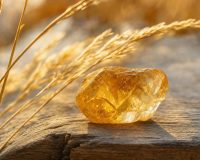
There is a quiet kind of exhaustion that does not always look dramatic from the outside. It can look like staying polite when you want to say no. It can look like replaying conversations long after they end. It can look like carrying tension in your shoulders, clenching your jaw at night, or feeling strangely overstimulated by ordinary life. Many people find their way to stones like howlite and turquoise in that kind of season, not because they are searching for something trendy, but because some part of them wants softness, steadiness, and relief.
That is part of what makes this comparison meaningful. Howlite and turquoise are often grouped together because they can look similar at a glance, especially when dyed howlite is sold in blue tones. But emotionally, they do not meet you in the same place. One tends to feel like exhale. The other tends to feel like truth. One quiets the noise. The other helps your voice come back. And if you are moving through stress, grief, burnout, overthinking, or emotional disconnection, that difference matters more than appearances alone.
In the broader world of crystal healing, stones are often chosen for the way they support a felt experience, not just the way they look in a tray or bracelet. Sometimes what draws you in is not color. It is recognition. Your body notices a certain kind of support before your mind knows how to explain it. That is why people who need calm often gravitate toward howlite, while people who need clarity, courage, or expression often feel pulled toward turquoise.
This article is here to help you understand that difference with care. Not in a rushed, hyper-technical way. Not in a way that turns emotional experience into a checklist. But in a way that respects what people are often actually carrying when they search for stones like these. If your nervous system feels frayed, if your emotions feel close to the surface, or if you are trying to reconnect with your own voice after a season of self-silencing, howlite and turquoise can represent two very different forms of support.
Within the landscape of gemstone meanings, these stones belong to different emotional moments. Howlite tends to belong to the moment when you need things to soften. Turquoise tends to belong to the moment when you are ready to be honest. Neither is better. Neither is more evolved. They simply answer different needs. And sometimes, the wisest choice is not the stone that looks most beautiful online. It is the one that helps your inner world feel a little safer to live inside.
Howlite and Turquoise: What Is the Real Difference?
The most immediate difference between howlite and turquoise is visual, but even that can be misleading. Natural howlite is usually white or pale gray with dark, web-like veining. Natural turquoise is often blue, blue-green, or greenish, with its own matrix patterns and earthy character. Because howlite is porous and easy to dye, it is frequently colored blue and sold in a way that resembles turquoise. That has created years of confusion for shoppers, collectors, and emotionally intuitive buyers who know they are drawn to something but are not always sure what they are holding.
Yet the deeper difference is not just in color or market value. It is in emotional direction. Howlite turns attention inward. It is associated with rest, decompression, patience, and mental quiet. When a person feels internally loud, howlite often feels like a soft place to land. Turquoise moves differently. It has a more outward current. It is often connected with expression, truth, communication, and the courage to let your inner world be seen.
This is why it helps to think of howlite as a stone that supports regulation, while turquoise supports articulation. Howlite does not ask you to explain yourself. It helps you settle enough to hear yourself. Turquoise does not simply make you bolder for the sake of boldness. It supports clarity when your truth has been buried under people-pleasing, conflict avoidance, or fear of being misunderstood. In that sense, howlite and turquoise are less like competitors and more like two different companions for two different emotional thresholds.
If you are building a more intentional relationship with stones, it can help to start with the foundational question of howlite as its own conceptual hub rather than treating it only as a visual substitute for something else. The same is true for turquoise, because turquoise has its own history, symbolism, and emotional role. When each stone is allowed to be understood on its own terms, the comparison becomes clearer and more respectful. You are no longer asking which one looks more valuable. You are asking what kind of support you actually need.
The Emotional Meaning of Howlite
Howlite is often described as calming, but that word can feel too small for what people are really reaching for when they choose it. Calm is not always about feeling peaceful in a polished, aesthetic sense. Sometimes calm means not snapping after a long day. Sometimes it means not spiraling after a difficult text. Sometimes it means being able to sit in your own thoughts without feeling trapped inside them. That is where the emotional world of howlite meaning becomes especially relevant.
Howlite is often associated with patience, quiet awareness, and emotional decompression. Its energy is less about activation and more about reducing intensity. For people who live with racing thoughts, overstimulation, or chronic emotional vigilance, that can feel deeply supportive. It does not demand that you transform overnight. It simply offers steadiness. There is something trauma-aware in that pace. It does not rush the body into insight. It lets the body soften first.
Many people are drawn to howlite during seasons when they feel mentally crowded. Maybe sleep has been thin. Maybe every small interaction feels heavier than it should. Maybe there is a constant undertone of irritability that is really exhaustion in disguise. In those moments, howlite can feel less like a symbol and more like permission. Permission to pause. Permission to respond later. Permission to not solve everything while dysregulated.
It also carries a meaningful connection to howlite chakras, especially when people are exploring gentler forms of spiritual awareness that do not abandon the body in the process. The emotional intelligence of howlite is that it slows you down without disconnecting you from yourself. And for those who want a softer entry point into practice, howlite uses can extend that support into daily rituals, quiet evenings, and intentional moments of rest.
The Emotional Meaning of Turquoise
If howlite holds the energy of softening, turquoise holds the energy of honest emergence. It is often associated with protection, truth, and communication, but those words only begin to explain its emotional pull. Turquoise often resonates with people who have spent too long editing themselves. People who know what they feel but hesitate to say it. People whose voice tightened over time because speaking honestly once felt unsafe, inconvenient, or likely to be dismissed.
Within the framework of chakras and energy, turquoise is frequently connected to the throat center. But in lived experience, that connection is not about abstract symbolism alone. It is about what happens when you finally stop swallowing your own needs. It is about letting your words belong to you again. It is about finding a tone that is true, steady, and grounded rather than reactive or apologetic.
Turquoise can feel supportive in seasons of relational repair, boundary setting, and emotional honesty. Not because it makes difficult conversations easy, but because it can symbolize the kind of clarity that many people are trying to rebuild from the inside out. If howlite says, “Slow down enough to hear your feelings,” turquoise says, “Trust yourself enough to speak them.” That is why it often sits naturally alongside throat chakra self-expression rituals and other practices that prioritize safe expression over forced vulnerability.
For readers who are drawn to truth-centered stones more broadly, turquoise often belongs in the same emotional family as lapis for emotional clarity and truth or blue lace agate for throat chakra. Not because all of these stones do the exact same thing, but because they meet the tender place where silence, fear, and self-expression overlap. Turquoise, in that context, becomes less about image and more about inner permission.
Howlite and Turquoise in Daily Life
The clearest way to understand the difference between howlite and turquoise is to imagine when you would reach for each one in real life. Howlite often belongs to the quieter edges of the day. Nighttime. Recovery time. The hour after overstimulation. The part of the morning when your body feels awake before your spirit does. It fits naturally into crystals for meditation because it supports stillness, reflection, and a less noisy relationship with your thoughts.
Turquoise, by contrast, often shows up before movement. Before a hard conversation. Before travel. Before social interaction. Before the kind of moment where you want to feel connected to yourself rather than scattered by everyone else’s expectations. It can be especially meaningful for people working with intention-based practices, which is why it sits comfortably within crystals by intention tied to truth, protection, communication, and emotional clarity.
Sometimes these stones are not best understood separately, but sequentially. Howlite first. Turquoise second. First the settling, then the speaking. First the inner quiet, then the outer truth. That sequence can be emotionally intelligent for people whose nervous systems need safety before expression. You do not need to “find your voice” while still flooded. You may need to regulate first, then articulate. That is one reason the broader chakra crystals guide can be so useful when people are learning how different stones support different stages of inner work.
Jewelry can also change the way these stones are experienced. Wearing a stone throughout the day creates a different relationship than keeping it near a bed or on a meditation table. For readers drawn to wearable support, howlite jewelry meaning can deepen the emotional symbolism of carrying calm on the body, while gemstone jewelry offers a broader category context for choosing pieces that feel aligned rather than merely decorative.
Choosing the Stone That Matches Your Season
One of the gentlest mistakes people make with emotional tools is assuming they should choose the stone that sounds most impressive rather than the one that actually meets them where they are. If you are dysregulated, exhausted, touchy, or mentally overfull, a communication stone may not be the first support you need. You may need quiet before clarity. Rest before revelation. In that season, howlite can feel more honest.
If, on the other hand, you already know what you feel but keep abandoning your own voice, turquoise may feel like the more aligned companion. Maybe you are learning to stop over-explaining. Maybe you are trying to name your limits without guilt. Maybe you are rebuilding trust in your own perspective after a long period of self-doubt. Turquoise can feel especially resonant then, because it speaks to expression that is rooted in self-respect rather than performance.
There is no failure in needing howlite first. There is no superiority in reaching for turquoise. Emotional support is seasonal. What helps during one chapter may not be what helps during another. That is why a fuller crystal healing guide can be valuable, not as a rulebook, but as a way of seeing that stones support different thresholds of experience. The most meaningful choice is not always the most spiritual-looking one. It is the one that helps your body unclench and your truth feel a little less far away.
FAQ About Howlite and Turquoise
Is howlite the same as turquoise?
No, howlite and turquoise are different stones. Howlite is naturally white or pale gray with dark veining, while turquoise is usually blue, blue-green, or greenish. They can look similar when howlite is dyed blue, but their composition, history, and emotional associations are different. Howlite is more closely tied to calm and decompression, while turquoise is more closely tied to truth, communication, and expressive clarity.
Why is howlite often dyed to look like turquoise?
Howlite is porous and easy to dye, which makes it a common stand-in for turquoise in the marketplace. Because turquoise is often rarer and more expensive, dyed howlite is frequently sold in blue tones that resemble it. This is part of why visual comparison alone can be misleading. Understanding the emotional and conceptual role of each stone can help you choose more intentionally, rather than relying only on color.
Which stone is better for anxiety and overstimulation?
Howlite is usually the better fit for anxiety, overstimulation, and mental restlessness because its energy is associated with softening intensity and supporting calm. It often resonates with people who feel emotionally flooded, mentally noisy, or unable to slow down. Turquoise can still be supportive during anxious seasons, especially if anxiety is linked to self-silencing, but howlite is generally the gentler choice for immediate emotional settling.
Can you use howlite and turquoise together?
Yes, and many people find that they complement each other beautifully. Howlite can support inner quiet and regulation, while turquoise can support outward truth and communication. Used together, they can create a more balanced emotional rhythm: first helping you settle into yourself, then helping you express yourself from a more grounded place. This pairing can be especially meaningful during seasons of healing, boundary work, or rebuilding self-trust.
How can I tell real turquoise from dyed howlite?
Real turquoise often has more variation in tone and depth, while dyed howlite may look more uniform or bright in color. Turquoise is also generally denser and carries a different mineral identity. Still, visual differences are not always obvious in photos or polished pieces. When possible, it helps to buy from trusted sources and to understand what each stone is meant to offer, so your decision is guided by both authenticity and emotional fit.
What does turquoise represent emotionally?
Turquoise is often associated with honest expression, communication, self-trust, and protective clarity. Emotionally, it can feel supportive during times when you are trying to say what you mean, honor what you feel, or stop abandoning your own perspective in relationships. It is less about being louder and more about speaking from a place that feels aligned, steady, and true.
Conclusion
Choosing between howlite and turquoise is rarely just a matter of preference. More often, it is a reflection of what your inner world needs most right now. If life feels too loud, too fast, or too emotionally crowded, howlite can feel like a quieter place to rest. If your truth has been waiting behind fear, politeness, or old self-abandonment, turquoise can feel like a return to your own voice.
Both stones matter because both needs matter. Regulation matters. Expression matters. Softness matters. Truth matters. The most healing choice is not always the most expensive stone or the most recognizable one. It is the one that helps you feel more present in your own life. And sometimes that begins with the simple honesty of knowing whether you need to settle first or speak first.
When that choice is made with care, stones stop feeling like decorative objects and start feeling like companions for a real emotional season. That is often where crystal healing practices become most meaningful: not as performance, not as spiritual pressure, but as small, grounding ways of honoring what your body and heart have been trying to say all along.

Where softness, self-awareness, and emotional healing are allowed to coexist. Through reflective writing, grounding rituals, and intentional beauty, Sparrow Trades offers gentle support for sensitive souls learning to reconnect with themselves.