
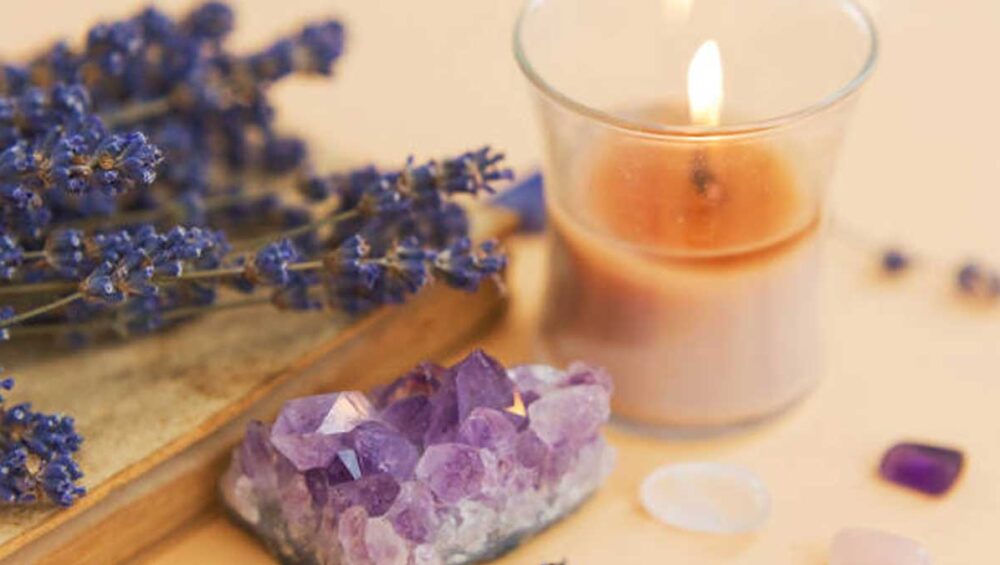
Introduction (grounding first, then calm)
There’s a specific kind of exhaustion that doesn’t come from doing too much — it comes from holding yourself together all day long.
You might recognize it as that buzzing feeling under your skin when your system won’t fully settle. Or the way your mind keeps scanning for what might go wrong next, even when nothing is happening. Or the moment you realize you’ve been “fine” for hours… but your shoulders have been clenched the entire time.
When you live with anxiety, emotional sensitivity, trauma history, or chronic overstimulation, calm isn’t always something you can simply think your way into. Sometimes your body doesn’t trust calm. Sometimes calm feels unsafe because your system learned that relaxing is when something unexpected happens. Sometimes you’re not looking for “peace” — you’re looking for a feeling of stability, like you can finally come back into your own body without bracing for impact.
That’s where grounding can become meaningful — not as a cure, not as a shortcut, and not as a replacement for real support — but as a gentle anchor. Something physical you can hold when you feel like you’re floating away. Something that reminds you: you are here. you are real. you can come back.
Crystals don’t force your healing. They don’t demand performance. They don’t tell you to be positive, or productive, or spiritually “above it.” They just exist — quietly, steadily — and that alone can be deeply regulating when your body is tired of being told to “handle it.”
And if you’ve ever felt embarrassed for needing comfort — for needing something small to get you through the day — I want to say this clearly:
Needing support is not weakness.
Needing steadiness is not “too much.”
Needing calm is not something you should have to earn.
Crystals are especially helpful for people who respond well to sensory cues. The weight in your palm. The coolness against your skin. The routine of reaching for something familiar when you’re overwhelmed. The reminder that you can create safety in tiny ways, even if life feels too big.
In this guide, we’re focusing on grounding and calming crystals that support emotional steadiness, nervous-system gentleness, and a sense of inner “I can breathe again.” We’ll also talk about how to choose the right stones for your specific kind of overwhelm — because not all anxiety feels the same, and not all calming energy lands the same in every body.
No pressure. No perfection.
Just a grounded, soothing place to start.
What grounding and calming crystals actually help with (and what they don’t)
Grounding and calming crystals can support you in a way that feels surprisingly practical — especially when you use them as part of your real-life coping toolkit, not as a spiritual performance.
At their best, these stones can help with things like:
1) Feeling safer in your body
When you’ve lived through stress, trauma, emotional invalidation, or long-term anxiety, your body may feel like a place you don’t fully want to live in. Grounding crystals create a steady sensory cue that says, “You can return here.” When the bigger picture feels hard to access, emotional wellness foundations can start with small, body-level truths.
2) Softening overwhelm and emotional flooding
Some crystals help you feel less “flooded” when emotions spike fast. Not by shutting your feelings down — but by reducing the internal chaos so you can actually respond instead of react. If your body tends to escalate quickly, nervous system regulation techniques can offer a steadier baseline to pair with crystal support.
3) Interrupting spirals
If you have a looping mind that won’t let go, calming stones can act like a pause button. Not because they magically stop thoughts, but because they help you shift attention into something tangible. When that loop is anxiety-driven, mindfulness for anxiety can feel like a gentle hand on your shoulder.
4) Supporting boundary energy
Sometimes anxiety isn’t random — it’s your system working overtime because you’re absorbing too much from other people, environments, or expectations. Grounding stones can help you feel more “sealed” in your own space, especially when you’re rebuilding emotional grounding that doesn’t depend on anyone else cooperating.
5) Creating ritual consistency
Daily repetition is incredibly regulating. It tells your system: “This is familiar. This is safe. We’ve done this before.” Even small routines — like 5-minute grounding rituals — can make crystal support feel more like care and less like effort.
What crystals don’t do
To keep this trauma-informed and honest, it matters to say what crystals can’t do:
- They won’t “erase” trauma.
- They won’t replace therapy, medication, community support, or safety planning.
- They won’t fix a harmful environment.
- They won’t make you invincible.
What they can do is help you come back to yourself in small, meaningful ways — especially when you’re trying to build stability from the inside out.
Healing often looks like tiny returns:
Back to your breath.
Back to your body.
Back to the present moment.
Back to your own inner voice.
The best grounding and calming crystals (and why they feel so steady)
Not every crystal that’s “popular for anxiety” will feel supportive for you. Some stones are calming in a way that feels spacious and floaty — and if you’re already dissociating or feeling ungrounded, that can actually make things worse.
So this list is focused on crystals that support both grounding and calm: steadying your base and easing your nervous system.
Black tourmaline (protection + rooted calm)
Black tourmaline is one of the strongest choices for grounding because it feels like a firm “no” to chaos. If you want the deeper layer — the meaning, the feel of it, the energetic “why” — black tourmaline is a powerful companion.
It’s especially helpful when:
- you feel energetically porous
- your anxiety spikes in public places
- you absorb other people’s moods fast
- you need a sense of inner protection
Black tourmaline doesn’t feel light and airy — it feels solid. Like standing with your feet planted. Like emotional insulation. Like you can finally stop scanning every room for danger.
Hematite (heavy, stabilizing, “back in my body” energy)
If your anxiety feels like you’re floating, spiraling, or mentally “gone,” hematite can be incredibly supportive.
This is a classic stone for:
- feeling scattered
- feeling ungrounded after arguments or stress
- overthinking that won’t shut off
- “I can’t settle” restlessness
Hematite has a weight to it that can feel instantly regulating. It often works well as a palm stone because you can physically feel its presence. That matters when your system needs proof that you’re safe right now.
Smoky quartz (gentle emotional detox + steady clarity)
Smoky quartz is grounding, but softer than black tourmaline. It’s the kind of stone that helps you exhale.
It supports:
- releasing emotional tension
- calming after overstimulation
- returning to neutral after heavy conversations
- processing stress without drowning in it
Smoky quartz is a beautiful option if you want grounding that doesn’t feel intense or “armored.” It’s steady, but compassionate.
Lepidolite (nervous-system soothing + emotional steadiness)
Lepidolite is often called one of the best crystals for anxiety, and for good reason: it’s calming in a way that feels like emotional permission.
It’s especially supportive for:
- anxious spirals
- sleep anxiety
- emotional sensitivity
- feeling like you’re always “on”
Lepidolite energy often feels like: “You don’t have to brace. You can soften.”
It’s not forceful. It’s quiet relief.
Amethyst (calm mind + soft inner safety)
Amethyst supports:
- mental tension
- worry loops
- emotional overwhelm that turns into insomnia
- slowing down internal noise
It’s a great crystal to pair with grounding stones. Think: black tourmaline for stability, amethyst for calm. One holds your base, the other cools the storm.
Obsidian (deep grounding + truth-telling energy)
Obsidian can be powerful — and not always “soft.” It’s deeply grounding, but it may bring up emotional truth quickly.
It can help with:
- clearing out emotional clutter
- cutting cords with draining dynamics
- recognizing when you’re abandoning yourself
If you’re in a tender season, obsidian might feel too intense. If you’re in a rebuilding season and want strength, it can feel like coming home to your instincts.
How to choose the right stone for your overwhelm
Instead of asking “what’s the best crystal,” ask:
- Do I need softer calm or stronger grounding?
- Am I anxious… or overstimulated?
- Am I overwhelmed… or dissociating?
- Do I need comfort… or protection?
You’re not guessing. You’re listening.
If you want a broader starting point for selecting stones, crystals for grounding can help you match your needs to what actually feels steady in your body. And if you’re choosing between classic grounding staples, best grounding gemstones gives you that clear, practical comparison without the pressure.
How to use grounding and calming crystals when you’re anxious (without forcing a ritual)
If you’ve ever tried to build calming routines and then felt like you “failed” at them, you’re not alone.
A trauma-informed approach to grounding is not rigid. It doesn’t demand that you meditate perfectly or do a 20-step practice every time your emotions spike. In fact, for many people, too much structure during anxiety becomes another form of pressure.
So instead of treating crystals like homework, use them like support.
1) The “reach for something real” practice (30 seconds)
When you feel yourself spiraling, do this:
- pick up your stone
- feel its weight
- name three physical sensations (cool, smooth, heavy, textured)
- take one slow exhale
That’s it.
You’re not trying to become a different person in 30 seconds. You’re reminding your system that you have a body, and you are in the present. If breath is accessible, grounding with air and breath can make that exhale feel like a return instead of a performance.
2) Pocket stone support (low effort, high impact)
One of the most regulating uses of crystals is simply carrying one.
Especially if:
- you feel anxious in public
- you freeze during conversations
- you feel panicky at stores or appointments
A pocket stone gives you a private anchor. You can hold it in your hand without anyone noticing. That matters if your system feels exposed.
Great pocket choices:
- black tourmaline
- hematite
- smoky quartz
3) Nightstand calming (for “my brain won’t turn off” nights)
Some nights, the hardest part is not sleeping — it’s the fear that you won’t sleep, and what that will do to you tomorrow.
If nighttime anxiety hits you hard, keep one calming stone near your bed. Not as a guarantee, but as a cue: this space is for softening.
If you need something even simpler than a whole routine, mindfulness for beginners can meet you in that “I can only do one breath” place.
Even placing your hand on the stone for a few breaths can help your body shift out of alert mode.
4) Create a “transition ritual” for emotional resets
If you’re sensitive, transitions can be dysregulating:
- coming home from work
- after socializing
- after being in crowds
- after a hard conversation
A transition ritual can be as simple as:
- wash your hands
- hold your grounding stone
- take 3 slow breaths
- whisper: “I’m back with me.”
If your body struggles after emotional intensity, how to reset your nervous system after stress can help that return feel more possible.
5) Pair crystals with nervous-system cues that already work
Crystals work best when they’re paired with grounding tools that your body responds to, like:
- warm drinks
- a blanket over your shoulders
- soft lighting
- slow music
- gentle movement (even swaying)
If your body responds well to sensation and movement, somatic self-soothing practices can deepen that support without making it complicated. And if you like “small body switches” that signal safety, vagus nerve exercises can pair beautifully with a calming stone in your hand.
The most trauma-informed rule of all
If you forget to use your crystal, you didn’t fail.
Support tools exist to serve you — not to become another standard you have to live up to.
When grounding and calming crystals feel triggering (and how to adjust gently)
This part matters, because sometimes grounding work doesn’t feel good at first — and that doesn’t mean you’re doing it wrong.
If you have trauma history or chronic anxiety, your system may interpret stillness as danger. Calm might feel unfamiliar. Quiet might feel like vulnerability. Being “present” might feel like stepping into memories or sensations you used to survive by leaving.
So if crystals (or grounding in general) ever make you feel worse, please know: you’re not broken. You’re responding normally to an abnormal level of stress.
Signs a crystal practice is too much right now
You might notice:
- you feel panicky when you try to ground
- you feel emotionally flooded
- you feel numb or shut down
- you feel trapped in your body
- you feel like you can’t breathe deeply
If that happens, adjust the goal. Instead of “calm,” try stability. Instead of “presence,” try safety at the edge.
If you’ve ever needed someone to say “go slow” and actually mean it, grounding safety guide is built for that kind of nervous-system honesty.
Try these gentler alternatives
1) Use the stone as an “external anchor,” not an internal one
Instead of closing your eyes and turning inward, keep your eyes open and focus on the stone’s surface, color, or shape. This helps you stay connected to the room you’re in — and that can feel safer.
2) Choose softer stones
If black tourmaline or obsidian feels too intense, try:
- smoky quartz
- lepidolite
- amethyst
Some nervous systems need gentleness first.
3) Use grounding in micro-doses
You don’t have to sit with the feeling for ten minutes. Try 10 seconds. Then step away. Then come back later.
Healing doesn’t require endurance.
4) Combine grounding with movement
If stillness triggers you, add motion:
- stand and shift your weight
- walk slowly while holding your stone
- sway side to side
Movement tells your body: I’m not stuck.
5) Let your environment hold some of the grounding
If you can’t access “earthy calm” inside, borrow it from outside: water, trees, a steady horizon, even a quiet corner of your home. Sometimes urban grounding guide is the difference between “I can’t ground” and “I can find one small steady place.”
You deserve softness that doesn’t ask you to justify it.
FAQ: Grounding and calming crystals (gentle answers that actually help)
What are the best grounding and calming crystals for anxiety?
The best grounding and calming crystals for anxiety are usually the ones that make your body feel steady, not just “relaxed.”
For many people, anxiety isn’t only mental — it’s physical: racing heart, tight chest, restless hands, stomach tension, emotional flooding, or the sense that you can’t settle.
Some of the most supportive crystals for anxiety include:
- black tourmaline
- hematite
- smoky quartz
- lepidolite
- amethyst
If you want a broader stone-based starting point, crystals for grounding can help you choose based on what your body actually responds to — not what you “should” like.
Can grounding and calming crystals help with panic attacks?
Crystals can’t stop panic attacks in a guaranteed way, but they can help you create an interrupting moment — something physical and real to hold onto while your body rides the wave.
During panic, your nervous system is often in a survival state. Your body may not respond well to complex coping strategies. That’s why a crystal can help as a simple sensory anchor:
- it gives your hands something to hold
- it helps your mind focus outward
- it reminds your brain: I’m here, I’m safe enough, this will pass
For panic support, many people prefer stones with weight and grounding force, like black tourmaline, hematite, and smoky quartz.
The most important part isn’t doing it perfectly. It’s creating a small “steady point” inside the storm.
How do I know which crystal is right for me?
The “right” crystal often feels like relief, comfort, or steadiness — even if it’s subtle.
A helpful way to choose is to match the stone to what your nervous system needs:
- If you need protection and boundaries → black tourmaline
- If you need grounding and focus → hematite
- If you need gentle emotional release → smoky quartz
- If you need soft calm and reassurance → lepidolite
- If you need quiet mind and restful energy → amethyst
You can also trust your response when you hold the stone. Some people feel a sense of “yes” immediately. Others just notice they’re breathing a little easier. That counts.
And if a crystal doesn’t feel good? You’re allowed to choose differently. Your comfort matters more than the “rules.”
Where should I keep grounding and calming crystals in my home?
Where you keep your crystals should match where you tend to feel the most overwhelmed.
Gentle, practical placements:
- Nightstand → for sleep anxiety and calming routines
- Desk/workspace → for overstimulation, pressure, or focus support
- By the front door → for grounding when you leave or return home
- In your bag or pocket → for public anxiety and emotional protection
- On your bathroom sink → for a daily reset moment (even 10 seconds)
Try not to treat placement as a perfection project. The goal is emotional support, not aesthetic control.
If seeing them helps you remember to breathe, they’re in the right place.
If you feel pulled toward elemental steadiness, grounding with earth and grounding with water can bring that calm into spaces that feel too loud.
How do I use grounding and calming crystals every day without it feeling like “one more task”?
This is such a real concern — especially if you’re already burned out.
The easiest way to use crystals daily is to attach them to something you already do:
- hold your stone while your coffee or tea cools
- keep one in your pocket during errands
- touch it before a difficult conversation
- place it on your chest for three breaths before sleep
Daily use doesn’t have to be ritual-heavy. In fact, for many people, the most regulating support is the most simple:
touch, breathe, return.
If your nervous system is already tired, your practice should feel like a kindness — not an assignment.
Do I need to cleanse grounding and calming crystals?
Some people cleanse crystals for energetic reasons, and others do it as a personal reset ritual. You don’t have to cleanse crystals constantly, but it can be emotionally helpful if it makes you feel like you’re starting fresh.
If cleansing feels supportive, keep it gentle and low-pressure:
- place the crystal somewhere quiet overnight
- use soft smoke cleansing if you tolerate it
- set it near a candle (safely) for a calm “reset” moment
- simply wipe it clean and set a new intention
The most important thing is choosing a method that feels safe for your nervous system and realistic for your life.
You don’t need to do it perfectly for it to matter.
Conclusion (a steadier place to land)
If you’ve been feeling overwhelmed, anxious, emotionally overloaded, or simply worn thin from holding too much — I hope this gave you more than information.
I hope it gave you permission.
Permission to reach for support before you’re at your breaking point.
Permission to ground yourself without proving you deserve it.
Permission to soothe your nervous system in ways that feel real, not performative.
Grounding and calming crystals aren’t about escaping your emotions or forcing yourself into “good vibes.” They’re about giving your body a steady point to return to — especially when you’ve spent a long time feeling like you have to survive everything alone. Sometimes support starts with what you can touch, and grows into the inner steadiness that nervous system regulation techniques can help you rebuild over time.
Sometimes the most powerful healing moment isn’t dramatic.
It’s the moment you pause.
The moment you take a breath.
The moment you hold something solid and remember: I’m still here.
If you don’t know where to start, start small: choose one stone that feels comforting, keep it close, and let it be your reminder that support can be simple. If you want a wider foundation to hold that practice, crystal healing guide can give your intuition a home base without making it feel clinical.
And on the days you can’t do anything else — no big routines, no deep processing, no perfect practices — you can still do this:
Hold something steady.
Breathe once.
Come back to yourself.
That is enough.
And so are you.

Where softness, self-awareness, and emotional healing are allowed to coexist. Through reflective writing, grounding rituals, and intentional beauty, Sparrow Trades offers gentle support for sensitive souls learning to reconnect with themselves.