
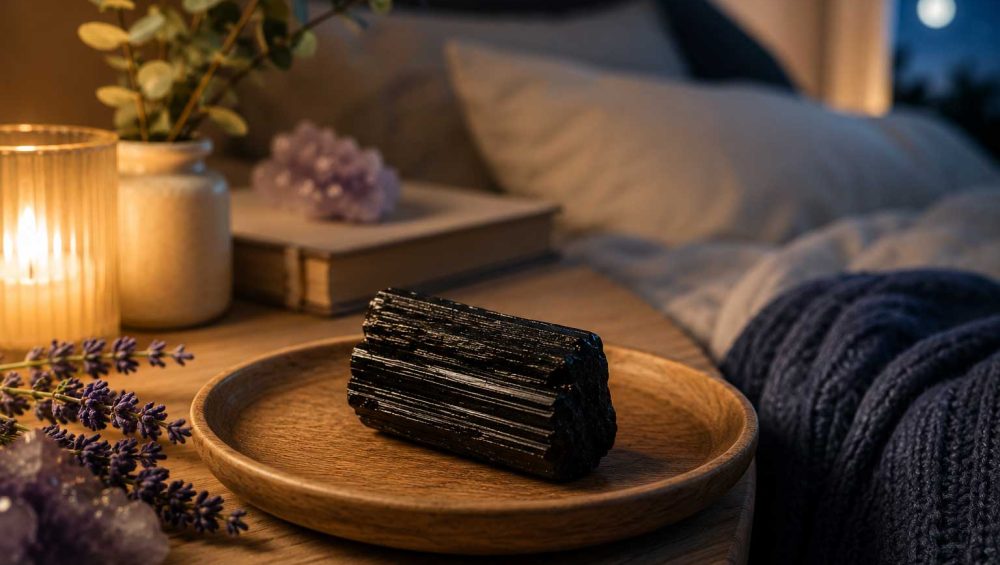
Introduction (When Sleep Doesn’t Feel Safe Anymore)
There are nights when you’re tired in your body, but your nervous system doesn’t seem to get the message. Your eyes burn. Your limbs feel heavy. You’ve done everything you’re “supposed” to do—dimmed the lights, put your phone away, tried to breathe slowly—but the inside of you is still awake.
Not awake in a productive way. Awake in the way that feels like you’re listening for something. Like your body is waiting for danger to return. Like rest is a doorway you can’t step through because some part of you doesn’t trust what happens when you stop being alert.
If you’ve ever stared at the ceiling and thought, Why can’t I just fall asleep like a normal person?—you’re not broken. You’re not weak. You’re not “too sensitive.” You’re responding to something real, even if the threat isn’t visible anymore.
Sometimes sleep becomes difficult not because we lack discipline, but because our system learned a long time ago that nighttime wasn’t safe. Or that quiet didn’t mean peace—it meant vulnerability. Or that if you relaxed, you might miss the moment everything changed.
This is where rituals can become more than aesthetics. They can become a form of permission. A gentle signal to the body: We’re not bracing tonight. We’re softening.
And that’s one reason people reach for black tourmaline for sleep—not as a magic fix, but as a grounding presence. Something steady. Something quiet. Something that doesn’t demand anything from you.
Black tourmaline has a reputation for being protective and stabilizing, the kind of stone you keep close when you feel energetically “open” or emotionally porous. For some people, it feels like putting a weighted blanket on the inside of the body. For others, it’s simply comforting to have a physical object that symbolizes, I am supported. I am contained. I can rest.
But the most important thing isn’t whether black tourmaline “works” in a measurable way.
The real question is: Can your bedtime become a place where your body learns safety again?
This article is for the nights when you want to sleep, but you can’t.
For the ones who get drowsy and then suddenly wired.
For the ones whose thoughts race the moment the world goes quiet.
For the ones who feel like they’re carrying too much to lay down.
We’ll talk about how black tourmaline may support sleep through grounding rituals, how to use it in a trauma-informed way (without pressure or perfection), and how to create a night routine that feels like a soft landing—not another task to fail at. When your system has been living in “on” mode for a long time, sometimes the kindest support is something simple—like a stone, a breath, a dim light, a promise that you don’t have to hold everything alone.
Because you deserve rest that doesn’t feel like a battle.

What Black Tourmaline for Sleep Really Means (And Why It Helps Some People)
When people talk about black tourmaline for sleep, they often describe it like this: calming, protective, grounding, stabilizing. But underneath those words is something deeper and more human.
What they’re really saying is:
- My mind won’t stop scanning.
- My body won’t unclench.
- I feel emotionally “exposed” at night.
- I can’t settle into stillness without panicking.
- I need something that helps me come back to earth.
Sleep is not just a biological function. It’s a state of surrender.
And surrender is complicated when you’ve lived through experiences that taught you to stay ready—ready to respond, ready to manage, ready to protect yourself, ready to endure.
For many trauma survivors (and honestly, many chronically stressed humans), bedtime isn’t neutral.
It can bring intrusive memories, looping thoughts, body tension, emotional flashbacks, a sudden wave of loneliness, grief that you didn’t have time to feel during the day, and that particular kind of dread that doesn’t have a story—just a sensation.
Even if you don’t identify with the word trauma, your nervous system might still be carrying a backlog of stress that never got fully processed. Sometimes it helps to name that gently, without making it a diagnosis—just recognizing that your body has been doing its best with what it’s lived through, and that it makes sense to want more support around regulation. If you want a broader foundation for the “why,” the way patterns settle into the body can become clearer when you hold the lens of nervous system regulation techniques in the background.
So what does a grounding stone like black tourmaline offer?
It offers a sensory anchor
When your thoughts spiral, touch can be a lifeline. Holding a cool, solid stone gives your brain something real to focus on—something outside the storm of your mind.
It offers a symbolic boundary
Some people struggle with sleep because they feel energetically “too open,” like they absorb everything—other people’s moods, the emotional residue of the day, the weight of tomorrow. Black tourmaline is often chosen because it represents energetic containment and protection.
Not in a paranoid way.
In a I want to feel held inside myself kind of way.
If you want the deeper essence of the stone itself—the meaning, the energetic “personality,” and why it’s associated with protection—start with black tourmaline and come back here with whatever resonates.
It offers repetition (which is safety)
The body learns safety through consistency, not intensity. If black tourmaline becomes part of a nightly routine, it may act like a cue: This is the part of the day where we come down.
The brain loves cues. Cues create predictability. Predictability tells your system it doesn’t have to stay on guard.
It offers comfort without forcing “positive thinking”
This matters so much.
A lot of sleep advice accidentally becomes emotional invalidation:
“Just relax.”
“Just clear your mind.”
“Just be grateful.”
“Just think happy thoughts.”
But if you could just do that, you would.
Black tourmaline doesn’t ask you to override your reality. It doesn’t argue with your fear. It simply sits there with you—heavy, quiet, and steady—like a grounding friend who doesn’t need to fix you to stay.
And sometimes, that’s exactly what helps.

Choosing Where to Place Black Tourmaline at Night (Without Creating Pressure)
If you’re using black tourmaline for sleep, you might wonder where it “should” go—under your pillow, by the bed, on your chest, in your hand.
Here’s the truth: there’s no single correct placement.
What matters most is what helps your body settle.
Because sleep rituals shouldn’t feel like rules.
They should feel like support.
If you like having a bigger map of options based on goals—sleep, grounding, protection, emotional steadiness—let crystals by intention hold the structure in the background while you experiment gently.
Option 1: On your nightstand (gentle, low-intensity support)
If you’re new to crystals—or if you tend to feel overstimulated easily—this is often the best place to start.
Putting black tourmaline on your nightstand creates a sense of “nearby protection” without making you hyper-aware of it. It can be present without being intense.
This works well if you want grounding energy in the room but don’t want anything physically touching you.
Option 2: Near the bed, at the “edge” of your space
Some people like to place black tourmaline at the corners of the bed frame, or at the foot of the bed. It creates a symbolic boundary—like saying, This is my rest zone.
This can be especially soothing if nighttime triggers a sense of emotional exposure, or if you wake up feeling like your system is braced before you even open your eyes.
Option 3: Under the pillow (only if it feels comfortable)
This is a popular suggestion, but it’s not for everyone.
Under the pillow works if:
- the stone is smooth enough not to bother you
- you like the idea of “sleeping with protection”
- you want the stone close to your head without holding it
But if you’re the type who wakes up more easily, a hard object under the pillow might create discomfort that backfires.
Option 4: In your hand (best for active anxiety)
If anxiety spikes at bedtime, holding black tourmaline can be grounding in a practical way.
You can hold it like a worry stone.
You can trace the edges.
You can let your brain rest on its weight.
And if your thoughts start running, you can return to the feeling of it again and again, like a small ritual of coming back.
Option 5: Over the lower belly or pelvis (deep grounding)
Many people associate grounding with the root chakra or the lower body. Placing black tourmaline over your lower belly can feel stabilizing, especially if your anxiety lives in your chest or throat.
But again—only if it feels safe.
If you have trauma stored in the body, placing something on your torso might feel too intense. Your system’s “no” matters.
The trauma-informed rule:
If a placement makes you tense, it’s not supportive.
Even if someone online says it’s the “best” method.
We’re not trying to win at sleep.
We’re trying to feel safe enough to rest.
Start small.
Start gentle.
Let your body lead.
A Trauma-Informed Bedtime Ritual Using Black Tourmaline (That Doesn’t Feel Like a Performance)
A lot of bedtime routines are written as if you have unlimited energy, unlimited time, and zero emotional weight.
But if you’re reading this, you might be coming into nighttime already depleted.
Already carrying too much.
Already trying your best.
So here’s a bedtime ritual with black tourmaline for sleep that prioritizes nervous system safety over perfection. If you want a broader framework for spiritual tools that don’t override the nervous system, you can keep crystal healing guide as a quiet reference point—then come back to the lived reality of tonight.
Step 1: Create a “soft landing” moment (2 minutes)
Before you do anything else, pause.
Put one hand on your chest, or your belly, or anywhere that feels neutral.
Then place black tourmaline somewhere nearby.
Whisper (or think):
“I’m here. I made it through today.”
That’s it.
Not “I should be calm.”
Not “I should be asleep by now.”
Just: I’m here.
This is your nervous system’s first cue: we’re transitioning.
Step 2: Release the day gently (not aggressively)
If you try to force release, your system might resist.
So instead of “letting go,” try unclasping.
Try a phrase like:
- “I don’t have to hold everything tonight.”
- “Tomorrow can wait.”
- “I can pause my vigilance.”
Hold the stone while you say it.
Let your fingers learn the shape of steadiness.
Step 3: A grounding breath that doesn’t trigger stress
Some people get anxious doing deep breathing because it feels too intense or controlling.
So keep it simple:
Inhale gently through the nose.
Exhale slowly through the mouth, like you’re fogging a mirror.
Do that 3 times.
That’s enough.
If breath is the only thing you can access on a hard night, let grounding with air and breath be your reminder that it doesn’t have to be dramatic to be real.
Step 4: The “Containment Check”
This is a powerful step for sensitive, empathic, or overwhelmed nervous systems.
Ask yourself quietly:
“What am I still carrying that isn’t mine?”
Don’t overthink it.
Just notice what comes up.
Then say:
“Anything that isn’t mine can stay outside my sleep.”
Imagine black tourmaline as a boundary stone—not a wall, but a gentle edge.
A soft perimeter around your resting self.
If your body needs language for what containment actually feels like from the inside, you may find it easier to name through emotional grounding than through willpower.
Step 5: Choose one comfort cue (not five)
Pick just one:
- a warm blanket
- a dim lamp
- a scent you associate with calm
- a slow song
- the weight of the stone in your hand
Your system doesn’t need a complicated routine.
It needs one reliable cue that says: we are allowed to rest now.
When you’re building that cue over time, it can help to think in terms of tiny rituals—small enough to do even on depleted nights—like 5-minute grounding rituals that don’t demand energy you don’t have.
Step 6: Give yourself permission to be imperfect
This might be the most important part.
Say:
“Even if I don’t sleep perfectly, I can still rest.”
Because the fear of not sleeping is often what keeps us awake.
If your body learns that bedtime isn’t a pass/fail exam, it starts to soften.
And softness is where sleep becomes possible again.
When Black Tourmaline Helps You Sleep… But Your Mind Still Won’t Stop
Sometimes black tourmaline for sleep feels supportive, but your mind keeps talking anyway.
This is where people get discouraged and think, It’s not working.
But it might actually mean something else:
Your body is starting to soften enough for your mind to surface what it’s been holding back.
When the world gets quiet, your inner world gets louder.
That doesn’t mean you’re failing.
It means you’re human.
Here are a few ways to use black tourmaline when your thoughts won’t slow down—without trying to force silence.
Try “one thought at a time” grounding
Instead of fighting your thoughts, slow them down.
Hold the stone and say:
“Just this thought.”
Then:
“Just this breath.”
Then:
“Just this moment.”
You’re not trying to become empty.
You’re trying to become present.
If anxiety is the engine underneath the thoughts, sometimes it helps to have a gentler pathway back into the present—one that doesn’t ask you to “fix” yourself—like mindfulness for anxiety held with compassion rather than pressure.
Let the stone be your “return point”
Your mind will wander.
That’s normal.
Each time you notice you’re spiraling, return to the sensation of black tourmaline:
- the weight
- the temperature
- the texture
This is mindfulness without pressure.
A steady return.
A gentle repetition.
Use the “Nighttime Reassurance” script
If your nervous system is in threat mode, try saying:
“Nothing is required of me right now.”
“I am not in trouble.”
“I can rest without earning it.”
You can repeat it until it starts to feel real.
Because sometimes the deepest insomnia isn’t caused by caffeine or screens.
It’s caused by old fear.
And sometimes the body needs reassurance in physical language—through touch, warmth, and gentle containment—like somatic self-soothing practices that help the system feel held, not argued with.
If your mind is replaying conversations
This is so common for emotionally sensitive people—especially those who’ve been criticized, invalidated, or punished for having needs.
The mind replays because it’s trying to protect you from future harm.
Try this:
Hold the stone and say:
“That moment is over.”
Then:
“I don’t have to solve it tonight.”
You’re not dismissing your feelings.
You’re giving them a container.
And containment is one of the most sleep-supportive things your nervous system can receive.
If You Wake Up at 2–4 AM, Try This Grounding Reset (Without Panicking)
Middle-of-the-night wakeups can be one of the most discouraging sleep experiences.
You wake up, you check the clock, and instantly your system goes:
No. No no no. I have to be up in a few hours. Now I’m going to be exhausted tomorrow.
And suddenly, you’re wide awake.
If you use black tourmaline for sleep, this is a perfect moment to bring it in—not as a solution, but as a reset cue.
Step 1: Don’t negotiate with the clock
If possible, don’t look at the time.
The clock turns wakefulness into a math problem.
Instead, try telling yourself:
“I woke up. That’s okay. My body can still return.”
If your brain panics anyway, it can help to remember that sleep is also biology and rhythm, not just mindset—so letting sleep & circadian basics sit in the background can soften the shame spiral that often comes with wakeups.
Step 2: Hold black tourmaline and do “micro-grounding”
Micro-grounding is grounding that doesn’t require effort.
Hold the stone.
Notice one sensation:
- “My pillow is soft.”
- “My blanket is warm.”
- “The stone is heavy.”
You’re reminding your brain: I’m here, not back there.
If your system needs a bigger container for what “here” means, it can help to tether into grounding as a lived practice—less “technique,” more returning.
Step 3: Release the pressure to fall asleep immediately
This is key.
Say:
“I’m allowed to rest even while awake.”
Because the nervous system often can’t fall asleep when it feels forced.
Step 4: Use “safe repetition”
Do one simple phrase, over and over:
“I’m safe enough to rest.”
Not “I am completely safe forever.”
Just safe enough.
Safe for this moment.
Safe for this breath.
Safe for this night.
That kind of language is believable to a hypervigilant system.
And believable safety is what helps the body soften.
If your nights have a history of feeling unsafe, it can be stabilizing to keep gentle boundaries in mind—physical, emotional, and energetic—like grounding safety guide that protects softness rather than pushing it.
How to Know If Black Tourmaline Is Too Stimulating at Bedtime
This might surprise some people, but yes—sometimes black tourmaline for sleep can feel like too much.
Not because it’s harmful.
But because your nervous system might interpret strong grounding energy as intensity.
Especially if you’re used to living “up in your head,” strong grounding can feel unfamiliar, like something is shifting too quickly.
Here are signs it might be too stimulating for you right before bed:
- you feel restless after placing it near you
- you feel emotionally “activated” or heavy
- you get vivid dreams that don’t feel restorative
- you feel like your system is processing instead of settling
- you feel a subtle sense of “pressure” or alertness
If that happens, you’re not doing anything wrong.
Try adjusting:
Move it farther away
Nightstand instead of under pillow.
Foot of bed instead of chest.
Across the room instead of next to you.
Use it earlier in the evening
Some people love black tourmaline for their wind-down routine but prefer something softer during sleep itself.
You can still benefit from it without keeping it close all night.
Pair it with gentleness
If you emotionally associate grounding with “seriousness,” it might help to add something warm:
- a comforting light
- a soft fabric
- a soothing scent
Nervous system safety often needs both grounding and softness.
If you want a broader field of options—stones that support steadiness in different “volume levels”—it can help to browse through crystals for grounding and choose what your body actually says yes to.
Trust your body’s feedback
The goal isn’t to do the “most powerful” practice.
The goal is to rest.
The most trauma-informed approach is always:
choose what supports regulation, not what you think you’re supposed to do.
Frequently Asked Questions About Black Tourmaline for Sleep
Can black tourmaline help with insomnia?
Black tourmaline may help some people with insomnia indirectly—especially if their sleep struggles are connected to anxiety, emotional overwhelm, or feeling ungrounded. Many people find comfort in having a steady object to hold, focus on, or keep nearby as part of a calming bedtime routine. That said, insomnia can have many causes, including stress, hormonal changes, trauma responses, and medical factors.
If you’re trying to build a gentler “reset” after long stretches of stress, sometimes it helps to approach sleep as one part of a bigger unwinding—like how to reset your nervous system after stress that meets the body where it is instead of demanding instant calm.
Where should I put black tourmaline at night for sleep?
The best placement is the one that helps your body relax. Many people place it on a nightstand, near the bed, or under the pillow. Others hold it in their hand during wind-down time, then set it aside before falling asleep. If you’re highly sensitive, starting with the stone a little farther away can feel safer and less intense.
If you prefer jewelry as your “close-but-not-too-close” option, you can keep the support wearable without turning bedtime into a setup—like black tourmaline jewelry that stays with you in a quiet, familiar way.
Can I sleep with black tourmaline under my pillow?
Yes, you can—if it’s comfortable and doesn’t disrupt your rest. Make sure the stone is smooth and not sharp or bulky. If you notice discomfort, tension, or restless sleep, move it to your nightstand instead. Some people love having it close to their head, while others sleep better with it nearby but not directly under them. Your nervous system’s response matters more than any rule.
If your pillow placement feels too intense, you can still keep the energetic “edge” of protection in the room through black tourmaline for EMF protection as a steadier, environmental layer rather than a close-contact one.
How do I cleanse black tourmaline if I use it for sleep?
If you use black tourmaline regularly—especially for sleep support—you may want to cleanse it occasionally as a symbolic reset. You can do this gently by wiping it with a soft cloth, placing it in moonlight, using sound (like a bell), or setting it on a dry surface where it can “rest.” The most important part is intention, not intensity. Cleansing should feel calming and respectful, not like a chore or a fear-based ritual.
If you want a specific, simple ritual that stays grounded and doable, use how to cleanse black tourmaline as your anchor point.
What if black tourmaline gives me vivid dreams?
Vivid dreams can happen when your system is processing stress, emotion, or change—especially if you’re finally starting to soften at night. Some people experience more intense dreams when using grounding tools because their body feels stable enough to release what it’s been carrying. If the dreams feel restorative, you may choose to keep going. If the dreams feel disruptive or emotionally heavy, try moving the stone farther away or using it earlier in the evening instead of throughout the night.
If you’re using multiple stones and want a rhythm that doesn’t turn into pressure, it can help to cleanse on a schedule that feels gentle through how often to cleanse crystals instead of doing it reactively.
Can black tourmaline help with anxiety at bedtime?
For many people, yes—because it gives the body something steady to come back to when anxiety rises. Bedtime anxiety often shows up as racing thoughts, chest tension, or a sense of dread when the lights go out. Holding black tourmaline can act as a grounding cue: a quiet reminder that you’re here, you’re safe enough, and you don’t have to solve everything tonight.
If your anxiety needs an outlet that doesn’t keep you stuck in your head, it can help to empty the swirl onto paper with journaling prompts for emotional stability and let the night hold less.
Conclusion (Let Sleep Be a Sanctuary Again)
If sleep has been hard for you, I want you to hear this clearly: you are not failing.
You’re not “bad at resting.”
You’re not too dramatic.
You’re not making it up.
Your body is doing what it learned to do—stay alert, stay ready, stay guarded—because at some point, that vigilance helped you survive.
But survival isn’t supposed to be the only way you live.
And little by little, you can teach your system something new:
that darkness doesn’t have to mean danger,
that stillness doesn’t have to mean vulnerability,
that bedtime can become a sanctuary instead of a battlefield.
Using black tourmaline for sleep is one small way to practice that shift.
Not as a superstition.
Not as a perfect “routine.”
But as a steady, quiet support—something that reminds you you’re allowed to come back into your body.
You’re allowed to feel held.
You’re allowed to be contained.
You’re allowed to put the day down.
And even if you don’t sleep deeply right away, every gentle night you give yourself matters.
Because rest isn’t only something you achieve.
It’s something you slowly learn to trust again.
Tonight, if all you do is place a stone nearby, soften your shoulders once, and whisper, I made it through today…
that counts.
That’s the beginning of safety.
And safety is where sleep begins.
When you’re ready to build a bedtime rhythm that doesn’t rely on motivation, you can let your days support your nights through daily self-care rituals so rest feels less like a leap and more like a natural return.
And if you want your crystal practice to stay trauma-aware—gentle, consent-based, and nervous-system supportive—keep trauma-informed crystal care as a steady foundation under everything you do.
Finally, if you prefer cleansing methods that avoid water and stay simple on low-energy days, you can lean on crystal cleansing without water so your support tools keep feeling like support.


Where softness, self-awareness, and emotional healing are allowed to coexist. Through reflective writing, grounding rituals, and intentional beauty, Sparrow Trades offers gentle support for sensitive souls learning to reconnect with themselves.