
There comes a point in many sensitive people’s lives where they stop asking, “Why am I so emotional?” and start asking a more painful question: “Why do I feel everything that belongs to everyone else?”
For empaths, emotional overwhelm rarely arrives all at once. It builds quietly. A crowded grocery store suddenly feels exhausting. A simple conversation lingers in your chest for hours. You walk into a room feeling calm and leave carrying tension that does not even belong to you. Over time, the nervous system begins to stay braced for impact, anticipating emotional noise before it even happens.
Many people who seek protection for empaths are not trying to disconnect from others. They are trying to survive their own openness.
Sensitivity is not weakness. In many cases, it is heightened awareness combined with a nervous system that learned early to monitor emotional environments closely. Some people developed this sensitivity through caregiving roles, emotional unpredictability, trauma, or growing up in homes where reading the emotional atmosphere felt necessary for safety. Others simply move through the world with naturally deep emotional perception.
That depth can feel beautiful at times. It can also become exhausting when there are no boundaries separating your emotions from someone else’s emotional weather.
Many empaths eventually realize they have spent years trying to earn safety by staying emotionally available to everyone around them. They absorb tension before conflict escalates. They over-explain to avoid hurting people. They carry emotional responsibility that was never theirs to hold.
In those moments, protection is not about building emotional walls. It is about creating enough safety inside your body to remain connected to yourself.
For many sensitive people, this begins with understanding what it means to be an empath without turning sensitivity into an identity built entirely around emotional exhaustion.
Protection for empaths is less about becoming untouchable and more about becoming emotionally distinguishable. You begin learning the difference between compassion and emotional merging. You notice when your body tightens around someone else’s anxiety. You recognize when emotional exhaustion is signaling overstimulation rather than personal failure.
The nervous system changes when it no longer believes it must absorb everything to stay connected.
That is why real emotional protection cannot come only from spiritual language or surface-level self-care routines. Sensitive people often need grounding, nervous system regulation, emotional boundaries, physical rest, and environments that feel emotionally safe enough for their bodies to unclench.
Many empaths eventually find themselves searching for emotional wellness foundations that help them feel present in their own lives again rather than emotionally consumed by everyone else’s.
The goal is not emotional numbness. The goal is remaining compassionate without abandoning yourself.
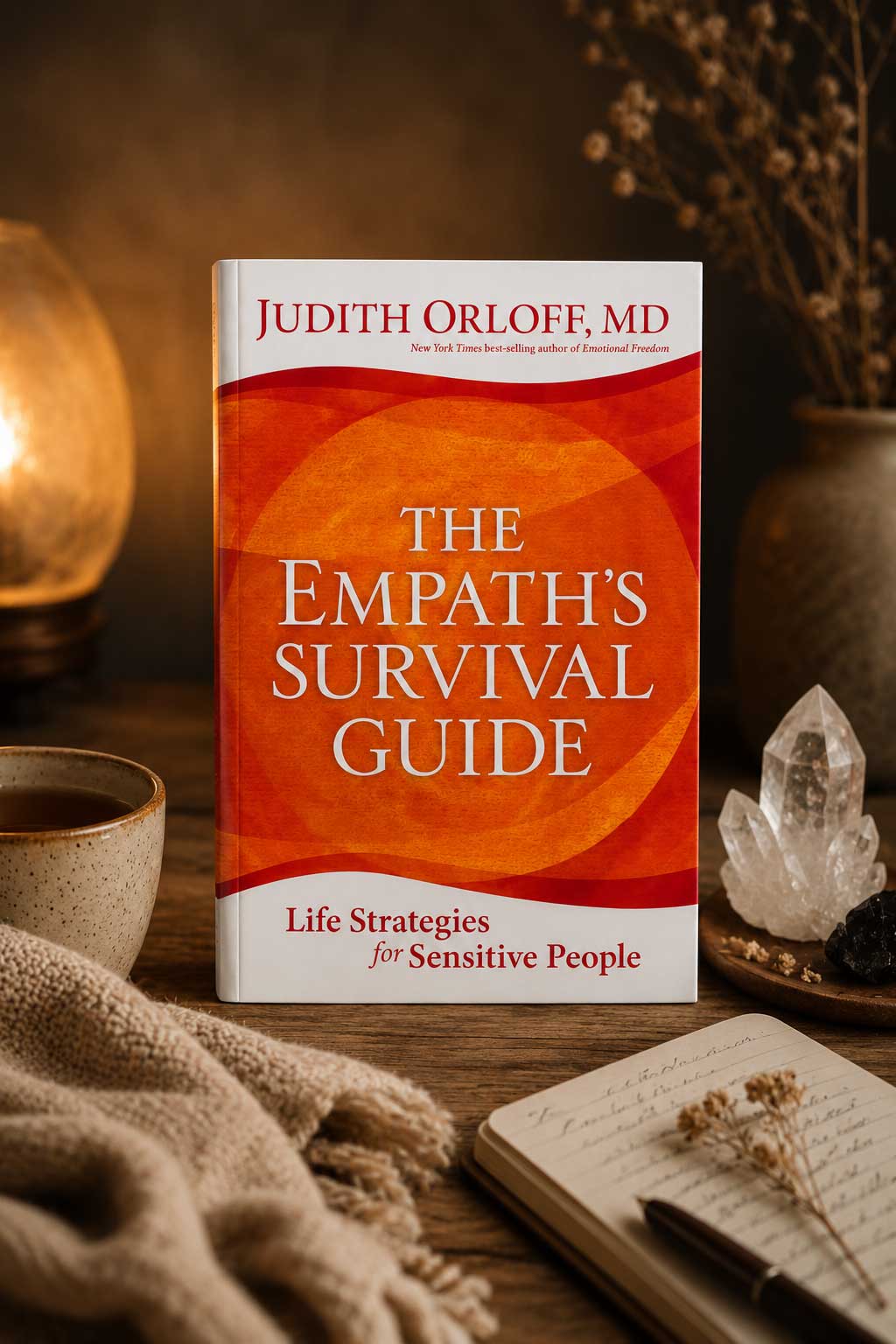
Why Empaths Absorb So Much Emotional Energy
Many empaths blame themselves for feeling overwhelmed. They believe they are “too sensitive,” emotionally fragile, or incapable of handling normal life. But emotional absorption is often less about weakness and more about survival patterns that became deeply wired into the nervous system.
When someone grows up in emotionally unpredictable environments, the body learns to monitor tone, tension, facial expressions, and subtle shifts in energy constantly. The nervous system becomes hyper-attuned to emotional cues because awareness once felt necessary for safety.
Over time, emotional scanning becomes automatic.
An empath may walk into a room and immediately sense discomfort before anyone speaks. They may absorb anger sitting silently beneath someone’s words. They may feel emotionally responsible for stabilizing tension around them even when nobody asked them to.
This can create deep exhaustion because the body rarely gets permission to fully rest.
Many sensitive people are also unconsciously seeking belonging through emotional caretaking. They learned early that being emotionally available made them valuable, lovable, or safe. So they continue absorbing emotional weight because disconnecting feels frightening.
Sometimes emotional absorption becomes so normalized that empaths no longer recognize what belongs to them.
That is why many people eventually begin searching for ways of stopping emotional absorption from others without losing their compassion entirely.
The truth is that empathy becomes painful when there are no emotional filters.
Without boundaries, the nervous system treats every emotional signal as equally urgent. A stranger’s irritation can feel as activating as personal conflict. Emotional tension from social media can linger in the body for hours. Crowded spaces can create invisible exhaustion because the nervous system never stops processing emotional information.
This is why protection for empaths must include nervous system awareness rather than only energetic language.
Sensitive people often need nervous system regulation techniques that help the body understand it is no longer required to absorb every emotional atmosphere in order to stay safe.
Protection starts when your body realizes it can witness emotions without carrying them.
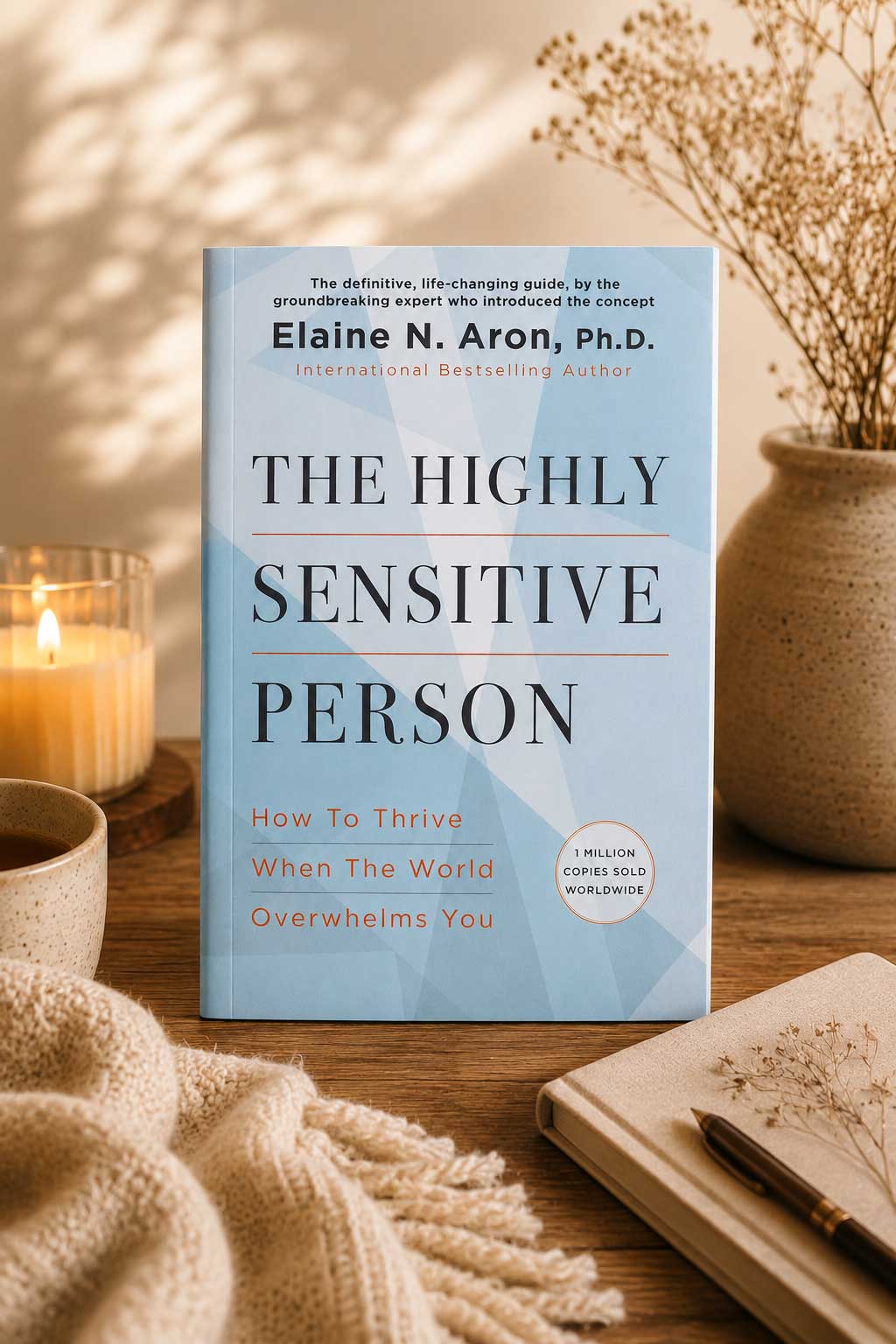
Emotional Boundaries Are a Form of Protection
Many empaths misunderstand boundaries because they associate them with rejection, conflict, or emotional distance. But healthy boundaries are not emotional punishment. They are nervous system safety.
A person without boundaries often feels emotionally open all the time. They over-listen, over-explain, over-give, and over-accommodate. They remain emotionally accessible even when exhausted because they fear disappointing people.
Over time, this creates emotional depletion that feels impossible to recover from.
Sensitive people often notice that they can feel another person’s emotional state immediately but struggle to identify their own needs in the moment. Their attention automatically moves outward.
That is why emotional protection often begins with reconnecting inward.
Many empaths slowly begin learning emotional boundaries when they realize compassion does not require emotional self-erasure.
Boundaries can look surprisingly gentle.
Sometimes protection means leaving a conversation earlier than usual.
Sometimes it means not answering emotionally draining messages immediately.
Sometimes it means acknowledging that another person’s emotions are real without making yourself responsible for fixing them.
And sometimes it means recognizing when your body is signaling overwhelm long before your mind admits it.
Many sensitive people also need grounding boundaries for empaths because emotional protection becomes far more difficult when the body is already overstimulated.
Boundaries are easier to maintain when your nervous system feels regulated.
The body often communicates emotional overload quietly at first: jaw tension, fatigue, emotional numbness, irritability, overstimulation, difficulty concentrating, or a sudden need to isolate.
Ignoring those signals usually leads to deeper exhaustion.
Empaths frequently spend years believing emotional exhaustion means they are failing at life when in reality their nervous systems are overloaded from continuous emotional intake.
Protection means learning to honor those signals before collapse happens.
You are allowed to care deeply without becoming emotionally consumed.
Grounding Helps the Nervous System Feel Safe Again
Empaths often search for protection techniques while overlooking one of the most important realities: an overwhelmed nervous system cannot maintain emotional boundaries consistently.
When the body feels unsafe, it becomes more emotionally porous.
Grounding is not just a spiritual ritual. It is the process of helping the nervous system reconnect to the present moment instead of remaining trapped in emotional overstimulation.
Many people discover grounding practices after realizing their bodies rarely feel settled, even during quiet moments.
Grounding can look simple.
Feeling your feet against the floor.
Holding something textured in your hands.
Walking outside without your phone.
Breathing slowly enough for your body to recognize that immediate danger is not present.
For highly sensitive people, emotional overload often creates dissociation from the body itself. Thoughts race while the nervous system remains flooded with emotional stimulation.
That is why many empaths benefit from emotional grounding that helps reconnect emotional awareness with physical safety.
Small grounding rituals repeated consistently tend to regulate the body more effectively than dramatic attempts to “clear negative energy” all at once.
Many sensitive people also find comfort in 5-minute grounding rituals because protection becomes easier when nervous system care feels sustainable rather than overwhelming.
The body often needs gentleness more than intensity.
Breathwork can also become deeply regulating for empaths who carry chronic emotional tension. Slow breathing patterns help the nervous system exit survival mode gradually.
Practices like extended exhale breathing can help emotionally overwhelmed bodies release tension that has been stored for far too long.
Some empaths also notice that grounding becomes more effective when combined with sensory experiences like water, fresh air, warmth, soft fabrics, calming scents, or quiet movement.
Protection is not always about blocking energy.
Sometimes it is about giving your body enough safety that it no longer feels required to absorb everything around it.
Protection for Empaths Is Also About Emotional Discernment
One of the hardest experiences for empaths is realizing they have spent years carrying emotions that were never theirs.
Many sensitive people can sense emotional atmospheres instantly but struggle to separate observation from absorption. They feel someone’s sadness and immediately internalize it. They notice tension and unconsciously begin regulating themselves around it.
Eventually, the body stops distinguishing between “I sense this emotion” and “this emotion belongs to me.”
That confusion creates chronic exhaustion.
Learning emotional discernment is one of the most powerful forms of protection because it restores psychological separation between your inner world and someone else’s emotional experience.
Many empaths begin healing when they learn how to tell if an emotion is yours or someone else's without automatically taking responsibility for everything they feel.
Discernment often begins with simple pauses.
What was I feeling before this interaction?
Did this emotion appear suddenly?
Does my body feel expanded or constricted around this person?
Am I comforting myself or managing someone else’s discomfort?
These questions help restore emotional orientation.
Empaths are frequently taught that emotional closeness requires emotional merging. But healthy connection still allows room for separation.
You can care deeply without carrying another person’s emotional reality inside your body.
This becomes especially important in emotionally intense environments, relationships with chronically dysregulated people, or spaces filled with constant stimulation.
Many sensitive people eventually recognize the need for energetic boundaries for intuitive empaths when emotional closeness begins feeling indistinguishable from emotional depletion.
Discernment also means noticing when compassion becomes self-abandonment.
Empaths often stay emotionally available long after their nervous systems have reached capacity. They fear appearing cold, selfish, or uncaring if they step back.
But emotional protection sometimes means allowing yourself to leave the emotional room before your body collapses inside it.
You do not have to absorb suffering in order to prove you care.
Crystals, Jewelry, and Symbolic Protection for Sensitive People
For many empaths, emotional protection is not only psychological. It is symbolic.
Objects can become grounding reminders for the nervous system. Jewelry, crystals, textures, scents, and rituals often help sensitive people reconnect to safety because the body responds strongly to association and meaning.
This is why some empaths feel calmer wearing certain stones or carrying grounding objects throughout the day. The item itself may not “fix” emotional overwhelm, but it can help interrupt spiraling emotional absorption by bringing awareness back to the body.
Many sensitive people become drawn toward protective jewelry meaning when they begin creating emotional rituals that support nervous system safety.
Protection rituals often work best when they feel emotionally comforting rather than fear-based.
Some people wear black tourmaline because it reminds them to stay grounded during emotionally intense interactions. Others wear calming stones because they create a sense of emotional steadiness during overstimulation.
Many empaths feel especially connected to black tourmaline for protection because grounding stones can serve as physical reminders not to emotionally absorb every environment they enter.
There is also something deeply regulating about creating intentional rituals around protection.
Touching a necklace before entering a stressful conversation.
Holding a grounding stone during emotional overwhelm.
Breathing slowly while reconnecting to your own emotional center.
These actions communicate safety to the body.
Some people are also drawn toward protection jewelry because wearable rituals can quietly reinforce emotional boundaries throughout the day.
The key is approaching protection gently.
Fear-based spiritual messaging can sometimes intensify nervous system anxiety in highly sensitive people. Constant warnings about “negative energy attacks” may keep the body hypervigilant rather than grounded.
Real protection should help your body feel calmer, more present, and more connected to yourself.
Protection is not meant to make the world feel dangerous.
It is meant to help you feel safe enough to stay rooted inside yourself.
FAQ: Protection for Empaths
How do empaths stop absorbing negative energy?
Empaths often stop absorbing negative energy gradually rather than instantly. The process usually involves building emotional boundaries, regulating the nervous system, practicing grounding consistently, and learning emotional discernment.
Many sensitive people notice emotional improvement when they begin prioritizing somatic self-soothing practices instead of forcing themselves to stay emotionally available all the time.
Protection becomes easier when your body no longer believes emotional absorption is necessary for connection or safety.
Why do empaths feel emotionally exhausted around certain people?
Emotionally intense or chronically dysregulated people can overwhelm highly sensitive nervous systems quickly. Empaths often unconsciously mirror emotional states around them, especially when they feel responsible for maintaining emotional harmony.
Many people eventually recognize patterns connected to empath nervous system overwhelm recovery when emotional exhaustion starts affecting daily functioning.
Exhaustion is often a signal that your body needs boundaries, grounding, rest, or emotional separation.
What crystals help protect empaths?
Many empaths feel drawn toward grounding stones like black tourmaline, smoky quartz, hematite, and obsidian because these stones are commonly associated with emotional steadiness and energetic grounding.
Some sensitive people also explore cleansing crystals for empaths as part of emotional reset rituals that help them feel calmer and more emotionally centered.
Crystals work best when they are used as grounding supports rather than magical solutions. Emotional protection still requires boundaries, nervous system care, and self-awareness.
Can grounding really help emotional sensitivity?
Yes. Grounding often helps sensitive people reconnect to physical safety when emotional overwhelm becomes intense.
Practices like slow breathing, walking outdoors, sensory awareness, and body-based regulation techniques can reduce emotional flooding significantly.
Many empaths also benefit from grounding with air and breath because breath-focused grounding gently signals safety to the nervous system.
The goal is not emotional numbness. The goal is emotional stability.
How do I know if I need stronger emotional boundaries?
You may need stronger boundaries if you constantly feel drained after interactions, struggle to separate your emotions from other people’s feelings, feel guilty saying no, or remain emotionally available even while exhausted.
Sensitive people often discover deeper emotional protection through grounding after emotional overload when they realize their bodies have been carrying prolonged emotional overstimulation.
Boundaries are not about becoming cold. They are about creating enough internal safety to remain emotionally connected without collapsing.
Can empaths protect themselves without shutting people out?
Absolutely.
Healthy protection does not require isolation, emotional numbness, or emotional detachment. In fact, many empaths become more emotionally connected after learning how to protect their nervous systems.
When the body no longer feels overwhelmed constantly, connection becomes safer.
Many sensitive people eventually develop supportive routines involving vagus nerve exercises that help them remain emotionally present without absorbing everything around them.
Protection is not about disconnecting from humanity.
It is about staying connected to yourself while moving through it.
Conclusion
Protection for empaths is ultimately about returning home to yourself.
Not the performative version of yourself that keeps everyone comfortable.
Not the emotionally hypervigilant version that scans every room for tension.
Not the exhausted version carrying emotional responsibility for everyone else’s healing.
The real version.
The one whose nervous system deserves rest.
The one who can feel deeply without disappearing inside other people’s emotions.
Many empaths spend years believing their sensitivity is the problem when the deeper issue is often a lack of emotional safety, boundaries, grounding, and regulation.
Your empathy was never meant to consume you.
Real protection is not emotional armor so thick that nothing reaches you anymore.
It is the ability to stay emotionally rooted inside yourself while remaining open-hearted.
That process takes practice.
It may involve grounding rituals, nervous system care, emotional discernment, symbolic protection, intentional rest, or learning to recognize when your body has reached capacity.
It may also involve slowly releasing the belief that your value comes from absorbing pain gracefully.
Many sensitive people begin rebuilding emotional steadiness through digital energy hygiene for empaths when they realize emotional overstimulation is not limited to in-person environments anymore.
Others feel supported by creating rituals around emotional shielding without dissociation so protection feels grounding rather than emotionally avoidant.
The truth is that empathy becomes sustainable when your nervous system finally understands this:
You are allowed to witness pain without carrying all of it.
You are allowed to care without collapsing.
And you are allowed to protect your peace without apologizing for it.
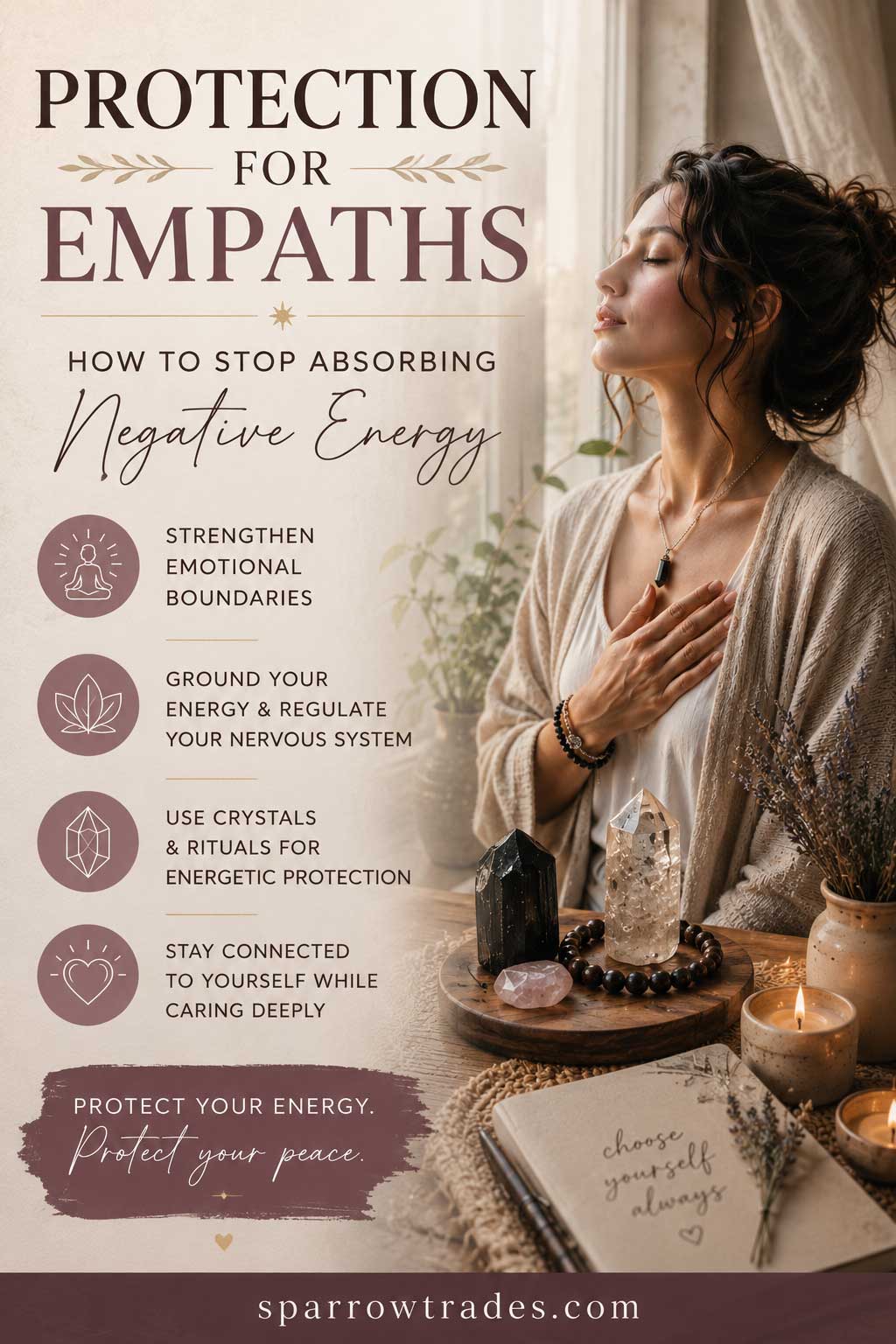

Where softness, self-awareness, and emotional healing are allowed to coexist. Through reflective writing, grounding rituals, and intentional beauty, Sparrow Trades offers gentle support for sensitive souls learning to reconnect with themselves.