
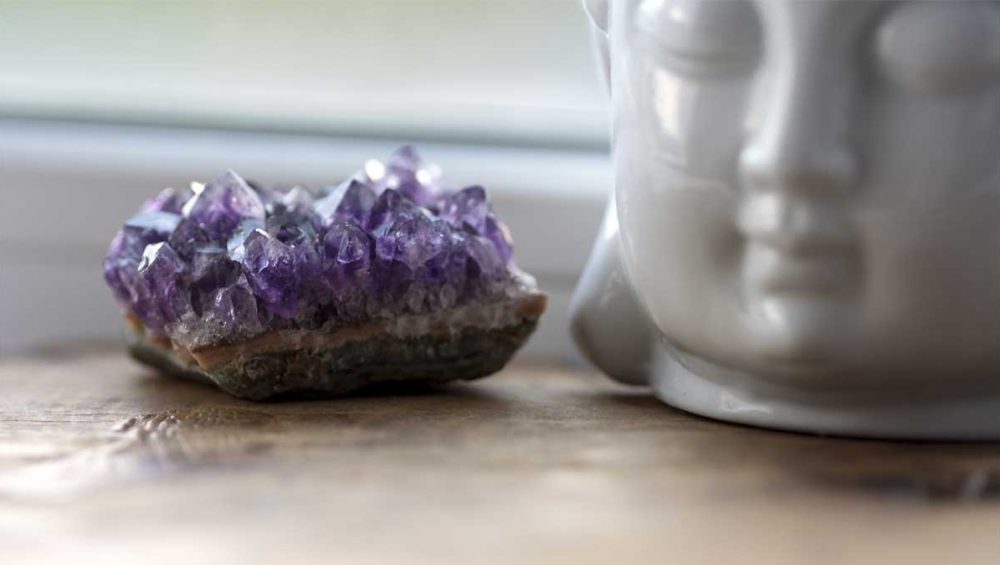
There are moments when something inside you quietly knows the answer before your mind can explain it. A subtle pull toward a certain decision. A feeling that something is right—or deeply wrong—even when everything looks normal on the surface. Many people describe this quiet inner knowing as intuition.
Yet intuition can feel fragile in a world that often prioritizes logic over inner signals. Over time, stress, emotional overwhelm, or simply living too much in the mind can make that inner voice harder to hear. People begin to question themselves, dismiss gut feelings, or second-guess the quiet insights that once guided them.
This is where many turn toward spiritual tools that help restore a sense of inner listening. Among the most beloved of these tools is amethyst, a crystal long associated with clarity, spiritual awareness, and intuitive insight. Across cultures and traditions, amethyst has been valued as a stone that helps calm mental noise while creating space for deeper perception.
Within the wider tradition of crystal healing many stones are believed to interact with emotional and energetic states in subtle ways. While crystals do not replace personal growth or emotional awareness, they can act as grounding reminders that reconnect people to their inner experience.
Amethyst, with its deep violet color and calming energy, is often seen as a bridge between intellect and intuition. Its presence invites stillness—the kind of stillness where insight begins to surface naturally.
Within the broader landscape of gemstone meanings amethyst stands out as a stone connected to perception, clarity, and spiritual understanding. Rather than pushing for answers, it supports the quieter process of learning to trust what you already feel inside.
When people explore crystals by intention amethyst frequently appears under intentions like intuition, insight, emotional clarity, and spiritual awareness.
In simple terms, working with amethyst often becomes less about gaining new abilities and more about remembering the intuitive sensitivity that already exists within you.
This article explores how amethyst supports intuition, how it interacts with emotional awareness, and how people integrate it into practices that strengthen inner guidance.
The Emotional Landscape of Intuition
Intuition is often misunderstood as something mystical or rare, but in reality it is closely connected to emotional awareness. Intuition arises when the mind and body communicate clearly with each other. It is the quiet recognition of patterns, emotions, and experiences that your nervous system has already processed.
When intuition feels blocked, it is rarely because the ability is gone. More often, the signal has simply become buried under stress, noise, or self-doubt.
Many people rediscover their intuitive sense through practices that calm the mind and bring attention back to the body. This is where crystals like amethyst can play a supportive role—not as magical answers, but as anchors for mindful awareness.
Within traditions that explore amethyst healing properties the stone is associated with mental quiet, emotional balance, and spiritual clarity. These qualities naturally support intuition because intuition requires mental space to emerge.
When the mind is overwhelmed, intuition becomes difficult to hear. Thoughts become louder than feelings. Doubt replaces trust. Amethyst’s calming presence is believed to help soften this internal noise.
The relationship between intuition and awareness also connects to the symbolic meaning of the third eye chakra, often linked to perception and insight. Many spiritual systems describe this energy center as the seat of intuition and inner vision.
This connection explains why amethyst frequently appears in conversations about amethyst chakras particularly its association with the third eye and crown chakras.
But intuition is not purely spiritual. It is also deeply human.
Sometimes intuition appears as a quiet discomfort when something is not right. Sometimes it appears as an unexpected sense of calm when making a difficult decision. Learning to recognize these signals requires patience, self-trust, and a willingness to slow down long enough to listen.
Amethyst often becomes a companion in that slowing down.
Why Amethyst Is Associated with Intuitive Awareness
Amethyst has been connected to insight and clarity for thousands of years. Ancient cultures used it in meditation, sacred jewelry, and spiritual ceremonies. While interpretations vary across traditions, the stone’s symbolic role has remained remarkably consistent.
Its deep purple color has long been associated with wisdom and perception.
Within spiritual traditions, purple often represents the merging of grounded awareness and higher understanding—the balance between intellect and intuition. Amethyst’s color therefore reflects the emotional experience many people describe when intuitive clarity appears: a feeling of calm certainty that rises above confusion.
Within studies of amethyst crystal meaning the stone is frequently connected to themes of clarity, spiritual awareness, and intuitive trust.
But intuition is rarely loud or dramatic.
More often, it emerges through subtle emotional shifts. A gentle sense of knowing. A moment of clarity after confusion. A feeling of calm about a decision that once felt overwhelming.
These quiet moments are where intuition lives.
Many people incorporate amethyst into meditation or reflective practices designed to cultivate this inner listening. During these practices, the stone serves as a visual and tactile reminder to slow down and return attention inward.
Within broader spiritual practices like crystals for meditation amethyst is often recommended because of its calming presence and its connection to introspection.
Some people place the stone near the forehead during meditation, aligning with traditions that connect it to the third eye. Others simply hold the crystal in their hand while breathing slowly, allowing the mind to settle.
The stone itself does not create intuition—but the stillness it encourages often allows intuition to surface.
Daily Practices That Strengthen Intuition
Strengthening intuition is less about sudden breakthroughs and more about gentle consistency. Intuition grows when the mind regularly enters states of calm attention.
Small daily practices can gradually rebuild trust in your inner signals.
For many people, these practices begin with simple moments of reflection. Sitting quietly for a few minutes. Holding a crystal while breathing slowly. Asking a question internally and allowing an answer to arise without forcing it.
Within traditions that explore daily rituals with crystals amethyst is frequently used in small grounding rituals designed to reconnect people with emotional awareness.
One example is a morning reflection ritual. A person may sit quietly with an amethyst crystal, set an intention for the day, and ask themselves a simple question: “What does my intuition want me to notice today?”
These gentle rituals often overlap with practices like morning affirmation rituals with crystals where intention, mindfulness, and emotional clarity work together.
Journaling is another powerful tool for strengthening intuition. Writing without overthinking allows subconscious insights to surface in unexpected ways. Over time, patterns begin to appear—revealing intuitive signals that were previously overlooked.
This reflective process aligns naturally with journaling prompts for emotional stability which help people explore emotions without judgment.
Some individuals also incorporate meditation practices focused on energy awareness. Within traditions of chakra alignment meditation amethyst may be used to encourage balance in the upper chakras associated with perception and spiritual insight.
These practices are not about forcing intuitive answers. They are about creating space where answers can appear.
Intuition grows strongest when the mind learns to be quiet enough to hear it.
The Relationship Between Intuition, Emotional Safety, and Self-Trust
Many people struggle with intuition not because the ability is missing, but because self-trust has been weakened.
Past experiences—especially those involving emotional invalidation or chronic self-doubt—can cause people to question their inner signals. They may learn to ignore gut feelings in favor of external opinions or logic alone.
Rebuilding intuition therefore involves rebuilding emotional trust.
This process often begins by reconnecting with practices that restore inner calm. Within many mindfulness traditions, developing awareness starts with simple attention to breath, sensation, and emotion.
Practices rooted in mindfulness for beginners help individuals observe their thoughts and emotions without immediate judgment. Over time, this quiet observation creates the foundation for intuitive awareness.
When the nervous system feels safe and grounded, intuition becomes easier to recognize.
Spiritual traditions that explore benefits of healing crystals often describe crystals as tools that help anchor emotional intention. Amethyst in particular is associated with calm reflection, which naturally supports self-trust.
Learning to trust intuition does not mean abandoning logic. Instead, it means allowing emotional awareness and rational thought to work together.
Intuition often speaks through subtle sensations—curiosity, hesitation, calm, discomfort. Recognizing these signals takes practice, patience, and compassion toward yourself.
Amethyst becomes meaningful not because it creates intuition, but because it reminds people to listen to themselves again.
How Amethyst Supports Intuition in Decision-Making and Spiritual Reflection
Intuition is not only about sensing energy or receiving inner insight during meditation. It also shows up in very ordinary moments—when you are choosing what to say, what to trust, what to release, or which direction feels most aligned with who you are becoming.
That is why many people are drawn to amethyst during seasons of change. The stone is often associated with helping people soften mental overactivity so they can hear what feels true underneath fear, urgency, or outside pressure.
This is especially meaningful for people who tend to overthink. When every decision becomes a spiral of “what if” questions, intuitive knowing can feel drowned out by mental noise. In those moments, symbolic tools can help interrupt the pattern and create a pause long enough for clarity to rise.
That emotional pause is part of why people resonate with amethyst for intuition and decision-making when they want support that feels both spiritual and practical.
For some, this looks like holding amethyst before a difficult conversation. For others, it means placing the crystal nearby while journaling through uncertainty, sitting with one honest question instead of chasing immediate answers. The point is not to demand certainty. The point is to create conditions where your own truth can become easier to hear.
Amethyst can also support spiritual reflection by helping people slow down enough to notice what their inner world has been trying to communicate all along. Sometimes that message is a boundary. Sometimes it is grief. Sometimes it is permission to stop forcing what no longer feels right.
Within the wider rhythm of gentle intention-setting practices amethyst often becomes part of a quieter relationship with decision-making—one rooted in trust, stillness, and emotional honesty rather than pressure.
In that sense, intuition is not about becoming more mystical than human. It is about becoming more honest with yourself.
How Amethyst Fits Into a Larger Intuition and Energy Practice
Amethyst can absolutely be used on its own, but many people find that its meaning deepens when it becomes part of a larger practice of awareness. Intuition rarely grows in isolation. It is strengthened through repetition, reflection, and the feeling that your inner life deserves time and care.
For some, that larger practice begins with learning how energy, attention, and symbolism work together. Within crystal healing guide traditions, crystals are often approached as companions to intention rather than replacements for self-awareness. This framing matters because it keeps the relationship grounded and emotionally honest.
Amethyst also fits naturally into systems that connect stones with energy centers and spiritual perception. In practices shaped by a chakra crystals guide understanding, the stone is often chosen for work involving inner vision, mental clarity, and upper chakra balance.
Some people build simple routines around this. They may meditate with amethyst on certain mornings, keep it nearby during reflective journaling, or include it in an altar or sacred space that supports clarity and peace. Others pair it with breathwork, stillness, or simple observation of emotional patterns throughout the day.
There is also value in keeping these practices beginner-friendly. Intuition often opens more easily when the process feels safe rather than performative. That is one reason amethyst remains popular within spaces centered on best crystals for beginners in meditation and accessible spiritual routines.
And for those who want to go deeper, the stone can become part of broader crystal healing practices that support emotional reflection, nervous-system calm, and spiritual connection over time.
Used this way, amethyst becomes more than a beautiful crystal. It becomes part of a living ritual of learning how to trust yourself again.
Frequently Asked Questions About Amethyst for Intuition
Can amethyst really strengthen intuition?
Amethyst does not create intuition on its own. Intuition is a natural human ability connected to emotional awareness and subconscious pattern recognition.
However, many people find that working with amethyst encourages the calm mental states where intuitive insights are easier to notice.
The crystal often serves as a symbolic reminder to pause, breathe, and listen inward.
Which chakra is connected to intuition and amethyst?
Amethyst is commonly associated with the third eye chakra and the crown chakra.
The third eye chakra is traditionally linked to perception, intuition, and inner vision. Within traditions exploring chakra crystals guide amethyst frequently appears as one of the stones connected to intuitive awareness and spiritual clarity.
The crown chakra, meanwhile, relates to spiritual connection and expanded awareness.
How do people use amethyst during meditation?
Many people hold amethyst in their hand during meditation or place it nearby while practicing breath awareness.
Others place the crystal near the forehead to symbolically connect with the third eye chakra.
Within broader spiritual practices involving crystal healing practices amethyst is often included in meditation routines that encourage reflection and intuitive listening.
How long does it take to develop stronger intuition?
Intuition grows gradually through awareness and self-trust.
Some people begin noticing intuitive signals quickly once they start slowing down and paying attention to their inner experience. For others, rebuilding intuition can take longer, especially if self-doubt has been deeply ingrained.
Practices like meditation, journaling, and mindful reflection often help strengthen this connection over time.
Is amethyst the best crystal for intuition?
Amethyst is one of the most commonly recommended stones for intuition, but it is not the only one.
Different crystals support different emotional qualities. For example, clear quartz is often associated with clarity and amplification, while lapis lazuli is sometimes connected to truth and inner wisdom.
Within the wider tradition of best crystals for beginners in meditation amethyst remains popular because of its calming energy and accessibility.
Can beginners work with amethyst for intuition?
Yes. Amethyst is often considered one of the most beginner-friendly crystals.
It does not require complex rituals or advanced spiritual practices. Many people simply keep the stone nearby during quiet reflection or meditation.
Because of its calming symbolism and connection to insight, amethyst often becomes one of the first crystals people explore when learning about intuitive awareness.
Conclusion
Intuition is not a mysterious power reserved for a few people. It is a natural part of human awareness—an inner language that becomes clearer when the mind learns to slow down and listen.
In a world that constantly demands attention, creating quiet space for intuition can feel surprisingly difficult. The mind becomes crowded with information, opinions, and expectations. Inner signals grow quieter beneath that noise.
This is why many people turn toward grounding spiritual practices that encourage stillness and reflection.
Amethyst has become one of the most recognized crystals connected to this process. Its symbolism of clarity, calm awareness, and spiritual perception makes it a natural companion for anyone seeking to reconnect with their inner guidance.
Yet the true power of intuition does not lie in the crystal itself.
It lies in the willingness to pause, breathe, and trust what your inner experience is quietly revealing.
Amethyst simply reminds us that the answers we seek are often already present—waiting for the moment we become still enough to hear them.

Where softness, self-awareness, and emotional healing are allowed to coexist. Through reflective writing, grounding rituals, and intentional beauty, Sparrow Trades offers gentle support for sensitive souls learning to reconnect with themselves.