
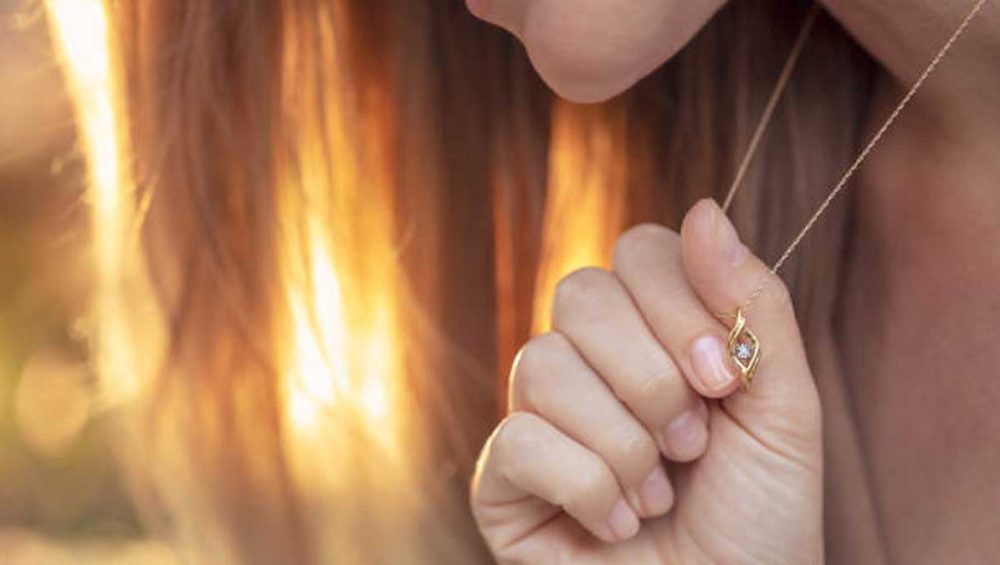
Introduction: When Life Shifts, We Reach for Symbols
There are seasons in life when something inside you quietly rearranges itself.
Sometimes it’s obvious — a breakup, a move, a new job, a diagnosis, a birth, a loss. Other times it’s harder to name. You wake up and realize you don’t fit inside your old identity anymore. The version of you that tolerated certain dynamics, dimmed your voice, or carried everyone else’s weight feels distant. You are not who you were.
During these thresholds, the nervous system searches for stability. The mind searches for meaning. The heart searches for something solid to hold.
This is where jewelry for life transitions becomes more than decoration. It becomes an anchor.
Across cultures and centuries, humans have marked change with symbols. Rings to honor union. Pendants to signify protection. Stones worn during grief. Talismans carried into battle. The deeper roots of this practice live inside the broader symbolism of jewelry — the quiet understanding that what we wear can hold memory, intention, and identity.
When you are in the middle of a life transition, your nervous system is often oscillating between fear and possibility. Change can feel exhilarating and destabilizing at the same time. You might find yourself seeking steadiness in small rituals, grounding practices, or gentle frameworks of emotional wellness foundations that remind you who you are becoming.
Jewelry can participate in that process.
Not because a stone “fixes” you.
Not because a bracelet magically erases grief.
But because intention stabilizes attention — and attention regulates the body.
The practice sits naturally within crystal healing, where objects are treated as companions in emotional integration rather than solutions to emotional pain.
Life transitions are thresholds. And thresholds deserve ceremony.
Whether you are healing after betrayal, stepping into independence, redefining motherhood, leaving a family role that no longer fits, or quietly choosing yourself for the first time, the right piece of jewelry can become a physical reminder:
You are allowed to evolve.
You are allowed to close chapters.
You are allowed to begin again.
Jewelry for life transitions does not shout.
It whispers.
And sometimes a whisper is what the nervous system trusts most.
Jewelry as a Nervous System Anchor During Change
Change activates the survival system.
Even positive change can feel threatening. The brain prefers familiarity. When routines shift or identities dissolve, the body can interpret uncertainty as danger. Sleep may become shallow. Emotions may feel louder. Old coping patterns may resurface.
This is why trauma-informed care matters — even in symbolic practices. Approaching jewelry through trauma-informed crystal care means recognizing that objects should feel supportive, never overwhelming.
A piece chosen during a transition often functions as a regulation cue. When your hand touches a pendant during a difficult conversation, or you notice the weight of a bracelet while signing divorce papers, the body registers continuity. Something familiar remains with you.
For grounding during destabilizing shifts, many people gravitate toward stones associated with best grounding gemstones — such as tourmaline or hematite — because they symbolically reinforce steadiness and containment.
But the deeper truth is this: the stone matters less than the meaning you assign to it.
Transitions often require new emotional skills. You might be learning learning to trust your emotions again after years of self-doubt. Or navigating healing after being emotionally invalidated where your feelings were dismissed.
In those moments, jewelry becomes a boundary marker.
A ring that represents your voice.
A necklace that represents your sovereignty.
A bracelet that represents “no more.”
And if the transition feels overwhelming, pairing jewelry with grounding rituals for emotional safety can transform it from an accessory into a ritual object.
The body calms through repetition.
The mind settles through symbolism.
Identity rebuilds through small, embodied choices.
Jewelry for life transitions becomes one of those choices.
Choosing Jewelry That Reflects Who You’re Becoming
A life transition is not only about what you are leaving.
It is also about who you are becoming.
During identity shifts, people often intuitively select stones aligned with their emerging needs. Some are drawn to heart-centered softness through rose quartz healing when rebuilding after loss or heartbreak. Others lean toward confidence and personal power through citrine healing when stepping into leadership or independence.
Transitions that require clarity and intuitive recalibration may resonate with amethyst healing, especially during periods of deep reflection.
These choices often align with the broader system of chakras and energy, where emotional themes are mapped to energetic centers in the body.
But there is no formula.
Some seasons are quiet.
Some are fierce.
Some are grief-soaked.
Some are radiant.
You may find guidance in frameworks like crystals by intention, where stones are selected based on emotional themes rather than aesthetics.
You may also feel called to reassess how you choosing jewelry by emotional season so your adornment reflects your current inner climate.
The key is attunement.
Does the piece feel steady?
Does it feel expansive?
Does it feel like permission?
Jewelry for life transitions should not feel aspirational in a way that pressures you. It should feel aligned in a way that supports you.
It is not about becoming someone else.
It is about becoming more yourself.
Ritualizing Endings and Beginnings
Humans are ritual-making beings.
When a chapter closes without acknowledgment, the nervous system can remain suspended in unfinished emotional loops. Ritual provides completion. It signals safety. It marks change as intentional rather than chaotic.
This is why integrating jewelry into threshold rituals for life transitions can deepen its impact.
A ritual might look like:
- Removing a ring that symbolizes a former identity and placing it somewhere sacred.
- Lighting a candle and putting on a new necklace as a declaration of self-trust.
- Holding a bracelet while journaling through daily rituals with crystals during a period of reinvention.
Jewelry becomes the physical bridge between endings and beginnings.
Transitions often stir the nervous system. If you notice activation — racing thoughts, emotional spikes, restlessness — pairing jewelry rituals with how to reset your nervous system after stress can prevent overwhelm from overshadowing growth.
And when emotions surge unexpectedly, grounding practices such as grounding after emotional overload can help you return to center while still honoring the depth of what you’re experiencing.
Ritual is not about perfection.
It is about presence.
Jewelry for life transitions becomes powerful when it is integrated intentionally — not just worn, but witnessed.
Jewelry for Life Transitions and Emotional Change
How does jewelry actually support emotional transitions?
Jewelry does not change your circumstances. What it changes is your relationship to your circumstances.
During life transitions, the nervous system often feels disoriented. A consistent object worn daily becomes a stabilizing cue. When paired with nervous system regulation techniques, touching or noticing a piece can signal safety and continuity.
Over time, the brain begins associating that object with resilience, self-trust, and forward movement. The support is not mystical in a bypassing way. It is embodied, repetitive, and grounded in attention.
What type of jewelry is best for a major life change?
The “best” jewelry is the piece that feels emotionally congruent.
If you are leaving a toxic dynamic and rebuilding trust, something symbolic of boundaries or sovereignty may resonate. If you are grieving, heart-centered stones may feel appropriate. If you are stepping into new leadership, stones associated with empowerment may align.
Understanding the broader language of gemstone meanings can help you identify themes that mirror your internal experience — but your intuition is the final authority.
The body knows what feels steady.
Can jewelry help after emotional manipulation or gaslighting?
After destabilizing experiences — especially those involving how gaslighting destroys trust and reality perception — identity can feel fractured.
In these cases, jewelry becomes a reclamation tool.
A piece chosen intentionally can represent reality, clarity, or self-trust. Paired with practices that rebuild internal safety, such as tracking growth through an emotional self-trust tracker, the symbolism reinforces cognitive and emotional repair.
Jewelry does not replace healing work.
It accompanies it.
Should I replace old jewelry during a transition?
Sometimes yes. Sometimes no.
Certain pieces hold memories that no longer align with who you are becoming. Releasing them can be part of closure. Other times, transforming the meaning of an existing piece can symbolize reclamation.
The decision should feel empowering rather than reactive.
If letting go feels destabilizing, support yourself with gentle frameworks of mindfulness for anxiety so the act of release is regulated rather than impulsive.
Transitions are not about erasing the past.
They are about integrating it differently.
How can I make jewelry part of a daily practice during change?
Start small.
Put the piece on intentionally each morning. Pause. Name your intention for the day. In the evening, reflect briefly on what shifted.
You might pair this with grounding breathwork, journaling, or reflective questions drawn from daily self care rituals.
Consistency builds safety.
Safety builds courage.
Courage carries you through transition.
Conclusion: Marking Your Becoming
Life transitions are rarely neat.
They are layered with grief and hope, fear and excitement, endings and beginnings braided together. The nervous system does not always know how to process that complexity at once.
Jewelry for life transitions offers something tangible in the middle of that intangible change.
A bracelet that says: I am grounded.
A necklace that says: I trust myself.
A ring that says: I am no longer shrinking.
These objects do not replace therapy, community, or reflection. They complement them. They act as steady companions while you recalibrate your identity and rebuild your internal compass.
In times of uncertainty, we reach for symbols because symbols compress meaning into something we can hold.
When chosen with care, worn with intention, and integrated into ritual, jewelry becomes more than adornment. It becomes evidence of your evolution.
You are allowed to cross thresholds.
You are allowed to shed identities.
You are allowed to become someone new.
And sometimes, marking that becoming with something you can feel against your skin makes the journey a little steadier — and a little more sacred.
And if you want to browse what resonates right now, the jewelry collection can be a gentle place to start — not to rush your healing, but to honor it.
Where softness, self-awareness, and emotional healing are allowed to coexist. Through reflective writing, grounding rituals, and intentional beauty, Sparrow Trades offers gentle support for sensitive souls learning to reconnect with themselves.