
Some days leave you feeling emotionally drained, even when nothing especially dramatic seems to have happened. You may leave a crowded grocery store feeling exhausted without understanding why, replay a tense conversation long after everyone else has forgotten it, or spend time with someone who is anxious or angry only to discover that you carry the weight of their emotions for the rest of the day. If you identify as an empath, experiences like these may feel surprisingly familiar.
Many people search for triggers for empaths because they’re trying to make sense of a pattern they can’t quite explain. Certain people seem to leave them emotionally depleted. Certain environments feel overwhelming before anything has even gone wrong. Some situations linger in their minds for hours, while others appear to move through the same experiences without giving them a second thought.
Although every person’s experiences are unique, many common triggers have one thing in common: they place emotional, relational, or sensory demands on the mind and body. Whether the trigger comes from another person’s emotions, a busy environment, unresolved conflict, or the pace of everyday life, these experiences can place additional strain on nervous system regulation. When that happens, it often becomes harder to think clearly, stay grounded, or separate your own emotions from everything happening around you.
Recognizing your triggers isn’t about becoming less compassionate, and it certainly isn’t about avoiding the world. It’s about understanding the situations that consistently leave you emotionally depleted so you can respond with greater awareness instead of simply wondering why certain days feel so much heavier than others.
For many people, that awareness doesn’t come easily. If you’ve spent years being told you were “too emotional,” “too sensitive,” or “overreacting,” you may have learned to question your own experiences before trusting them. Over time, those messages can blur the line between healthy emotional awareness and unnecessary self-doubt. Sometimes, being called sensitive reflects another person’s discomfort far more than it reflects your emotional capacity.
Understanding your own patterns creates something that’s easy to overlook but incredibly valuable: choice. Instead of criticizing yourself for needing quiet after a difficult day or wondering why certain relationships leave you emotionally exhausted, you begin recognizing that your reactions often have understandable causes. That perspective doesn’t remove every trigger, but it gives you a place to begin responding with greater kindness toward yourself.
Why Do Empaths Experience Emotional Triggers So Deeply?
One of the biggest misconceptions about empaths is that they simply feel more emotions than everyone else. In reality, many people who identify as empaths describe something slightly different. They don’t necessarily experience stronger emotions—they often notice more of what’s happening around them.
A subtle change in someone’s tone of voice. A tense silence during a family gathering. The uncomfortable atmosphere in a crowded waiting room. These moments may barely register for one person while immediately capturing another person’s attention. That heightened awareness can become emotionally exhausting when multiple sources of stimulation compete for your attention at the same time.
Research also suggests that people naturally differ in how they respond to emotional and sensory experiences. Personality, temperament, life experiences, chronic stress, and previous relationships all shape the way we interpret the world around us. For some people, identifying as an empath overlaps with being highly sensitive or carrying emotional patterns that developed over many years.
Rather than asking whether you are “really” an empath, it can be more helpful to ask a different question: Which situations consistently leave me feeling emotionally depleted? That shift moves the focus away from labels and toward understanding your own lived experience.
It also creates an opportunity to strengthen emotional regulation. Emotional regulation isn’t about suppressing feelings or pretending difficult emotions don’t exist. It’s about recognizing what’s happening early enough that you can choose how to respond instead of feeling swept away by every emotionally demanding situation.
Common Triggers for Empaths
No two people will have exactly the same emotional triggers, but certain situations appear again and again in the experiences shared by many empaths. The goal isn’t to eliminate every difficult situation or avoid life altogether. Instead, it’s to recognize the patterns that repeatedly leave you feeling emotionally overwhelmed so you can respond with greater awareness.
Emotionally Intense People
Some people seem to carry emotional intensity wherever they go. Conversations revolve around ongoing crises, unresolved anger, constant criticism, or persistent anxiety. Supporting someone through a difficult season is a natural part of healthy relationships, but there is a difference between offering compassion and becoming emotionally consumed by someone else’s emotional state.
If you regularly leave certain conversations feeling unusually tense, emotionally drained, or responsible for fixing problems that aren’t yours to solve, it’s worth paying attention to that pattern. Emotional exhaustion often develops gradually, making it easy to mistake chronic depletion for simply being a caring person.
Recognizing the difference isn’t selfish—it can become one of the healthiest forms of self-awareness. Learning how to protect your energy as an empath isn’t about caring less about other people. It’s about discovering that compassion becomes more sustainable when your own emotional well-being is included in the equation.
Crowded or Overstimulating Environments
Not every trigger begins with another person’s emotions. Sometimes the environment itself is enough to leave you feeling mentally and emotionally exhausted. Busy airports, crowded shopping centers, noisy restaurants, or events filled with constant movement require your brain to process an enormous amount of information all at once.
For someone who is naturally attentive to both emotional and sensory details, that steady stream of stimulation can become draining long before the event is over. You may find yourself craving quiet without fully understanding why.
Giving yourself permission to step outside for fresh air, take a brief walk, or simply spend a few minutes somewhere calm isn’t avoiding life. It’s recognizing that recovery is part of maintaining your emotional well-being, not evidence that you’re somehow less capable than everyone else.
Conflict and Emotional Tension
Conflict has a way of lingering for many empaths, even when they aren’t directly involved. An argument between coworkers, tension during a family gathering, or a disagreement between close friends may continue replaying long after everyone else has moved on. Instead of simply witnessing the conflict, you may find yourself searching for ways to restore harmony or wondering whether you could have prevented it.
Healthy communication can make difficult conversations feel more manageable, but it doesn’t eliminate conflict altogether. What often makes the biggest difference is recognizing which emotional burdens genuinely belong to you and which belong to someone else. That distinction creates the foundation for responding with compassion without carrying responsibilities that were never yours in the first place.
Feeling Rushed or Constantly Busy
Not every trigger comes from another person or a difficult relationship. Sometimes the trigger is the pace of your own life. When every hour feels scheduled, every notification demands attention, and every task seems equally urgent, your mind has very little opportunity to settle before moving on to the next demand.
For many empaths, emotional overwhelm doesn’t always arrive because one event was especially stressful. It develops quietly through accumulation. A busy morning, a difficult conversation, a noisy commute, several unexpected interruptions, and an evening filled with responsibilities may each seem manageable on their own. Together, however, they can leave you feeling emotionally depleted without a single obvious cause.
Recognizing this pattern can be surprisingly freeing because it shifts the question from “What’s wrong with me?” to “Have I given myself any space to recover?” Even brief moments of quiet—a walk outside, an uninterrupted cup of tea, or five minutes without another demand on your attention—can help interrupt the cycle of constant stimulation before it becomes emotional exhaustion.
Inauthentic Relationships
Many people who identify as empaths describe feeling unsettled around people whose words and actions don’t seem to align. Perhaps someone speaks kindly to your face but criticizes others behind their back. Maybe they promise change but continue repeating the same hurtful patterns. Sometimes you leave an interaction with the uncomfortable feeling that something wasn’t quite right, even if you can’t immediately explain why.
Whether or not you identify as an empath, relationships built on inconsistency often create emotional uncertainty. Instead of feeling secure, you begin second-guessing your own perceptions or wondering if you’re being unfair. Developing a clearer understanding of narcissism and other unhealthy relationship dynamics can make these experiences feel less confusing—not because every difficult person is narcissistic, but because recognizing unhealthy patterns often restores confidence in your own observations.
Trust doesn’t disappear overnight, and neither does emotional safety. Paying attention to how you consistently feel after spending time with someone can often tell you far more than the explanations they offer.
Recognizing Your Personal Triggers
Lists of common triggers can be helpful, but they are only a starting point. Your emotional landscape has been shaped by your personality, relationships, life experiences, current stress levels, and countless moments that no article could ever fully capture. What consistently overwhelms one person may barely affect someone else, and that’s part of what makes emotional awareness such a personal journey.
Instead of asking whether your reactions are normal, consider becoming curious about the situations that repeatedly leave you feeling emotionally drained. Which relationships leave you feeling lighter after spending time together? Which ones leave you carrying tension long after you’ve gone home? When do you feel most like yourself, and when do you begin feeling disconnected from your own needs?
Over time, those observations often reveal patterns that are far more valuable than memorizing a list of common triggers. You may also begin noticing subtle changes that appear before emotional exhaustion fully sets in. Learning to recognize the signs of emotional overload can make it easier to respond while you still have emotional capacity instead of waiting until you’re completely overwhelmed.
Awareness isn’t about predicting every difficult situation or preventing uncomfortable emotions altogether. It’s about recognizing your internal signals early enough that you can respond thoughtfully rather than feeling as though every emotional experience simply happens to you.
How to Respond to Your Triggers Without Losing Yourself
Recognizing your triggers is an important beginning, but awareness alone rarely changes long-standing patterns. The next step is learning how to respond in ways that protect your emotional well-being without asking you to become someone less caring or compassionate. Healthy emotional boundaries aren’t built by feeling less—they’re built by responding differently.
Pause Before Reacting
Emotional triggers often reach your body before they reach your thoughts. You may notice your breathing become shallow, your shoulders tighten, or a sudden urge to fix a problem before you’ve even had time to understand what you’re feeling. These reactions are natural, especially if you’ve spent years responding quickly to other people’s emotional needs.
Creating even a brief pause can make an enormous difference. One slow breath, a moment of silence, or quietly asking yourself, “What am I feeling right now?” creates space between the trigger and your response. Over time, those small pauses help replace emotional momentum with intentional choice.
Practice Mindful Awareness
Many people find that emotional triggers become easier to recognize when they develop mindfulness. Mindfulness isn’t about forcing yourself to feel calm or pretending difficult emotions don’t exist. Instead, it encourages you to notice your experience without immediately judging it or trying to make it disappear.
You might notice tension building in your body before you recognize the emotion attached to it. You may realize that you’re becoming overwhelmed by noise rather than by the people around you. Sometimes simply naming what you’re experiencing creates enough distance to respond thoughtfully instead of reacting automatically. Emotions become something you can observe rather than something that immediately takes control.
Let Your Feelings Belong to the Right Person
One of the most difficult habits many empaths develop is believing they are responsible for emotions that don’t actually belong to them. If someone you love is anxious, you may immediately begin looking for a solution. If someone is disappointed, you may assume you’ve done something wrong. If conflict arises, your first instinct may be to restore peace, even when the disagreement has nothing to do with you.
Compassion and responsibility are not the same thing. Caring about another person’s experience doesn’t require carrying their emotional burden as though it were your own. Sometimes the healthiest reminder is also one of the simplest: I can care without carrying.
That distinction often takes time to practice, especially if you’ve spent years absorbing emotions before recognizing they weren’t yours to hold. Learning how to stop absorbing other people's emotions usually happens through many small moments of awareness rather than one dramatic breakthrough.
Give Yourself Permission to Recover
Emotional energy is still energy, and it deserves the same respect you would give physical energy after a demanding day. Recovery doesn’t always mean doing nothing. It may mean reading quietly, spending time in nature, listening to gentle music, gardening, or simply enjoying a few uninterrupted minutes before moving on to the next responsibility.
What matters isn’t the activity itself but the intention behind it. Recovery reminds your mind and body that they don’t have to remain in a constant state of alertness. Over time, making space for that recovery becomes less about escaping life and more about returning to it with greater steadiness and emotional resilience.
When Triggers Become a Pattern
Feeling emotionally overwhelmed from time to time is part of being human. But if you regularly end the day exhausted, find yourself anticipating other people’s emotions before your own, or feel responsible for keeping everyone around you comfortable, it may be helpful to look beyond individual triggers and consider the patterns connecting them.
Sometimes recurring triggers point toward habits that developed slowly over many years. You may have learned to put everyone else’s needs ahead of your own, become skilled at reading emotional tension before it was spoken aloud, or discovered that keeping the peace felt safer than expressing your own feelings. Those patterns often begin as ways of adapting to difficult circumstances rather than conscious choices.
Recognizing them isn’t about assigning blame to yourself or anyone else. It’s about understanding that what once helped you navigate certain relationships may no longer be serving the life you’re trying to build today. Awareness gives you the opportunity to decide which patterns deserve to continue and which ones deserve to change.
That process is rarely immediate, and it doesn’t require becoming emotionally unaffected. Instead, it invites you to respond with greater patience toward yourself. Developing self-compassion can make that process feel less like fixing yourself and more like gradually offering yourself the same understanding you so naturally extend to others.
A Gentle Practice for Responding to Emotional Triggers
Understanding your triggers is valuable, but lasting change usually comes from what happens after you recognize them. The goal isn’t to monitor every emotion or analyze every interaction. It’s to create small moments throughout your day where you intentionally reconnect with yourself before moving on to the next demand.
For one person, that practice might be sitting quietly with a journal each evening and asking, “What felt especially heavy today?” Someone else may prefer taking a slow walk after work, spending a few peaceful minutes in nature, or simply enjoying a cup of tea without distractions. There isn’t one correct ritual. The most meaningful practice is often the one you can return to consistently.
Many people also find that strengthening mindfulness makes these moments feel more intentional. Rather than trying to stop emotions from appearing, mindfulness creates space to notice them, understand them, and decide how you want to respond before they carry you in a direction you never intended to go.
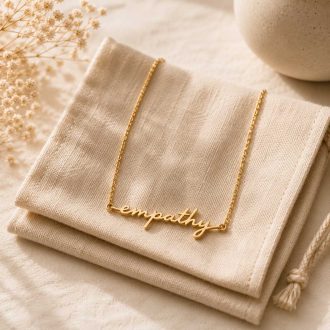
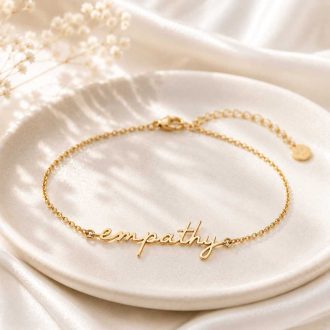
If you enjoy incorporating meaningful objects into reflective moments, some people find comfort in keeping a journal nearby, lighting a candle before an evening reflection, or wearing a piece of jewelry that reminds them to pause before reacting. The object itself isn’t what creates change. It simply becomes a gentle reminder of the practice you’re building and the relationship you’re strengthening with yourself.
What matters most is returning to yourself regularly. Those small moments of awareness often become the foundation for responding with greater steadiness the next time life presents an emotional challenge.
Frequently Asked Questions
Are emotional triggers the same for every empath?
No. Emotional triggers are deeply personal and are influenced by personality, life experiences, relationships, stress levels, and individual sensitivity. While many empaths describe similar experiences, the situations that feel overwhelming—and the reasons they do—can vary significantly from one person to another.
Can emotional triggers become less overwhelming over time?
Yes. While you may not eliminate every trigger, developing greater self-awareness often changes how you respond to them. Learning to recognize patterns earlier, creating healthy boundaries, and practicing emotional recovery can make difficult situations feel far more manageable than they once did.
Is feeling emotionally overwhelmed a sign that something is wrong with me?
Not necessarily. Emotional overwhelm is often your mind and body’s way of signaling that you’ve reached your current capacity for processing stress, emotion, or stimulation. Paying attention to those signals can become an important part of caring for your emotional well-being rather than something to criticize or ignore.
Should empaths avoid emotionally intense people?
Healthy relationships naturally include supporting one another through difficult seasons, so the goal isn’t to avoid people who are struggling. Instead, it’s learning to recognize when someone else’s emotional needs consistently leave you feeling depleted and remembering that compassion doesn’t require sacrificing your own well-being.
What’s the first step toward understanding my own triggers?
Begin by noticing patterns instead of isolated moments. Ask yourself which situations leave you feeling emotionally drained, which relationships help you feel more grounded, and what helps you recover afterward. Those observations often reveal far more than trying to analyze a single difficult day.
Final Thoughts
If you’ve ever questioned why certain people, conversations, or environments affect you so deeply, remember that emotional awareness isn’t a weakness—it’s information. Your reactions may not always be comfortable, but they often reveal something important about your needs, your relationships, and the environments where you feel safest to be yourself.
Learning to recognize your triggers isn’t about becoming less compassionate or building walls around your heart. It’s about creating enough emotional stability that your empathy becomes something you can offer freely instead of something that continually leaves you exhausted. Every small moment of awareness, every healthy boundary, and every decision to care for yourself strengthens that foundation.
Growth rarely arrives through one dramatic breakthrough. More often, it develops quietly through everyday choices: pausing before reacting, allowing yourself time to recover, recognizing when a burden isn’t yours to carry, and responding to yourself with kindness instead of criticism.
Like every part of emotional wellness, this journey isn’t about becoming someone different. It’s about understanding yourself more deeply so your empathy can remain one of your greatest strengths without becoming one of your greatest sources of exhaustion.

Where softness, self-awareness, and emotional healing are allowed to coexist. Through reflective writing, grounding rituals, and intentional beauty, Sparrow Trades offers gentle support for sensitive souls learning to reconnect with themselves.