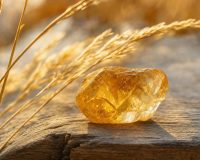
There are seasons when your inner world feels loud. Not dramatic-loud—just… constantly on. The kind of mental noise that makes it hard to rest even when you’re exhausted. You might be doing all the “right” things—hydrating, journaling, setting boundaries, getting sunlight—and still feel like your thoughts are sprinting ahead of your body. In that space, people often reach for a stone like howlite not because they believe a crystal will “fix” them, but because they’re craving a softer signal. Something gentle enough to hold without effort. Something that reminds the nervous system, we’re safe enough to slow down now.
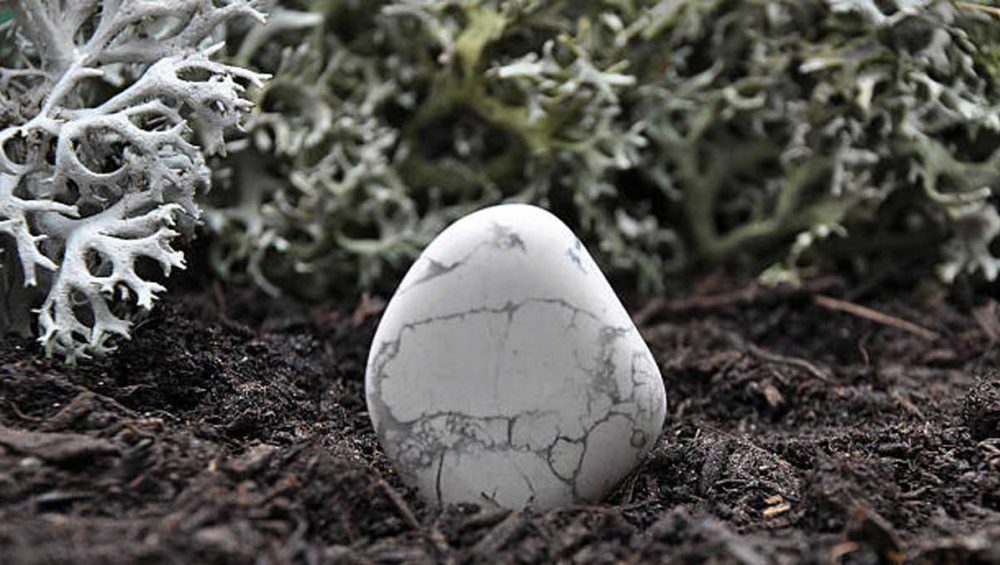
Howlite is one of those stones that tends to find people when they’re tired of bracing. It doesn’t have the flashy intensity of a high-vibration myth. It’s quiet. It’s white with soft gray veining, like a winter sky that isn’t trying to be anything but what it is. And that visual matters. Our nervous systems respond to cues—color, texture, temperature, weight. A smooth, pale stone in your palm can become a simple sensory anchor when everything else feels slippery.
If you’ve ever noticed that your mind gets louder when you finally lie down, you’re not alone. Many of us carry a stress pattern where “rest” feels unsafe—where stillness invites old memories, old dread, old unresolved stories. This is why trauma-informed support isn’t about forcing calm. It’s about offering calm as an option, repeatedly, without punishment. Howlite works well in that lane. It’s often associated with patience, emotional steadiness, and cooling down reactivity—not as a moral project, but as a body-based experience of “less charge.”
This matters because soothing isn’t just a mindset. It’s physiology. When your body is in a protective state, even gentle things can feel like too much. So the most useful tools are the ones you can use without having to be “good at healing.” Howlite doesn’t demand intensity. It pairs naturally with breath, a hand over the heart, a quiet moment by a window. It can sit on your nightstand like a reminder that you don’t have to earn rest. You can practice it.
In Sparrow Trades language, this is part of a wider ecosystem—where stones aren’t treated as shortcuts, but as companions within a larger framework of safety, consent, and self-trust. If you’re exploring stones through the lens of meaning and gentle ritual, you might also resonate with gemstone meanings. And if you’re curious how this fits into the broader spiritual-wellness approach without bypassing the real work of regulation, crystal healing can help ground the “why” in something more honest than hype.
This article will answer the literal question—what is howlite?—but it will also hold the emotional subtext most people are really asking: How do I come back to myself when my inner world won’t quiet down?
What Is Howlite?
Howlite is a naturally occurring mineral most often recognized by its chalky white color and soft gray or black veining. It’s frequently polished into tumbled stones, beads, palm stones, and small carvings—pieces that are easy to hold when your body wants comfort more than complexity. People sometimes confuse it with white turquoise or dyed stones (because howlite is commonly dyed to imitate other minerals), but undyed howlite has a distinct, milky presence—subtle, porous-looking, and quietly calming.
In metaphysical and emotional-wellness contexts, howlite is often described as a “cooling” stone—one associated with easing overstimulation, settling the mind, and supporting patience. That doesn’t mean it will erase anxiety or stop intrusive thoughts like flipping a switch. A trauma-informed framing is different: it treats howlite as a supportive cue, not a cure. The value is often in what it invites—slower breath, gentler self-talk, less urgency in the body—especially when you’re learning how to create safety from the inside out.
Many people reach for howlite during transitions: grief, burnout, the aftermath of conflict, or the long middle part of healing where you’re functional on the outside but internally brittle. If you relate to that, it can help to pair the stone with practices that respect your pacing. A simple hand-held grounding moment can complement what you’re already building through nervous system regulation techniques—especially when you need something small, repeatable, and non-performative.
Howlite is also commonly associated with the crown chakra in chakra-based systems—not because it’s “better” than other stones, but because its color and felt quality are linked with quiet awareness and mental spaciousness. If chakra language resonates for you, chakras and energy can offer a wider map without turning your healing into a checklist.
Howlite Meaning: The Emotional Tone of the Stone
If howlite had an emotional tone, it would be exhale. Not the forced exhale you do when someone tells you to “just relax,” but the natural one that happens when you finally feel understood. Howlite is often connected to patience, emotional softening, and the kind of inner quiet that isn’t numbness—it’s relief.
For many people, the hardest part of “calming down” is that calm can feel unfamiliar. When you grew up in chaos, your nervous system may have learned to equate intensity with normal. In that pattern, peace feels suspicious. You might even feel restless when things are going well. This is where the symbolism of howlite becomes useful: it doesn’t push you into positivity. It offers a neutral, steady presence—something you can touch when your mind starts building worst-case scenarios.
A gentle way to work with the meaning of howlite is to treat it as an anchor for emotional consent. You’re not demanding that your body become calm. You’re asking, Would it be okay to soften by 5% right now? That smallness matters. It aligns with the same nervous-system-respecting philosophy behind somatic self-soothing practices—where the goal isn’t to override your response, but to meet it with steadiness.
Howlite is also often used when someone wants to reduce reactivity. Not because anger is “bad,” but because the body can get stuck in fight mode. If you’ve ever snapped, then immediately felt shame, you know how exhausting that loop is. A stone doesn’t solve the root cause, but it can help interrupt the spiral: touch the stone, feel its temperature, notice your grip, return to breath. Over time, those tiny returns build a new pathway.
And if you’re rebuilding your relationship with calm after emotional overwhelm, you might appreciate weaving howlite into a wider grounding framework—like grounding rituals for emotional safety. The point isn’t to do more. It’s to feel less alone inside your own body.
Howlite Properties: What It’s Known For (Without the Hype)
Howlite is typically described as calming, steadying, and mentally clearing—especially for overthinking and emotional tension. In spiritual and wellness circles, it’s often associated with:
- Quieting mental noise (helpful when thoughts feel “sticky” or repetitive)
- Supporting sleep and wind-down rituals
- Encouraging patience during conflict, irritability, or sensory overload
- Softening emotional intensity without flattening your feelings
- Creating a sense of spaciousness when you feel crowded internally
If you’re familiar with the idea of crystals supporting specific intentions, howlite often lands in the “calm” category alongside stones used for emotional ease. If that’s a lane you’re exploring, crystals by intention can help you stay aligned with what you actually need—without turning crystal work into a performance.
It’s also common to use howlite for meditation, especially when the body wants stillness but the mind keeps narrating. Here’s the trauma-informed truth: meditation is not always calming. Sometimes it’s activating. If that’s been your experience, you’re not doing it wrong—your nervous system is responding to silence. Howlite can be used as a sensory bridge into stillness: a tangible object to keep you tethered. That’s why it pairs well with crystals for meditation—not as a shortcut, but as a support.
And because howlite’s calming reputation often overlaps with “grounding,” it helps to clarify: grounding isn’t the same as numbness. Grounding is the felt experience of being here, in your body, with enough safety to be present. If you want that deeper context, grounding is a strong place to orient.
How to Use Howlite in a Nervous-System-Aware Way
If you want to use howlite in your day-to-day life, the most important thing is how you relate to it. Trauma-informed crystal work doesn’t ask you to force a ritual. It asks you to choose something your body can actually tolerate.
Here are a few emotionally gentle ways people use howlite:
1) The pocket anchor.
Carry a small tumbled howlite stone in your pocket. When you notice stress rising, touch it for three breaths. Not to “fix” anything—just to give your body a predictable cue. This is especially helpful if your stress shows up as mental spinning or jaw tension.
2) The sleep threshold.
Place howlite on your nightstand as part of a consistent wind-down cue. Pair it with one small act—turning off a lamp, washing your hands, a slower breath. If you struggle with sleep rituals because they feel like pressure, keep it minimal. If you want a broader, gentle framework, sleep & circadian basics can help you build rhythms that don’t rely on willpower.
3) The “cooling down” handhold.
If you feel emotionally hot—irritable, overstimulated, ready to snap—hold the stone in your non-dominant hand (often experienced as more receptive). Notice the weight. Let your shoulders drop by one millimeter. That’s enough.
4) The intention that doesn’t demand.
If you set intentions with crystals, keep it soft: “May I meet myself with patience.” If you like intentional structure without intensity, gentle intention-setting practices aligns beautifully with howlite’s tone.
5) The care and cleansing that respects your sensitivity.
Howlite is often porous, and many people prefer non-water cleansing methods to avoid damaging delicate stones. If you want options that feel safe and simple, crystal cleansing without water fits well here. And if you’re wondering about frequency, how often to cleanse crystals can help you avoid the anxious “I’m doing it wrong” loop.
A final note: if you’re drawn to crystals because you’re recovering from trauma, burnout, or years of emotional invalidation, your pacing matters more than your technique. A supportive lens like trauma-informed crystal care can help you keep your practices protective rather than pressuring.
What Is Howlite FAQ
Is howlite a real crystal or a man-made stone?
Howlite is a naturally occurring mineral. What gets confusing is how often it’s dyed—because its porous, white surface takes color easily. Dyed howlite is frequently sold as “turquoise” or other stones. If you want undyed howlite, look for the classic milky white base with gray veining and a softer, chalkier appearance rather than a glossy, glass-like sheen.
If you’re buying for emotional support, the “real” question is often: Does this feel steady to me? That’s a valid way to choose. You’re allowed to prioritize what your body trusts.
What chakra is howlite associated with?
Howlite is commonly associated with the crown chakra, largely because of its pale color and its reputation for mental quiet and spacious awareness. Some people also use it to support emotional soothing (which can overlap with heart and throat themes), but crown is the most common association.
If you want a broader map of how chakras are understood in this framework, chakras & energy 101 can give you context without turning your body into a project.
What is howlite used for spiritually?
Spiritually, howlite is often used for calming the mind, encouraging patience, and supporting a softer relationship with inner experience—especially when someone feels mentally crowded or emotionally reactive. Many people use it during meditation, before sleep, or after conflict when they want to return to center without bypassing what they feel.
If meditation tends to activate you, using a sensory anchor can help. That’s one reason howlite pairs well with crystals for meditation.
Can howlite help with anxiety or overthinking?
Some people experience howlite as supportive for anxiety and overthinking because it encourages a “cooling” emotional tone and provides a tactile anchor. But it’s important to keep expectations trauma-informed: a stone isn’t a replacement for care, support, or medical guidance. Think of it as a cue that helps you practice regulation—especially in small moments where you need something gentle and immediate.
If anxiety shows up as physical agitation, pairing the stone with body-based soothing can be more effective than trying to think your way out of it. You might appreciate somatic self-soothing practices as a companion approach.
How do I cleanse and care for howlite?
Because howlite can be porous, many people prefer cleansing methods that don’t involve soaking in water. Options like smoke cleansing, sound, moonlight, or resting the stone in a calm space can feel safer for the material and for your routine. For gentle options, crystal cleansing without water is a good fit.
A quieter kind of care is also valid: sometimes “cleansing” is simply letting your stone rest. If that idea feels like permission rather than another task, resting crystals intentionally may resonate.
What’s the difference between howlite and other white stones like selenite or clear quartz?
Howlite is often chosen for its calming, patience-oriented tone and its gentle visual softness. Selenite is frequently linked with clarity and crown chakra work in a more “light and cleansing” way—many people experience it as airy and bright. Clear quartz is often viewed as amplifying and versatile, which can be beautiful, but sometimes too activating for someone who’s already overstimulated.
If you’re deciding between them, it can help to explore their meanings side-by-side: selenite and the crown chakra and clear quartz meaning can help you choose based on what your nervous system actually wants.
Conclusion: Howlite as a Soft Place to Land
If you’re drawn to howlite, there’s often a deeper truth underneath the curiosity. Not just “What is this stone?” but “Can something in my life feel quieter?” Sometimes it’s about sleep. Sometimes it’s about irritability. Sometimes it’s about the way your mind won’t stop scanning for danger even when you’re safe. In those moments, a simple object you can hold—smooth, cool, steady—becomes more than a crystal. It becomes a choice: I’m allowed to come back to myself.
Howlite’s gift is that it doesn’t require you to be brave in a dramatic way. It supports the brave that looks like turning down the volume a notch. The brave that looks like leaving one text unanswered until your body settles. The brave that looks like pausing mid-spiral and choosing a slower breath. Those are not small things. They’re how safety is rebuilt—one nervous-system-friendly repetition at a time.
If you want to keep your relationship with crystals grounded and emotionally honest, let your practice be simple. Let it be kind. Let it be shaped by your capacity, not your ideals. That’s the deeper architecture behind emotional wellness foundations—the idea that healing doesn’t have to be loud to be real.
And if you’re someone who connects to meaning through what you wear, you might find it comforting to explore pieces designed for softness and steadiness—like calming jewelry. Not as armor. Not as a statement. Just as a quiet companion you can carry into your day.
When you’re ready to go deeper, howlite can also open natural next steps in the Sparrow Trades ecosystem—without forcing urgency. You might eventually want a more focused page on howlite meaning, a chakra-specific guide like howlite chakras, an everyday-practice companion such as howlite uses, or a wearable symbolism lens through howlite jewelry meaning.
But for now, the simplest truth is enough: howlite is a gentle stone. And gentleness—real gentleness—can be a powerful beginning.

Where softness, self-awareness, and emotional healing are allowed to coexist. Through reflective writing, grounding rituals, and intentional beauty, Sparrow Trades offers gentle support for sensitive souls learning to reconnect with themselves.