
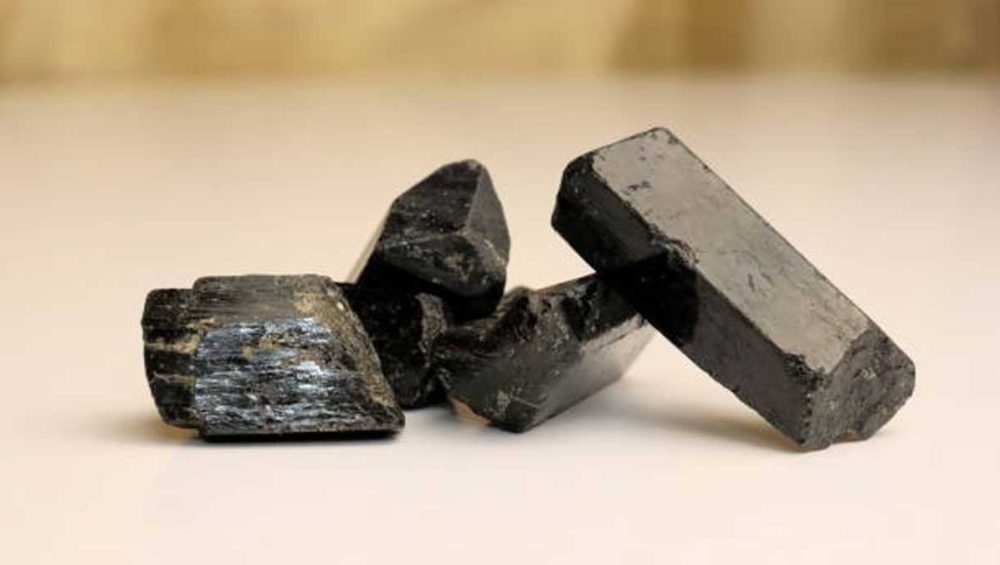
Black tourmaline has a way of showing up when you’re tired of feeling porous.
Not “tired” like you need more sleep (though that might be true too), but tired in the deeper sense—tired of carrying tension that isn’t yours, tired of walking into a room and instantly bracing, tired of your nervous system acting like the world is always a few seconds away from danger. Sometimes what we’re craving isn’t a dramatic transformation. It’s a quieter kind of safety: something we can reach for when we feel untethered, like a handrail you can find in the dark without having to explain why you need it.
That’s where black tourmaline tends to fit. Not as a promise that the world will stop being loud, but as a steady companion that helps you stay connected to yourself inside the noise.
If you’ve heard it described as protective, grounding, or stabilizing, those words can feel a little vague until you know what “use” actually looks like. This guide is for that. It’s the practical application page: simple ways to use black tourmaline in daily life—wearing it, carrying it, placing it in spaces, weaving it into meditation and breath, and using it as a small anchor for intention-setting. It does not replace the deeper symbolism of black tourmaline meaning and it doesn’t try to become a full benefits inventory. It’s about real-world use, one gentle step at a time.
A trauma-informed approach matters here, because “protection” doesn’t have to mean armor. For many of us, the goal isn’t to harden—it’s to soften without collapsing. It’s to stay open to life while staying connected to ourselves. So as you read, keep this principle close: the best way to use black tourmaline is the way that helps your body feel more present, not more performative.
You don’t need to do it perfectly. You don’t need a ritual that takes an hour. You don’t need to “believe” the right way for it to be supportive. Start with what’s real: your body, your day, and the moments when you notice you’re drifting away from yourself. If you’ve been living with long-term stress, your system may default to scanning, bracing, or disconnecting—sometimes so quickly you don’t even notice it happening. The point of a grounding tool is to give you a pathway back: back to your breath, back to your body, back to a sense of “I’m here.” If you want a wider landscape of support, you might also explore crystals for grounding and see what resonates with your nervous system, not just your aesthetics.
Use 1: Wear It When You Want Your Energy to Feel More “Yours”
Wearing black tourmaline is often the simplest and most consistent way to work with it, because it stays close to your body’s field of awareness all day. The point isn’t that it magically blocks the world; the point is that it becomes a tactile reminder: I’m allowed to stay with myself. If your default is to leave your body when things get intense—over-explaining, people-pleasing, over-performing—something physical on your skin can be a quiet cue to come back.
If you’re someone who feels other people’s moods like weather, wearing black tourmaline can support a boundary you don’t have to constantly explain. Not a wall—more like an edge. A soft, steady “no” to absorbing everything. If your system tends to fuse with other people’s urgency, the simple act of touching the stone can interrupt that pattern and create a moment of choice.
Try wearing it in situations where you usually lose yourself:
- social settings where you “scan” the room and forget your own needs
- work environments that keep your system on alert
- errands or public places where overstimulation builds fast
- family interactions where old roles get reactivated
On a nervous-system level, wearing a grounding stone can work like a small “orientation anchor.” You touch it, you notice its weight, and your body gets a moment to come back online. This can be especially supportive when you’re practicing new patterns—like pausing before you say yes, or taking a breath before you explain yourself. If your “yes” comes too quickly, this is a gentle place to practice slowing down.
If you like jewelry, let the choice be practical. A bracelet can feel like a constant reminder you can touch without drawing attention. A necklace can feel more like a steady presence near the heart and throat. If you want to browse in a way that stays aligned with the stone’s everyday use, black tourmaline jewelry can be a simple starting point—no pressure, just options.
A gentle practice: before you put it on, take ten seconds to name what you want to feel more of. Not as a demand—more like a direction. “Steady.” “Here.” “Clear.” “Safe enough.” Then let the day happen. If you forget about it, that’s fine. If you remember it in the exact moment you need it, that’s the point.
Use 2: Carry It as a Pocket Anchor for Stress Spikes
Carrying black tourmaline—especially as a small stone in your pocket or bag—is for the moments when life hits harder than you expected. You might not be wearing jewelry that day. You might be in a season where you’re doing your best just to get through. A pocket stone can meet you there.
This is one of the most trauma-informed uses because it doesn’t require you to “process” anything on the spot. It supports regulation without forcing a story. You can simply touch the stone and let your body register something steady. The goal is not to analyze why you’re triggered; the goal is to help your system come back into the present without shame.
Use it when:
- your chest tightens and you don’t know why
- you feel suddenly unsafe even though nothing obvious happened
- you’re about to walk into a hard conversation
- you’re leaving the house while grieving, exhausted, or raw
- you’ve been scrolling or working too long and feel “floaty”
A practical technique: when you touch the stone, pair it with a micro-orientation. Feel the stone’s edges or texture. Press your feet into the ground. Look for three neutral objects in your environment. Let your exhale be slightly longer than your inhale. If you want a tiny structure that’s easy to remember, 5-minute grounding rituals can give you quick options without turning it into a project.
The stone becomes a cue for a pattern your body can learn: touch → orient → exhale → return. Over time, this builds trust—not in the stone as a solution, but in you as someone who can come back to yourself. That’s the deeper gift of a grounding tool: it helps you practice the kind of inner steadiness you used to think you had to earn.
Use 3: Place It in Spaces Where Your Body Wants to Exhale
Placement is about environment. Some spaces hold stress like humidity—your entryway after a long day, your desk where you overfunction, your bedroom when sleep feels guarded, your living room where you host and perform. Placing black tourmaline in a space is a way of saying: this place gets to feel like mine.
This can be especially meaningful if you grew up in homes where you didn’t feel safe to take up space, or where your nervous system learned to stay on watch. A grounding stone in your environment can act as a visual and energetic “permission slip” to soften. It’s not that a stone erases your history. It’s that it can help you practice a new present.
Consider placing it:
- near your front door as a threshold marker (leaving and returning)
- on your desk as a boundary between you and work pressure
- beside your bed if nighttime makes you hyperaware
- in a quiet corner you use for journaling, prayer, or reflection
- near devices if you feel digitally overstimulated
The key is to pair placement with a felt intention. Not a dramatic vow—just a simple statement your body can understand. “This room is for rest.” “This desk is for focus, not self-erasure.” “When I enter here, I can let go.” If you want support making a space feel emotionally safe without forcing yourself into “positive vibes,” grounding rituals for emotional safety can offer language that stays gentle and embodied.
If your overwhelm is strongly linked to screens, devices, and constant input, black tourmaline is often used in spaces where you work or charge your phone. If you’re specifically exploring that angle, black tourmaline for emf protection stays focused on that exact use case without turning the whole article into an EMF deep-dive.
Use 4: Grounding Practices with Breath and Presence (No Forced Breakthrough)
Black tourmaline meditation doesn’t need to be mystical. It can be practical, body-first, and gentle—especially if your nervous system doesn’t respond well to going inward too fast. For some people, closing the eyes intensifies sensation rather than soothing it. If that’s you, let this be simple and choice-based.
A supportive way to meditate with black tourmaline:
- hold it in one hand and keep your eyes softly open
- feel its weight as a reminder you are here, now
- place it on your lap rather than your body if touch feels too intense
- focus on the sensation of contact, not “clearing energy”
Try a grounding practice that prioritizes safety:
- Sit comfortably and notice one place your body feels supported (chair, floor, wall).
- Hold the stone and name what you’re feeling without analysis: “tight,” “buzzing,” “heavy,” “numb.”
- Take three slow exhales, letting your breath be honest rather than perfect.
- Ask one gentle question: “What would help me feel 5% more steady right now?”
- Listen for something small: water, light, movement, a boundary, a pause.
If breathwork helps, keep it nervous-system-aware. The intention isn’t intensity; it’s steadiness. One of the simplest ways to signal safety to the body is to slow down the exhale. If you want structured ideas that stay gentle, grounding with air and breath can support you without pushing you past your window of tolerance.
If you’re rebuilding baseline regulation in general, this is where broader practices can matter. Sometimes what looks like “energy sensitivity” is actually an exhausted system that hasn’t had consistent recovery. If you want a nervous-system-first foundation alongside your crystal practices, nervous system regulation techniques can help you widen the support around the stone rather than putting all the pressure on it.
And if your body responds well to small, gentle physical cues, practices like vagus nerve exercises can pair beautifully with a grounding stone: not as a “fix,” but as a daily signal that you are safe enough to be here.
Use 5: Rituals and Intention-Setting for Real Life (Not Performance)
Ritual can be a beautiful way to use black tourmaline—especially when it’s designed for the life you actually have. Not the ideal morning routine. Not the version of you who never gets triggered. Real life.
A ritual is just a repeated act that tells your nervous system, we are paying attention. Black tourmaline supports rituals that focus on boundaries, grounding, and returning to self. If you want a simple framework for using crystals in daily rhythm without making it feel ceremonial or heavy, daily rituals with crystals can help you keep it tender and sustainable.
Try these simple options:
Morning “steady start” (under 60 seconds)
Hold the stone, take one breath, and choose a single word for the day: “steady,” “clear,” “protected,” “soft.” Put it in your pocket or wear it. If you like starting your day with supportive language, morning affirmation rituals with crystals can offer gentle phrasing that doesn’t feel performative.
End-of-day release (2 minutes)
Place the stone on your nightstand or beside a candle. Let your shoulders drop. Say: “I’m done carrying what isn’t mine.” Wash your hands slowly and treat it like a reset. If your system holds onto the day like it’s still happening, this kind of ending matters more than you think.
Threshold ritual (leaving home / returning home)
Touch the stone near your door. On the way out: “I can stay with myself.” On the way in: “I can let go here.” This is especially powerful if you’ve learned to leave your body the moment you step into the world.
Difficult conversation support
Hold the stone before you speak. Let it be a cue to slow down. You don’t have to explain everything. You don’t have to earn your boundary with perfect words. If you’re using black tourmaline specifically because you want to feel more held in relational stress, black tourmaline for protection stays focused on that exact emotional terrain.
The most Sparrow Trades-friendly way to think about intention-setting is this: you’re not commanding the universe. You’re choosing an inner posture. Black tourmaline becomes the object that helps you practice that posture consistently—especially on days when you’d otherwise abandon yourself.
Use 6: Care, Cleansing, and Pacing (So Your Practice Stays Gentle)
One of the fastest ways a spiritual practice becomes stressful is when it turns into a maintenance schedule you can’t keep. If you’ve ever felt guilty because you didn’t cleanse a crystal “often enough,” you’re not alone. A nervous-system-aware approach values relationship over rules. Your practice should support your life, not add another invisible standard to meet.
Black tourmaline is often used for grounding and protection, which means people reach for it during heavier seasons. That’s also when you may want simple, sustainable care. If you’re looking for a clear, specific guide, how to cleanse black tourmaline is the most direct resource for this exact stone.
For broader guidance, it can help to know what “often” actually means without turning it into a rigid rule. If you want that bigger-picture rhythm, how often to cleanse crystals can help you choose a cadence that matches your real life. And because black tourmaline is commonly kept near entryways, desks, and bedrooms, many people prefer methods that don’t involve water. If that’s you, crystal cleansing without water can keep things simple and safe.
There’s also pacing. Some tools feel supportive when you’re regulated, but can feel “too much” when you’re already overstimulated. If black tourmaline ever feels heavy to you, treat that as information—not failure. It may be a sign you need rest, softness, or fewer inputs. In those seasons, it can help to broaden your support system with approaches like trauma-informed crystal care so your practice stays kind to your body.
If you want to explore grounding stones beyond black tourmaline—especially if you’re learning what your nervous system prefers— best grounding gemstones can help you compare options without losing the emotional thread of why you’re reaching for support in the first place.
Black Tourmaline Uses FAQ
Can I use black tourmaline every day?
Yes—daily use is often the most supportive because it’s consistent and low-pressure. If you notice you feel heavy, edgy, or unusually tired while using it, that’s a cue to pause and check your basics first: hydration, sleep, overstimulation, emotional load. Sometimes what we call “energy” is simply a nervous system asking for less input. It’s also okay to take breaks from any tool, even one you love. Daily use should feel steadying, not intense.
Where should I place black tourmaline in my home?
Place it where your body tends to brace. For many people that’s the entryway (threshold energy), the desk (work stress), and the bedroom (rest and recovery). If you’re sensitive to your environment, start with one location and live with it for a few days. The goal isn’t perfect placement—it’s noticing whether that area feels even slightly easier to inhabit.
Is it better to wear black tourmaline or carry it?
Wear it when you want consistent support and you like having a close, body-level reminder. Carry it when you want flexibility, when jewelry isn’t an option, or when you prefer a private grounding tool. Many people do both: jewelry for day-to-day steadiness, a pocket stone for stress spikes or unfamiliar environments.
How do I use black tourmaline for grounding when I’m overwhelmed?
Keep it simple: touch the stone and pair it with one regulating action. Feel your feet on the floor. Look around and name three neutral objects. Let your exhale be longer than your inhale. If overwhelm is strong, you don’t need a long practice—you need a small anchor that helps you orient to the present. The stone is the cue; your body’s return is the outcome.
Can black tourmaline be used during meditation?
Yes, and it can be especially helpful if meditation tends to make you feel “floaty” or ungrounded. Hold it, keep your eyes softly open if that feels safer, and focus on contact and weight. This isn’t about achieving a trance. It’s about staying here. If you notice meditation becomes too intense, come back to sensation: the stone, the chair beneath you, the room around you.
Do I need to cleanse black tourmaline if I use it often?
If you use it daily, cleansing can be a helpful maintenance practice—but it doesn’t need to become another task you feel guilty about. A good rule is to cleanse it when it feels dull to you, when you’ve been through a heavy season, or when you want a fresh start. Gentle methods like smoke, sound, or resting it in a quiet place can be enough. The deeper purpose of cleansing is often psychological: it marks a reset and reminds you that you can begin again.
Conclusion: Let It Be a Small, Steady Yes to Yourself
The most powerful black tourmaline uses are rarely dramatic. They’re quiet. Repetitive. Almost boring in the best way—because safety is built through repetition, not intensity.
If you’re in a season where you’re learning to ground after years of bracing, let black tourmaline be simple. Wear it when you want to stay connected to yourself. Carry it when you anticipate a stress spike. Place it where your body wants to exhale. Hold it during meditation when you need help staying present. Use it in small rituals that tell your nervous system, again and again: I’m here. I’m listening. I’m allowed to come back. And when you want the grounded feeling to become more than a moment—when you want it to become a way of living— grounding with crystals daily practices can help you build consistency without turning it into pressure.
You don’t have to turn it into a performance. You don’t have to use it perfectly. The goal isn’t spiritual productivity. The goal is a life that feels more inhabitable—one moment of steadiness at a time. If your nights are where your nervous system feels most on watch, it may help to explore black tourmaline for sleep as a focused next step.
If you want a single guiding question to return to, make it this: Does this use help my body feel more like it belongs to me? If the answer is yes, you’re using black tourmaline in the way it was always meant to be used—not as armor, but as an anchor.

Where softness, self-awareness, and emotional healing are allowed to coexist. Through reflective writing, grounding rituals, and intentional beauty, Sparrow Trades offers gentle support for sensitive souls learning to reconnect with themselves.