
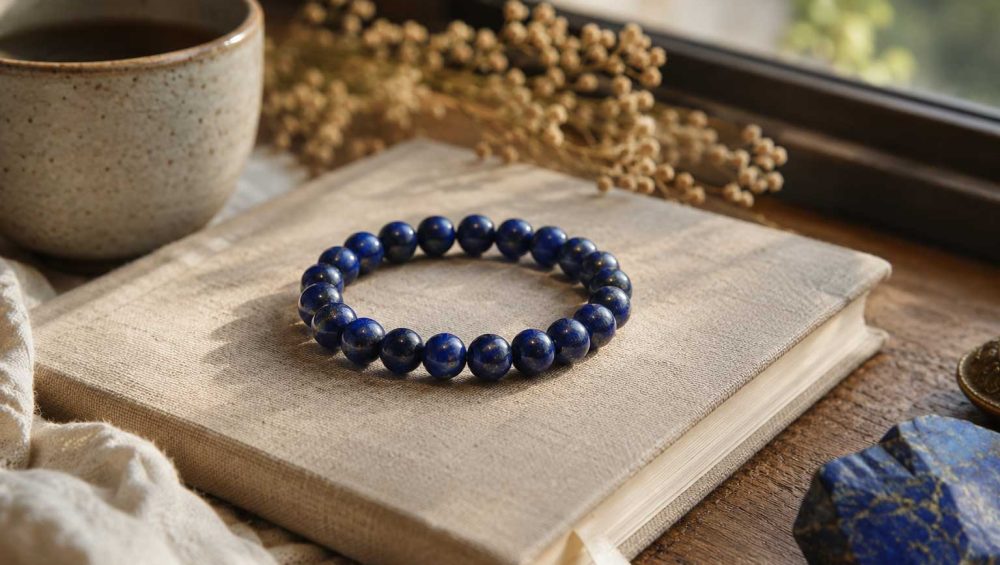
Many people are drawn to lapis lazuli before they know much about its history, symbolism, or spiritual associations. Something about its deep blue color, often flecked with shimmering gold pyrite, feels timeless. It has been treasured for thousands of years by rulers, artists, healers, and seekers who viewed it as a stone connected to wisdom, truth, and inner vision.
Then comes a surprisingly common question:
Which hand should you wear a lapis lazuli bracelet on?
At first glance, the question may seem simple. Yet for many people, it reflects something deeper. They are not only asking where a bracelet belongs physically. They are wondering how to work with the intentions they associate with the stone. They want their jewelry to feel meaningful rather than random.
The good news is that there is no universally correct answer.
Different spiritual traditions, crystal practitioners, and energy workers have different perspectives on how gemstones interact with the body. Some focus on receiving energy. Others focus on expressing energy. Many people simply choose the hand that feels most natural and comfortable.
If you have ever felt overwhelmed by conflicting advice online, you are not alone. Crystal work is highly personal. Your relationship with a stone develops through experience rather than strict rules.
Lapis lazuli is often associated with honest communication, self-expression, intuition, wisdom, and personal truth. Because of these themes, the hand you choose can become part of your intention rather than a rigid requirement.
For some people, wearing lapis lazuli becomes a daily reminder to speak honestly. For others, it serves as a symbol of listening more deeply to themselves. Many are drawn to the stone during periods of self-discovery, emotional healing, or spiritual growth when reconnecting with their authentic voice feels especially important.
Understanding the symbolic meaning of each hand can help you decide what feels right for your situation. More importantly, it can help you approach the practice with curiosity instead of pressure.
Just as many people are first drawn to the history and symbolism of lapis lazuli, the journey often continues into understanding how intention shapes the way a stone is worn and experienced.

The Traditional Meaning of Wearing a Crystal on the Left Hand
In many spiritual traditions, the left side of the body is associated with receiving.
You may hear crystal practitioners describe the left hand as the side that receives energy, insight, wisdom, or emotional support. Whether viewed literally or symbolically, this perspective can offer a helpful framework for intention-setting.
When lapis lazuli is worn on the left wrist, many people associate it with inviting qualities inward:
- Greater self-awareness
- Inner wisdom
- Emotional clarity
- Intuitive guidance
- Honest self-reflection
- Deeper connection to personal truth
This can be particularly meaningful during periods of uncertainty or transition. When life feels noisy, people often seek practices that help them reconnect with themselves rather than focus on external demands.
Lapis lazuli has long been connected to introspection and wisdom. Its reputation as a stone of truth is not necessarily about speaking more loudly. Sometimes truth begins with listening more carefully to what you already know deep inside.
Individuals exploring emotional clarity and truth often find that the symbolism of the left hand aligns naturally with personal reflection and inner guidance.
If your intention involves:
- Strengthening intuition
- Understanding your emotions
- Developing self-trust
- Deepening meditation practices
- Cultivating personal insight
the left wrist may feel like a meaningful choice.
Rather than thinking of the left hand as magically producing results, many people find it helpful to view the bracelet as a physical reminder. Every time they notice it, they reconnect with the qualities they are trying to nurture within themselves.
That simple act of awareness can be surprisingly powerful.

The Traditional Meaning of Wearing a Crystal on the Right Hand
The right hand is often associated with expression, action, and outward energy.
In symbolic crystal traditions, the right side is sometimes viewed as the side through which intentions are shared with the world. While the left side is linked with receiving, the right side is linked with giving, communicating, and embodying.
For lapis lazuli, this symbolism can feel especially relevant because the stone is strongly connected to communication.
Many people choose the right wrist when their focus involves:
- Speaking confidently
- Sharing ideas
- Setting boundaries
- Expressing emotions honestly
- Communicating with authenticity
- Living more openly from their values
Lapis lazuli has a long association with the throat chakra, which is often connected to self-expression and truthful communication. People who are working to strengthen their voice may find that wearing the stone on the right side reinforces this intention.
This does not mean speaking more often or becoming louder. Healthy communication frequently involves calmness, clarity, and confidence rather than volume.
For individuals healing from people-pleasing, emotional suppression, or self-doubt, wearing a lapis bracelet on the right wrist can become a gentle reminder that their voice matters.
Themes explored through throat chakra healing with lapis lazuli often center around expressing thoughts and emotions with greater honesty and self-respect.
In this sense, the bracelet serves less as a source of power and more as a symbol of a personal commitment to authenticity.
Every glance at the bracelet becomes an opportunity to ask:
“Am I honoring what I truly think, feel, and believe?”
How Intuition Can Be the Best Guide
One challenge many people encounter when exploring crystals is the desire to find the perfect answer.
Should it be left or right?
Should it be day or night?
Should it be worn continuously or only during meditation?
While traditions can offer useful guidance, rigid rules often create unnecessary pressure.
Many experienced crystal practitioners eventually arrive at a simpler approach:
Pay attention to what feels meaningful.
If you instinctively want to wear lapis lazuli on your left wrist, there may be a reason. If the right wrist feels better, there may be a reason for that as well.
Sometimes intuition communicates through subtle preferences rather than dramatic insights.
The same principle appears in many mindfulness and self-awareness practices. Learning to trust yourself often begins with noticing small signals rather than waiting for certainty.
People developing stronger self-trust frequently discover that the process mirrors themes found within emotional self-awareness in healing and learning to trust your emotions again.
Lapis lazuli itself is often associated with inner wisdom. In a sense, allowing yourself to choose the hand that feels most aligned may actually embody the stone’s symbolism more fully than following someone else’s rule.
The goal is not perfection.
The goal is connection.
What If You Switch Hands?
Many people switch hands depending on their circumstances.
There is no reason a lapis lazuli bracelet must stay on the same wrist forever.
In fact, some people intentionally alternate based on changing intentions.
For example:
During meditation or journaling, they may wear it on the left hand to emphasize reflection and receptivity.
Before a difficult conversation, presentation, or important meeting, they may move it to the right hand to emphasize communication and confidence.
This flexible approach allows the symbolism to evolve alongside your needs.
Some people also wear lapis lazuli only during specific rituals or reflective practices. Others wear it every day as part of their regular jewelry collection.
If you enjoy combining spiritual symbolism with personal rituals, practices such as lapis lazuli meditation techniques or working with lapis lazuli affirmations can help deepen your connection with the stone.
The most important factor is consistency with your intention rather than consistency with a rule.
Lapis Lazuli, the Throat Chakra, and the Third Eye Chakra
One reason people often ask which hand to wear lapis lazuli on is because of its strong connection to energy centers associated with communication and insight.
Lapis lazuli is most commonly linked with:
- The throat chakra
- The third eye chakra
The throat chakra is often associated with communication, self-expression, truth, and authenticity.
The third eye chakra is commonly associated with intuition, wisdom, perception, and inner knowing.
Because lapis lazuli bridges both themes, it occupies a unique space among gemstones. It supports not only speaking your truth but also understanding your truth.
This balance helps explain why both the left and right hand traditions can feel meaningful.
The left side may symbolize receiving insight.
The right side may symbolize expressing insight.
Together, they reflect the full cycle of self-awareness and communication.
Those interested in exploring the broader energetic symbolism behind these associations may find value in understanding chakras and energy or examining the relationship between third eye chakra connection.
Rather than viewing these concepts as strict doctrines, many people use them as reflective frameworks that encourage greater awareness of their intentions and personal growth.
Frequently Asked Questions
Which hand should women wear a lapis lazuli bracelet on?
There is no specific hand designated for women. Most crystal traditions focus on intention rather than gender. The left hand is often associated with receiving and introspection, while the right hand is associated with expression and action.
Which hand should men wear a lapis lazuli bracelet on?
The same guidance applies regardless of gender. Many people choose the wrist that best reflects their current intention or simply the side that feels most comfortable.
Is it better to wear lapis lazuli on the left hand?
It depends on your purpose. If your focus is intuition, self-reflection, emotional insight, or personal growth, many traditions suggest the left hand because of its symbolic connection to receiving energy.
Is it better to wear lapis lazuli on the right hand?
Many people choose the right hand when they want support with communication, confidence, self-expression, and sharing their ideas more openly with others.
Can I wear lapis lazuli every day?
Yes. Many people wear lapis lazuli daily as part of their jewelry collection or personal spiritual practice. As with any gemstone jewelry, comfort, durability, and personal preference should guide your decision.
Can I switch wrists?
Absolutely. Many crystal enthusiasts switch wrists depending on their goals, emotional needs, or intentions for a particular day.
Does lapis lazuli really have spiritual effects?
Experiences vary widely. Some people view crystal work as a spiritual practice, while others appreciate gemstones primarily for symbolism, mindfulness, beauty, or personal meaning. Both approaches are valid.
Is lapis lazuli considered a stone of truth?
Yes. Throughout history, lapis lazuli has often been associated with wisdom, honesty, authenticity, and deeper understanding. These themes contribute to its reputation as a stone of truth.
Conclusion
If you are wondering which hand to wear a lapis lazuli bracelet on, the simplest answer is this:
Wear it on the hand that best supports your intention.
The left wrist is often associated with receiving wisdom, intuition, and personal insight.
The right wrist is often associated with expressing truth, communication, and authentic action.
Neither choice is universally right or wrong.
Lapis lazuli has remained meaningful across centuries because it invites reflection rather than rigid rules. Its symbolism encourages people to become more aware of their inner voice, their personal truth, and the way they share themselves with the world.
Whether you wear it during meditation, moments of self-reflection, important conversations, or everyday life, the bracelet can become a quiet reminder of the qualities you wish to cultivate.
Sometimes the most powerful aspect of a gemstone is not where it sits on your wrist.
It is the intention you bring to it.
For those continuing to explore crystal symbolism, gemstone traditions, and mindful jewelry practices, resources on gemstone meanings, crystal healing, and authentic lapis lazuli jewelry can offer additional perspectives as your journey unfolds.

Where softness, self-awareness, and emotional healing are allowed to coexist. Through reflective writing, grounding rituals, and intentional beauty, Sparrow Trades offers gentle support for sensitive souls learning to reconnect with themselves.