

January arrives with a strange kind of noise.
Not the loud kind — not fireworks or celebrations — but the quieter pressure that hums underneath everything. The sense that you should know something by now. That you should feel clearer, more motivated, more resolved. As if the turning of the calendar demands immediate orientation.
For many people, January doesn’t feel like a beginning at all. It feels like standing in the doorway after a long year, still holding the weight of what you carried through December. The body hasn’t caught up yet. The nervous system is still thawing. The mind keeps scanning for the “right” direction, while the heart feels slower, less certain.
And somewhere in that space, a question arises — often gently, sometimes with frustration:
What is my word of the year supposed to be?
You may have seen others choosing words that sound confident and decisive. Focus. Discipline. Abundance. Growth. You may have tried to pick one yourself, only to feel blank, resistant, or quietly overwhelmed. Or perhaps you’ve chosen a word before and watched it turn into another expectation you couldn’t live up to.
What often gets lost in conversations about choosing a word of the year is this: the practice was never meant to be about performance. It wasn’t designed to sharpen you, optimize you, or demand transformation on a schedule. At its core, it’s an orienting ritual — a way of naming what you’re willing to stay in relationship with as time unfolds, the same way you might return to small daily self-care rituals when life feels too loud to hold all at once.
January is not a month of answers. It is a month of listening.
This is especially true if you’ve lived through emotional exhaustion, prolonged stress, grief, relational rupture, or any experience that taught your system to stay alert instead of curious. When your inner world has learned to brace, even gentle practices can feel demanding if they’re framed the wrong way. Sometimes the most supportive thing isn’t a new plan — it’s a return to emotional wellness foundations that make your body feel safer inside itself.
So if you’re here asking what your word of the year should be, this is not going to push you toward clarity. It’s going to invite you into something quieter: a way of letting a word arrive rather than forcing it into place. Something that respects nervous system regulation techniques instead of overriding them.
Not a goal.
Not a mandate.
Not a personality overhaul.
But a companion.
One word you can walk with — slowly, imperfectly, and without pressure — through a year that doesn’t need to be mastered to be meaningful.
Why January Is a Threshold, Not a Starting Line
January sits in a psychological in-between.
Culturally, it’s framed as a reset — a clean slate, a chance to reinvent yourself. But biologically and emotionally, most people are still in a phase of recovery. Light is only beginning to return. Energy is uneven. Motivation comes in short bursts and disappears just as quickly.
This mismatch creates tension.
When the mind is told to move forward but the body is still integrating what’s passed, people often experience subtle distress: irritability, self-doubt, restlessness, or the feeling that they’re “behind” before the year has truly begun.
Rituals that work in January honor this threshold quality. They don’t demand action. They provide containment — the kind of slow, steady structure you might find in threshold rituals for life transitions when you’re crossing from one inner season to another.
Choosing a word of the year — when approached gently — functions less like a decision and more like a stabilizing reference point. It gives the psyche something simple to return to when everything feels open-ended. Not a plan, but a reminder.
Importantly, this kind of ritual supports nervous-system safety because it reduces cognitive load. Instead of juggling multiple resolutions or tracking constant self-improvement metrics, you orient around a single concept that can adapt as circumstances change. If your system is still recovering, even that simplicity can feel like relief — the same relief people reach for when they need how to reset your nervous system after stress without being told to “push through.”
January doesn’t ask you to sprint. It asks you to arrive.
When you understand this, the pressure to “pick the perfect word” softens. There is no perfect word — only one that resonates enough to stay with you through uncertainty.
And resonance isn’t loud.
It’s often subtle. It shows up as a quiet “yes” in the body. A sense of steadiness rather than excitement. A word that doesn’t demand explanation or defense.
If you’re waiting for fireworks, you may miss it.
What a Word of the Year Is — and What It Is Not
A word of the year is not a commandment.
It is not a brand identity. It is not a productivity hack. And it is not a promise about who you will become if you try hard enough.
When people struggle with this practice, it’s often because they’ve absorbed the idea that the word should fix something — their habits, their personality, their lack of direction. That framing turns a reflective ritual into a performance metric, which is especially destabilizing for anyone who already carries a history of self-criticism or emotional over-responsibility.
At its healthiest, a word of the year functions as orientation rather than expectation.
Orientation asks:
Where am I facing?
What am I willing to stay curious about?
What quality do I want to notice when it appears — even imperfectly?
Expectation asks:
What should I achieve?
What should change?
Who should I be by December?
Those two approaches feel very different in the body.
Orientation creates room. Expectation creates pressure.
A supportive word doesn’t hover over you like a supervisor. It walks beside you. It doesn’t scold you when you forget it. It waits patiently until you remember.
This distinction matters deeply for people with sensitive nervous systems, trauma histories, or long-standing patterns of people-pleasing. If you’ve spent years being evaluated — by others or by yourself — you don’t need another standard to live up to. You need something that restores agency and choice. Sometimes that restoration begins with learning to trust your emotions again in small, ordinary moments.
Your word is not there to correct you. It’s there to reflect you.
And sometimes the most meaningful words aren’t aspirational at all. They’re grounding. Stabilizing. Even modest.
Words like enough, steady, soften, allow, listen, repair don’t sparkle on social media — but they can quietly change how a year feels from the inside.
How to Let Your Word Emerge Instead of Forcing It
One of the most common questions people ask is how to choose their word of the year — as if there’s a correct method they’re missing.
In reality, the problem is rarely lack of technique. It’s usually excess effort.
Forcing clarity often backfires because it activates the same part of you that associates decision-making with risk or judgment. When the body feels evaluated, intuition goes quiet — and the gentlest way back is often through grounding instead of mental pressure.
Instead of asking “What should my word be?”, try asking gentler questions — ones that invite listening rather than performance.
What themes have followed me lately, even when I didn’t choose them?
What do I keep returning to when things feel hard?
What quality feels regulating rather than demanding?
You might notice that certain words evoke a physical response. A softening in the chest. A steadier breath. A sense of recognition rather than ambition.
That’s information.
Another helpful approach is subtraction. Instead of imagining who you want to become, consider what you’re tired of carrying. Often, the word that wants to accompany you arises in contrast to what you’re ready to release. When your body has been living near overwhelm, that release might be supported by simple somatic self-soothing practices that help you come back to yourself before you decide anything at all.
If you’re exhausted by urgency, the word might be pace.
If you’re weary of over-explaining, the word might be trust.
If you’ve lived in survival mode, the word might be rest — not as a goal, but as permission.
There’s no requirement that the word feel inspiring. Safety often comes before inspiration.
Once a word surfaces, sit with it. You don’t need to announce it. You don’t need to commit publicly. Let it exist quietly for a few days and notice how it interacts with your inner world. Does it feel intrusive or supportive? Does it narrow you or give you space?
If a word creates tension, it’s allowed to change. Flexibility is not failure.
This ritual isn’t about locking yourself into an identity. It’s about choosing a point of gentle reference you can return to when the year inevitably becomes unpredictable.
Carrying the Word Through the Year Without Turning It Into Pressure
The most common way people unintentionally sabotage their word of the year is by turning it into a measurement tool.
They ask:
Am I living up to it?
Am I honoring it enough?
Have I failed if I forget it for weeks at a time?
But a word of the year doesn’t require constant attention. It works through repetition and return, not vigilance.
Think of it less like a rule and more like a background note in music. Sometimes you hear it clearly. Other times it fades — but it’s still shaping the experience.
You might write your word somewhere private. You might associate it with a small object or gesture. Or you might simply hold it internally, allowing it to surface when you need orientation.
What matters is that the word remains non-punitive.
If you notice self-criticism creeping in — I’m not doing this right — that’s not a sign to try harder. It’s a sign to soften your grip. The practice is meant to support regulation, not undermine it. In the moments where your system feels activated, it can help to return to small, steady supports like vagus nerve exercises or a short set of 5-minute grounding rituals that bring you back into your body without making the day feel like a project.
Some years, the word is active. Other years, it’s protective. Some years, it asks you to move. Others, it asks you to stay.
You don’t have to use it to decide everything. Sometimes it simply reminds you that you’re allowed to choose differently than before.
And sometimes, that’s enough.
Frequently Asked Questions About Choosing a Word of the Year
What if I don’t feel drawn to any word right now?
That’s okay. A word of the year doesn’t need to be chosen on January 1st — or even in January at all. If your system feels blank or resistant, that often means it’s still integrating. Waiting can be an act of self-trust rather than avoidance. If you need something to hold you while you wait, gentle structure like journaling prompts for emotional stability can offer a place for your inner voice to land without demanding certainty.
Can my word change during the year?
Yes. Changing your word isn’t a failure; it’s responsiveness. Growth is not linear, and neither is orientation. Some people carry one word all year. Others notice a shift halfway through. Both are valid. The goal is not consistency — it’s relationship.
What if my word feels “too small” or unimpressive?
Words that feel small are often the most stabilizing. Loud words tend to activate effort. Quiet words tend to support regulation. The value of a word isn’t measured by how impressive it sounds — it’s measured by how it feels to live alongside it. When you notice yourself bracing, short practices like grounding affirmations and prompts can help you return to a kinder internal tone.
Do I need to do anything specific with my word?
No. There’s no required practice. Some people journal with their word. Others simply remember it when making decisions. Some don’t actively engage with it at all — and still find that it subtly shapes their year. If you want a gentle container, you can pair the word with a small recurring ritual, the way gentle intention-setting practices support clarity without turning it into pressure.
What if I choose the “wrong” word?
There is no wrong word. If a word stops resonating, it has already done its job by revealing what no longer fits. You’re allowed to adjust without self-judgment. Many people discover that the word they thought they needed was actually a doorway to what they were avoiding.
Is this the same as setting an intention or resolution?
Not exactly. Intentions and resolutions often focus on outcomes or behavior change. A word of the year focuses on relationship — how you meet yourself, your experiences, and your choices as the year unfolds. If you’ve been feeling sensitive to seasonal shifts, it can help to remember you’re moving inside a cycle, not a straight line — something seasonal nervous system transitions can make feel less personal and more human.
Conclusion: Let the Year Meet You Slowly
January does not require certainty.
It does not demand that you know where you’re headed or who you’re becoming. It asks something much simpler — and much harder for many people: presence.
Choosing a word of the year, when done gently, is an act of consent. You’re consenting to stay in relationship with one quality, one idea, one orientation — without forcing it to justify itself.
Your word doesn’t need to be visible to anyone else. It doesn’t need to be shared, defended, or explained. It’s allowed to be quiet.
Some days, it will feel distant. Other days, it will feel like a hand on your back when things feel uncertain. Over time, it may even surprise you — not by changing you, but by revealing how much was already there.
If you’re still unsure what your word is, that’s not a problem to solve. It’s an invitation to listen a little longer. Sometimes the listening gets easier when you have a soft anchor like mindfulness for beginners or a steadier way to meet anxiety through mindfulness for anxiety on the days your mind wants to race ahead.
The year will meet you where you are — not where you think you should be.
And when the word is ready, it will arrive not with urgency, but with recognition.
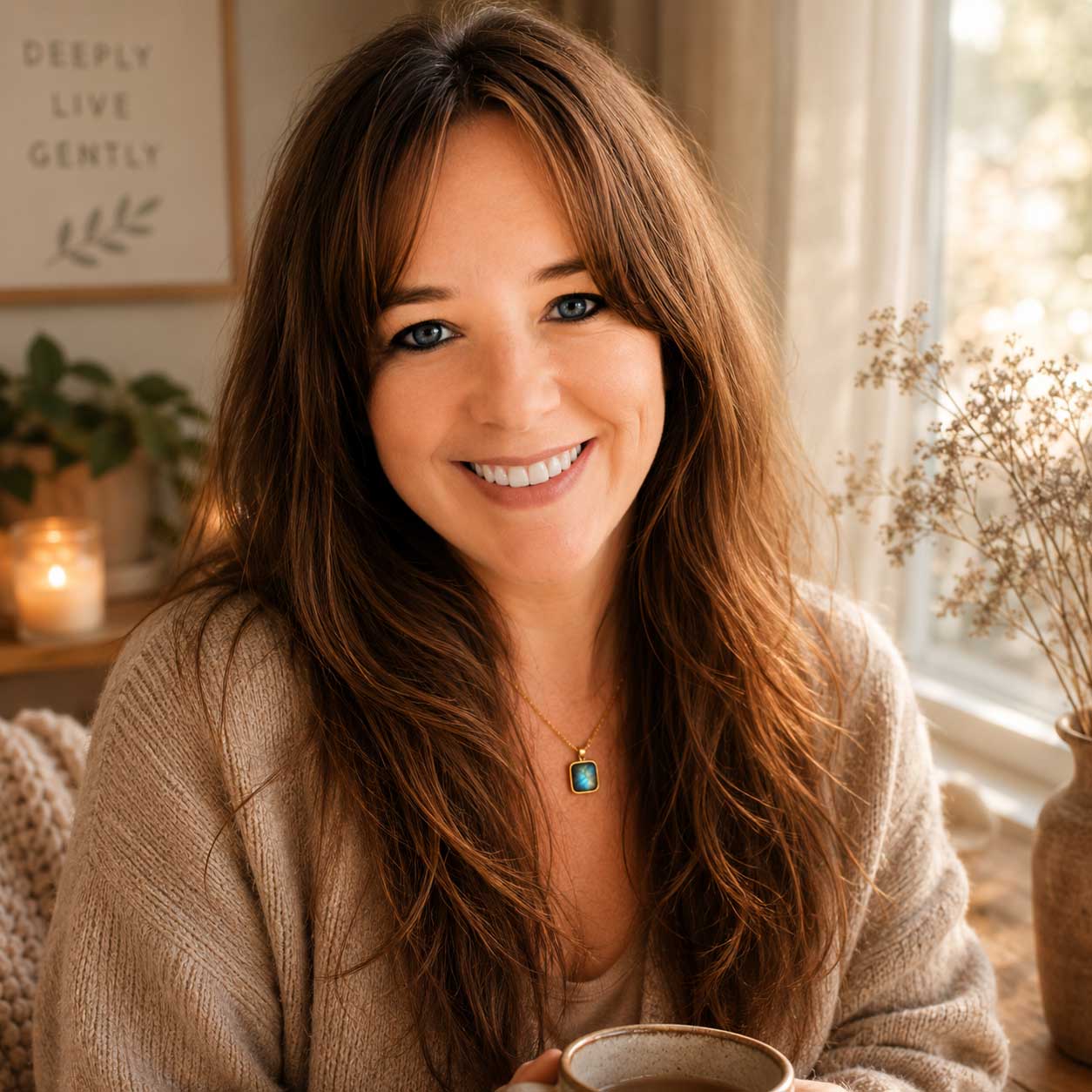
Where softness, self-awareness, and emotional healing are allowed to coexist. Through reflective writing, grounding rituals, and intentional beauty, Sparrow Trades offers gentle support for sensitive souls learning to reconnect with themselves.