

Spirituality for emotional wellness is not about forcing yourself to be positive, pretending pain has a purpose before you are ready, or following a belief system that does not feel true to you. At its healthiest, spirituality is the part of emotional wellness that helps you feel connected to meaning, purpose, inner guidance, and something larger than the stress of the moment.
For some people, spirituality is rooted in faith, prayer, sacred tradition, or a relationship with God. For others, it comes through nature, meditation, intuition, creativity, ancestors, energy work, quiet reflection, or a deep sense that life holds meaning beyond what can be measured. There is no single correct way to experience spirituality. What matters is whether it helps you feel more grounded, more honest with yourself, and more connected to your inner life.
Emotional wellness often begins with noticing what you feel, understanding your emotional patterns, and learning how to care for your nervous system. But many people eventually reach a deeper question: what helps me stay connected to myself when life feels uncertain? That question is where spirituality often enters the healing process.
When you are overwhelmed, your nervous system may narrow your focus around survival. You may feel stuck in fear, grief, shame, urgency, or emotional exhaustion. Spirituality can gently widen that frame. It can remind you that you are more than the hardest thing you are currently carrying. It can help you return to meaning when life feels fragmented, and it can soften the loneliness that often comes with emotional pain.
This does not mean spirituality should replace emotional honesty. It should never be used to silence grief, excuse harm, or rush healing. True spirituality for emotional wellness makes more room for your humanity, not less. It allows you to feel sadness without becoming hopeless, uncertainty without becoming lost, and tenderness without seeing yourself as weak.
In that sense, spirituality belongs inside the larger practice of emotional wellness. It supports the inner life beneath your habits, relationships, coping tools, and daily choices. It asks not only “How do I feel?” but also “What matters to me? What helps me feel connected? What kind of life feels aligned with who I am becoming?”
Why Spirituality Matters for Emotional Wellness
Emotional wellness is often described through practical language: coping skills, healthy boundaries, self-care, emotional regulation, and stress management. These pieces matter deeply. They help you move through daily life with more steadiness and self-trust. But emotional wellness also includes the deeper need to feel that your life has meaning.
When people are hurting, they often do not only want advice. They want to feel less alone. They want to understand why certain experiences have affected them so deeply. They want to know whether healing is possible, whether they can trust themselves again, and whether their pain can become part of a larger story without defining their entire identity.
Spirituality helps meet that deeper need. It gives people language for connection, purpose, hope, devotion, surrender, mystery, and inner wisdom. It can help you feel anchored when life changes, especially during seasons of grief, burnout, heartbreak, identity shifts, trauma recovery, or emotional awakening.
This is why spirituality can be such a meaningful foundation within emotional wellness. It does not remove hard feelings, but it can help you hold them differently. A painful experience may still hurt, but spirituality can help you remember that pain is not the whole story. A difficult transition may still feel uncertain, but spirituality can help you move through it with more trust in your values, your intuition, or your sense of direction.
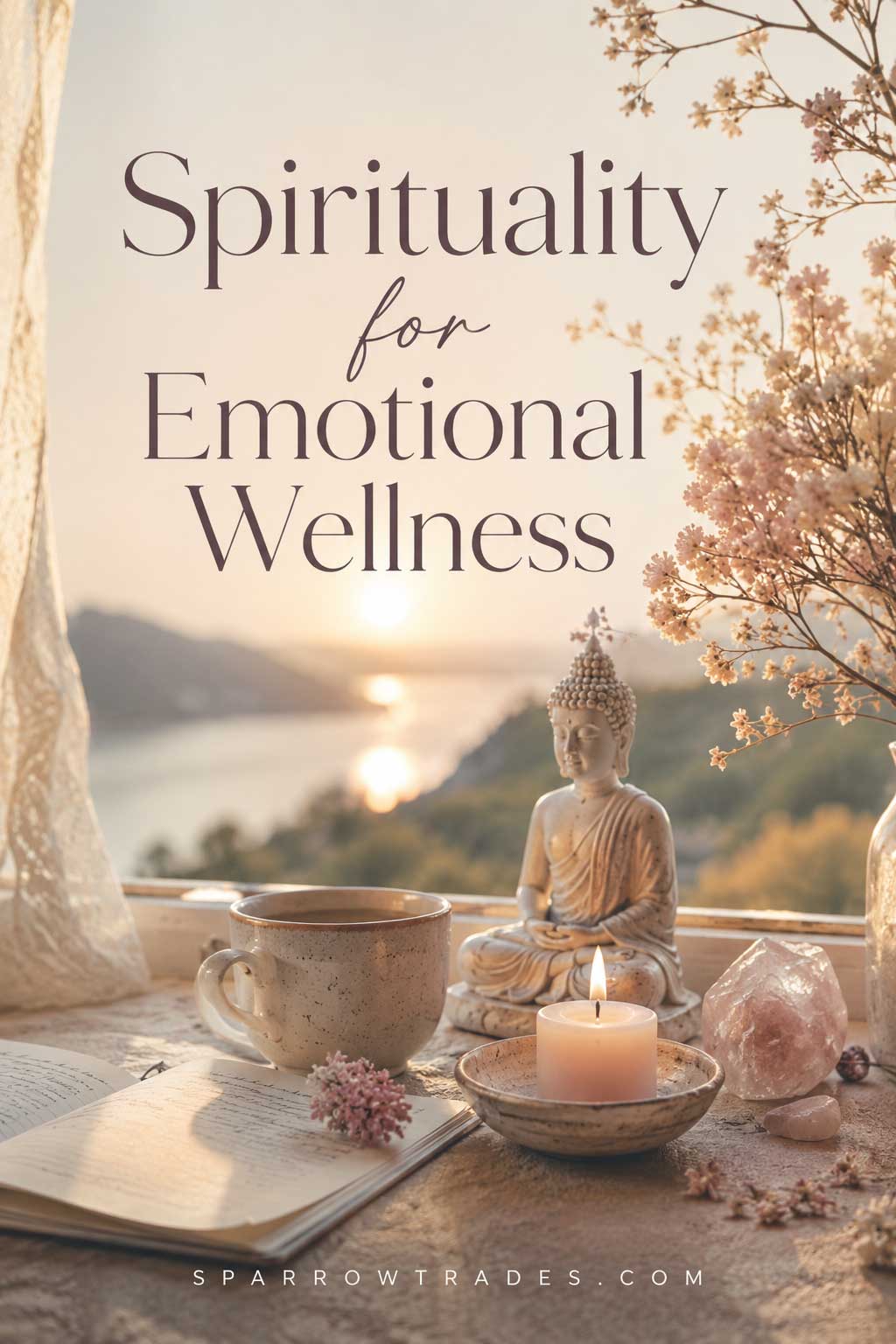
For some people, this support comes through prayer. For others, it comes through stillness, ritual, music, journaling, nature, meditation, or symbolic practices. Some people feel most spiritually connected while walking beneath trees, lighting a candle, wearing meaningful jewelry, sitting in silence, or noticing small signs of beauty during an otherwise heavy day.
The form is personal. The emotional function is what matters. Spirituality helps you reconnect with something steady inside yourself when outside life feels unstable.
When paired with self-awareness for emotional wellness, spirituality can help you notice not only what you feel, but what your emotions may be asking you to honor. It can help you identify when you are living out of fear, abandoning your values, ignoring your intuition, or moving through life disconnected from your deeper needs.
Spirituality Is Not Emotional Bypassing
One of the most important parts of spirituality for emotional wellness is learning the difference between spiritual support and emotional avoidance.
Spirituality becomes harmful when it pressures you to rise above feelings you have not been allowed to process. You may hear phrases like “everything happens for a reason,” “just stay positive,” “protect your energy,” or “choose love over fear” used in ways that dismiss pain instead of honoring it. Even when these phrases are meant kindly, they can feel invalidating if you are grieving, overwhelmed, angry, or recovering from something that truly hurt you.
Healthy spirituality does not ask you to abandon your emotional truth. It helps you stay with yourself while you move through it.
If you are sad, spirituality does not have to turn sadness into a lesson right away. If you are angry, spirituality does not have to shame you for having a boundary. If you are afraid, spirituality does not have to demand instant trust. A trauma-informed spiritual life understands that the nervous system needs safety before it can access reflection, meaning, or peace.
This matters especially for people who have been emotionally dismissed, controlled, or told that their feelings were too much. If you have had to minimize your emotions to keep connection, you may need gentleness before meaning. You may need validation before interpretation. You may need to feel what happened before you can make sense of it.
For that reason, spirituality should work alongside healing after being emotionally invalidated, not against it. It should help restore your relationship with your inner life. It should never become another voice telling you to be quieter, easier, more forgiving, or more detached than you truly are.
A grounded spiritual approach might sound like this: “This hurts, and I can stay present with myself.” Or, “I do not understand this season yet, but I can still treat myself with compassion inside it.” Or, “My pain is real, and meaning can unfold slowly.”
That kind of spirituality does not erase emotion. It gives emotion a safe place to breathe.
How Spirituality Supports the Nervous System
Spirituality is often described as something abstract, but it can have a very embodied effect. When a spiritual practice helps you feel safe, connected, and present, your nervous system may begin to soften out of urgency.
This does not mean spirituality is a replacement for therapy, medical care, or practical support. It simply means that spiritual connection can become one of the ways your body remembers safety.
Think of the difference between feeling alone with your pain and feeling held inside your pain. The circumstances may not change immediately, but your body may respond differently. You may breathe more slowly. Your shoulders may drop. Your thoughts may become less frantic. You may feel a small sense of space between yourself and the emotion moving through you.
This is why practices such as grounding for emotional wellness often overlap with spiritual care. Grounding brings your awareness back to the present moment. Spirituality can add meaning, comfort, or connection to that moment.
For example, placing your hand over your heart and breathing slowly can be a grounding practice. Adding a quiet prayer, affirmation, intention, or moment of gratitude can make it spiritual. Sitting outside and feeling your feet on the earth can support the nervous system. Noticing that you are part of something larger than your thoughts can deepen the emotional effect.
Some people also find support through nervous system-safe spiritual practices. This is especially important for sensitive people, trauma survivors, empaths, or anyone who has felt overwhelmed by intense spiritual spaces, rituals, or emotional energy. Spirituality should not push the body into panic, dissociation, or pressure. It should help the body feel more gently present.
When spirituality is nervous-system aware, it becomes less about intensity and more about steadiness. You do not have to chase signs, force breakthroughs, or perform healing. You can build quiet rituals that help your body recognize peace in small, repeatable ways.
Spiritual Practices That Can Support Emotional Wellness
Spirituality becomes most supportive when it feels integrated into real life. It does not need to be elaborate. It does not need to look impressive. In many cases, the most emotionally nourishing spiritual practices are simple, private, and repeatable.
Meditation can help create space between your awareness and your thoughts. It allows you to notice what is happening inside without immediately reacting. This is one reason meditation for emotional wellness can be such a natural doorway into spiritual reflection. It helps you slow down enough to hear what your inner life is trying to say.
Mindfulness can also support spirituality by bringing attention back to the present moment. When you practice mindfulness for emotional wellness, ordinary experiences can become sacred in a quiet way: drinking tea, walking outside, watching light move across a room, or noticing your breath after a difficult conversation.
Journaling is another powerful practice because it gives emotions somewhere to land. Through journaling for emotional wellness, you can explore questions like: What is this season teaching me? What do I need to release? Where do I feel disconnected from myself? What values do I want to return to?
Some people connect spiritually through energy-based traditions, including chakras for emotional wellness. Chakra work can offer symbolic language for emotional patterns, such as feeling unsafe, silenced, blocked, disconnected, or closed off from love. Whether someone views chakras spiritually, symbolically, or reflectively, the practice can help them notice where emotional energy feels held in the body.
Others are drawn to crystals, gemstones, or meaningful objects as reminders of intention. gemstones for emotional wellness can support this kind of practice when the focus stays grounded in reflection rather than magical certainty. A stone, necklace, bracelet, or charm may become a physical reminder to breathe, set a boundary, trust your voice, or return to your heart.
These practices are not about doing spirituality correctly. They are about creating moments where your inner life feels witnessed.
Spirituality, Self-Trust, and Inner Guidance
One of the quiet gifts of spirituality for emotional wellness is the way it can help rebuild self-trust.
When people have been through emotional pain, they often lose confidence in their own inner signals. They may question whether their feelings are valid, whether their intuition can be trusted, or whether their needs are reasonable. This can happen after gaslighting, chronic invalidation, people-pleasing, emotional neglect, or relationships where staying connected required self-abandonment.
Spirituality can support the return to inner guidance, but only when it is practiced gently. The goal is not to treat every feeling as a divine message or every fear as intuition. The goal is to build a more compassionate relationship with your inner world.
You might begin by asking simple questions:
- What feels true in my body?
- What gives me a sense of peace rather than pressure?
- What part of me needs care before I make a decision?
- Where am I confusing urgency with guidance?
- What choice feels aligned with my values?
These questions invite reflection without forcing certainty. They help you listen inward while staying grounded.
This is closely connected to learning to trust your emotions again. Emotional self-trust grows when you stop treating your feelings as problems to solve and begin treating them as information to understand. Spirituality can deepen that process by helping you approach your emotions with reverence, curiosity, and compassion.
Inner guidance does not always arrive as a dramatic sign. Sometimes it feels like a quiet no. Sometimes it feels like relief. Sometimes it feels like grief rising because you finally admitted what you need. Sometimes it feels like a small pull toward a more honest life.
Spirituality for emotional wellness helps you honor those signals without becoming ruled by fear, fantasy, or pressure. It invites you back into relationship with yourself.
Spirituality, Boundaries, and Emotional Safety
A healthy spiritual life needs boundaries.
This may seem surprising if spirituality has been framed as openness, compassion, surrender, or unconditional love. But without boundaries, spirituality can become exhausting, confusing, or unsafe. You may feel responsible for everyone’s energy. You may override your own limits in the name of kindness. You may stay in harmful situations because forgiveness has been misunderstood as self-abandonment.
Emotional wellness requires discernment. Spirituality should help you become more loving without becoming less protected.
This is why boundaries for emotional wellness belongs inside a spiritual conversation. Boundaries are not the opposite of compassion. They are part of how compassion stays honest. They allow you to care without disappearing. They help you remain connected to your values without absorbing what does not belong to you.
Spiritual boundaries might include choosing which conversations you enter, which spaces feel safe, which teachers or communities you trust, and which practices support your body instead of overwhelming it. They may also include emotional consent. Not every spiritual practice, reading, ritual, healing session, or conversation is right for every person at every time.
emotional consent in spiritual practices is especially important when spiritual spaces involve vulnerability. A person should never feel pressured to reveal, release, forgive, participate, or receive guidance before they feel ready. Emotional safety matters as much as spiritual intention.
When spirituality is grounded in boundaries, it becomes more trustworthy. It supports connection without demanding exposure. It welcomes growth without rushing the nervous system. It encourages openness while still honoring the sacredness of your limits.
How Crystals, Chakras, and Symbolic Tools Can Fit
Many people are drawn to spiritual tools because they make inner experiences feel tangible. A journal can hold thoughts that feel too heavy to carry alone. A candle can mark a moment of intention. A gemstone can become a reminder of strength, calm, love, protection, clarity, or trust.
These tools can be meaningful when they are used with emotional honesty.
For example, someone working with the heart chakra may be exploring grief, compassion, forgiveness, or the ability to receive love. Someone drawn to grounding stones may be longing for stability during a stressful season. Someone wearing a meaningful bracelet may be giving themselves a daily reminder to pause, breathe, or return to a chosen intention.
This is where what crystal healing is can support a spirituality-centered emotional wellness practice. Crystal healing, when approached gently, does not need to make extreme promises. It can be understood as a symbolic, reflective, and ritual-based practice that helps people connect with intention.
Similarly, what chakras are can offer a framework for noticing emotional themes in the body. The root chakra may bring attention to safety and stability. The throat chakra may invite reflection around voice and expression. The heart chakra may hold questions about trust, tenderness, grief, and connection.
These systems can be supportive when they help you understand yourself more compassionately. They become less helpful when they create fear, rigidity, or the feeling that you are spiritually broken.
Spiritual tools should never replace your own inner knowing. They should support it. Whether you use gemstones, cards, candles, prayer beads, music, scripture, nature, or quiet rituals, the most important question is: does this help me feel more connected, grounded, and emotionally honest?
When Spirituality Feels Difficult
Spirituality does not always feel peaceful.
For some people, spiritual language is complicated by past wounds, religious trauma, family control, disappointment, grief, or unanswered prayers. Others may feel spiritually disconnected during depression, burnout, loss, or emotional exhaustion. Some may want a sense of meaning but feel numb, skeptical, or unsure where to begin.
That does not mean you are failing spiritually.
Sometimes the most honest spiritual season is not certainty. It is questioning. It is sitting with what no longer fits. It is grieving an old belief system. It is allowing your relationship with meaning to become more personal, more mature, and more compassionate.
During difficult seasons, spirituality for emotional wellness may become very simple. It may look like one deep breath before getting out of bed. It may look like stepping outside for sunlight. It may look like saying, “I do not know what I believe right now, but I am willing to be gentle with myself.”
Spirituality does not have to be intense to be real. A quiet return to your own heart can be enough.
If spiritual practices make you feel pressured, fearful, ashamed, or disconnected from your body, it may help to return to grounding before meaning-making. Practices rooted in nervous system regulation for emotional wellness can help your body feel safe enough to explore deeper questions without overwhelm.
You are allowed to move slowly. You are allowed to question. You are allowed to choose practices that feel nourishing rather than performative. Your spirituality does not have to look like anyone else’s to support your emotional wellness.
FAQ
What is spirituality for emotional wellness?
Spirituality for emotional wellness is the way meaning, purpose, connection, inner guidance, and personal beliefs can support emotional balance and healing. It may include faith, meditation, prayer, nature, reflection, rituals, or symbolic practices. The goal is not to avoid emotions, but to feel more connected to yourself and your life while moving through them.
Do I have to be religious to practice spirituality for emotional wellness?
No. Some people experience spirituality through religion, but others experience it through nature, mindfulness, creativity, gratitude, meditation, energy work, personal values, or a sense of connection to something larger than themselves. Spirituality for emotional wellness can be deeply personal and does not need to follow one specific tradition.
How can spirituality help emotional healing?
Spirituality can help emotional healing by offering meaning, hope, connection, compassion, and a larger perspective during difficult seasons. It can help people feel less alone with grief, uncertainty, stress, or transition. Healthy spirituality also encourages emotional honesty instead of pressuring someone to deny or rush their feelings.
Can spirituality support the nervous system?
Spirituality can support the nervous system when it helps a person feel safe, grounded, connected, and present. Gentle practices such as prayer, meditation, breathing, nature connection, journaling, or ritual can help create a sense of steadiness. Spiritual practices should not overwhelm the body or pressure someone into emotional intensity.
What are simple spiritual practices for emotional wellness?
Simple spiritual practices for emotional wellness may include meditation, prayer, journaling, gratitude, mindful walks, lighting a candle with intention, spending time in nature, working with meaningful gemstones, or reflecting on personal values. The best practice is one that helps you feel grounded, emotionally honest, and connected.
Conclusion
Spirituality for emotional wellness is not about having perfect faith, constant peace, or a polished healing practice. It is about creating a relationship with meaning that can hold your real life: your grief, your hope, your uncertainty, your tenderness, your growth, and your becoming.
At its best, spirituality does not pull you away from your emotions. It helps you meet them with more compassion. It reminds you that your inner life is worthy of care, that your pain does not erase your purpose, and that healing can unfold in quiet, layered ways.
Whether your spirituality is rooted in prayer, meditation, nature, energy work, creativity, sacred tradition, or personal reflection, it can become a steady companion in your emotional wellness journey. It can help you return to your values when life feels loud. It can help your nervous system soften when you feel alone. It can help you listen inward when old patterns ask you to abandon yourself.
You do not need to force meaning before you are ready. You do not need to turn every wound into wisdom immediately. You do not need to perform peace.
You can begin gently.
One breath. One honest feeling. One quiet moment of connection. One small choice that brings you closer to yourself.
That is where spirituality begins to support emotional wellness: not above your humanity, but within it.

Where softness, self-awareness, and emotional healing are allowed to coexist. Through reflective writing, grounding rituals, and intentional beauty, Sparrow Trades offers gentle support for sensitive souls learning to reconnect with themselves.