
Sometimes the greatest gift another person needs isn’t a solution.
It’s the experience of feeling truly heard.
Most of us enter conversations with good intentions. We want to comfort the person in front of us, help them feel better, or find an answer that makes the problem less painful. Yet even when our intentions are caring, we may begin preparing advice, comparing their experience to our own, or searching for something reassuring to say before they have finished speaking.
Empathic listening asks for something gentler—and, in many ways, something more courageous. It invites us to remain present with another person’s experience without immediately trying to correct it, minimize it, or move them beyond it. Instead of listening primarily for facts, we listen for the feelings, needs, and meaning beneath the words.
This kind of listening is closely connected to empathy, but it is more than simply recognizing how another person might feel. It involves communicating that recognition through our attention, responses, and willingness to stay with the conversation. The other person doesn’t have to wonder whether we are merely waiting for our turn to speak because they can feel that we are genuinely trying to understand them.
That doesn’t mean remaining completely silent or agreeing with everything being said. Empathic listening is an active form of communication that may include thoughtful questions, gentle reflections, and moments of clarification. The difference is that these responses are used to deepen understanding rather than redirect the conversation toward our own perspective.
For many people, this way of listening was never modeled clearly. They may have grown up in homes where emotions were quickly dismissed, conversations became debates, or vulnerable feelings were met with advice before they were acknowledged. Others learned that being helpful meant finding solutions as quickly as possible. Over time, these habits can become automatic, even when they unintentionally leave someone feeling alone inside the conversation.
Empathic listening begins by noticing those habits without judging yourself for having them. You may realize that you interrupt when you become anxious, offer reassurance because another person’s pain makes you uncomfortable, or tell a similar story because you’re trying to show that you relate. None of these reactions necessarily mean you lack compassion. They often mean you are still learning how to let compassion feel like presence instead of action.
When someone feels listened to in this way, they are less likely to feel pressured to defend, simplify, or justify their emotions. They can speak more honestly because the conversation offers a sense of emotional safety. That safety doesn’t come from perfect words. It grows from the experience of being taken seriously without being rushed toward a different feeling.
Ultimately, empathic listening isn’t about saying less. It’s about understanding more before you speak.
That small shift changes the purpose of the conversation. Rather than trying to become the person with the right answer, we become someone who is willing to stay present long enough for another human being to feel genuinely understood. That quiet act of presence becomes the foundation for everything that follows.
Understanding that difference becomes easier when we compare empathic listening with another communication skill that is often mentioned alongside it.
Empathic Listening vs. Active Listening
Empathic listening and active listening are closely related, and the terms are sometimes used interchangeably. Both ask us to give another person our attention rather than simply waiting for an opportunity to respond. Both may involve asking questions, avoiding interruptions, and reflecting back what we have heard. The distinction is not that one is caring and the other is not, but that they often emphasize different layers of the conversation.
Active listening generally focuses on accurately understanding the speaker’s message. It helps prevent misunderstandings by encouraging the listener to clarify details, summarize key points, and confirm that the information has been interpreted correctly. In practical conversations, this can be especially valuable because it keeps both people connected to what is actually being communicated rather than what either person assumes was meant.
Empathic listening includes that attention to meaning, but it reaches further into the emotional experience behind the message. It asks not only, What is this person telling me? but also, What might this experience feel like for them? The listener pays attention to tone, hesitation, emotional shifts, and the needs that may not yet have been stated directly.
Consider someone saying, “I don’t think I can keep doing this.” Active listening may lead you to ask what situation they are referring to or what has become unmanageable. Empathic listening also notices the exhaustion, fear, or discouragement carried within the statement. A response such as, “It sounds like you’ve been carrying more than you can sustain,” shows that you are listening to both the words and the emotional weight behind them.
This doesn’t mean empathic listening requires guessing what someone feels or interpreting emotions with certainty. In fact, humility is an important part of the process. You might say, “It sounds like that left you feeling dismissed—am I understanding you correctly?” That response offers recognition while leaving room for the person to clarify their experience in their own words.
Active listening supports clarity. Empathic listening adds emotional connection to that clarity. In many meaningful conversations, the two work best together: one helps us understand what happened, while the other helps us appreciate what the experience meant to the person living through it.
Why Empathic Listening Matters
Most people don’t remember every detail of an important conversation. What stays with them is whether they felt dismissed, judged, rushed, or genuinely understood. That emotional memory often shapes the future of the relationship far more than the specific words that were exchanged. Feeling heard doesn’t just make a conversation more pleasant—it helps people believe they’re safe enough to be honest again.
Empathic listening creates that kind of environment. It doesn’t eliminate disagreement or guarantee that every conversation ends with complete understanding. Instead, it changes how people move through difficult moments by helping each person feel respected, even when their perspectives remain different. When people no longer feel like they have to defend themselves, they often become more willing to listen in return.
Research consistently shows that feeling understood supports healthier relationships, stronger emotional well-being, and more satisfying communication. While empathic listening can’t solve every problem, it often eases one of the deepest human experiences: the loneliness of feeling unseen. Many people aren’t searching for perfect advice when they share something painful. They’re quietly wondering whether it’s safe to reveal what’s really happening beneath the surface.
That question is answered less by what we say than by how we respond. Simple behaviors like remaining present, resisting the urge to interrupt, and showing genuine curiosity communicate respect in ways quick solutions often cannot. Conversations like these are also strengthened by emotional validation, which acknowledges that another person’s emotions make sense within the context of their experience without requiring agreement with every conclusion they reach.
Imagine a friend quietly admits, “I feel like I failed.” An immediate response such as, “No, you didn’t. Don’t think like that,” is encouraging, but it quickly moves away from the emotion they’re trying to express. A response like, “It sounds like you’re carrying a lot of disappointment right now,” doesn’t erase the problem, yet it often gives the person something they needed first: the feeling of being understood.
Ironically, advice usually becomes more effective after understanding has already happened. Feeling heard lowers defensiveness, while feeling dismissed often strengthens it. Over time, those moments accumulate into stronger, healthier relationships built on mutual trust rather than assumptions.
What Empathic Listening Looks Like
Empathic listening isn’t defined by finding the perfect words. It’s reflected through a series of quiet, consistent behaviors that communicate, “I’m here with you.” While every conversation looks different, people who practice empathic listening tend to create the same emotional experience: they make others feel important in the moment.
One of the clearest signs is presence. Rather than mentally rehearsing your reply, checking your phone, or waiting for an opportunity to tell a similar story, your attention stays with the person speaking. That kind of presence communicates that the conversation matters—not because it’s dramatic, but because the person sharing it matters.
Curiosity naturally follows. Instead of assuming you already understand, empathic listening invites questions that deepen connection. Asking, “Can you tell me more about that?” or “What was the hardest part for you?” encourages the speaker to continue exploring their own experience rather than defending or simplifying it. These questions aren’t designed to collect information; they’re invitations to feel understood.
The same is true of body language. Gentle eye contact, relaxed posture, patient silence, and small expressions of encouragement often communicate as much as spoken words. People also notice what doesn’t happen. They notice when they aren’t interrupted, when the conversation isn’t redirected, and when someone resists the urge to immediately compare experiences.
Those quiet moments can feel uncomfortable at first, especially if you’re used to filling every pause with conversation. Remaining present through silence sometimes requires mindfulness, because it asks you to notice your own urge to speak without immediately acting on it. That awareness creates enough space to choose curiosity over habit.
Empathic listening also remains flexible. Some people need time before they can describe what they’re feeling, while others process emotions by talking through them. Some welcome practical suggestions after they’ve been heard, while others simply need companionship for a while. Recognizing these different communication styles allows listening to become responsive rather than formulaic. Instead of following a technique, you begin responding to the person in front of you.
Common Habits That Get in the Way
Most barriers to empathic listening don’t come from selfishness or a lack of compassion. More often, they develop through habit. Many of us learned that being helpful meant offering immediate advice, while others grew up in environments where silence felt uncomfortable or emotions were quickly dismissed. Those patterns become so familiar that we rarely notice them until someone leaves a conversation feeling unheard.
Interrupting is one of the most common examples. Sometimes it happens because we’re excited or think we already understand where the story is going. Other times we interrupt because we’re eager to reassure the other person that everything will be okay. Regardless of the intention, stepping in too soon can unintentionally communicate that our thoughts deserve more attention than the experience someone is trying to share.
Another common habit is moving too quickly toward solutions. Advice has an important place, but timing matters. When someone hasn’t yet felt understood, even excellent advice can feel premature. Many conversations become more healing simply because someone remained present long enough for another person to feel fully understood before trying to change the situation.
This is one reason reflective listening can be so valuable. Rather than preparing the next answer, reflective listening gently mirrors back what you believe the other person is feeling, giving them space to clarify, expand, or simply recognize that someone is paying close attention.
Defensiveness can quietly become another obstacle. When someone expresses disappointment or offers criticism, it’s natural to explain your intentions or defend your perspective. Yet responding from a place of self-protection often makes it difficult to hear the emotion beneath their words. Moments like these are supported by stronger emotional regulation, allowing you to notice your own reactions before they begin steering the conversation.
Empathic listening isn’t about ignoring your own feelings. It’s about creating enough space to understand someone else’s experience before inviting your own perspective into the conversation.
How to Practice Empathic Listening
Like any meaningful relationship skill, empathic listening becomes more natural through consistent practice rather than perfect performance. You don’t need a script or the perfect response every time someone shares something vulnerable. Instead, a handful of simple habits gradually change the way conversations feel—for both you and the people around you.
Listen to Understand Before You Respond
Most of us listen while quietly preparing what we’ll say next. We compare the story to our own experiences, search for advice, or begin defending ourselves if we feel criticized. Empathic listening invites a different goal: understanding before responding.
One helpful question to carry into conversations is, “What are they trying to help me understand?” That shift naturally slows the impulse to fix or persuade and redirects your attention toward the emotional experience behind the words. People can usually sense the difference between someone waiting for their turn to speak and someone who is genuinely trying to understand them.
Slow Down the Conversation
Meaningful conversations often happen in the pauses. Allowing a few extra seconds before responding gives both people room to think and helps emotions surface more naturally. The speaker may continue sharing something they hadn’t intended to say, while you gain a clearer understanding of what truly matters beneath the story.
Slowing down doesn’t make a conversation awkward—it communicates patience. It tells the other person they don’t need to rush through something important simply because silence exists.
Reflect Before Offering Solutions
Before offering advice, try reflecting the emotion you hear underneath the story. You don’t need to repeat every detail or guess perfectly. A simple response such as, “That sounds incredibly frustrating,” or, “I can understand why that felt overwhelming,” communicates that you’ve been listening for more than facts.
If you notice yourself immediately searching for answers, it may help to practice listening without trying to fix everything. Many people discover that feeling understood often brings more comfort than receiving solutions too quickly.
Ask Questions That Invite Connection
Questions have the power to either deepen empathy or quietly close it down. Curious questions encourage reflection, while judgmental questions often make people feel as though they need to defend themselves.
Instead of asking, “Why didn’t you just leave?” you might ask, “What made that situation so difficult?” Rather than saying, “Why would you do that?” consider asking, “What was going through your mind at the time?” The goal isn’t to gather evidence or evaluate someone’s decisions. It’s to better understand the experience they’re trying to describe.
When Empathic Listening Feels Difficult
Empathic listening sounds straightforward when conversations are calm. It becomes far more challenging when emotions become personal. Perhaps someone criticizes you, questions your intentions, or expresses anger that feels unfair. In those moments, your nervous system naturally shifts toward protecting itself before your mind has time to fully process what’s happening.
You may feel the urge to interrupt, explain, defend yourself, or prove your point. Those reactions are completely human. Empathic listening doesn’t ask you to suppress them. Instead, it invites you to notice those impulses before allowing them to shape your response. Sometimes a single slow breath creates enough space for curiosity to return where defensiveness might otherwise take over.
It’s also important to remember that empathic listening has healthy limits. Listening with compassion does not require accepting manipulation, emotional abuse, repeated disrespect, or ongoing violations of your boundaries. Healthy listening and healthy boundaries support one another. You can care deeply about another person’s experience while still protecting your own emotional well-being.
Understanding someone is also different from agreeing with them. Some of the most meaningful conversations happen between people who leave with different opinions but a greater appreciation for each other’s humanity. That willingness to understand before persuading often becomes the foundation for healthier conflict resolution, because people are far more willing to work through disagreement after they’ve experienced being heard.
The same principle becomes especially valuable during difficult conversations, where people often stop listening in order to prepare their defense. Empathic listening gently interrupts that cycle, creating an opportunity for understanding to come before persuasion.
A Gentle Practice for Becoming a Better Listener
Learning about empathic listening is only the beginning. The real change happens in ordinary conversations that rarely seem remarkable at the time. You don’t need to transform the way you communicate overnight or remember every listening technique at once. In fact, trying too hard to “get it right” often pulls your attention away from the very person you’re hoping to understand.
Instead, choose one conversation tomorrow and make it your practice. It might be with your partner, a close friend, a coworker, or a family member. Before they begin speaking, quietly remind yourself, “For the next few minutes, my goal is to understand before I respond.” That simple intention is often enough to change the tone of an entire conversation.
As the other person speaks, notice the familiar urge to interrupt, solve the problem, or relate the story back to your own experience. You don’t need to criticize yourself when those impulses appear—they’re part of being human. Simply acknowledge them, let them pass, and gently return your attention to the person in front of you. When they finish speaking, pause for one slow breath before responding.
Rather than immediately offering advice, begin by reflecting what you’ve heard. You might say, “It sounds like that was really discouraging,” or, “I can understand why you felt hurt.” Sometimes a simple “Thank you for trusting me with that” offers more comfort than an elaborate solution ever could. The goal isn’t to find perfect words. It’s to help another person leave the conversation feeling a little less alone.
Over time, those small moments begin to shape something much larger than individual conversations. They gradually change how people experience your presence, making trust easier to build and understanding easier to find. If you’d like to continue strengthening this skill, active listening offers practical techniques that naturally complement empathic listening. As you become more comfortable recognizing another person’s emotional experience, emotional validation can help deepen those conversations even further.
Frequently Asked Questions
Is empathic listening the same as active listening?
Not quite. Active listening focuses on communication techniques such as paying close attention, asking clarifying questions, and confirming understanding. Empathic listening includes those same skills but adds emotional awareness. Rather than simply understanding someone’s words, it also seeks to understand what those words feel like from the speaker’s perspective. Together, those two qualities create conversations that feel both clear and emotionally supportive.
Can empathic listening improve relationships?
For many people, yes. Feeling consistently heard helps create trust, encourages openness, and reduces the defensiveness that often appears during difficult conversations. While empathic listening won’t eliminate every disagreement, it often changes how people move through conflict by helping each person feel respected before trying to solve the problem. Like any relationship skill, its greatest impact comes when both people are willing to practice it with honesty and mutual care.
Does empathic listening mean I should never give advice?
No. Advice can be incredibly valuable when someone is ready to receive it. The difference is that empathic listening places understanding before problem-solving. After someone feels heard, they are often far more open to exploring possible solutions together. When you’re unsure what they need, asking, “Would you like me to simply listen, or would you like help thinking through some ideas?” allows them to guide the conversation instead of making assumptions for them.
What if I don’t know the right thing to say?
You don’t need perfect words to be a compassionate listener. In many situations, your steady presence matters far more than finding the ideal response. Simple statements such as, “That sounds really difficult,” or, “Thank you for sharing that with me,” often communicate genuine care because they show you’re listening without trying to immediately change the experience. Most people aren’t looking for perfection—they’re hoping someone will stay present long enough to understand.
Conclusion
Empathic listening isn’t about becoming the person who always has the right answer. It isn’t about fixing every problem, agreeing with every opinion, or carrying responsibility for someone else’s emotions. At its heart, it’s an invitation to offer something that has become surprisingly rare in many conversations: your full attention.
When people feel genuinely heard, conversations begin to shift. They become less about winning, persuading, or preparing the next response and more about understanding one another. That doesn’t mean every disagreement disappears or every relationship suddenly becomes easy. There will still be moments when you interrupt, lose focus, or realize afterward that you could have listened more carefully. Those moments don’t mean you’ve failed. They simply remind you that listening, like every meaningful relationship skill, is something we return to and practice throughout our lives.
The encouraging part is that empathic listening doesn’t grow through perfection. It grows through awareness, curiosity, and the willingness to pause before reacting. Each conversation offers another opportunity to ask one thoughtful question, remain present a little longer, or choose understanding before assumptions. Those choices may feel small, yet they often become the moments people remember most.
Long after someone forgets the exact words that were spoken, they often remember how safe they felt while sharing them. And sometimes, that experience of being truly heard becomes the beginning of healing, deeper trust, and stronger connection—for both people involved. Few gifts are remembered longer than the feeling that someone genuinely chose to understand you before trying to change you.
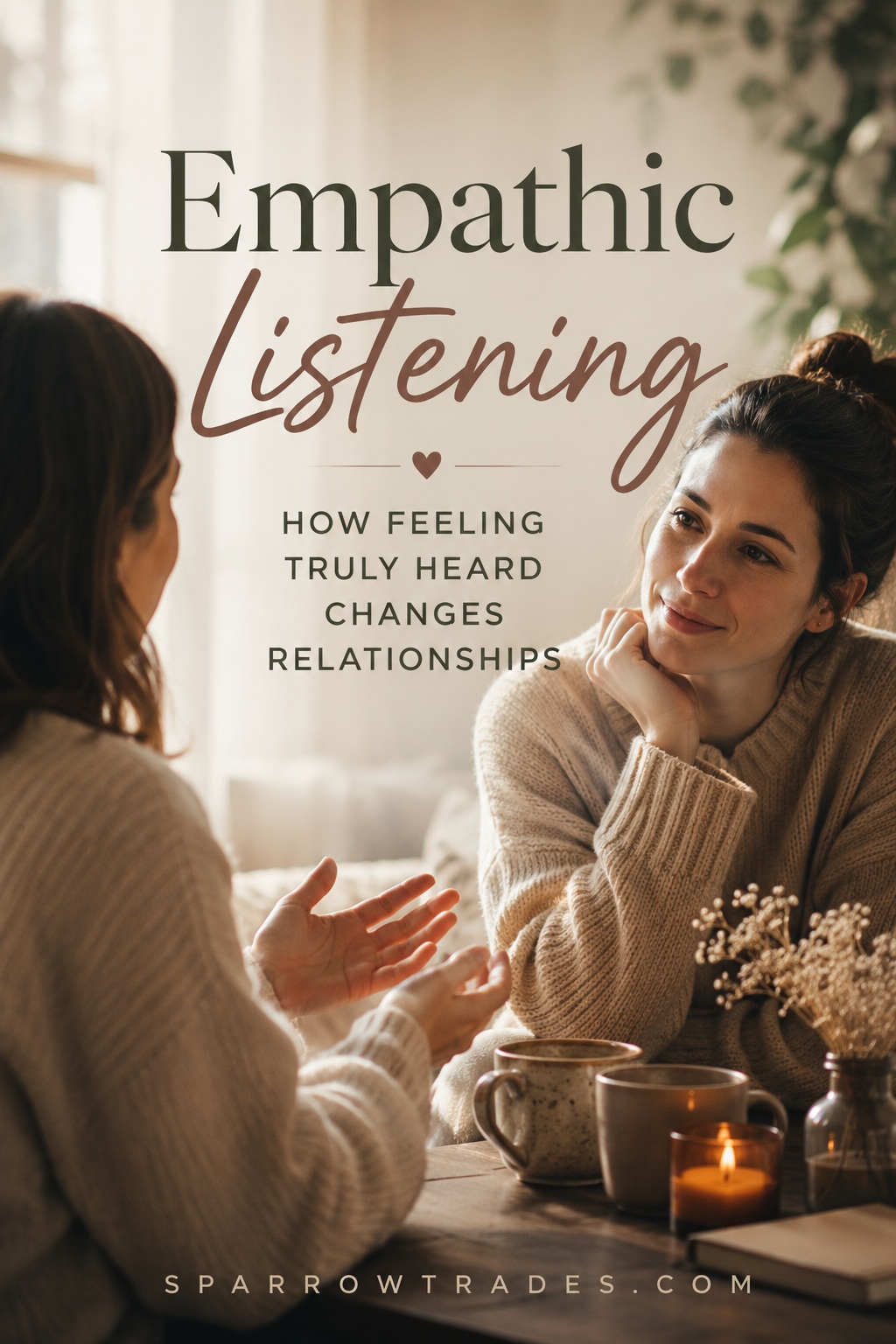

Where softness, self-awareness, and emotional healing are allowed to coexist. Through reflective writing, grounding rituals, and intentional beauty, Sparrow Trades offers gentle support for sensitive souls learning to reconnect with themselves.