
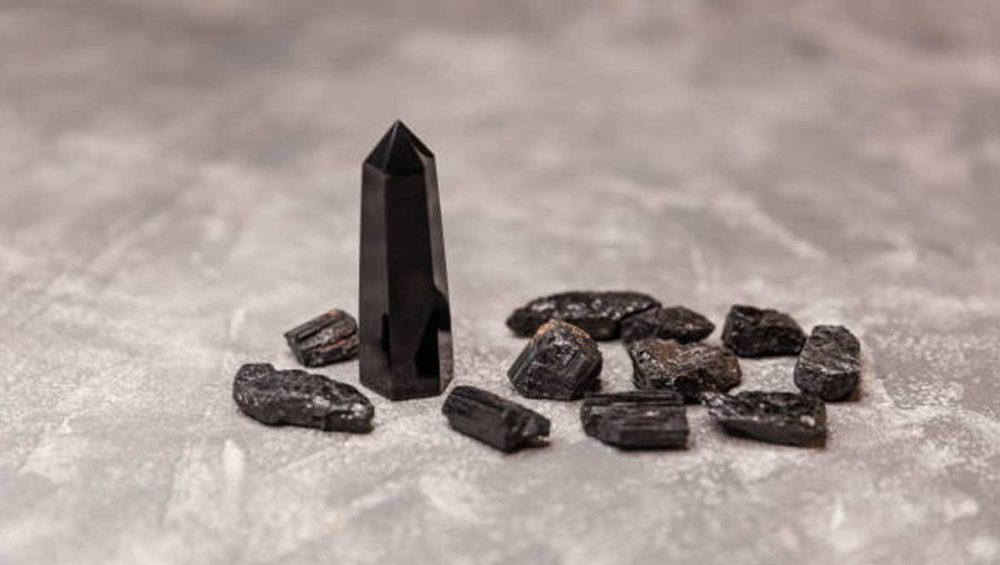
There are days when your mind is technically “fine,” but your body isn’t buying it. You’re answering texts, making food, showing up—but underneath it, something is buzzing. Too much input. Too many emotions that aren’t fully yours. Too many little stresses stacked into one long, silent alarm.
If you’ve ever lived in that state—hyperaware, easily startled, exhausted by ordinary interaction—you know that “calm down” isn’t advice. It’s a misunderstanding. When your nervous system is braced, your body is trying to protect you. It’s doing its job, even if it doesn’t feel good.
This is part of why people reach for grounding stones like black tourmaline. Not as a replacement for therapy, medication, boundaries, or real-life support—but as a small, steady companion that helps them feel more anchored. Black tourmaline has a reputation for being weighty in the best way: supportive, stabilizing, protective. For many people, it feels like an energetic “exhale” stone—something that helps the body remember it can settle.
A benefits page isn’t a promise. It’s a map of what people commonly experience and what this stone is most often used for. Black tourmaline benefits are usually described in emotional, energetic, and spiritual terms: grounding, protection, steadiness, and a sense of safety that returns you to yourself. Some people also connect it with digital overstimulation and feeling energetically “scrambled” after long hours around screens or crowds—especially when they’re looking for black tourmaline for emf protection in a world that rarely lets your attention rest.
If you’re here because you’re tired of feeling porous—tired of absorbing everything, tired of carrying what isn’t yours—this is for you. Not in a dramatic, defensive way. In a quiet, practical way. The kind that says: you deserve to feel like you belong inside your own body again.
Below, you’ll find the most commonly believed benefits of black tourmaline, what it’s “good for,” and when it may feel supportive—especially for people who are sensitive, trauma-aware, or trying to rebuild a sense of inner steadiness without forcing themselves into a version of healing that feels harsh. If you want a broader view of what this stone symbolizes (beyond benefits), you may also resonate with black tourmaline meaning.
Grounding Benefits: Feeling Steady When Your Body Feels “Too Much”
Grounding isn’t just a spiritual concept—it’s a body experience. It’s what happens when you can feel your feet again, when your breath is no longer trapped in your chest, when the room stops feeling like a threat. For many people, black tourmaline is used as a grounding ally because it’s associated with heaviness, stability, and energetic containment. That’s why so many readers specifically search for black tourmaline for grounding when their system feels like it’s hovering just a little too far above the present moment.
The most common grounding benefit people describe is a return to the present. Not a sudden transformation, but a subtle shift: the mind stops racing quite so fast. The body feels less scattered. Your awareness comes back from ten places at once and lands—right here, right now.
This matters because dysregulation often looks like mental spiraling, but it’s usually a nervous system story first. When you’re overwhelmed, your body might go into fight, flight, freeze, or fawn. Grounding supports the opposite direction: settling, orienting, re-entering the moment with enough safety to stay. Sometimes that support is practical (breath, hydration, movement); sometimes it’s symbolic and sensory—like holding something cool, weighted, and familiar in your hand.
Black tourmaline is often chosen during times like emotional overload after conflict, heightened sensitivity in crowded places, feeling “floaty,” disconnected, or unreal, big transitions (moving, breakups, new jobs, grief), or periods of hypervigilance where the body won’t unclench. In those seasons, people also explore emotional grounding as a way to name what their body has been trying to do all along: find enough safety to come back.
People who resonate with black tourmaline often describe it as a stone that doesn’t demand anything. It doesn’t feel “bright” or activating. It feels like a boundary made of calm weight—something that helps you hold your own energy without force. In that sense, it can be especially appealing to trauma-aware readers: it supports steadiness without pushing intensity. And if you’re exploring other options for that same steadying effect, you might also be drawn to crystals for grounding—not to replace black tourmaline, but to widen the sense of choice your nervous system can trust.
Grounding, at its healthiest, isn’t numbness. It’s presence. Black tourmaline benefits are often framed as helping you stay present without being flooded—helping you remain open without losing your center.
Protection Benefits: Energetic Boundaries Without Becoming Hardened
“Protection” can sound intense—like armor, like walls, like bracing for impact. But for a lot of people, protection is actually a tender need. It’s not about shutting the world out. It’s about not being constantly penetrated by it.
Black tourmaline is one of the most well-known stones for energetic protection. In spiritual and metaphysical traditions, it’s commonly believed to absorb, transmute, or deflect negative energy. Even if you don’t use that language, the felt experience can still make sense: it can function like a personal boundary object. A small cue that you’re allowed to be with people, with life, with stimulation—without letting everything sink into you. That’s the heart of why people look for black tourmaline for protection when their system feels exposed.
Many people seek protection benefits when they’re doing emotional labor at work or in caregiving roles, navigating a relationship where their boundaries are being tested, processing grief or trauma during a period of inner fragility, healing from environments that trained them to over-accommodate, or learning to stop overexplaining, overgiving, or overabsorbing.
In those seasons, black tourmaline is often used as a steadiness anchor. Not because it makes life “safe,” but because it can help you feel less alone while you build real-world safety: boundaries, choices, distance, support. Sometimes “protection” is simply the ability to stay in your own energy long enough to hear what you actually want.
There’s also a modern layer to how people talk about protection—especially around digital overwhelm. Many people associate black tourmaline with EMF-related support as a way of describing that wired, overstimulated feeling after too much screen time. If that’s your lived experience, exploring black tourmaline for emf protection can feel less like a debate and more like an emotional truth: your body can feel scattered in a tech-heavy world, and you’re allowed to seek steadiness.
Importantly, protection doesn’t have to mean defensiveness. If you’ve been through trauma, “protective” energy can sometimes tip into bracing—always scanning, always anticipating harm. A trauma-informed approach to protection is softer: it’s containment, not hostility. It’s boundaries that don’t require rage to be real.
When black tourmaline is used wisely, it can support this softer kind of boundary work. It can help you feel like you have a choice again—like you can be in contact with the world without surrendering your internal space. And if you’re drawn to protection as a theme, you may also want to browse black tourmaline uses for the most common ways people integrate this stone into daily life without turning it into a rigid ritual.
Emotional Support Benefits: Calm, Regulation, and Returning to Yourself
One of the most meaningful black tourmaline benefits—at least for people living with anxiety, sensitivity, or nervous-system fatigue—is emotional steadiness. Not artificial positivity. Not a forced “high vibe.” More like a quiet inner stability that makes life feel doable.
Some people describe black tourmaline as supportive when their emotions feel too close to the surface. When you’re one small trigger away from tears, anger, shutdown, or spiraling. When you can’t find the line between “I’m upset” and “I’m overwhelmed.” In those moments, the body often needs containment before it can process anything. This is why readers often pair benefits with practical context like black tourmaline uses—not because you need to “do it right,” but because your nervous system tends to relax when it feels oriented.
Many people use black tourmaline as an emotional stabilizer, a grounding presence, a companion stone for self-soothing. People often say it helps with feeling less reactive, recovering after overstimulation, finding calm after conflict, easing the sense of “energetic clutter,” and feeling more emotionally protected in public spaces. If you’re building steadiness gently, you may also appreciate exploring grounding rituals for emotional safety as a future-facing companion topic that supports the same emotional need: safety without force.
It’s worth saying plainly: a stone can’t replace support. But it can support your support. Sometimes the smallest ritual—holding a stone, wearing it, placing it nearby—creates a micro-moment of choice. You pause. You breathe. You remember you’re allowed to come back to yourself. That pause is not nothing. For a dysregulated nervous system, a pause can be the beginning of regulation.
Black tourmaline is also commonly used by people who are rebuilding self-trust. If you’ve spent years overriding your body, dismissing your instincts, or adapting to other people’s emotions, it can feel unfamiliar to live inside your own signal. A grounding stone can become a gentle reminder: your internal experience matters. Your “no” matters. Your need for rest matters.
For some, the emotional benefit is also symbolic: black tourmaline can represent the right to take up space. It’s dark, dense, unapologetic. It doesn’t apologize for being protective. If you’ve been trained to be agreeable at the cost of your own nervous system, that symbolism can be quietly healing. If you’re exploring care through a trauma-aware lens, holding that symbolism alongside trauma-informed crystal care can help you stay in the realm of gentleness rather than pressure.
A trauma-informed lens also means acknowledging that not every stone feels good for every person. Some people find grounding stones too heavy when they’re in deep grief or depression. Others find them stabilizing. Your body’s response is the truth here. If black tourmaline feels supportive, that’s enough. If it feels off, that’s also information. Sometimes the next right step is simply choosing support that doesn’t overwhelm—whether that’s a softer stone, a different practice, or a calmer environment.
If you want to care for grounding stones in a way that protects emotional flow (and avoids turning care into a chore), you might also appreciate grounding crystal care guide as a future cluster expansion that keeps this same tone: supportive, steady, non-demanding.
Everyday Support: How Black Tourmaline Fits Into Real Life
One reason black tourmaline stays popular isn’t only the mythology around it—it’s the way it fits into ordinary days. People place it near a workspace, carry it in a pocket, wear it as jewelry, or keep it by the front door as a symbol of leaving work stress at work. These small placements can become nervous-system cues: “I’m allowed to come home to myself now.”
If your system tends to feel sensitive in social spaces, black tourmaline is often used as a steady companion. The goal isn’t to block people out. It’s to stay with yourself while you’re with them. That kind of steadiness can be deeply healing when you’ve spent years scanning for what others need before you even notice what you feel.
Some people also relate to black tourmaline through sleep and rest—especially when nighttime is when the body finally releases what it held in all day. If you find that your nervous system “wakes up” the moment the lights go out, exploring black tourmaline for sleep may feel like a compassionate extension of your needs: not another routine to perfect, but another way to support your body’s unwinding.
And for people who are energetically sensitive, there’s often curiosity about how black tourmaline intersects with spiritual frameworks like chakras or ritual. If that’s part of your path, you might find it meaningful to explore black tourmaline chakras—not as a requirement, but as an option that helps you name where you feel you need steadiness most.
Finally, it’s common for people to want to care for this stone in a way that feels safe and respectful—especially if they’ve had experiences where spiritual practices were used to pressure them. If that resonates, learning how to cleanse black tourmaline in a gentle, non-performative way can help the stone stay a support rather than another “should.”
FAQ: Black Tourmaline Benefits
What is black tourmaline good for?
Black tourmaline is most commonly used for grounding and energetic protection. Many people reach for it when they feel scattered, overstimulated, emotionally porous, or in need of steadiness. In emotional and spiritual contexts, it’s often described as supportive for stabilizing energy, helping you feel more present, and creating a sense of containment. For some, it’s also associated with feeling less affected by other people’s moods and more able to stay anchored in their own experience.
What are the emotional benefits of black tourmaline?
Emotionally, black tourmaline is often associated with calm, stability, and a sense of safety. People commonly describe it as supportive during anxiety spikes, emotional overload, or periods of heightened sensitivity. Rather than “lifting” mood in an activating way, it’s often chosen for its steadying feel—like a quiet weight that helps the nervous system soften. Many people use it as a reminder to return to their body and to their boundaries without needing to become hardened or shut down.
Does black tourmaline protect you from negative energy?
In many metaphysical traditions, black tourmaline is believed to protect against negative energy by absorbing, transmuting, or deflecting it. Whether you interpret that literally or symbolically, the protective quality often shows up as a felt experience: people report feeling less energetically affected by stressful environments, tense interactions, or emotionally heavy spaces. It can function like a boundary object—something that reinforces the intention to stay rooted in your own energy rather than carrying what isn’t yours.
Is black tourmaline good for grounding?
Yes—grounding is one of the most widely cited black tourmaline benefits. People often use it when they feel disconnected, overwhelmed, “floaty,” or overstimulated. Grounding, in this sense, isn’t about shutting emotions down. It’s about helping your awareness come back into the present moment with enough stability to breathe, think, and respond rather than react.
Can black tourmaline help with anxiety or stress?
Many people use black tourmaline as a supportive tool for stress and anxiety because it’s associated with steadiness and energetic containment. It won’t “fix” anxiety, and it shouldn’t be used as a substitute for professional care, but it can support self-regulation when used gently. For some, it helps create a pause—something tactile and grounding to hold or wear when the mind is racing. The benefit often comes less from a dramatic shift and more from a subtle return to the body: a calmer baseline, a little more spaciousness, a little less internal noise.
What does it mean if black tourmaline feels too heavy for me?
If black tourmaline feels too heavy, intense, or emotionally dense, it doesn’t mean you’re doing anything wrong. It may simply be that your system is asking for a different kind of support right now. Some people prefer lighter, more soothing stones during grief, depression, or deep fatigue, while others find black tourmaline stabilizing. A trauma-informed approach trusts your body’s response. If it feels supportive, use it gently. If it feels like too much, it’s okay to step back, try a different stone, or focus on grounding practices that feel more spacious. If you’re in a season where your body is healing from deep stress, exploring grounding tools for trauma recovery can offer additional, non-demanding options that honor your pace.
Conclusion
Black tourmaline benefits are often described in the language of grounding and protection, but beneath that language is something deeply human: the desire to feel safe inside yourself. Not perfectly calm. Not spiritually “advanced.” Just steady enough to live your life without constant energetic leakage.
For many people, black tourmaline is supportive because it feels like containment without punishment. It offers a kind of quiet boundary—one that doesn’t require you to be cold or hardened. If you’ve spent years absorbing, accommodating, anticipating, or bracing, that kind of support can feel like relief. Not because it changes the world around you, but because it helps you return to your own center more quickly.
A benefits hub isn’t a promise, and it’s not a replacement for real-world care. But it can be a meaningful starting point. Sometimes healing begins with the simplest truth: your body deserves steadiness. Your energy deserves protection. Your sensitivity deserves respect.
If black tourmaline helps you feel a little more grounded, a little more intact, a little more present—then it’s doing what people have long believed it does best. It’s reminding you that you don’t have to disappear to be safe. You can stay here. You can take up space. You can come back to yourself—again and again, gently, without force. And if you want to explore the broader landscape of steadying stones, you might also find best grounding gemstones supportive as a next step that stays aligned with this same nervous-system-first intention.
When anxiety is the shape of your sensitivity, it can also help to name what you’re actually reaching for—relief, steadiness, a softer baseline. In that spirit, many readers find grounding stones for anxiety relief resonates because it speaks to the emotional truth beneath the search: “I want to feel safe enough to breathe again.”
If you’re drawn to ritual paths that are more niche or advanced, you may also explore black tourmaline witchcraft when and only when it feels emotionally congruent with your practice—not as a requirement, but as an optional branch of the same protective, grounding theme.

Where softness, self-awareness, and emotional healing are allowed to coexist. Through reflective writing, grounding rituals, and intentional beauty, Sparrow Trades offers gentle support for sensitive souls learning to reconnect with themselves.