There is something quietly captivating about a full moon. Even people who rarely think about lunar cycles may find themselves looking up when the moon appears unusually bright, lingering for a moment before continuing with their evening. That pause is part of what has inspired people across generations to associate the full moon with reflection, completion, gratitude, and renewal.
Today, full moon rituals mean different things to different people. For some, they are rooted in long-held spiritual traditions. For others, they offer a simple opportunity to step away from daily responsibilities and reconnect with themselves through quiet reflection. Many people are not searching for anything mystical at all; they are simply looking for a meaningful way to slow down in a world that rarely encourages rest.
Unlike routines, rituals are intentional. They invite us to become fully present for a few moments rather than moving automatically from one task to the next. A full moon ritual might involve writing in a journal, taking a peaceful walk beneath the evening sky, practicing meditation, or simply sitting quietly with a cup of tea while considering everything the past month has brought into your life.
For many people, these moments become less about the moon itself and more about creating space for honest self-awareness. We spend so much of our time responding to deadlines, responsibilities, and other people’s needs that our own thoughts can become surprisingly easy to overlook. A monthly ritual offers permission to pause long enough to notice what you are feeling before rushing toward whatever comes next.
For some, that reflection is connected to spirituality. Others approach it through mindfulness, appreciating the simple practice of paying attention without judgment. Neither path is more meaningful than the other. What matters is finding an approach that feels genuine rather than performative.
It is also easy to assume that full moon rituals require expensive crystals, carefully arranged altars, or elaborate ceremonies because that is often what appears online. In reality, many of the most meaningful rituals are remarkably ordinary. Sitting quietly on your porch, watching moonlight through a window, writing a few honest sentences in a notebook, or taking several slow breaths before bed can become meaningful acts of reflection precisely because they ask so little beyond your presence.
Perhaps the most important thing to remember is that there is no single correct way to practice a full moon ritual. Your emotional well-being matters far more than following someone else’s checklist. If a particular tradition resonates with you, you are free to explore it. If it does not, you are equally free to create something entirely your own.
For readers who have experienced chronic stress, anxiety, trauma, or emotional overwhelm, this flexibility is especially important. Reflection should feel supportive, not demanding. nervous system-safe spiritual practices can help place emotional safety ahead of pressure, performance, or the belief that healing depends on completing every step perfectly.
A ritual is not successful because every action was performed exactly as planned. It becomes meaningful because it creates a safe opportunity to notice your inner experience with curiosity instead of criticism. Some evenings that may involve a longer period of writing or reflection. On others, simply noticing the moon and taking one slow breath may be enough.
Throughout this guide, we will explore what full moon rituals are, why people have practiced them for generations, how to create one that feels authentic to you, and simple ways to carry that sense of reflection into everyday life. Whether this is your first full moon ritual or one you have returned to for years, the goal remains the same: creating a little more space for awareness, compassion, and intentional living.
What Are Full Moon Rituals?
At their heart, full moon rituals are intentional practices performed around the time of the full moon to encourage reflection, emotional awareness, gratitude, or symbolic release. While the details vary widely between cultures, spiritual traditions, and personal beliefs, the underlying purpose remains surprisingly consistent: creating a meaningful pause before moving forward.
Unlike habits, rituals invite presence. Brushing your teeth every evening is a routine. Sitting quietly for ten minutes to reflect on what you have learned during the past month is a ritual because you are choosing to be fully engaged with the experience rather than simply completing another task.
People are often drawn to the full moon because it naturally represents completion. The lunar cycle has reached its brightest point before gradually giving way to a new phase. That symbolism can encourage you to look back before looking ahead. What has grown? What feels complete? What deserves gratitude? What no longer feels necessary to carry into the coming weeks?
Some full moon rituals emphasize quiet contemplation, while others include journaling, meditation, creative expression, prayer, or spending time outdoors. None of these practices are required. Instead, they serve as different pathways toward the same destination: becoming more aware of your own thoughts, needs, and emotions.
The distinction between new moon vs full moon rituals can also help clarify their purpose. While new moon practices often focus on fresh beginnings and intentions, full moon rituals tend to emphasize reflection, appreciation, completion, and release. Together, they represent different moments within the same ongoing cycle of growth rather than opposing practices.
For many people, the ritual itself gradually becomes less important than the habit it creates. Returning to a moment of reflection each month can make it easier to notice emotional patterns, celebrate personal growth, and approach life’s changes with greater self-awareness instead of simply reacting as they happen.
The Meaning and Symbolism of the Full Moon
Long before calendars and digital reminders, people looked to the sky to mark the passing of time. The changing phases of the moon helped communities recognize seasons, organize agricultural work, and celebrate important moments throughout the year. Because the full moon is the brightest and most visible phase of the lunar cycle, it naturally became associated with completion, illumination, and reflection in many cultures around the world.
While the specific traditions differ, the symbolism often shares similar themes. A full moon can represent bringing something into the light, acknowledging what has grown, or recognizing that one chapter is coming to a close before another begins. These ideas have endured because they reflect experiences that are deeply human, regardless of personal beliefs.
Today, many people continue to find comfort in this symbolism without viewing it as a supernatural event. Looking at the full moon can simply become a reminder to pause and ask questions that are easy to overlook during everyday life. Have you been caring for yourself as kindly as you care for others? What has brought you joy recently? Is there something you have been carrying that you are finally ready to put down?
The answers do not need to arrive immediately. Sometimes the value comes from creating space for the questions themselves.
For others, the symbolism feels deeply connected to their spiritual beliefs. Some view the full moon as a time for gratitude, prayer, or personal renewal. Others see it as an opportunity to reconnect with nature and remember that life moves through seasons rather than remaining constant. Neither perspective is inherently right or wrong. The meaning comes from the intention you bring to the experience.
While these symbols have been interpreted in different ways throughout history, their meaning ultimately becomes personal. The full moon is not asking everyone to follow the same tradition. Instead, it offers a recurring opportunity to pause and reflect in whatever way feels most authentic to your own life.
Why People Practice Full Moon Rituals
There is not one universal reason people practice full moon rituals because every person’s life is different. What feels meaningful during one season may change completely during another. The ritual often evolves alongside the person practicing it.
Some people are seeking a regular opportunity for reflection. Life moves quickly, and weeks can pass before we realize how much we have experienced without taking time to process it. Setting aside even fifteen quiet minutes each month creates a rhythm of checking in with yourself before emotions have the chance to accumulate unnoticed.
Others appreciate the ritual because it encourages gratitude. Instead of focusing only on unfinished goals or future plans, they intentionally acknowledge moments of progress, kindness, resilience, or unexpected joy that might otherwise be forgotten. Gratitude does not erase difficult experiences, but it often broadens our perspective enough to recognize that several truths can exist at once.
For many, the practice also becomes a way to symbolically release emotional weight. That does not mean pretending painful experiences never happened. Rather, it is an opportunity to recognize what no longer deserves to occupy so much emotional space. This gentle perspective naturally connects with letting go rituals for emotional renewal as emotional healing continues over time.
Some people write worries on a piece of paper before recycling or safely discarding it. Others close a journal after acknowledging a difficult month, take a deep breath before returning indoors, or simply speak a quiet intention to themselves beneath the evening sky. None of these actions possess magical power. Their value comes from creating a tangible moment that helps the mind recognize a transition.
The ritual can also become a gentle reminder that growth is rarely dramatic. More often, it happens through small moments of awareness repeated over time. Looking back each month makes it easier to notice those quiet changes that might otherwise pass unnoticed.
How to Prepare for a Full Moon Ritual
Preparing for a full moon ritual does not require extensive planning or special equipment. In many cases, the preparation is simply about creating enough space to be present without feeling rushed.
You might begin by choosing a time when interruptions are less likely. Some people prefer the evening when the moon is visible, while others practice earlier in the day if that is when they can be fully present. Missing the exact moment of the full moon does not diminish the experience. The intention behind the ritual matters far more than perfect timing.
Next, consider where you feel most comfortable. That may be outside beneath the night sky, beside an open window, or curled up in your favorite chair with a journal. The environment does not need to look impressive. It simply needs to feel supportive.
Many people also find it helpful to reduce distractions before beginning. Silencing notifications, dimming bright lights, or putting away unfinished work can make it easier to shift from doing into simply being. These small changes signal to your mind that this time has a different purpose than the rest of your day.
If you would like, you can gather a few meaningful objects before you begin. A notebook, a favorite pen, a warm blanket, or a cup of tea may be all you need. Some people enjoy including candles or other symbolic items, while others prefer keeping the space completely uncluttered.
If this is your first experience, full moon rituals for beginners explores additional ideas that can help the practice feel approachable without becoming overwhelming.
Once you have created a quiet space and set aside a little uninterrupted time, the next step is simply allowing yourself to be present. The ritual does not begin with perfect words or carefully planned actions. It begins with your willingness to pause.
A Simple Full Moon Ritual You Can Make Your Own
One of the greatest misconceptions about full moon rituals is that they must follow a specific formula. In reality, the most meaningful rituals are often the simplest because they leave room for your own experiences instead of asking you to perform someone else’s traditions.
If you’re unsure where to begin, think of your ritual as creating intentional space rather than completing a series of required steps. The goal isn’t perfection. It’s presence.
You might find the following gentle framework helpful:
- Pause for a few quiet moments. Sit comfortably, take several slow breaths, and allow yourself to settle into the present moment without trying to change how you feel.
- Reflect on the past month. Consider the experiences that challenged you, surprised you, or brought unexpected joy. There is no need to judge your answers—simply notice what comes to mind.
- Write your thoughts. Many people discover that journaling helps organize emotions that previously felt scattered. Even a few honest sentences can reveal patterns you may not have noticed before.
- Practice symbolic release. If there is something you no longer wish to carry, acknowledge it with kindness. Some people quietly speak it aloud. Others write it on paper before safely discarding it. The act itself isn’t magical; its value comes from consciously recognizing a transition.
- End with gratitude or intention. Before your ritual ends, take a moment to acknowledge something that supported you during the past month or choose one quality you hope to carry into the weeks ahead, such as patience, courage, curiosity, or compassion.
Remember that every step is optional. Your ritual may last five minutes or an hour. It may include silence, music, prayer, movement, or simply watching the moon through your window. The practice becomes meaningful because it reflects your life rather than someone else’s expectations.
Full Moon Ritual Ideas for Different Seasons of Life
Just as life changes, your rituals can change alongside it. A practice that feels deeply supportive during one chapter may feel unnecessary during another, and that’s perfectly normal. Rather than forcing yourself to repeat the same experience every month, allow your ritual to reflect what you genuinely need today.
During periods of stress or emotional overwhelm, your ritual may simply involve slowing your breathing and giving yourself permission to rest without feeling guilty. Sometimes creating space for stillness is more restorative than searching for answers.
If you’re moving through grief or a difficult life transition, you may choose to acknowledge emotions that have been difficult to express. Reflection doesn’t require finding immediate solutions. Sometimes healing begins by allowing difficult feelings to exist without trying to push them away.
Moments of gratitude can also become meaningful rituals. Looking back over the previous month and recognizing small victories, supportive relationships, acts of kindness, or personal growth often shifts attention away from what remains unfinished and toward what is already present.
Creative seasons invite different forms of reflection as well. Instead of asking what you’re ready to release, you might ask what ideas, relationships, or opportunities feel ready to receive more of your energy. The questions evolve because your life continues evolving too.
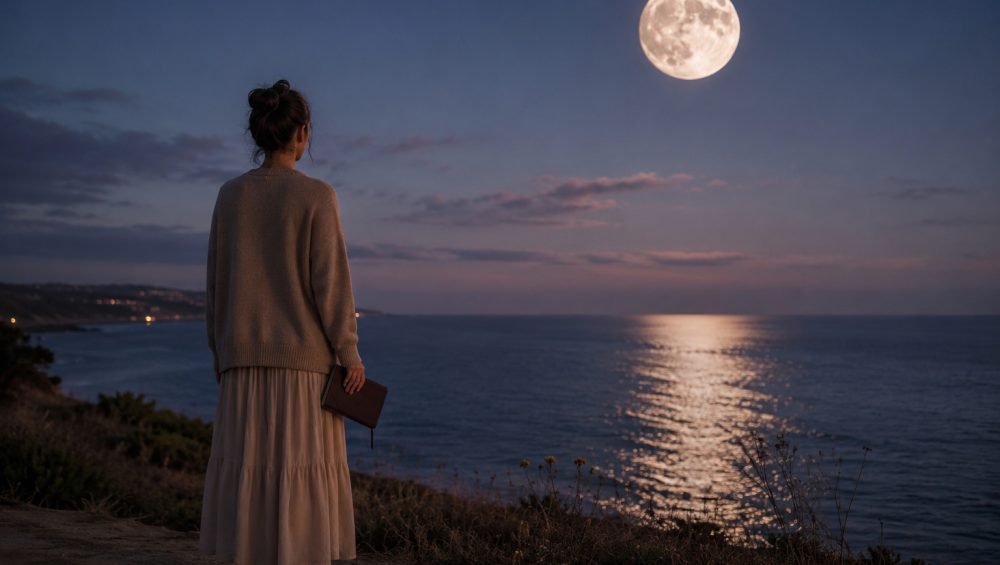
Others find that spending time outdoors deepens the experience. Watching moonlight reflect across water, sitting beneath trees, or listening to the quiet sounds of the evening can become gentle reminders that change is part of every natural cycle, including our own lives.
However your ritual unfolds, there is no expectation that every month should feel profound. Some reflections will feel deeply meaningful. Others may seem surprisingly ordinary. Both experiences are valuable because they encourage the habit of paying attention.
Some people also find it helpful to spend a few minutes checking in with themselves between lunar cycles. Small moments of reflection often make it easier to notice emotional patterns before they become overwhelming, and daily emotional check-in prompts can offer gentle guidance for maintaining that awareness throughout the month.
Do You Need Crystals, Candles, or Special Tools?
Not at all. While images shared online often feature crystals, candles, incense, tarot cards, or beautifully arranged altars, none of these items are necessary for a meaningful full moon ritual.
Many people enjoy symbolic objects because they help create a calming atmosphere or encourage intentional reflection. A candle may represent hope, a favorite blanket may create comfort, or a journal may become a familiar place to process emotions. These items can enrich the experience if they already feel personally meaningful, but they are never requirements.
In fact, some of the most memorable rituals involve almost nothing at all. Sitting quietly beneath the night sky, taking a peaceful walk, noticing your breathing, or writing a single page in a notebook can be just as meaningful as a carefully planned ceremony.
If gathering supplies begins to feel stressful, complicated, or expensive, it may help to simplify. The purpose of the ritual is not to build the perfect environment but to create a little space for honest self-reflection. Everything else is optional.
For readers who prefer an intentionally simple practice, full moon rituals without crystals explores meaningful ways to create a ritual using only your time, attention, and willingness to reflect.
Can Full Moon Rituals Support Emotional Well-Being?
Full moon rituals are not a substitute for therapy, medical care, or professional mental health treatment. They cannot solve life’s challenges or guarantee emotional healing. What they can offer is something much gentler: a recurring opportunity to slow down long enough to notice what is happening within you.
Modern life encourages constant movement. We finish one responsibility only to begin another, often without taking time to process our experiences. Over weeks and months, emotions can quietly accumulate until we feel overwhelmed without fully understanding why. A monthly ritual creates intentional space to check in with yourself before those feelings become impossible to ignore.
Reflection also strengthens self-awareness. When you regularly pause to notice your thoughts, emotions, and reactions, you begin recognizing patterns that might otherwise remain hidden. You may notice situations that consistently leave you feeling energized, relationships that restore your sense of peace, or habits that contribute to unnecessary stress. That awareness often becomes the first step toward making meaningful changes.
Self-compassion frequently grows alongside this awareness. Looking back over the past month may remind you that progress rarely follows a straight line. Some months feel productive and joyful, while others involve setbacks, uncertainty, or grief. A ritual encourages you to acknowledge both without immediately judging yourself for either experience.
Perhaps most importantly, a recurring practice reminds you that emotional well-being is built through consistent care rather than dramatic breakthroughs. Small moments of reflection repeated throughout the year often have a greater impact than waiting for a single life-changing realization.
Whether your ritual lasts five minutes or an hour, the simple act of creating intentional space for yourself can become a quiet reminder that your inner life deserves the same attention and compassion you so often extend to others.
Common Questions and Misconceptions About Full Moon Rituals
Because full moon rituals have become increasingly popular, they are often surrounded by unrealistic expectations. Separating symbolism from misconception can help the practice feel more supportive and less intimidating.
You don’t have to practice on the exact night of the full moon. While many people enjoy observing the full moon when it is brightest, your ritual can take place the day before, the following evening, or whenever you have uninterrupted time to reflect. The intention matters far more than the calendar.
There is no perfect ritual. Social media often presents elaborate ceremonies with carefully arranged tools and lengthy checklists. In reality, meaningful rituals are usually much simpler. They evolve naturally as your life changes instead of remaining identical month after month.
You don’t have to experience an emotional breakthrough. Some rituals leave you feeling deeply inspired, while others simply provide a peaceful moment in an otherwise busy week. Both experiences are valuable. Reflection does not need to produce dramatic transformation to be worthwhile.
Belief systems vary. Some people practice full moon rituals as part of their spiritual traditions. Others approach them as mindfulness exercises or opportunities for personal reflection. There is room for many perspectives because the ritual itself is deeply personal.
If you’re worried about making mistakes or wondering whether you’re “doing it correctly,” common full moon ritual mistakes explores some of the most common misconceptions while encouraging a more flexible, reader-first approach.
Ritual & Journey Continuation: Carrying the Reflection Beyond the Full Moon
The full moon may inspire the ritual, but the quiet awareness you cultivate during those moments can continue long after the moon has faded from the night sky.
You may notice yourself becoming more aware of your emotions during ordinary days, recognizing moments of gratitude more easily, or responding to challenges with greater patience than you once did. These subtle changes often develop gradually through repeated moments of reflection rather than dramatic breakthroughs.
If journaling became part of your ritual, consider returning to it occasionally throughout the month instead of waiting for the next full moon. Even a few honest sentences can help you recognize patterns that are easy to miss when life feels busy.
Likewise, if your ritual centered on releasing emotional weight, remember that letting go is rarely a single event. It often unfolds through many small choices made with compassion over time.
As your practice evolves, you may naturally find yourself returning to gentle intention-setting practices between lunar cycles or exploring additional journals that encourage ongoing reflection in ways that fit your own life.
Whatever your practice looks like next month, remember that the ritual itself is never the goal. The goal is creating recurring opportunities to meet yourself with honesty, curiosity, and kindness. The full moon simply offers one beautiful reminder that another chance to begin again is always on the horizon.
Frequently Asked Questions
What do you do during a full moon ritual?
There isn’t one correct way to practice a full moon ritual. Many people spend a few quiet minutes reflecting on the past month, writing in a journal, practicing meditation, taking a peaceful walk, or simply sitting beneath the night sky. The purpose isn’t to complete a checklist but to create intentional space for self-awareness.
Do full moon rituals have to be spiritual?
No. While many people connect full moon rituals with personal spirituality, others approach them as a mindfulness practice or monthly reflection. You don’t have to follow a particular belief system for a ritual to feel meaningful. For many people, it’s simply an opportunity to slow down and notice what they’re experiencing emotionally.
What should I write about during a full moon ritual?
Many people begin by reflecting on a few simple questions:
- What challenged me this month?
- What am I grateful for?
- What have I learned about myself?
- What no longer feels helpful to carry forward?
- What would I like to make more space for next month?
Your journal doesn’t need to sound insightful or polished. Honest thoughts are often the most valuable because they reflect where you genuinely are rather than where you think you should be.
Is it okay if I miss the exact night of the full moon?
Absolutely. While many people enjoy practicing on the evening of the full moon, there’s nothing magical about a specific hour. If your schedule is busy or the weather keeps you indoors, you can practice the day before, the following evening, or whenever you’re able to create uninterrupted time for reflection. The intention matters far more than the date on the calendar.
Do I need crystals or candles for a full moon ritual?
No. Crystals, candles, incense, and other symbolic objects are completely optional. Some people enjoy incorporating them because they help create a calming atmosphere or serve as meaningful reminders of their intentions. Others prefer a notebook, a comfortable chair, and a few quiet moments. Neither approach is more authentic than the other.
Can full moon rituals improve emotional well-being?
A full moon ritual isn’t a substitute for professional mental health care, but it can support emotional well-being by encouraging regular self-reflection. Taking time to acknowledge your thoughts and emotions each month may help you recognize patterns, celebrate progress, and respond to yourself with greater compassion. Many people discover that the greatest benefit comes from creating a consistent habit of checking in with themselves.
Can I do the same ritual every month?
Yes. Some people enjoy returning to the same familiar practice because it creates a comforting sense of rhythm throughout the year. Others allow their rituals to evolve as life changes. During one season you may spend time journaling, while another month may call for a quiet walk or a few minutes of meditation. The ritual can change as your needs change.
Final Thoughts
The full moon has inspired reflection for generations, not because it asks us to become someone different overnight, but because it quietly reminds us to notice where we are today.
In many ways, that’s what full moon rituals are truly about. They aren’t performances or tests of spiritual knowledge. They don’t require perfect timing, elaborate ceremonies, or expensive supplies. Instead, they offer something far more accessible: permission to pause before another month begins to unfold.
Some months your ritual may center on gratitude. Other months it may help you acknowledge grief, celebrate resilience, or recognize that you’re ready to leave something behind. There will also be times when simply sitting beneath the moon for a few peaceful minutes is enough. Every one of those experiences has value because each begins with the same simple decision—to make space for yourself.
As you continue developing your own practice, allow it to remain flexible. The rituals that last are rarely the most elaborate. They’re the ones that continue meeting you where you are, season after season, gently reminding you that growth doesn’t always happen through dramatic moments. More often, it happens through small acts of awareness repeated with kindness over time.
Whether this is your first full moon ritual or one you’ve quietly returned to for years, let it be a practice that supports your well-being rather than adding another expectation to your life. The moon will return next month, offering another opportunity to pause, reflect, and begin again—one gentle step at a time.
Where softness, self-awareness, and emotional healing are allowed to coexist. Through reflective writing, grounding rituals, and intentional beauty, Sparrow Trades offers gentle support for sensitive souls learning to reconnect with themselves.