Rose quartz is one of the world’s most recognizable gemstones, admired for its soft pink color and timeless beauty. Whether you’ve encountered it in jewelry, crystal collections, or decorative objects, you’ve likely noticed that it carries a reputation unlike almost any other gemstone. For some, it is simply an elegant natural stone. For others, it represents compassion, kindness, or emotional connection. These different perspectives have helped rose quartz remain popular across cultures and generations.
To truly understand what rose quartz is, it helps to separate two equally fascinating stories. The first is the scientific story—how this beautiful pink variety of quartz formed deep within the Earth over millions of years and what gives it its distinctive appearance. The second is the human story—how civilizations throughout history have admired the stone, woven it into myths and traditions, and given it symbolic meaning that continues to resonate today.
Neither perspective replaces the other. Science explains what rose quartz is made of and how it formed, while history helps us understand why people have valued it for thousands of years. Appreciating both allows us to see rose quartz not only as a remarkable natural gemstone but also as a reflection of humanity’s enduring desire to find beauty and meaning in the natural world.
If you’re beginning to explore gemstones, rose quartz is one of the easiest places to start. It belongs to the quartz family, one of the most abundant mineral groups on Earth, alongside familiar varieties such as amethyst, citrine, smoky quartz, and clear quartz. Its accessibility, durability, and gentle appearance have made it one of the most widely collected and worn gemstones in the world.
As you continue learning, you’ll also discover that many cultures have attached symbolism to natural stones through traditions known as gemstone meanings. These meanings are shaped by history, folklore, spirituality, and personal belief rather than scientific evidence. Rose quartz, in particular, has long been associated with themes of kindness, compassion, affection, and emotional openness, making it one of the most recognizable symbolic gemstones.
More recently, rose quartz has become closely associated with gemstones for emotional wellness. While gemstones cannot diagnose, treat, or cure emotional or physical conditions, many people enjoy surrounding themselves with meaningful objects that reflect the qualities they hope to cultivate. For some, rose quartz serves as a quiet reminder to practice self-compassion, strengthen relationships, or approach life with greater patience and understanding.
Whether your interest comes from geology, history, jewelry, or simple curiosity, understanding what rose quartz is provides a richer appreciation for both the gemstone itself and the stories people have carried alongside it for centuries.
What Is Rose Quartz?
Rose quartz is a naturally occurring pink variety of quartz, a mineral composed primarily of silicon dioxide (SiO₂). Quartz is one of the most abundant minerals found on Earth, and rose quartz is among its most recognizable varieties thanks to its soft pink color and translucent appearance.
Unlike gemstones that are prized primarily for their rarity, rose quartz is appreciated for its natural beauty, versatility, and accessibility. It is commonly fashioned into necklaces, bracelets, earrings, carvings, decorative objects, and polished stones, making it one of the most widely used gemstones in the world. Its combination of durability and understated elegance has allowed it to remain popular for thousands of years.
Scientifically, rose quartz is defined by its mineral composition, crystal structure, and physical properties. Culturally, it has become associated with compassion, affection, emotional warmth, and connection through centuries of mythology, folklore, and spiritual traditions. These symbolic meanings are part of human history rather than scientific fact, but they continue to shape how many people experience and appreciate the stone today.
Many people first encounter rose quartz while exploring crystal healing or learning about emotional wellness. Although scientific research does not support healing claims for crystals, many individuals use meaningful gemstones as reminders of personal intentions, mindfulness, or reflection. Appreciating rose quartz through both its geological origins and its cultural history offers a balanced understanding of why it continues to resonate with so many people.
History and Formation of Rose Quartz
Rose quartz has been admired for thousands of years, making it one of the oldest gemstones used for jewelry and decorative art. Archaeological discoveries show that ancient civilizations—including the Assyrians, Egyptians, Greeks, and Romans—crafted rose quartz into beads, seals, amulets, and ornamental carvings. While each culture interpreted the stone through its own traditions, its soft pink color often inspired themes of beauty, harmony, affection, and emotional warmth.
Some of the earliest known rose quartz artifacts date back nearly 7,000 years. Egyptian artisans carved the stone into jewelry and ceremonial objects, while Greek and Roman mythology later connected it with stories of love and reconciliation. These traditions became part of the rich cultural history surrounding rose quartz and continue to influence the symbolic meanings many people associate with the gemstone today. Exploring these traditions alongside broader gemstone meanings provides valuable context for understanding how natural stones have inspired human imagination across generations.
Long before people admired rose quartz, however, nature was creating it deep within the Earth’s crust. Like all quartz varieties, rose quartz forms when mineral-rich fluids slowly cool and crystallize over millions of years. The gemstone’s soft pink color is believed to come from microscopic fibrous mineral inclusions that became trapped within the crystal structure during formation, giving the stone its distinctive appearance and gentle translucence.
Unlike amethyst or clear quartz, which often develop well-defined crystal points, rose quartz is most commonly found in large, massive deposits. This is why polished stones, carvings, cabochons, and rose quartz jewelry are much more common than naturally occurring rose quartz crystal clusters.
Today, significant deposits of rose quartz are found in Brazil, Madagascar, Mozambique, Namibia, South Africa, India, and parts of the United States. Although stones from different regions may vary slightly in color and clarity, each represents geological processes that unfolded over millions of years. Whether admired as a mineral specimen or worn as jewelry, every piece of rose quartz carries both a remarkable natural history and a rich human story.
Color, Properties, and How to Identify Rose Quartz
One of the reasons rose quartz has remained popular for centuries is its unmistakable appearance. Its soft pink color feels both elegant and approachable, making it one of the easiest gemstones to recognize. While no two pieces are exactly alike, rose quartz shares a combination of physical characteristics that distinguish it from other pink gemstones and make it a favorite among jewelers, collectors, and gemstone enthusiasts.
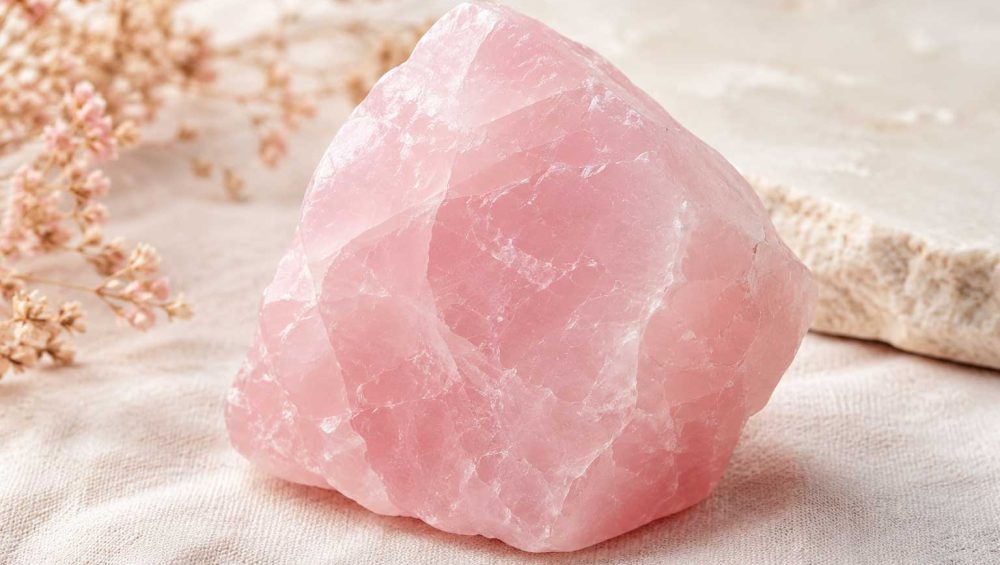
The color of rose quartz ranges from the palest blush pink to richer shades of rosy pink. Some specimens appear almost transparent in bright light, while others have a milky or cloudy appearance. These variations are completely natural and result from the conditions under which the stone formed millions of years ago. Rather than looking for perfect uniformity, many collectors appreciate the subtle differences that make each piece unique.
Unlike gemstones known for brilliant sparkle, rose quartz has a quiet, understated beauty. When polished, it displays a vitreous, or glass-like, luster that reflects light softly instead of producing dramatic flashes. This gentle glow contributes to the calming aesthetic that has made rose quartz a popular choice for everything from decorative carvings to elegant jewelry.
With a Mohs hardness of 7, rose quartz is durable enough for everyday wear in necklaces, pendants, bracelets, and earrings. While it is more resistant to scratches than many decorative stones, it can still be damaged by harder gemstones such as diamonds or sapphires. Storing jewelry separately and avoiding hard impacts will help preserve its polished surface and natural beauty for years to come.
Because rose quartz is abundant, it is also one of the easiest genuine gemstones to purchase. Natural specimens often contain tiny inclusions, gentle color variations, or a soft translucence rather than perfect clarity. In fact, these subtle imperfections are often signs that the gemstone formed naturally. While dyed stones and imitations can occasionally be found, authentic rose quartz is so readily available that artificial versions are less common than with many other gemstones.
Rose quartz is sometimes mistaken for other pink gemstones, including pink opal, morganite, pink tourmaline, rhodonite, and pink calcite. Although these stones may appear similar at first glance, they differ significantly in mineral composition, hardness, crystal structure, and appearance. Exploring other gemstones can help you appreciate just how diverse the natural world of minerals truly is.
As you learn more about natural stones, you may also notice that each has developed its own cultural history and symbolic associations. Browsing collections of gemstone meanings provides a broader perspective on how different civilizations have interpreted the colors, patterns, and characteristics found in gemstones throughout history.
Whether you’re choosing a polished palm stone, beginning a mineral collection, or browsing handcrafted rose quartz jewelry, understanding these physical characteristics allows you to appreciate rose quartz first as an extraordinary product of Earth’s geology. Its symbolism may differ from person to person, but its natural beauty remains universally admired.
Rose Quartz Meaning and Symbolism
Few gemstones have become as closely associated with compassion and emotional connection as rose quartz. Across centuries and cultures, its soft pink color has inspired stories, traditions, and symbolic meanings that continue to resonate today. While those interpretations vary around the world, they share a common thread: rose quartz has long been viewed as a gentle reminder of kindness, affection, and the importance of human connection.
It is important to distinguish symbolism from science. The meanings associated with rose quartz come from history, spirituality, folklore, and personal belief—not from measurable scientific evidence. There is no proof that the gemstone possesses healing powers or can directly influence emotions. Instead, many people find value in the personal intentions and reflections that a meaningful object can inspire.
Throughout history, rose quartz has frequently been connected with love—not only romantic love, but also friendship, family relationships, forgiveness, compassion, and self-acceptance. Because of these broader associations, many people see rose quartz as representing the many ways we experience care and connection throughout our lives rather than limiting its symbolism to one type of relationship.
Within many spiritual traditions, rose quartz is also associated with the chakras, particularly the heart chakra. In these belief systems, the heart chakra symbolizes compassion, empathy, forgiveness, and emotional balance. Whether someone embraces these traditions or simply appreciates them as cultural symbolism, they have become an enduring part of rose quartz’s identity.
This symbolism is one reason rose quartz frequently appears in conversations about gemstones for emotional wellness. Rather than viewing the stone as something that creates emotional change, many people choose it as a tangible reminder of the qualities they hope to cultivate in themselves—patience, kindness, openness, and understanding.
If this season of life has you seeking greater compassion for yourself or stronger connections with others, you may also find yourself drawn toward the traditions surrounding rose quartz healing. These practices explore the historical and spiritual symbolism of the stone while recognizing that each person’s experience is deeply personal and shaped by individual beliefs.
Some people are especially interested in the relationship between rose quartz and the heart. If that’s where your curiosity is leading, exploring rose quartz heart healing offers a deeper look at why this gemstone has become so closely associated with themes of compassion, forgiveness, and emotional openness across many traditions.
Ultimately, the meaning of rose quartz is not something contained within the stone itself—it is something people have created over thousands of years through stories, traditions, and lived experience. Whether you appreciate it as a beautiful mineral, a thoughtful gift, or a personal symbol of compassion, the significance of rose quartz is shaped by the meaning you choose to give it.
Rose Quartz and Emotional Wellness
Many people discover rose quartz while searching for ways to feel more grounded, connected, or emotionally balanced. Its soft color and long-standing symbolism naturally invite reflection, particularly during seasons when life feels uncertain, overwhelming, or emotionally demanding. While no gemstone can diagnose, treat, or cure emotional or mental health conditions, meaningful objects can serve as gentle reminders of the values and intentions we hope to carry with us each day.
This distinction is important. emotional wellness isn’t something that comes from an object outside of us. It develops through self-awareness, healthy relationships, emotional resilience, supportive habits, and practices that help regulate the nervous system. A gemstone cannot create these qualities, but it can become part of a personal routine that encourages you to pause, reflect, and respond to yourself with greater compassion.
For some people, that reminder comes from wearing a favorite piece of jewelry. Others keep a polished rose quartz on a desk, beside a journal, or in a space where they regularly spend quiet moments. Simply noticing it throughout the day can become an invitation to slow down, check in with yourself, or remember the kind of person you want to be. In this way, the practice—not the stone—is what supports emotional growth.
Many people also pair rose quartz with mindfulness practices. Holding a meaningful object while focusing on your breathing or observing your thoughts without judgment can help create a sense of presence. The gemstone isn’t responsible for the experience; rather, it serves as a familiar focal point that gently brings your attention back to the present moment.
Others choose to incorporate rose quartz into meditation. Whether placed nearby during a quiet meditation session or held while setting an intention, it can become part of a calming ritual that encourages stillness and reflection. These practices are rooted in personal preference and belief, and many people find value in the consistency of the ritual itself rather than attributing change to the gemstone.
If you’re looking for simple ways to incorporate rose quartz into everyday life, you may appreciate exploring daily rose quartz rituals. Small, intentional habits often have a greater impact than dramatic changes, especially when they help you reconnect with your values during busy or stressful days.
Some people also enjoy pairing those routines with rose quartz affirmations. Whether spoken aloud, written in a journal, or quietly reflected upon, affirmations can become another gentle reminder of the qualities you hope to strengthen—such as patience, compassion, gratitude, or self-acceptance.
If you want a broader path beyond one stone, crystals by intention can help you explore gemstones by the emotional themes, symbols, or personal intentions that feel most relevant to your current season.
Ultimately, rose quartz doesn’t change who you are. Instead, it can become a meaningful symbol of who you’re striving to become. Whether it reminds you to slow down, speak kindly to yourself, or approach others with empathy, its greatest value may be the quiet pause it creates—the moment that helps you respond with intention instead of reacting on autopilot.
Rose Quartz in Crystal Healing Traditions
Because rose quartz is so strongly associated with compassion and emotional openness, it often appears in crystal healing traditions. These practices vary widely, but many people use rose quartz as a symbolic object during quiet reflection, intention-setting, journaling, meditation, or personal rituals. The stone itself should not be viewed as a treatment or cure, but it may help some people create a sense of ritual around the qualities they want to remember.
For readers who want a wider introduction to this topic, a crystal healing guide can provide more context for how people use crystals symbolically, thoughtfully, and with realistic expectations. A balanced approach matters, especially when emotional wellness is involved, because meaningful rituals should support self-awareness rather than replace professional care, rest, relationships, or nervous-system-supportive practices.
You may also find it helpful to explore the benefits of healing crystals from a grounded perspective. The most meaningful benefits are often not about the stone causing change, but about the way a ritual, object, or daily reminder helps someone pause, reflect, and reconnect with what matters to them.
Rose Quartz Jewelry
For thousands of years, people have transformed rose quartz into jewelry that is both beautiful and deeply personal. From ancient carved beads to modern necklaces and bracelets, this gentle pink gemstone has remained a timeless choice because it pairs natural elegance with meaningful symbolism. Whether you’re drawn to its color, its history, or simply its understated beauty, rose quartz jewelry offers a way to appreciate one of nature’s most recognizable gemstones every day.
One of the reasons rose quartz is so popular in jewelry is its versatility. Its soft pink tones complement a wide range of styles, making it equally at home in delicate everyday pieces and more formal designs. Pendants, earrings, bracelets, and rings each showcase the gemstone differently, allowing people to choose pieces that reflect their personal taste rather than following trends.
Because rose quartz has a Mohs hardness of 7, it is well suited for regular wear when treated with reasonable care. While it isn’t as hard as a diamond or sapphire, it is durable enough for most everyday activities. Simple habits such as storing jewelry separately from harder gemstones and removing it before heavy physical work can help preserve its polished finish for years to come.
Many people choose rose quartz jewelry because the piece becomes more than an accessory. It may mark a meaningful life event, celebrate a relationship, honor a personal milestone, or simply serve as a quiet reminder of qualities like compassion and kindness. Over time, those memories often become just as valuable as the gemstone itself.
If you’re naturally drawn to jewelry that reflects themes of affection, connection, and meaningful relationships, you may also enjoy exploring love jewelry. These collections bring together gemstones that have traditionally been associated with care, compassion, and emotional connection while allowing each person to interpret their symbolism in their own way.
Others prefer to browse jewelry organized around broader themes of reflection and intention. Collections of healing jewelry feature a variety of natural gemstones selected for their beauty and the personal significance many people associate with them. Rather than promising outcomes, these collections encourage thoughtful choices based on what feels meaningful to the individual.
As you explore different styles, you may also enjoy learning more about jewelry and how natural gemstones have been incorporated into personal adornment throughout history. Understanding the craftsmanship behind gemstone jewelry adds another layer of appreciation for the artistry involved in transforming raw minerals into pieces designed to be worn and treasured.
Whether you’re selecting your first piece or adding to a growing collection, the most meaningful jewelry is often the piece that reflects your own story. Rose quartz has inspired people for thousands of years, not because everyone believes the same things about it, but because its quiet beauty leaves room for each person to attach their own memories, intentions, and experiences.
Frequently Asked Questions
Is rose quartz a gemstone or a crystal?
Rose quartz is both. Geologically, it is a variety of quartz, making it a mineral and a crystal. When it is cut, polished, and used in jewelry or decorative objects, it is also classified as a gemstone. In everyday conversation, people often use the terms interchangeably, but they describe different aspects of the same natural material.
What gives rose quartz its pink color?
Rose quartz gets its soft pink color from microscopic fibrous mineral inclusions that formed as the quartz crystallized deep within the Earth’s crust. These tiny inclusions scatter light throughout the stone, creating the gentle, cloudy appearance that makes rose quartz so recognizable.
Where is rose quartz found?
Rose quartz is found in many parts of the world, with significant deposits in Brazil, Madagascar, Mozambique, Namibia, South Africa, India, and the United States. Stones from different regions may vary slightly in color, clarity, and translucency, but all share the same basic mineral composition.
Is rose quartz rare?
No. Compared to many gemstones, rose quartz is relatively abundant. Its availability is one reason it has remained popular for jewelry, carvings, and decorative objects throughout history. While exceptionally transparent specimens are less common, most natural rose quartz is readily available and affordable.
What does rose quartz symbolize?
Rose quartz has traditionally been associated with compassion, kindness, affection, forgiveness, and emotional connection. These meanings come from cultural traditions, mythology, and spiritual beliefs rather than scientific evidence. Many people appreciate the stone as a personal symbol of the qualities they hope to cultivate in their own lives.
Is rose quartz connected to the heart chakra?
Within many spiritual traditions, rose quartz is associated with the heart chakra because it symbolizes compassion, empathy, forgiveness, and emotional openness. This association is part of spiritual belief systems rather than established scientific fact, but it has become one of the gemstone’s most enduring symbolic connections.
Can rose quartz improve emotional wellness?
There is no scientific evidence that rose quartz can improve emotional wellness or treat physical or mental health conditions. However, many people use meaningful objects as reminders of personal intentions, mindfulness, or self-reflection. For some, rose quartz serves as a gentle symbol of compassion and intentional living rather than a source of healing itself.
Can you wear rose quartz every day?
Yes. With a Mohs hardness of 7, rose quartz is durable enough for everyday wear when treated with reasonable care. Like any natural gemstone, it can be scratched by harder materials or chipped if dropped, so thoughtful handling and proper storage will help preserve its beauty.
How do you clean rose quartz?
Rose quartz can usually be cleaned using warm water, a small amount of mild soap, and a soft cloth or brush. Harsh chemicals, abrasive cleaners, and prolonged exposure to extreme heat should be avoided. Regular gentle cleaning helps maintain the gemstone’s natural luster.
Is rose quartz a good gift?
Rose quartz has long been given as a thoughtful gift because of both its beauty and its symbolism. Whether celebrating a birthday, anniversary, graduation, friendship, or another meaningful milestone, many people appreciate rose quartz as a lasting reminder of kindness, connection, and care.
Conclusion
Rose quartz has earned its place as one of the world’s most beloved gemstones through a remarkable combination of natural beauty, fascinating geology, and centuries of cultural significance. Its soft pink color has inspired artists, jewelers, collectors, and storytellers alike, while its durability and accessibility have made it a gemstone that people from all walks of life can appreciate.
Understanding what rose quartz is means looking at both the science and the symbolism. From a geological perspective, it is a naturally occurring variety of quartz formed over millions of years beneath the Earth’s surface. From a cultural perspective, it has become a symbol of compassion, affection, and emotional connection through traditions that span thousands of years. These perspectives complement one another, allowing us to appreciate both the natural history of the gemstone and the human stories that have grown around it.
If your curiosity has been sparked by the beauty of this gentle pink stone, you may enjoy continuing your exploration through gemstones for emotional wellness, discovering additional gemstone meanings, or learning more about the traditions surrounding crystal healing. Each offers a different perspective on the ways people have connected with natural gemstones throughout history.
And if rose quartz continues to resonate with you, exploring handcrafted rose quartz jewelry can be a meaningful way to celebrate one of nature’s most enduring creations. Whether you admire it for its geology, its history, or the personal meaning it holds for you, rose quartz reminds us that some of the most treasured objects are those that connect the beauty of the natural world with our own lived experiences.

Where softness, self-awareness, and emotional healing are allowed to coexist. Through reflective writing, grounding rituals, and intentional beauty, Sparrow Trades offers gentle support for sensitive souls learning to reconnect with themselves.