Have you ever picked up a gemstone simply because its color or texture caught your attention? Red jasper has a way of doing exactly that. With its rich earthy reds, warm brown undertones, and natural patterns formed over millions of years, it has been admired by cultures around the world for thousands of years. Whether carved into seals by ancient civilizations, polished into jewelry, or collected as a beautiful mineral specimen, red jasper has earned a lasting place among the world’s most recognizable gemstones.
If you’re wondering what red jasper actually is, the answer begins with geology rather than symbolism. Red jasper is an opaque variety of chalcedony, a form of microcrystalline quartz. Its distinctive red color comes primarily from iron minerals that became trapped within the stone as it formed. Every piece is unique, displaying its own combination of deep reds, rust tones, subtle veining, and natural patterns that reflect the environments where it developed.
Beyond its physical beauty, red jasper has also become associated with ideas of steadiness, resilience, and grounding in many cultural and spiritual traditions. Throughout history, people have assigned meaning to gemstones as a way of expressing values, hopes, and personal intentions. While these symbolic associations continue to be meaningful for many people today, they are rooted in tradition and personal belief rather than established scientific evidence.
For some, red jasper is simply an attractive gemstone that complements everyday jewelry. Others enjoy learning about its fascinating geological origins or the role it has played in ancient cultures. Many are also drawn to its symbolic reputation as a stone that represents stability during life’s changing seasons.
Understanding a gemstone means appreciating both its measurable characteristics and the stories people have attached to it over time. By exploring its formation, history, traditional symbolism, and modern uses, you can decide what red jasper means to you personally. If this is part of a broader season of reflection, you may also find yourself drawn toward gemstones for emotional wellness, where natural stones are explored through beauty, symbolism, and personal meaning.
What Is Red Jasper?
Red jasper is a naturally occurring gemstone belonging to the quartz family. More specifically, it is an opaque variety of chalcedony, which is made up of countless microscopic quartz crystals packed tightly together. This dense structure gives red jasper its smooth appearance, exceptional durability, and ability to take a beautiful polish.
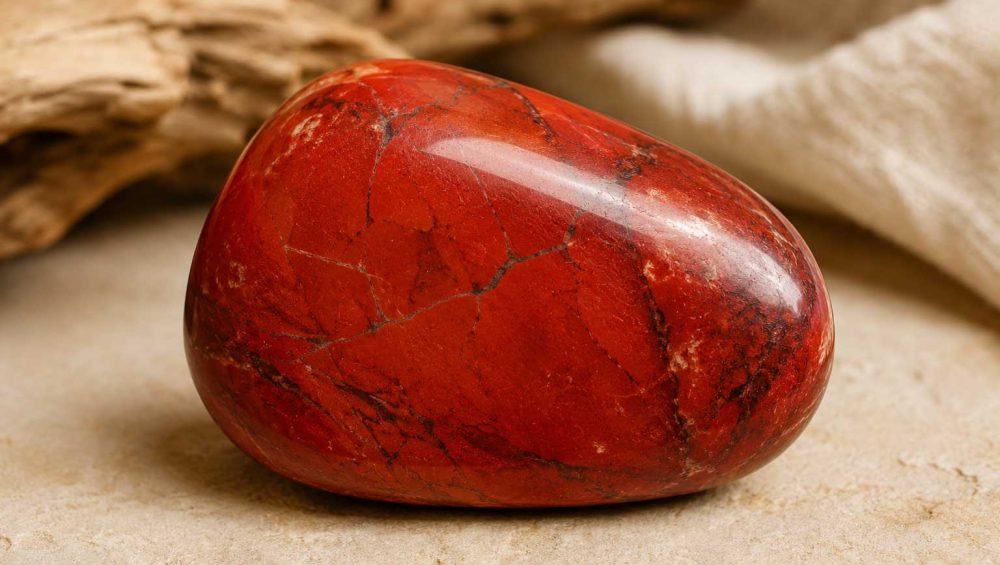
Unlike transparent gemstones, red jasper is completely opaque. Its color ranges from soft brick red and terracotta to deep crimson, often accented by streaks, veins, or patches of brown, black, cream, or gray. These natural variations occur because of the minerals present while the stone formed beneath Earth’s surface, making every specimen unique.
The characteristic red color comes primarily from iron oxide, the same mineral responsible for the reddish appearance of many desert landscapes and weathered rocks. Over millions of years, silica-rich sediments mixed with iron deposits and gradually hardened under pressure, creating the stone we know today.
Because of its hardness—ranking about 6.5 to 7 on the Mohs scale—red jasper is well suited for jewelry, carvings, decorative objects, and ornamental art. It resists everyday scratching better than many softer gemstones while maintaining its polished finish for years with proper care.
Today, red jasper is found in many parts of the world, including Brazil, India, Madagascar, Australia, Russia, South Africa, and the United States. Each location produces stones with slightly different shades, patterns, and mineral inclusions, contributing to the wide variety available to collectors and jewelry makers.
As you explore the wider world of gemstones, you’ll notice that red jasper is valued as much for its natural beauty as for the traditions that have grown around it. Within the broader family of gemstone meanings, it is often associated with themes of endurance, stability, and quiet strength, while remaining first and foremost a remarkable product of Earth’s geological history.
The Geological Story Behind Red Jasper
Every red jasper stone tells a story that began millions—even hundreds of millions—of years ago. Unlike gemstones that form as large individual crystals, red jasper developed gradually as microscopic quartz particles settled alongside mineral-rich sediments. Over immense periods of time, these materials were compressed by layers of rock, eventually hardening into dense stone.
Iron played the defining role in this process. As iron-rich groundwater moved through the developing rock, it stained the silica with shades ranging from muted rust to vivid crimson. Small changes in mineral content, temperature, pressure, and surrounding sediments produced the countless patterns seen in red jasper today, including bands, swirls, spots, and delicate veins.
Geologists classify red jasper as a sedimentary or hydrothermal silica-rich rock, depending on the specific conditions under which it formed. While these scientific classifications help explain its origin, they also reveal why no two pieces are exactly alike. Nature created each specimen slowly, layer by layer, through processes that unfolded long before human history began.
This remarkable formation process also contributes to the stone’s durability. The tightly interlocked quartz crystals make red jasper resistant to everyday wear, allowing it to be shaped into polished cabochons, beads, sculptures, worry stones, and decorative objects that can last for generations.
For many people, understanding how a gemstone formed deepens their appreciation for it. Rather than seeing only a polished stone, they begin to recognize a small piece of Earth’s history—one that carries millions of years of geological change within a single smooth surface.
Red Jasper Throughout History
Long before gemstones were appreciated as collectibles or modern jewelry, they served practical, artistic, and ceremonial purposes. Red jasper was one of the earliest stones to earn widespread admiration because it was both beautiful and durable. Its rich color made it easy to recognize, while its hardness allowed skilled artisans to carve intricate designs that could withstand daily use.
Archaeological discoveries show that red jasper was used by ancient Egyptians, Greeks, Romans, Mesopotamians, and many Indigenous cultures throughout history. Egyptian artisans carved it into amulets, scarabs, and decorative inlays that appeared in jewelry, ceremonial objects, and burial artifacts. The stone’s warm red color often symbolized vitality and protection, although these meanings varied from one culture to another.
The Romans valued red jasper for engraved signet rings and seals. Because the stone carved cleanly while remaining durable, it became a practical choice for creating detailed impressions in wax used to authenticate letters and official documents. Many surviving examples demonstrate the remarkable craftsmanship achieved thousands of years ago.
Across medieval Europe, red jasper continued to appear in religious artwork, ornamental carvings, and personal adornment. It was often incorporated into decorative objects alongside other colorful minerals, reflecting both artistic appreciation and cultural symbolism.
While historical records reveal many beliefs surrounding red jasper, it’s important to recognize that these interpretations belong to the traditions of their time. Different civilizations attached different meanings to the same stone, shaped by their own customs, spiritual beliefs, and understanding of the natural world.
Today, these historical connections help explain why red jasper remains one of the world’s most recognized gemstones. Its enduring popularity reflects not only its physical beauty but also humanity’s long-standing fascination with the stories and symbolism found in nature.
Physical Characteristics of Red Jasper
One reason red jasper has remained popular for centuries is that it combines striking appearance with exceptional durability. Its physical properties make it suitable for everything from everyday jewelry to decorative carvings and collectible mineral specimens.
Unlike transparent gemstones such as quartz crystal or amethyst, red jasper has a completely opaque appearance. Light does not pass through the stone, giving it a rich, solid color that emphasizes its natural patterns and textures.
The color itself varies considerably. While many people picture a deep brick-red stone, natural red jasper can range from soft terracotta and rusty orange-red to rich burgundy. Dark veins, cream-colored streaks, black speckles, and subtle banding are all common, making each stone distinctive.
On the Mohs hardness scale, red jasper measures approximately 6.5 to 7, placing it among the more durable gemstones commonly used in jewelry. This means it resists scratches during normal wear, although it can still be damaged by harder minerals such as sapphire or diamond.
Other notable characteristics include:
- Opaque appearance
- Waxy to vitreous polish
- Smooth texture when polished
- Dense, fine-grained structure
- Excellent durability for jewelry and carving
- Natural variations in color and pattern
Because every piece forms under slightly different geological conditions, no two specimens are identical. Some display dramatic landscape-like patterns, while others appear nearly uniform in color. These natural differences are considered part of the stone’s beauty rather than imperfections.
Understanding these characteristics also makes it easier to appreciate why red jasper has become such a common choice for decorative objects, pocket stones, sculptures, beads, and red jasper jewelry designed for everyday wear.
Traditional Symbolism and Meaning
Throughout history, people have often looked to gemstones as symbols that reflected their values, hopes, or personal journeys. Red jasper is no exception. Across many traditions, it has become associated with ideas of endurance, courage, resilience, and steadiness.
These symbolic meanings developed over centuries through folklore, spiritual traditions, and cultural storytelling rather than scientific research. For many people, these interpretations remain personally meaningful, while others simply enjoy learning about the historical significance attached to different gemstones.
One reason red jasper became associated with stability may be its appearance. Its earthy colors naturally evoke images of soil, stone, mountains, and landscapes that feel enduring and dependable. As a result, it has frequently been described as representing a steady foundation during periods of uncertainty or change.
Within many crystal traditions, red jasper is also connected with grounding. The idea of grounding generally refers to cultivating a greater sense of presence, steadiness, and connection with one’s surroundings. While these beliefs are spiritual or symbolic rather than medically established, many individuals find that meaningful rituals can encourage reflection and intentional living.
If themes of stability, presence, or emotional balance resonate with you, you may also enjoy exploring grounding for emotional wellness, which approaches grounding through practical everyday experiences alongside broader emotional well-being.
Some modern practitioners also associate red jasper with the root chakra, one of the traditional energy centers described in several Eastern spiritual systems. These beliefs remain part of spiritual practice and should be understood as cultural traditions rather than scientific explanations. If you’re curious about these ideas, learning about chakras can provide helpful background on where these symbolic associations originated.
Whether someone appreciates red jasper for its geological story, its historical symbolism, or simply its rich natural beauty, the stone continues to offer an invitation to slow down and notice the remarkable history held within a single piece of the Earth.
Common Uses for Red Jasper Today
Although red jasper has been appreciated for thousands of years, its role has evolved over time. Today, most people are drawn to it for one of three reasons: its natural beauty, its historical significance, or the personal meaning they choose to associate with it.
Collectors often enjoy red jasper because no two pieces are exactly alike. The stone’s rich colors and distinctive patterns make it a favorite among mineral enthusiasts, while lapidary artists value it for the smooth finish it develops when polished.
Jewelry designers frequently use red jasper in bracelets, necklaces, earrings, pendants, and rings. Its durability makes it well suited for everyday wear, and its warm earthy tones pair beautifully with sterling silver, copper, bronze, and gold settings. If you prefer to browse by stone rather than style, gemstone jewelry can be a gentle starting point for seeing how different natural stones are worn and styled.
Others simply enjoy keeping a polished stone on a desk, bookshelf, or bedside table as a decorative reminder of nature’s remarkable ability to create beauty over millions of years.
Within crystal traditions, red jasper is commonly included in meditation, journaling, intention-setting, or mindfulness practices. These activities are personal and symbolic rather than scientifically proven therapeutic techniques. Many people find that incorporating meaningful objects into reflective practices helps them slow down and reconnect with their intentions.
If you’re interested in exploring these traditions, you might also appreciate learning about crystal healing. While scientific evidence does not support healing claims attributed to crystals, many individuals value these practices as personal rituals that encourage mindfulness, reflection, and emotional awareness. For a broader look at traditional practices and responsible context, the crystal healing guide may also feel like a helpful next step.
Ultimately, there is no single “correct” way to appreciate red jasper. Whether viewed through the lens of geology, history, artistry, or symbolism, it remains a fascinating gemstone with a story that spans both the natural world and human culture.
Red Jasper and Emotional Wellness
Although red jasper is often discussed within conversations about emotional well-being, it’s important to distinguish between traditional beliefs and evidence-based health practices.
Many crystal traditions describe red jasper as a stone associated with steadiness, resilience, courage, and emotional grounding. These interpretations have developed through generations of cultural and spiritual practice rather than scientific research. Carrying or wearing a gemstone should never be considered a replacement for medical care, mental health treatment, or professional support.
That said, meaningful objects can still play a positive role in everyday life.
A favorite necklace may remind someone to pause during a stressful day. A polished stone resting beside a journal might become part of a calming evening routine. A treasured keepsake may symbolize a season of personal growth or healing. In these moments, the value often comes not from the object itself, but from the intention and reflection it represents.
Many people who explore gemstones for emotional wellness aren’t searching for quick fixes. Instead, they’re looking for thoughtful ways to slow down, reconnect with themselves, and create gentle rituals that support emotional awareness alongside healthy habits and professional care when needed.
If feelings of overwhelm, anxiety, or prolonged emotional distress are affecting daily life, reaching out to a qualified healthcare or mental health professional remains the most appropriate source of support. Personal rituals—including those involving gemstones—can complement, but should never replace, evidence-based care.
Approached with curiosity rather than expectation, red jasper can become one small part of a broader practice of mindfulness, reflection, and intentional living. If grounding is the quality that brought you here, you might also appreciate exploring best grounding gemstones, especially if you’re comparing stones by symbolic theme.
Choosing Red Jasper Jewelry
For many people, wearing a gemstone is one of the easiest ways to enjoy its natural beauty throughout the day. Because red jasper is both durable and versatile, it has become a popular choice for jewelry designed for everyday wear.
Its warm earthy tones complement a wide range of personal styles, from minimalist pieces to bold statement designs. Whether set in sterling silver for a contemporary look or paired with warm metals like gold and copper, red jasper offers a timeless appearance that works across changing fashion trends.
When choosing a piece, consider what naturally appeals to you rather than searching for a “perfect” stone. Since every piece of red jasper formed under unique geological conditions, differences in color, veining, and pattern are signs of authenticity rather than flaws.
Some people prefer smooth cabochons with deep, even coloring, while others are drawn to dramatic landscape-like patterns or contrasting mineral inclusions. There is no universal standard of beauty—only the stone that resonates with your personal taste.
If you’re considering adding one to your collection, exploring handcrafted red jasper jewelry can be a thoughtful next step. Necklaces, bracelets, and pendants each showcase the stone’s natural character while allowing its distinctive colors and patterns to become part of everyday life.
Rather than choosing jewelry based solely on symbolism, many people simply select the piece they genuinely enjoy wearing. Often, the personal meaning develops naturally over time through the experiences connected with it.
Caring for Red Jasper
One reason red jasper has remained popular for centuries is that it requires relatively little maintenance. With simple care, a quality piece can retain its beauty for many years.
Clean red jasper using lukewarm water, a mild soap, and a soft cloth. Gently remove any dirt or oils, then dry the stone thoroughly before storing it. Avoid abrasive cleaners or harsh chemicals that could affect the polish or damage the jewelry setting.
Although red jasper is fairly durable, it can still be scratched by harder gemstones or metals. Storing jewelry in a soft pouch or a separate compartment helps protect its surface from unnecessary wear.
If your piece includes sterling silver, gold plating, or other metals, following the care recommendations for those materials is just as important as caring for the stone itself.
Some people also enjoy incorporating red jasper into personal rituals, such as setting intentions, meditation, or quiet reflection. These practices are matters of individual belief rather than scientific necessity, but they can provide meaningful moments of pause in a busy day.
Whether displayed as a mineral specimen, worn as jewelry, or appreciated simply for its geological story, red jasper asks very little in return for the beauty it offers—only thoughtful handling and an appreciation for the remarkable journey that brought it from deep within the Earth to your hands.
Frequently Asked Questions About Red Jasper
Is red jasper a gemstone or a crystal?
Both descriptions are correct. Red jasper is a gemstone because it is cut, polished, and used in jewelry and decorative objects. It is also considered a crystal within the broader quartz family because it consists of microscopic quartz crystals known as chalcedony. In everyday conversation, you’ll often hear the terms “red jasper gemstone” and “red jasper crystal” used interchangeably.
What gives red jasper its red color?
Red jasper gets its distinctive color from iron oxide, a naturally occurring mineral present while the stone formed. Different amounts of iron and other mineral inclusions create a range of colors, from soft terracotta and rusty orange-red to deep burgundy. These natural variations are one of the reasons every piece of red jasper looks slightly different.
Is every piece of red jasper unique?
Yes. Because red jasper formed naturally over millions of years, each specimen develops its own combination of colors, veins, speckles, and patterns. Some stones appear nearly solid red, while others contain striking bands or landscape-like designs created by different mineral deposits.
What is red jasper traditionally believed to symbolize?
Across many historical and spiritual traditions, red jasper has been associated with qualities such as resilience, courage, stability, endurance, and grounding. These symbolic meanings developed through cultural beliefs and folklore rather than scientific research. Many people appreciate these traditions as personal sources of inspiration while recognizing that their significance is individual rather than universal.
Is there scientific evidence that red jasper has healing properties?
There is currently no scientific evidence showing that red jasper can diagnose, treat, cure, or prevent medical or mental health conditions.
Some people enjoy using gemstones as part of mindfulness practices, meditation, or personal rituals because they help create moments of reflection and intention. While these experiences may feel personally meaningful, they should be understood as complementary spiritual or wellness practices—not medical treatments. If you’re struggling with your emotional or physical health, seeking guidance from a qualified healthcare professional is always the most appropriate step.
Can red jasper be worn every day?
Yes. Red jasper is considered a durable gemstone, measuring approximately 6.5 to 7 on the Mohs hardness scale. This makes it suitable for everyday necklaces, bracelets, pendants, and many rings, provided it receives normal care and isn’t subjected to hard impacts or rough handling.
Like any gemstone jewelry, storing it separately from harder stones such as diamonds or sapphires can help preserve its polished finish over time.
Where is red jasper found?
Red jasper is mined in many parts of the world. Some of the best-known sources include Brazil, India, Madagascar, Australia, Russia, South Africa, and the United States. Each location produces stones with slightly different shades, patterns, and mineral characteristics, contributing to the remarkable diversity seen in red jasper today.
How can I tell if red jasper is real?
Natural red jasper usually displays subtle variations in color, pattern, and texture. Genuine stones rarely appear perfectly uniform because they formed naturally over millions of years.
If you’re purchasing red jasper jewelry, buying from a reputable seller who clearly identifies the stone and its materials is one of the best ways to feel confident in your purchase. High-quality natural red jasper should feel solid, smooth when polished, and display organic-looking patterns rather than perfectly repeated designs.
While dyed or imitation materials do exist, authentic red jasper remains widely available and is generally considered an affordable natural gemstone.
Is red jasper associated with the root chakra?
Within many crystal and spiritual traditions, yes. Red jasper is commonly associated with the root chakra, which is traditionally linked to feelings of stability, security, and connection to the physical world.
These associations come from spiritual belief systems rather than scientific study. Some people find these symbolic frameworks personally meaningful, while others simply appreciate learning about the cultural traditions connected to different gemstones.
What makes red jasper so popular?
Red jasper has remained popular for thousands of years because it combines several qualities that people naturally appreciate. It is durable enough for everyday jewelry, visually distinctive, rich in history, and widely available in beautiful natural patterns.
Some people are drawn to its geological story. Others enjoy its place in ancient cultures or its traditional symbolism. Many simply appreciate the warmth and character of a gemstone that reminds us of the remarkable beauty found within the Earth itself.
Conclusion
Red jasper is one of those rare gemstones that invites appreciation from many different perspectives. Geologists value it for the remarkable natural processes that formed it over millions of years. Historians recognize its importance in ancient civilizations, where it appeared in jewelry, carvings, seals, and ceremonial objects. Jewelers admire its durability, rich color, and timeless appeal. For many individuals today, it also carries personal symbolism that reflects resilience, steadiness, and a connection to the natural world.
Understanding what red jasper is means looking beyond a single definition. It is an opaque variety of chalcedony, a member of the quartz family, colored by iron minerals and shaped by Earth’s geological history. At the same time, it has accumulated centuries of stories, traditions, and cultural meanings that continue to inspire curiosity and reflection.
If you’re just beginning your journey into natural stones, red jasper offers an excellent introduction to the world of gemstones. Its combination of beauty, accessibility, and fascinating history makes it easy to appreciate whether your interest is scientific, artistic, historical, or symbolic.
Some people are simply captivated by its earthy colors. Others enjoy collecting different varieties of quartz or exploring the rich traditions surrounding gemstone meanings. Many choose to wear red jasper jewelry because they appreciate its timeless appearance and the personal significance it comes to represent over time.
Whatever first drew you here, remember that the most meaningful relationship with any gemstone is the one you develop yourself. Rather than searching for certainty in folklore or expecting extraordinary claims, allow curiosity to guide your exploration. Learning about the natural world, appreciating skilled craftsmanship, and finding beauty in objects that have existed for millions of years can be deeply rewarding in their own right.
If this is the beginning of your exploration, you may also enjoy discovering other gemstones for emotional wellness, where each stone offers its own unique geological story, cultural history, and symbolic traditions. Together, they remind us that while the Earth shapes every gemstone differently, we each bring our own experiences and meaning to the things we choose to treasure.

Where softness, self-awareness, and emotional healing are allowed to coexist. Through reflective writing, grounding rituals, and intentional beauty, Sparrow Trades offers gentle support for sensitive souls learning to reconnect with themselves.