
Empathy is often described as the ability to understand or share another person’s feelings. But empathy isn’t just something we experience internally—it can also be something we express through our actions.
Behavioral empathy is the outward expression of empathy. It is what someone can actually see. It might be offering comfort without trying to fix a problem, listening without interrupting, checking in after a difficult conversation, or making thoughtful adjustments because you recognize someone else’s emotional experience.
This distinction matters because many people worry they are “bad at empathy” simply because they don’t naturally absorb another person’s emotions. In reality, empathy is more complex than that. Some people feel emotions intensely but struggle to respond in supportive ways. Others may not experience another person’s feelings as deeply, yet consistently show kindness, patience, and compassion through their behavior.
Neither experience automatically makes someone more—or less—empathetic.
Behavioral empathy reminds us that compassion is often demonstrated through choices rather than emotions alone.
This perspective can be especially freeing for people who have spent years questioning themselves. Perhaps you grew up believing empathy meant carrying everyone else’s pain. Maybe you became the family caretaker, always anticipating emotional needs before your own. Or perhaps you’ve been told you seem emotionally reserved despite caring deeply about the people around you.
Empathy doesn’t require emotional self-sacrifice.
Many people discover this after learning more about empathy itself. Rather than being one single ability, empathy includes multiple ways of understanding and responding to other people. Behavioral empathy represents one important part of that larger picture.
As you continue exploring, you may also become curious about the broader types of empathy that shape human relationships. Understanding the differences between them often helps explain why people connect—and sometimes misunderstand one another—in such different ways.
Behavioral empathy is especially valuable because it creates emotional safety. When someone consistently responds with respect, curiosity, patience, and presence, others often feel understood regardless of whether every emotion is perfectly shared.
This article explores what behavioral empathy is, how it differs from other forms of empathy, what it looks like in everyday life, and how you can strengthen it without losing yourself in other people’s emotional worlds.
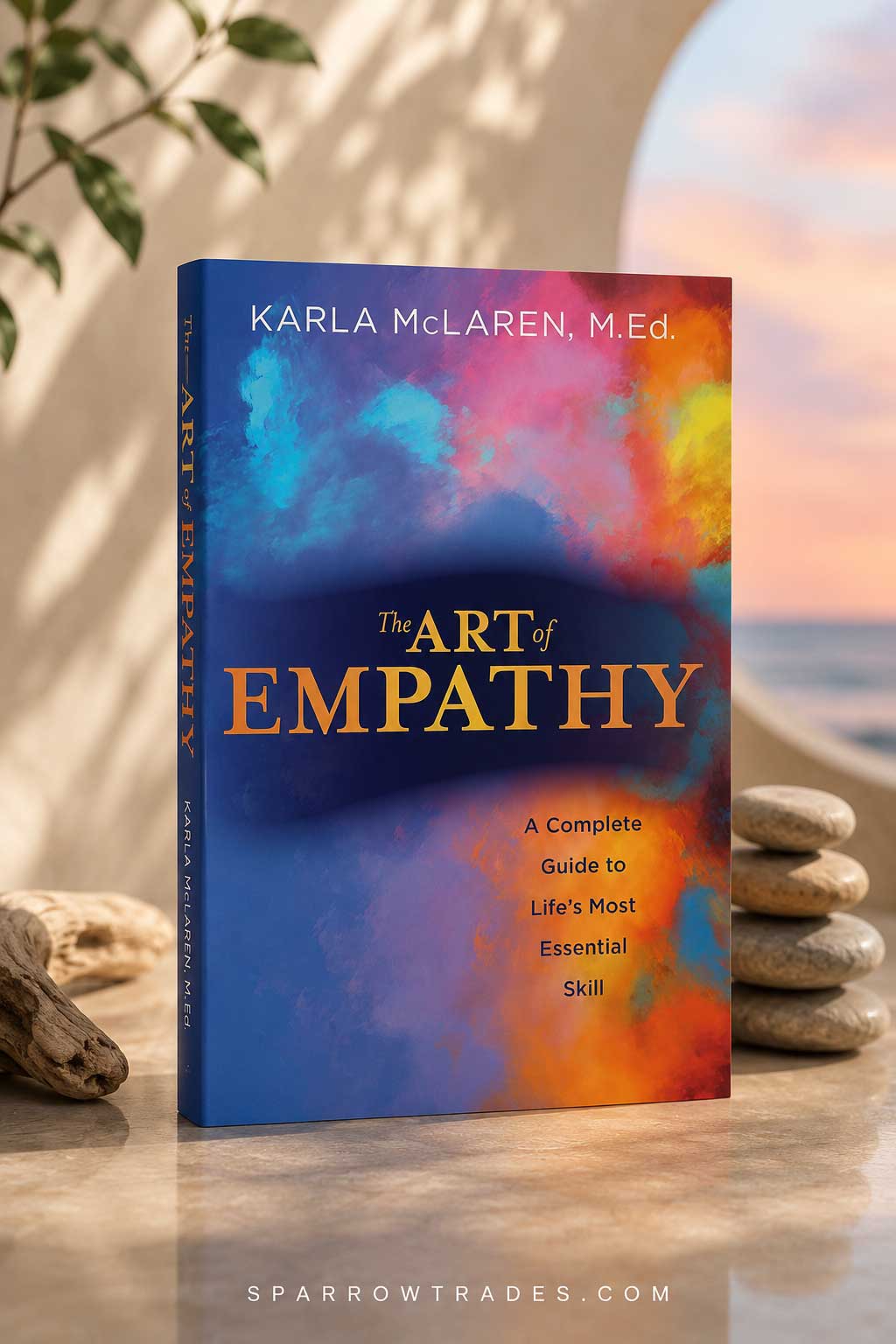
Behavioral Empathy Definition
Behavioral empathy is the ability to demonstrate care, understanding, and compassion through supportive actions that acknowledge another person’s emotional experience.
Unlike emotional empathy, which focuses on feeling another person’s emotions, behavioral empathy centers on what we choose to do.
Someone demonstrating behavioral empathy might:
- Listen without immediately offering solutions.
- Validate another person’s experience.
- Respect emotional boundaries.
- Adjust their communication when someone is overwhelmed.
- Offer practical support during difficult moments.
- Remember meaningful details about someone’s life.
- Follow through after promising to help.
These behaviors communicate something profoundly important:
“Your experience matters.”
Behavioral empathy is often easier to recognize than internal empathy because it is observable. Friends, partners, coworkers, healthcare professionals, teachers, and parents all communicate empathy largely through their actions.
This is one reason behavioral empathy plays such an important role in healthy relationships. Consistent caring behaviors build trust over time, even when people experience emotions differently.
For individuals working toward greater emotional wellness, behavioral empathy also creates healthier connections by encouraging compassionate action without requiring emotional overwhelm.
Behavioral Empathy Is Different From Feeling Everything
One of the biggest misconceptions about empathy is that caring means absorbing.
Many highly sensitive people believe they must experience another person’s emotions exactly as that person does in order to be supportive. Over time, this belief can become exhausting.
You may find yourself taking responsibility for everyone’s emotional state, feeling guilty when someone is unhappy, or becoming emotionally depleted after ordinary conversations.
Behavioral empathy offers another path.
Instead of asking, “Can I feel exactly what they’re feeling?”
it asks, “How can I respond in a way that helps this person feel seen?”
That subtle shift changes everything.
Rather than becoming consumed by someone else’s emotional experience, you remain grounded enough to offer genuine support.
This is especially important if you’ve experienced when empathy becomes emotional exhaustion. Caring deeply should not require abandoning your own nervous system.
Healthy empathy allows both people to remain emotionally present.
One person is hurting.
The other stays connected without drowning alongside them.
That balance is often where behavioral empathy shines.
Behavioral Empathy vs. Emotional Empathy
Behavioral empathy and emotional empathy are closely connected, but they are not the same thing.
Emotional empathy is the experience of feeling or sharing another person’s emotions. If a friend is grieving, you may notice sadness rising within yourself. If someone is anxious, your own body may begin to feel tense or unsettled.
Behavioral empathy begins after that emotional awareness—or even without it.
It asks how you choose to respond.
Someone with strong behavioral empathy might quietly sit beside a grieving friend, prepare a meal for someone who is overwhelmed, or send a thoughtful message weeks after a difficult event because they remember healing rarely happens overnight.
These actions don’t require feeling every emotion as intensely as the other person.
They require presence.
For many people, behavioral empathy becomes healthier as they learn that compassion does not have to mean emotional absorption. If you’ve ever struggled with carrying other people’s feelings long after they leave the room, you may recognize this pattern in how to stop absorbing other people's emotions. Many sensitive people discover that protecting their own emotional energy actually allows them to show up more consistently for others.
Healthy empathy is sustainable.
It allows kindness to continue without continually exhausting the person offering it.
Behavioral Empathy vs. Cognitive Empathy
Another type of empathy often discussed is cognitive empathy.
While behavioral empathy focuses on outward actions, cognitive empathy focuses on understanding another person’s perspective.
Someone using cognitive empathy might think:
“I can understand why they reacted that way.”
Behavioral empathy takes the next step:
“Knowing that, how can I respond with care?”
Imagine a coworker who seems unusually impatient.
Cognitive empathy might recognize they recently experienced a family emergency.
Behavioral empathy might respond by speaking more gently, offering flexibility, or checking whether they need support instead of assuming they are simply being difficult.
One without the other can sometimes feel incomplete.
A person may intellectually understand someone’s experience but never express compassion in ways the other person can feel.
Conversely, someone may perform kind actions without truly listening or understanding what another person actually needs.
When understanding and action work together, relationships tend to become safer and more trusting.
Many people also find these skills grow alongside emotional intelligence. Becoming more aware of emotions—both your own and others’—often creates space for more intentional, compassionate responses.
What Behavioral Empathy Looks Like in Everyday Life
Behavioral empathy rarely appears as dramatic gestures.
More often, it lives inside ordinary moments.
It looks like pausing before responding when someone is emotional.
It sounds like saying, “That must have been really difficult.”
instead of immediately offering advice.
It shows up when a parent kneels to meet a child’s eyes instead of shouting across the room.
It appears when a friend remembers the anniversary of a loss and quietly checks in months later, long after everyone else has moved on.
Behavioral empathy can also be expressed through boundaries.
Sometimes the kindest response is saying, “I care about you, and I want to have this conversation when we’re both calmer.”
Empathy is not endless availability.
Nor is it agreement.
It is the willingness to respond in ways that preserve another person’s dignity while also respecting your own.
Small behaviors often communicate empathy more powerfully than perfectly chosen words:
- Giving someone time to finish speaking.
- Putting your phone away during a conversation.
- Asking thoughtful follow-up questions.
- Respecting when someone isn’t ready to talk.
- Remembering what matters to them.
- Following through on promises.
- Being consistent over time.
These behaviors build emotional trust because they demonstrate reliability.
People begin believing, “I matter here.”
That feeling often becomes the foundation for healthier relationships.
Why Behavioral Empathy Creates Emotional Safety
Most people don’t need someone to experience their emotions exactly as they do.
They need someone who responds in ways that help them feel accepted.
Behavioral empathy creates emotional safety because it communicates respect.
When people feel emotionally safe, they are generally more willing to speak honestly, admit mistakes, express vulnerability, and ask for help.
This is true in friendships, romantic relationships, families, workplaces, and even brief interactions with strangers.
Emotional safety also depends on consistency.
A single kind gesture is meaningful.
Repeated compassionate behaviors build trust.
For those recovering from emotionally unpredictable environments, this consistency can feel profoundly healing. Someone who has experienced criticism, emotional invalidation, or manipulation may initially struggle to believe kindness is genuine. Over time, steady, empathetic actions begin to challenge those expectations.
If you’ve ever questioned your own emotional reality because your experiences were dismissed, you may recognize parts of your story in healing after being emotionally invalidated. Healing often begins when someone’s actions finally match their caring words.
Behavioral empathy helps create those experiences.
Not by fixing another person’s emotions.
But by becoming a steady presence while they move through them.
Can Behavioral Empathy Be Learned?
One of the most encouraging things about behavioral empathy is that it isn’t a personality trait reserved for a fortunate few. Like many interpersonal skills, it can be developed through awareness, intention, and practice.
Some people naturally grew up in homes where emotions were welcomed, respected, and discussed openly. They learned what empathy looked like because someone consistently modeled it for them.
Others had very different experiences.
Perhaps emotions were ignored, criticized, punished, or used as leverage. Maybe vulnerability felt unsafe, or conflict meant withdrawing rather than connecting. If that’s your history, showing empathy may feel less intuitive—not because you lack compassion, but because you never had many opportunities to see healthy emotional responses modeled.
The good news is that your past does not have to define your future.
Behavioral empathy often begins with small choices:
- Slowing down before reacting.
- Becoming curious instead of making assumptions.
- Listening to understand rather than preparing your response.
- Asking someone what they need instead of deciding for them.
- Respecting another person’s experience even when it differs from your own.
These actions may seem simple, but practiced consistently, they can reshape relationships over time.
Developing behavioral empathy also requires growing in self-awareness for emotional wellness. The more familiar you become with your own emotional patterns, the easier it becomes to recognize when someone else’s experience is different from your own—and to respond with genuine curiosity instead of projection.
Common Misconceptions About Behavioral Empathy
Because empathy is often discussed in broad terms, it’s easy for misunderstandings to develop. Behavioral empathy is especially vulnerable to these misconceptions because outward actions can sometimes be mistaken for inward experiences—or vice versa.
Here are a few common myths.
“If I Don’t Feel Their Emotions, I Can’t Be Empathetic.”
Not true.
Many compassionate people don’t naturally absorb other people’s emotional states. They still demonstrate empathy through thoughtful listening, respectful communication, and consistent support.
Behavior matters.
“Empathy Means Agreeing With Someone.”
Behavioral empathy does not require agreement.
You can acknowledge that another person’s emotions make sense from their perspective while holding different opinions or maintaining your own values.
Validation is not the same as endorsement.
“Being Empathetic Means Fixing People’s Problems.”
One of the greatest gifts of behavioral empathy is resisting the urge to immediately solve everything.
Sometimes people need solutions.
Often, they need companionship first.
Sitting with someone in uncertainty can be far more healing than rushing toward advice.
“Empathy Requires Sacrificing Yourself.”
This belief is surprisingly common among caregivers, helpers, and highly sensitive people.
In reality, sustainable empathy includes caring for yourself, too.
Without healthy limits, empathy can slowly become resentment, exhaustion, or emotional burnout.
When Behavioral Empathy Turns Into People-Pleasing
Behavioral empathy becomes unhealthy when compassionate actions are motivated primarily by fear.
Fear of disappointing someone.
Fear of conflict.
Fear of rejection.
Fear of being seen as selfish.
At that point, the behavior may still look caring from the outside, but internally it feels very different.
Instead of freely choosing compassion, you’re trying to manage someone else’s emotional state to feel safe yourself.
This is where behavioral empathy begins to blur into people-pleasing.
You might notice yourself:
- Apologizing when you’ve done nothing wrong.
- Constantly anticipating other people’s reactions.
- Saying yes when you want to say no.
- Feeling responsible for keeping everyone comfortable.
- Ignoring your own needs to avoid upsetting someone else.
These patterns are understandable, especially for people who learned early that love depended on being agreeable, helpful, or emotionally available at all times.
Healthy empathy, however, is rooted in choice—not obligation.
If you’ve recognized yourself in these patterns, how to set emotional boundaries without feeling guilty can be a gentle next step. Boundaries don’t reduce empathy—they often make genuine empathy possible because they protect the emotional capacity needed to keep caring over the long term.
Behavioral Empathy and Healthy Boundaries Can Exist Together
Some people worry that becoming more boundaried will make them less compassionate.
In practice, the opposite is often true.
When your nervous system feels safe, you’re better able to remain present with someone else’s emotions without becoming overwhelmed.
Instead of reacting from stress or emotional overload, you can respond thoughtfully.
Healthy behavioral empathy sounds like:
“I’m here with you.”
“I’m listening.”
“That sounds incredibly difficult.”
“I care about what you’re experiencing.”
It does not require saying:
“I’ll carry this for you.”
or
“Your emotions are now my responsibility.”
This distinction protects both people.
You remain emotionally available without losing yourself.
The other person receives authentic support without becoming dependent on your emotional regulation.
For many people, learning this balance is part of strengthening boundaries for emotional wellness. Boundaries are not walls that keep people out—they’re the steady foundation that allows compassion to remain honest, respectful, and sustainable.
Behavioral empathy flourishes when both kindness and boundaries are present.
They are partners, not opposites.
Conclusion
Behavioral empathy reminds us that compassion is not measured by how intensely we feel another person’s emotions. More often, it is reflected in how consistently we respond with kindness, respect, curiosity, and care.
For some people, empathy begins with deeply sharing another person’s emotional experience. For others, it begins with thoughtful actions that communicate, “You matter, and I’m here with you.” Neither path is inherently better than the other. Healthy relationships often benefit from a combination of emotional awareness, understanding, and supportive behavior.
If you’ve spent years believing you had to absorb everyone else’s emotions to be a caring person, behavioral empathy offers a gentler perspective. You can remain compassionate without becoming emotionally consumed. You can listen without carrying every burden. You can support someone while still honoring your own needs and limits.
That balance is not selfish.
It’s sustainable.
Over time, practicing behavioral empathy also strengthens your own emotional wellbeing. It encourages slower reactions, greater curiosity, healthier communication, and more secure relationships. These small choices accumulate into something much larger: relationships built on trust rather than obligation.
As you continue exploring empathy, you may find yourself drawn toward understanding other forms of connection as well. The broader types of empathy reveal that there is no single “right” way to care for another human being. Each offers its own strengths, challenges, and opportunities for growth.
Behavioral empathy simply reminds us that sometimes the most meaningful expression of compassion isn’t found in what we feel.
It’s found in what we choose to do.
Frequently Asked Questions
Is behavioral empathy the same as emotional empathy?
No. Behavioral empathy refers to the actions we take to demonstrate understanding, care, and support for another person’s emotional experience. Emotional empathy involves internally feeling or sharing another person’s emotions. Someone may naturally experience one more strongly than the other, but both can contribute to healthy relationships.
Can someone have behavioral empathy without feeling another person’s emotions?
Yes. Many compassionate people don’t intensely absorb other people’s emotions, yet they consistently respond with kindness, active listening, validation, and thoughtful support. Behavioral empathy is measured by caring actions rather than emotional intensity.
Is behavioral empathy something you can improve?
Absolutely. Behavioral empathy is a skill that grows with practice. Becoming more present during conversations, listening without rushing to solve problems, respecting emotional boundaries, and responding with curiosity instead of assumptions are all ways to strengthen behavioral empathy over time.
Does behavioral empathy mean always putting other people first?
No. Healthy behavioral empathy includes caring for others while also respecting your own emotional limits. Constantly ignoring your own needs can lead to exhaustion, resentment, or people-pleasing rather than genuine compassion. Healthy empathy and healthy boundaries work together.
What is an example of behavioral empathy?
A simple example is listening to a friend describe a difficult day without interrupting or immediately offering advice. Instead of trying to fix the situation, you acknowledge what they’re feeling, ask thoughtful questions, and remain present. Those behaviors communicate empathy even if you haven’t experienced the exact same situation yourself.
How does behavioral empathy improve relationships?
Behavioral empathy helps people feel emotionally safe, respected, and understood. Consistent actions—such as listening carefully, honoring boundaries, remembering important moments, and responding with patience—build trust over time. These behaviors create stronger friendships, healthier families, more supportive workplaces, and more connected romantic relationships.

Where softness, self-awareness, and emotional healing are allowed to coexist. Through reflective writing, grounding rituals, and intentional beauty, Sparrow Trades offers gentle support for sensitive souls learning to reconnect with themselves.