

There are moments when emotions move through the body so quickly that it becomes hard to tell what is actually happening inside you. You may know something feels “off,” but you cannot name it. Maybe you feel heavy, restless, emotionally flooded, disconnected, irritated for no reason, or strangely numb. Sometimes the body reacts before the mind catches up — tight shoulders, shallow breathing, exhaustion, brain fog, or the urge to withdraw from everyone around you.
For many people, emotional awareness was never modeled safely. Feelings may have been dismissed, minimized, mocked, punished, or treated like inconveniences. Some people learned early that being “easy,” “strong,” or emotionally quiet kept relationships more stable. Others became so focused on surviving stress, conflict, caregiving, or emotional unpredictability that they stopped checking in with themselves entirely.
Over time, this can create a painful disconnect between emotional experience and conscious awareness. You may sense emotions building underneath the surface without understanding what they are trying to communicate. That disconnect can quietly affect relationships, self-trust, nervous system regulation, and even physical wellbeing. When you are seeking emotional wellness foundations, it often begins with learning how to notice what is happening inside you without immediately judging it.
Sometimes people think emotional awareness means becoming more emotionally intense. In reality, it is often the opposite. Emotional awareness creates space between you and the overwhelm. It helps emotions become more understandable, less chaotic, and less frightening to experience.
That is why journaling for emotional wellness can become such a gentle support tool.
Not because you need to “fix” yourself on paper. Not because every emotion needs deep analysis. But because writing slows emotional experience down enough for the nervous system to safely notice what is happening internally.
Many people begin journaling expecting clarity immediately. Instead, what they often discover first is hesitation. Blank pages can feel surprisingly vulnerable. You may notice yourself censoring thoughts before writing them down. You may struggle to identify emotions beyond “fine,” “tired,” or “stressed.” That does not mean you are doing it wrong. It usually means your nervous system learned to protect you through emotional suppression, emotional distancing, or survival-focused functioning.
Healing often begins by simply noticing.
A sentence. A body sensation. A repeated emotional pattern. A truth you usually talk yourself out of feeling.
Over time, journaling can gently reconnect you to parts of yourself that have been waiting to be acknowledged. That reconnection matters deeply because emotional awareness is closely tied to self-awareness in emotional healing and the ability to recognize your internal reality before it becomes emotional exhaustion, shutdown, resentment, or overwhelm.
For many people, writing becomes one of the first places where honesty finally feels emotionally safe.
“Sometimes the most healing thing is simply realizing your feelings were real all along.”
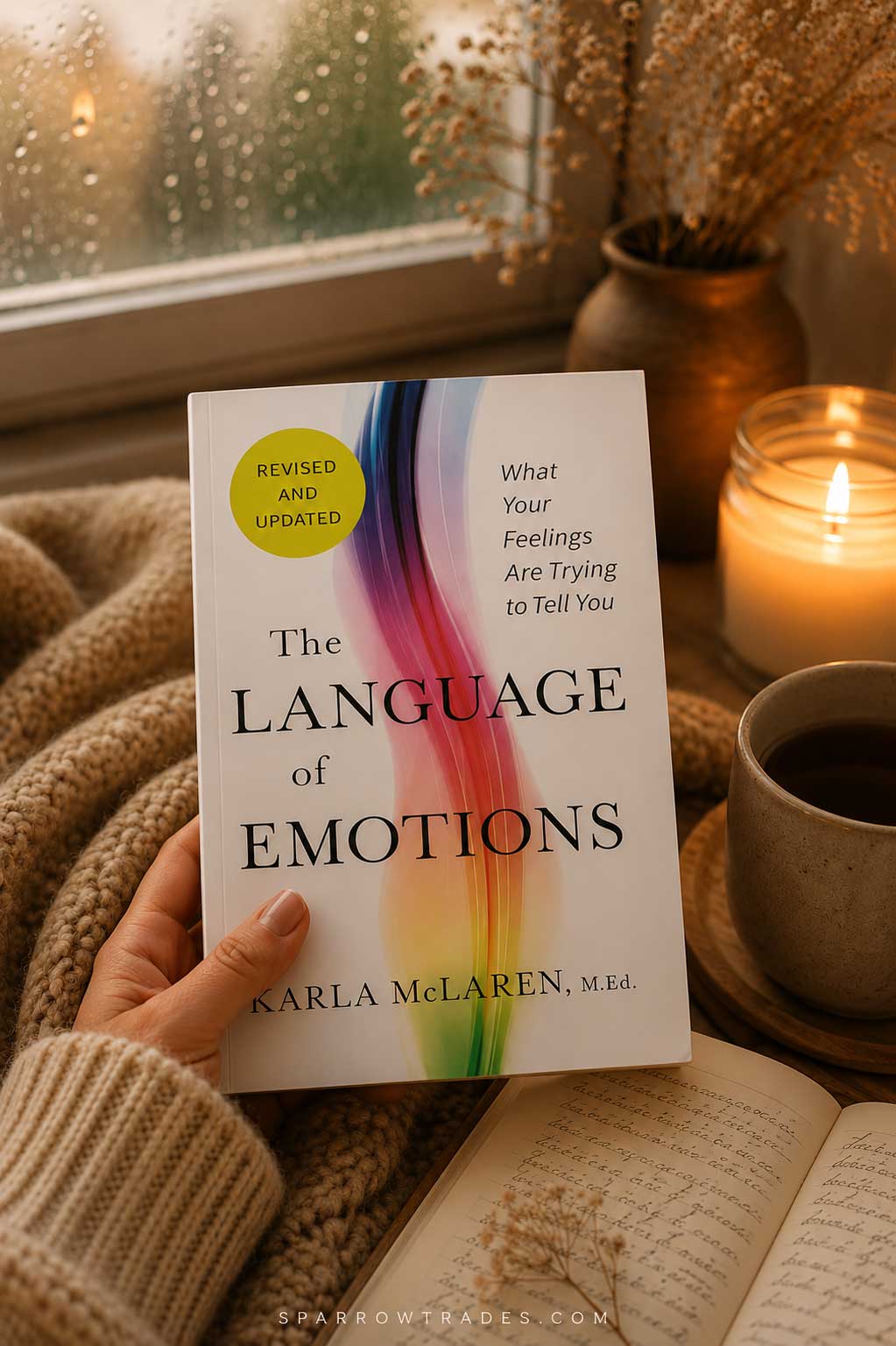
Why Emotional Awareness Can Feel So Difficult
Emotional awareness sounds simple until you try to practice it consistently.
Many people were taught how to perform emotions socially without actually learning how to experience them internally. You may know how to reassure others, stay calm during conflict, avoid burdening people, or keep functioning under stress while remaining disconnected from your own emotional state.
This disconnect is often nervous-system-based, not personal failure.
When emotions feel unsafe, the brain and body naturally prioritize protection over self-awareness. Some people become hypervigilant and emotionally flooded. Others disconnect from feelings entirely. Many fluctuate between both states depending on stress levels, relationships, or environmental triggers.
This is why emotional awareness is not just cognitive work. It is also nervous system work.
People sometimes judge themselves for struggling to identify emotions clearly, especially if they grew up hearing phrases like “you’re too sensitive,” “you’re overreacting,” or “just calm down.” Over time, emotional self-monitoring can replace emotional honesty. Instead of asking “What am I feeling?” the nervous system learns to ask “What emotion is safest to show right now?”
That survival adaptation can create distance from authentic emotional experience. For anyone rebuilding after confusion, dismissal, or self-doubt, learning to trust your emotions again can begin with the quiet practice of letting a feeling exist before deciding whether it is convenient, acceptable, or easy to explain.
Journaling gently interrupts that pattern because writing creates a slower, more private form of emotional processing. Instead of reacting immediately, suppressing emotions automatically, or abandoning feelings to stay functional, the page becomes a pause point.
This pause matters.
It creates room for recognition before emotional escalation. For example, someone may initially write “I’m irritated,” only to realize underneath that irritation is grief, loneliness, fear, shame, disappointment, or emotional exhaustion. Emotional awareness often unfolds in layers rather than instant clarity.
This process becomes even safer when paired with nervous system regulation techniques because emotional awareness is easier when the body no longer feels trapped in survival mode.
People who struggle with chronic emotional suppression sometimes discover that writing feels emotionally intense at first. This is normal. Awareness can feel vulnerable when you are used to disconnecting from yourself to maintain stability.
That is why gentle pacing matters more than emotional breakthroughs. The goal is not to force emotional excavation every time you journal. The goal is building safer internal connection over time.

What Journaling for Emotional Awareness Actually Looks Like
Journaling for emotional awareness is very different from performing productivity, positivity, or self-improvement on paper.
It is not about writing the right thoughts. It is not about sounding wise. It is not about forcing gratitude when you feel emotionally overwhelmed.
Instead, it is about becoming more honest with yourself in small, sustainable ways.
Sometimes emotional awareness journaling looks profound. Other times it looks incredibly simple:
“I feel disconnected today.”
“My chest feels tight around this conversation.”
“I’m more tired than I realized.”
“I keep pretending something doesn’t hurt me.”
Those small observations matter because emotional awareness grows through noticing patterns consistently rather than uncovering one dramatic revelation.
Many people benefit from starting with body-based awareness before trying to analyze emotions intellectually. The body often recognizes emotional stress before the conscious mind does. You may notice jaw tension, heaviness in the stomach, emotional numbness, shallow breathing, sudden irritability, exhaustion after certain interactions, difficulty concentrating, pressure behind the eyes, or emotional shutdown after conflict.
This is where beginner’s guide to somatic check-ins can help emotional journaling feel less overwhelming and more grounded in lived experience.
People often assume journaling should be structured, organized, or consistent to count. But emotional honesty rarely arrives in polished paragraphs. Some days you may write pages. Other days you may only manage a few sentences. Both still matter.
Journaling becomes especially powerful when it helps identify emotional patterns that previously felt invisible. You may begin noticing that certain relationships leave you emotionally drained, conflict triggers shutdown, overstimulation creates irritability, emotional needs appear most strongly when exhausted, grief surfaces during quiet moments, or anxiety increases when boundaries are ignored.
A gentle rhythm of daily emotional check-in prompts can make that noticing feel less like a demand and more like a small return to yourself.
For some people, emotional awareness deepens when writing becomes a steady ritual rather than a crisis response. In that space, journaling prompts for emotional stability can support the kind of reflection that does not wait until everything feels unbearable.
Over time, these observations build stronger emotional self-trust. Emotional awareness is rarely immediate. It is usually cumulative. One honest sentence at a time.
Journaling Through Emotional Overwhelm Without Flooding Yourself
One of the biggest fears people have around emotional awareness is this: “If I let myself feel everything, I’ll never stop feeling it.”
That fear is understandable, especially for people who already feel emotionally overwhelmed, highly sensitive, chronically stressed, or emotionally exhausted.
This is where journaling needs to remain nervous-system-aware. Emotional awareness is not emotional flooding.
You do not need to relive every painful experience in detail to become more emotionally connected to yourself. In fact, forcing emotional intensity can sometimes increase dysregulation rather than healing.
Gentle awareness is often more sustainable than emotional excavation.
Sometimes journaling works best when paired with grounding supports that help the body stay anchored in the present moment. That might include holding something comforting, taking pauses while writing, breathing slowly, journaling outdoors, placing both feet on the floor, or limiting emotionally intense writing sessions.
For people prone to spiraling thoughts or anxiety spikes, grounding journaling during anxiety spikes can help emotional reflection feel safer instead of destabilizing.
The nervous system often needs reassurance that emotional honesty will not create danger. This is especially true for people who learned to suppress emotions to survive conflict, criticism, unpredictability, or emotional invalidation. Writing may initially trigger fear, shame, self-judgment, or the urge to minimize your own experience.
That does not mean the process is harmful. It often means your protective patterns are becoming visible.
There are also moments when journaling should become softer instead of deeper. Not every difficult emotional state requires intense introspection. Sometimes emotional awareness simply means acknowledging, “I’m overwhelmed,” “I need rest,” or “I don’t have emotional capacity right now.”
That level of honesty can already be healing.
Many people find emotional journaling becomes more sustainable when balanced with grounding rituals for emotional safety or conscious breathing for nervous system regulation so the body feels supported alongside the emotional work itself.
Awareness without nervous system safety can feel destabilizing. Awareness with safety creates integration.
The Quiet Ways Emotional Awareness Changes Your Life
The changes that come from emotional awareness are often subtle before they become obvious.
You may begin recognizing emotional exhaustion before reaching total burnout. You may notice resentment earlier instead of abandoning your needs silently. You may stop apologizing for emotions that were never wrong to begin with.
These shifts can feel small externally while being life-changing internally.
People who practice emotional awareness through journaling often begin developing stronger internal boundaries naturally. Not because they become emotionally distant, but because they become more connected to their own reality. This is where understanding emotional boundaries becomes less about rules and more about recognizing what your body, emotions, and energy have been trying to tell you.
You start noticing what drains you, what regulates you, what relationships feel emotionally safe, what environments increase anxiety, what emotions you habitually suppress, and what needs consistently go unmet.
This awareness can feel bittersweet at first because clarity sometimes reveals how disconnected you previously were from yourself.
For people healing from emotional invalidation, people-pleasing, chronic caretaking, or emotional suppression, this reconnection can feel deeply emotional. Many discover how long they ignored discomfort in order to remain accepted, needed, calm, productive, or emotionally manageable for others.
That realization is not failure. It is awareness returning.
This is part of why healing after being emotionally invalidated often begins with rebuilding permission to acknowledge feelings internally before expressing them outwardly.
Journaling can also soften dissociation from the body itself. Many emotionally overwhelmed people live almost entirely in mental processing while remaining disconnected from physical sensations, fatigue, tension, or emotional depletion.
For that kind of reconnection, reconnecting with your body after years of dissociation and emotional grounding for dissociation can help emotional awareness feel embodied rather than purely analytical.
Over time, journaling often becomes less about figuring yourself out and more about staying connected to yourself consistently. That consistency changes relationships. It changes boundaries. It changes self-trust. It changes emotional recovery. Not overnight. But gradually. And gradually is still real healing.
Journaling Practices That Support Emotional Awareness Gently
When you are beginning, it can help to keep journaling simple enough that your nervous system does not experience it as another task to perform. Emotional awareness grows best when the practice feels approachable, not like a test you can fail.
You might begin by asking, “What am I noticing in my body right now?” before asking, “What emotion is this?” That small shift can reduce pressure. The body may offer information through warmth, tightness, heaviness, restlessness, numbness, or fatigue before the mind can name sadness, anger, fear, grief, or relief.
If writing freely feels too open-ended, a gentle structure can help. You might write three lines: what happened, what I felt, what I needed. This keeps the practice emotionally clear without turning it into an interrogation. Over time, emotional regulation journaling routines can make reflection feel more like a stabilizing rhythm than a place you only visit when things fall apart.
Some emotions may need more space than others. Grief, anger, fear, shame, and longing can feel especially difficult to meet directly. When emotions feel layered or confusing, journaling for emotional processing can help you move slowly enough to notice what is present without forcing yourself to solve it immediately.
There may also be days when the most honest entry is not a full reflection, but a single sentence: “I do not know what I feel yet.” That sentence still matters. It is not avoidance. It is contact with the truth of where you are.
If emotional awareness brings up a need to speak, set a boundary, grieve, or stop pretending everything is fine, journaling may become the first place your real voice returns. For many people, reclaiming your voice after emotional suppression begins privately, in words no one else sees, before it becomes something they can say out loud.
You do not have to journal perfectly. You only have to create enough safety for honesty to become possible.
FAQs About Journaling for Emotional Awareness
Is journaling for emotional awareness the same as keeping a diary?
Not exactly. A diary usually focuses on recording events, while emotional awareness journaling focuses more on internal experience. Instead of only documenting what happened, the writing explores how situations affected your emotions, nervous system, body, or sense of self.
What if I struggle to identify my emotions?
This is extremely common, especially for people who experienced emotional invalidation, chronic stress, trauma, or emotional suppression. Emotional awareness is often a skill that develops gradually through practice. Starting with body sensations, energy levels, or emotional patterns can feel more accessible than trying to name emotions immediately.
Can journaling make emotional overwhelm worse?
It can if the process becomes emotionally flooding or overly intense without nervous system support. That is why gentle pacing matters. Pairing journaling with grounding, breathing, rest, or emotional regulation support often helps the experience remain emotionally safe instead of overwhelming.
How often should I journal for emotional awareness?
Consistency matters more than frequency. Some people journal daily, while others benefit from shorter check-ins several times per week. Even a few honest sentences can strengthen emotional awareness over time.
What should I write about if I feel emotionally numb?
Emotional numbness is still an emotional experience. You can begin by describing physical sensations, energy levels, thoughts, or emotional absence itself. Writing “I feel disconnected” or “I can’t tell what I’m feeling today” is already emotional honesty.
Can journaling help rebuild emotional self-trust?
Yes. Journaling creates space to recognize emotions without immediately dismissing, minimizing, or overriding them. Over time, this can strengthen internal trust and help emotions feel more understandable instead of confusing or unsafe.
Conclusion
Journaling for emotional awareness is not about becoming emotionally perfect, endlessly introspective, or deeply analytical every day.
It is about becoming more connected to yourself in ways that feel emotionally sustainable.
For many people, emotional awareness begins very quietly. A pause before dismissing your feelings. A moment of honesty you normally avoid. A sentence you almost delete before deciding to leave it on the page.
Those moments matter more than they seem.
Healing often starts long before clarity fully arrives. It starts when the nervous system realizes it no longer has to suppress every feeling to stay safe. It starts when emotional honesty becomes less frightening than emotional disconnection.
Some days journaling may help you uncover deeper truths. Other days it may simply help you notice that you are tired, overwhelmed, grieving, anxious, lonely, hopeful, or emotionally overstimulated.
That still counts.
The goal is not to force emotional intensity. The goal is building a safer relationship with your own internal world.
Over time, those small moments of awareness begin reconnecting you to your needs, your emotions, your body, your boundaries, and your sense of self.
And sometimes, that reconnection becomes the beginning of everything changing.
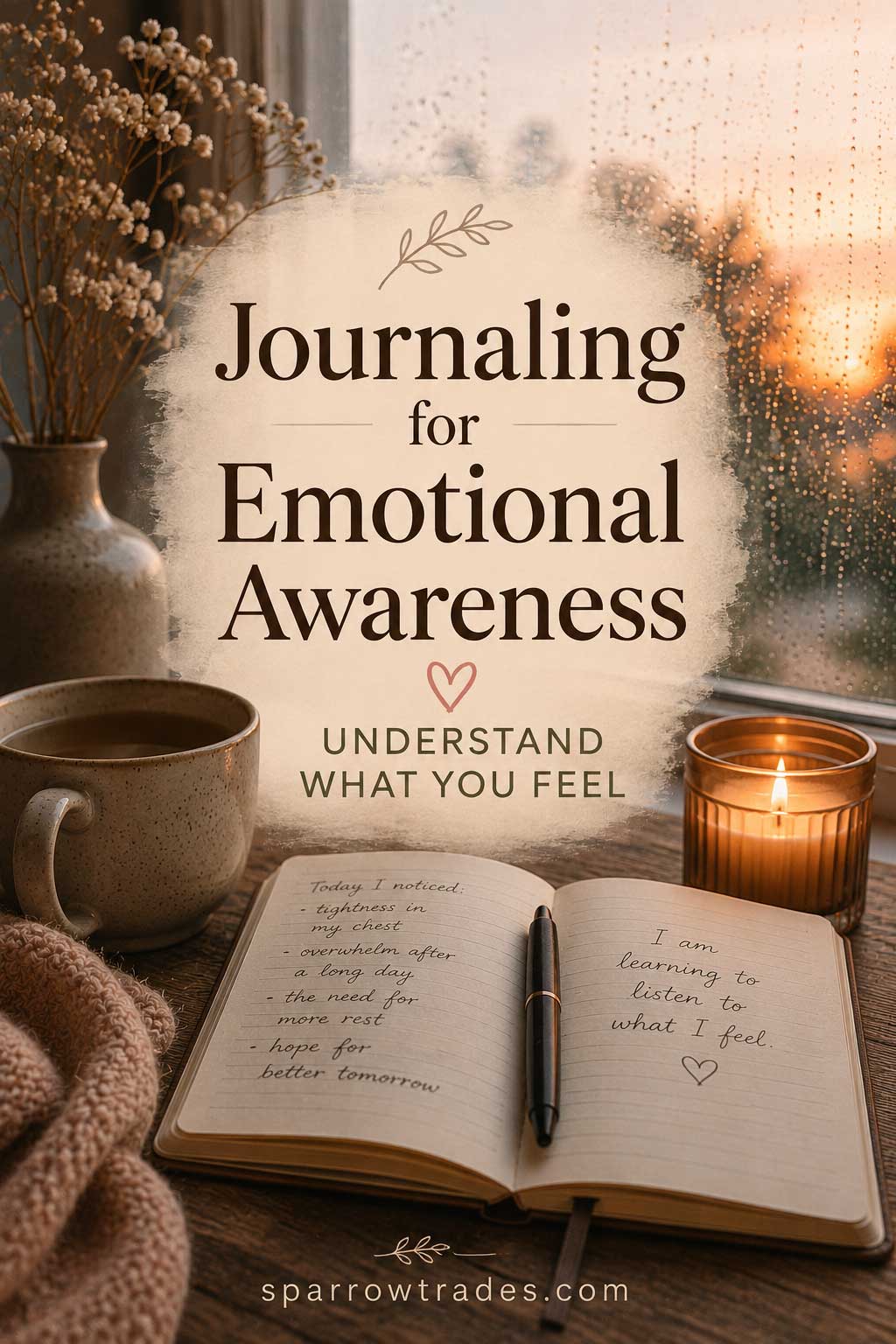

Where softness, self-awareness, and emotional healing are allowed to coexist. Through reflective writing, grounding rituals, and intentional beauty, Sparrow Trades offers gentle support for sensitive souls learning to reconnect with themselves.