
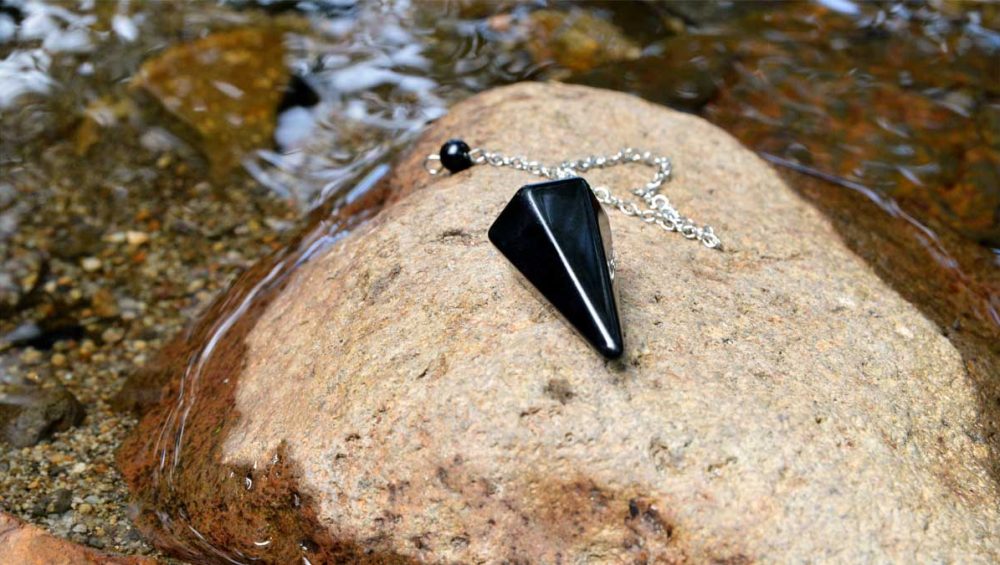
There are moments when “protection” stops feeling like a spiritual preference and starts feeling like a nervous system need.
Maybe you’ve walked into a room and felt your chest tighten before anyone even spoke. Maybe you’ve left conversations feeling wrung out, like your body kept bracing long after you got home. Maybe you’ve done the deeper work—therapy, journaling, boundary practice—and you still find yourself wishing for something you can hold when the world feels sharp.
That’s where onyx for protection often enters the story. Not as superstition. Not as a promise that nothing will ever touch you again. More like a steady weight in your palm that says: you’re here. You’re in your body. You can stay with yourself.
Within the language of spiritual practice, black onyx is often associated with strength, grounding, and energetic containment. But the lived experience of it can be more intimate than any definition. People reach for onyx when they’re tired of absorbing everyone else’s tension. When they’re learning to tell the difference between compassion and self-erasure. When they’re ready for the kind of protection that doesn’t harden them—it steadies them.
In the larger landscape of crystal healing, onyx is frequently described as a grounding stone. And grounding isn’t just a metaphor. It’s a physiological shift. It’s the difference between being pulled into a spiral and feeling your feet press into reality. It’s the quiet return that happens when you stop trying to outrun your own sensations.
Protection, at its healthiest, is rooted in grounding. And grounding, at its deepest, is a return to your body—your breath, your posture, your inner boundary. The kind of boundary that doesn’t require you to explain yourself to anyone.
Onyx for protection doesn’t promise a life without conflict. It doesn’t erase grief, betrayal, or difficult people. It doesn’t “make you invincible.” What it can support is something quieter and more sustainable: containment. The ability to stay present without taking in what doesn’t belong to you. The ability to feel deeply without dissolving.
In the broader world of gemstone meanings, black stones are often linked to absorption, boundary, and strength. But onyx tends to carry a particular energy of disciplined steadiness—less about pushing energy away and more about fortifying what’s within. Like a calm spine. Like a grounded “no” you don’t have to say out loud.
If you’ve spent years living in hypervigilance, protection can sound like a fantasy. If you’ve learned to monitor everyone else to stay safe, your body may not know what “safe” feels like yet. Onyx can become a small, daily cue—one that supports the work you’re already doing to come back to yourself.
The Emotional Meaning of Onyx for Protection
Black onyx is often described as a shield, but many people experience it more like a spine. A quiet structure. A steadying force that helps you stay upright when you’re tempted to collapse into old patterns.
Protection, in a trauma-informed sense, is not about becoming impermeable. It’s about becoming regulated. It’s about widening your capacity to stay present when stress rises—so you can respond with choice instead of reflex.
Energetically, onyx is commonly associated with the root chakra—the center connected to safety, survival, and belonging in the body. In the language of chakras and energy, the root governs whether you feel supported enough to soften. When that center feels shaky, life can feel like constant bracing: tight shoulders, shallow breath, scanning for what might go wrong.
Onyx for protection supports root stability. It doesn’t amplify emotion; it contains it. It doesn’t heighten sensitivity; it strengthens steadiness. That’s why many people reach for it during seasons of emotional turbulence—conflict at home, social overwhelm, grief, major transitions, or those subtle but relentless periods where everything feels like “too much” all at once.
When protection becomes nervous-system aware, it stops being about “defense” and starts being about safety. Your body doesn’t need more intensity—it needs more internal space. This is where onyx can pair beautifully with nervous system regulation techniques as a tactile reminder: slow down, come back, stay here.
Some people feel onyx as weight: a gentle downward pull, like gravity remembering you. Others feel it as a quieting—less mental noise, less urgency, fewer emotional hooks. Neither experience is “right.” What matters is whether your body feels more settled when you use it.
In that sense, onyx for protection can symbolize a new inner agreement: I don’t have to carry every mood in the room. I don’t have to translate other people’s tension into my responsibility. I can care without collapsing.
Onyx, Boundaries, and Emotional Safety
There is a difference between cutting people off and holding your center.
Many of us learned early that connection required over-functioning. We became experts at reading tone, anticipating needs, absorbing feelings, smoothing conflict. It can look like empathy from the outside, but inside it often feels like self-abandonment. Protection, then, is not the absence of care—it’s the presence of an internal boundary.
Onyx for protection often supports boundary work because it points you back to containment. It helps you remember the line between “I feel this” and “this is mine.” And that line matters, especially when you’re rebuilding relationship patterns that prioritize respect.
In the framework of understanding emotional boundaries and the psychology of respect, boundaries are not walls—they are clarity about responsibility. Onyx can reinforce a simple nervous-system truth: I am responsible for my emotions. You are responsible for yours.
If you grew up in environments where emotional boundaries were punished—where saying “no” led to guilt, withdrawal, or escalation—your body may interpret boundaries as danger. That’s why protection practices need to be gentle. Your system is learning something new: you can hold yourself and still be connected. You can protect your energy and still be kind.
Onyx can become part of your daily self-protection ritual in subtle ways. You might wear it during a conversation you’ve been dreading, not to “win,” but to stay regulated. You might carry it when you’re tempted to overexplain. You might touch it when you feel yourself shrinking.
For many people, this kind of protection belongs inside grounding rituals for emotional safety—not as an accessory, but as an anchor. The goal is not to avoid feeling. The goal is to stay with yourself while you feel.
If dissociation has been a survival strategy—if you tend to float away when stress peaks—onyx can be a supportive companion alongside emotional grounding for dissociation. It gives your hands something to hold while your mind tries to leave. It offers weight when your body feels unreal.
Protection, in this sense, becomes less about “keeping things out” and more about “staying in.” Staying in your body. Staying in your breath. Staying in your worth.
How Onyx for Protection Feels in Real Life
Protection stones can sound abstract until you notice what changes in you when you use them consistently.
For some people, onyx for protection shows up as fewer emotional hangovers. You still have the hard conversation, but you don’t spend the next two days replaying it with your whole body clenched. For others, it shows up as a slower response—an extra half-second of space where you can choose your next sentence instead of reflexively people-pleasing or snapping.
Sometimes protection looks like being able to walk away without apology. Sometimes it looks like staying quiet without shame. Sometimes it looks like feeling your feet during a tense moment and realizing: I don’t have to prove anything right now.
Onyx is often chosen by people who want strength without hardness. There’s a difference between being “tough” and being steady. Toughness can be a mask. Steadiness is a homecoming.
If you’re someone who absorbs other people’s energy, onyx may help you notice the moment absorption begins. That moment can be tiny—your shoulders lifting, your stomach tightening, your mind racing to fix. Touching the stone can interrupt the pattern long enough to return to self.
And if protection practices have ever felt fear-driven—like you’re constantly guarding against harm—onyx can help protection soften into stability. It reminds you that safety doesn’t require constant scanning. Safety can be practiced, moment by moment.
When you want extra support for using grounding tools in an emotionally safe way, it can help to lean on grounding safety guide so your protection practice feels nurturing instead of rigid.
Daily Ways to Use Onyx for Protection Without Turning It Into Armor
The most effective protection practices are often quiet ones—simple, repeatable, and embodied.
You can carry onyx in your pocket during a difficult workday. You can keep it in your bag when you’re moving through crowded spaces. You can place it on your desk when emotional labor feels heavy. Or you can wear it as jewelry, which turns intention into a daily ritual you don’t have to remember to “do.”
Wearing onyx for protection can be especially supportive when it’s part of a routine grounded in nervous-system care. Pairing it with grounding with crystals daily practices can help you move from symbolic intention into lived stability.
Here are a few trauma-informed ways to work with onyx that protect emotional continuity instead of creating a “fight stance”:
- The hand-on-heart pause: Touch the stone, then place a hand on your chest. Let your exhale lengthen. Notice your body’s temperature and weight. Let protection become presence.
- The threshold ritual: Hold onyx at your doorway before leaving home. Name one boundary you want to keep today: “I will not overexplain.” “I will not absorb.” “I will return to myself.”
- The post-conversation reset: After a hard interaction, sit for two minutes with onyx in your palm. Let your body discharge. If you need an immediate tool, extended exhale breathing can help your system settle without forcing calm.
- The sleep-side anchor: Place onyx near your bed during intense seasons. Not as protection against nightmares, but as a cue to your body: you are off duty now.
If you’re comparing protection stones, you may resonate with the more actively protective tone of black tourmaline for protection. Where tourmaline can feel like a boundary at the edge, onyx often feels like strength at the center.
For people who like pairing meaning with wearable ritual, there’s also a distinct emotional texture in protective jewelry meaning—the idea that what you wear can mirror what you’re learning to hold within yourself.
And if you’re ready to bring onyx into daily life in a way that feels subtle and consistent, onyx jewelry can be a gentle path—protection that looks like beauty, not battle.
How to Cleanse and Care for Onyx for Protection
Protection stones can take on a heavy emotional association, especially if you’ve carried them through grief, conflict, or long seasons of stress. Caring for your stone can become a way of caring for your nervous system—resetting intention, releasing residue, and returning to steadiness.
If you prefer gentle methods, crystal cleansing without water offers supportive options that avoid harsh approaches. Many people choose smoke cleansing, sound, moonlight, or resting the stone in a quiet, dedicated space.
Frequency matters too. If you cleanse compulsively, it can become another form of hypervigilance—like you’re constantly on guard for contamination. If you never cleanse, the stone can start to feel “stuck” or emotionally heavy. Finding a balanced rhythm through how often to cleanse crystals can help your practice feel grounded instead of anxious.
Sometimes the most nervous-system-aware option is simply rest. If you notice your onyx feels unusually dull, heavy, or emotionally “loud,” it may be asking for a pause—similar to what’s explored in signs your crystal needs rest.
Protection should not feel like constant bracing. If it does, the stone may be mirroring a truth your body is ready to address: you’re tired of holding everything alone.
If you want to build a practice that honors sensitivity while strengthening steadiness, trauma-informed crystal care can help protection feel nurturing rather than rigid.
Onyx for Protection: FAQs
Is onyx for protection only about blocking negative energy?
Onyx for protection is often less about blocking and more about stabilizing. Many people associate protection with shielding, but a nervous-system-aware version of protection is about containment—the ability to feel without absorbing. Onyx can support composure and inner steadiness, helping you stay present in situations that normally pull you into bracing or overfunctioning. When protection feels like calm instead of tension, it becomes sustainable.
Can onyx help with anxiety or overwhelm?
Onyx isn’t a replacement for medical care or therapy, but many people find it supportive during anxiety or overwhelm because of its grounding association. Used gently, it can serve as a tactile anchor that helps your body return to the present. Pairing onyx with simple regulation practices—slower exhale, posture awareness, or a brief pause—can help the ritual feel embodied rather than purely symbolic.
Is onyx stronger than black tourmaline for protection?
They have different “feels,” and the best choice is often the one your body responds to. Onyx is commonly experienced as disciplined steadiness—an inner spine. Black tourmaline is often experienced as more actively protective, like a boundary at the edge. If you tend to spiral or lose your center, onyx may feel stabilizing. If you feel overstimulated or energetically porous, tourmaline may feel more supportive.
How do I set an intention with onyx for protection?
Keep it simple. Hold the stone, take a slow breath, and name what you’re choosing. A steady intention might sound like: “I choose grounded protection. I choose to stay with myself.” The goal isn’t a dramatic ritual. It’s repetition. Small, consistent moments build a felt sense of safety over time, especially when you use the stone as a cue to return to your body.
Can I wear onyx for protection every day?
Yes—many people prefer daily wear, especially during seasons of transition, stress, or boundary growth. Wearing onyx can turn intention into a quiet daily practice: you don’t have to remember to “do” protection; you carry the reminder with you. If daily wear ever feels like you’re bracing, consider softening the intention toward steadiness rather than defense.
What does onyx protect against spiritually?
Traditionally, onyx is associated with protection from negative influence, emotional drain, and overwhelming energy. In a trauma-informed lens, that translates to support for internal stability—staying regulated when things get intense. The “protection” isn’t about magical invincibility. It’s about helping you stay grounded, so you can respond with clarity and keep your energy from being pulled away from you.
Conclusion
Onyx for protection isn’t about fearing the world. It’s about trusting yourself inside it.
It’s about choosing steadiness when you’re provoked. Containment when you’re overwhelmed. Presence when your old patterns beg you to disappear, overexplain, or absorb.
Protection, at its healthiest, doesn’t isolate you—it stabilizes you. It gives you enough inner structure to stay connected without losing yourself. And that kind of protection isn’t loud. It’s quiet, consistent, and deeply embodied.
If onyx becomes part of your practice, let it be a reminder you return to again and again: you can feel deeply without dissolving. You can care without carrying. You can be open-hearted and still held by your own center.
Sometimes, the first step toward that steadiness is as simple as a small black stone in your hand—and a breath that brings you back home.

Where softness, self-awareness, and emotional healing are allowed to coexist. Through reflective writing, grounding rituals, and intentional beauty, Sparrow Trades offers gentle support for sensitive souls learning to reconnect with themselves.