
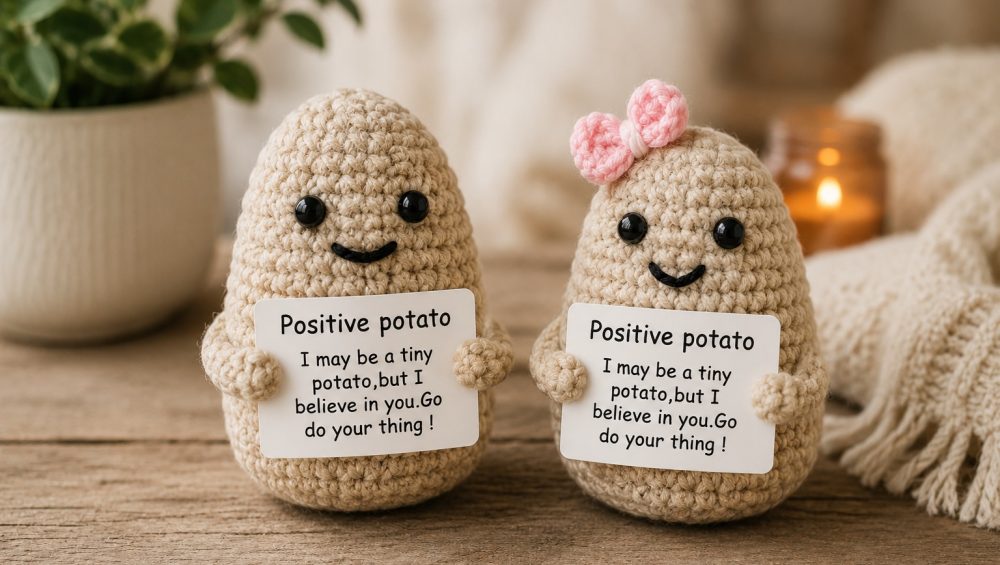
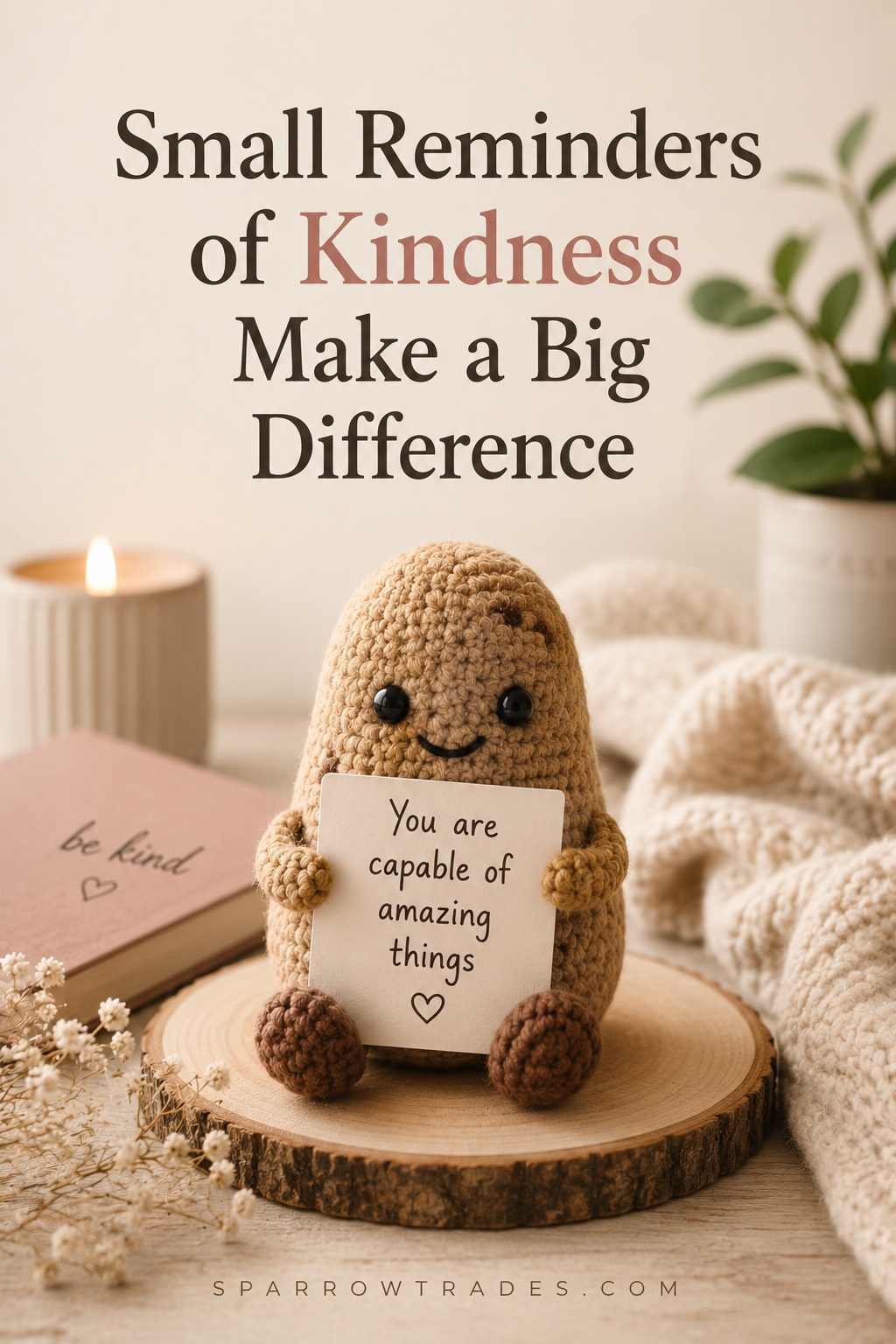
It isn’t every day that a tiny crocheted potato becomes an internet sensation.
Yet somehow, these smiling little plush toys holding handwritten messages have found their way onto office desks, hospital bedside tables, college dorm rooms, and kitchen counters around the world. They’re called positive potatoes, and while they may seem silly at first glance, many people describe them as bringing a surprising sense of comfort during stressful days.
That reaction isn’t really about the potato.
It’s about what the potato represents.
Sometimes encouragement arrives in unexpected ways. A handwritten note tucked into a lunchbox. A text from a friend at exactly the right moment. A small object sitting quietly on your desk that reminds you to keep going after a difficult meeting or challenging week. These ordinary moments often leave a deeper impression than grand gestures because they interrupt our inner criticism with something gentler.
Many people underestimate the emotional value of simple symbols. Within the broader conversation around emotional wellness, meaningful routines, supportive relationships, and comforting reminders can help people feel more grounded during everyday stress. While a crocheted potato isn’t therapy or a solution to life’s challenges, it can become one small reminder of kindness in the middle of an otherwise ordinary day.
Perhaps that’s why these tiny creations resonate with so many people.
They don’t ask us to change our lives overnight.
They simply whisper, “Keep going.”
Whether you discovered positive potatoes through social media, received one as a thoughtful gift, or are simply wondering why these cheerful little plush toys have become so popular, there’s more to the story than a cute trend. Their popularity says something meaningful about what many of us quietly need: encouragement that feels uncomplicated, genuine, and easy to carry with us.
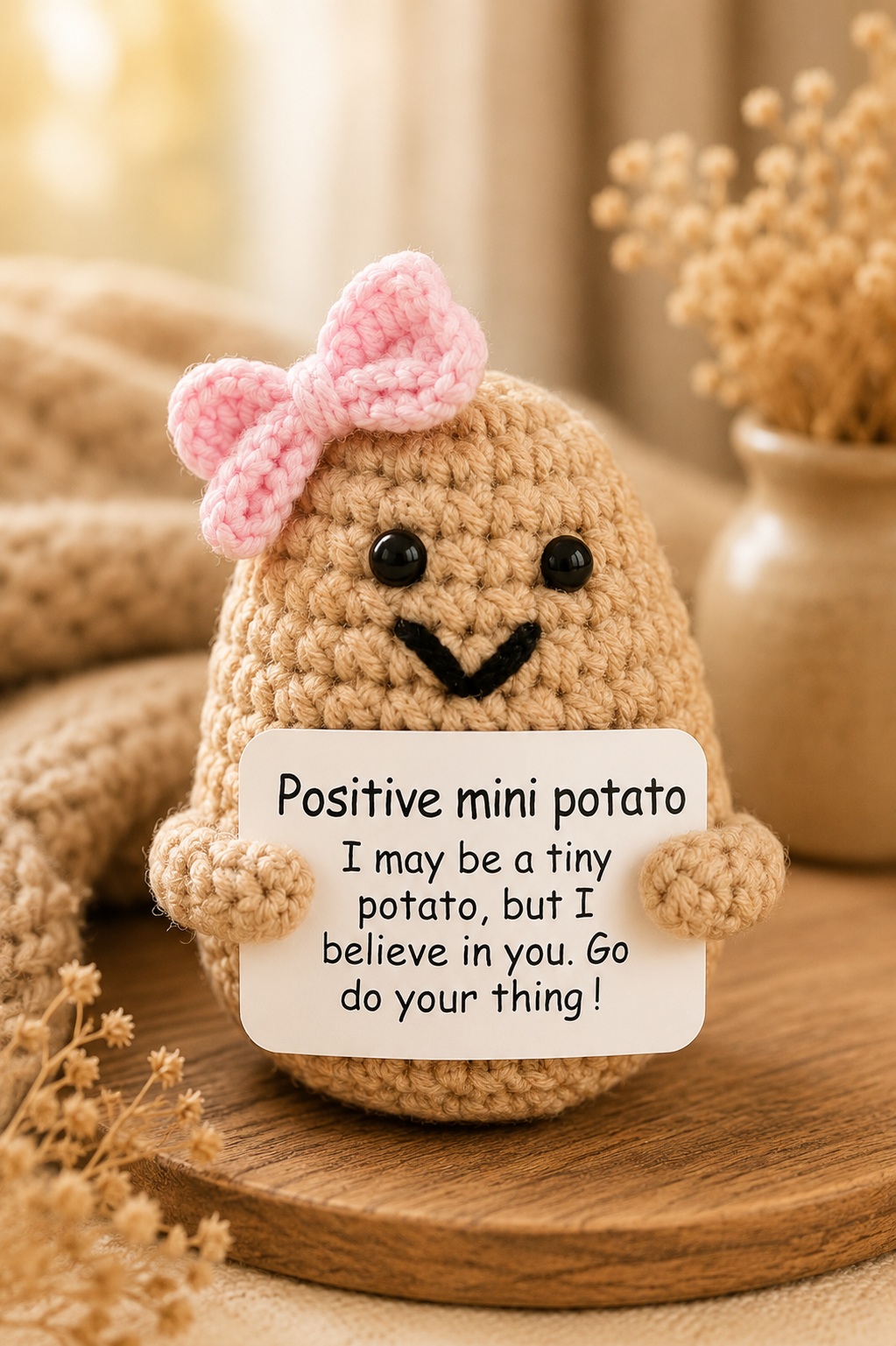
Why Have Positive Potatoes Become So Popular?
The popularity of positive potatoes isn’t really about crochet, novelty gifts, or internet trends. Those things may have introduced them to millions of people, but they don’t explain why so many owners develop an unexpected attachment to them.
Part of the appeal is their simplicity. Unlike expensive gifts or elaborate displays of affection, a positive potato asks for almost nothing. It sits quietly on a shelf or desk, holding a small message that often says something as simple as, “I believe in you,” or, “You’ve got this.” Those words aren’t profound on their own, yet they often arrive at moments when someone needs to hear them most.
There’s also something wonderfully disarming about encouragement coming from such an unlikely character. A smiling potato feels playful rather than preachy. It lowers our defenses in a way that motivational posters or inspirational speeches sometimes can’t. That lightheartedness makes it easier to receive the message without feeling pressured to immediately become happier, stronger, or more productive.
For many people, positive potatoes also become comfort objects for adults. While comfort objects are often associated with childhood, adults naturally form emotional connections with meaningful keepsakes as well. A favorite mug, an old photograph, a handwritten card, or a tiny crocheted potato can all become gentle reminders of people, memories, or values that help us feel a little steadier during difficult moments.
The growing popularity of these little gifts may actually reveal something encouraging about modern life. In a world filled with constant notifications, stressful headlines, and endless demands for our attention, people are gravitating toward small reminders of kindness that ask for nothing in return. That desire isn’t childish or naïve. It’s deeply human.
What Makes a Positive Potato Feel So Encouraging?
If someone unfamiliar with the trend looked at a positive potato, they might wonder why such a simple object could matter at all. After all, it’s just yarn, stuffing, and a small card with a kind message.
Yet human beings naturally attach meaning to symbols.
Wedding rings remind us of commitment. Family photographs help us remember moments we never want to lose. A seashell collected during a favorite vacation can instantly bring back feelings of peace. Objects become meaningful not because of what they’re made from, but because of what they come to represent in our lives.
Positive potatoes work in a similar way. They’re tiny visual reminders that kindness still exists, that someone cared enough to give you something thoughtful, or that you can offer yourself a little encouragement even on difficult days. For many people, these small reminders provide a quiet form of emotional validation. Seeing a cheerful message can gently interrupt the harsh inner dialogue that often accompanies stress, disappointment, or self-doubt.
Unlike advice, encouragement doesn’t demand immediate change. It simply creates a pause. That pause may last only a few seconds, but sometimes that’s enough to shift our attention away from self-criticism and toward something a little more compassionate.
The potato itself isn’t creating that feeling. It’s simply becoming the reminder that helps us reconnect with it.
Why Small Gestures Often Leave the Biggest Impression
We often assume meaningful support has to be dramatic. We picture life-changing conversations, expensive gifts, or perfectly timed words of wisdom. While those moments certainly matter, everyday kindness is often what stays with us the longest.
Think about the times someone unexpectedly checked in after a difficult week or left a short note telling you they appreciated you. Those gestures probably didn’t solve the problem you were facing, but they reminded you that you weren’t carrying it completely alone.
Positive potatoes capture that same spirit. Their messages are intentionally simple because encouragement rarely needs to be complicated. A few sincere words can feel surprisingly powerful when they arrive without expectation or pressure.
This is also where self-compassion quietly enters the picture. Receiving encouragement from someone else is meaningful, but learning to extend that same gentleness toward yourself can have an even longer-lasting impact. A positive potato can become a daily cue to notice your own efforts instead of only your perceived shortcomings.
Many people place theirs beside a computer monitor, near a favorite reading chair, or on a bedside table. Over time, it becomes less about the novelty of the plush toy and more about the habit it represents. Every glance offers another opportunity to replace one critical thought with a kinder one.
In that sense, the potato isn’t asking you to become relentlessly positive. It’s simply inviting you to notice that encouragement can exist alongside life’s challenges.
Are Positive Potatoes Good Gifts?
One reason positive potatoes have become so popular is that they feel personal without requiring a special occasion. You don’t need a birthday, holiday, or major milestone to give someone a small reminder that they’re appreciated.
They’re thoughtful gifts for friends navigating stressful jobs, students facing exams, someone recovering from an illness, or a loved one beginning a new chapter. Even coworkers often exchange them as lighthearted desk companions that brighten the workday without feeling overly sentimental.
Their appeal also comes from what they don’t communicate. They don’t suggest that someone should “just stay positive” or pretend everything is fine. Instead, they quietly acknowledge that life can be difficult while offering a little encouragement to keep moving forward. That balance reflects genuine compassion, recognizing another person’s experience without trying to minimize it. They’re also a wonderful example of symbolic gifts for emotional support, showing how even a small keepsake can become a meaningful reminder that someone cares.
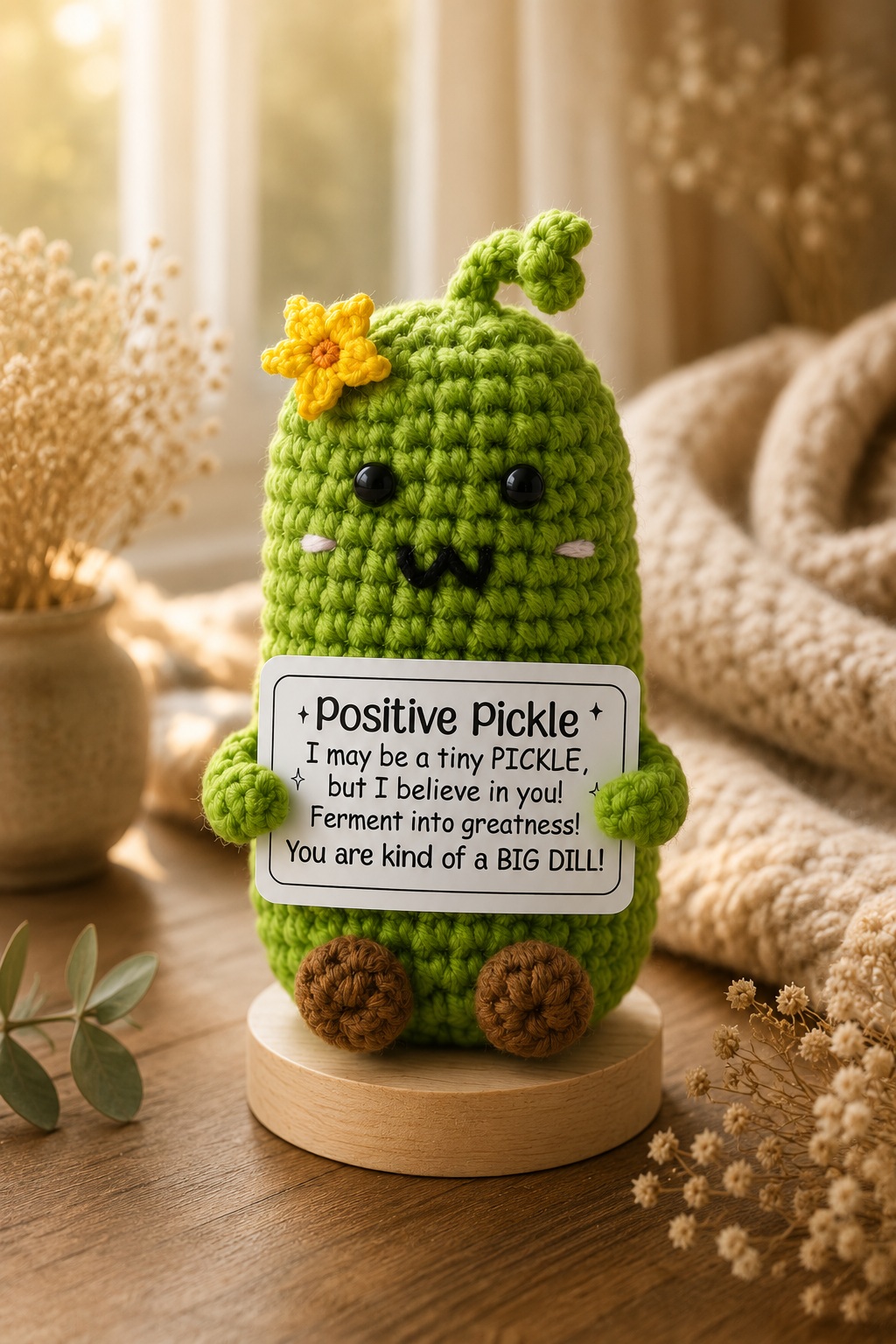
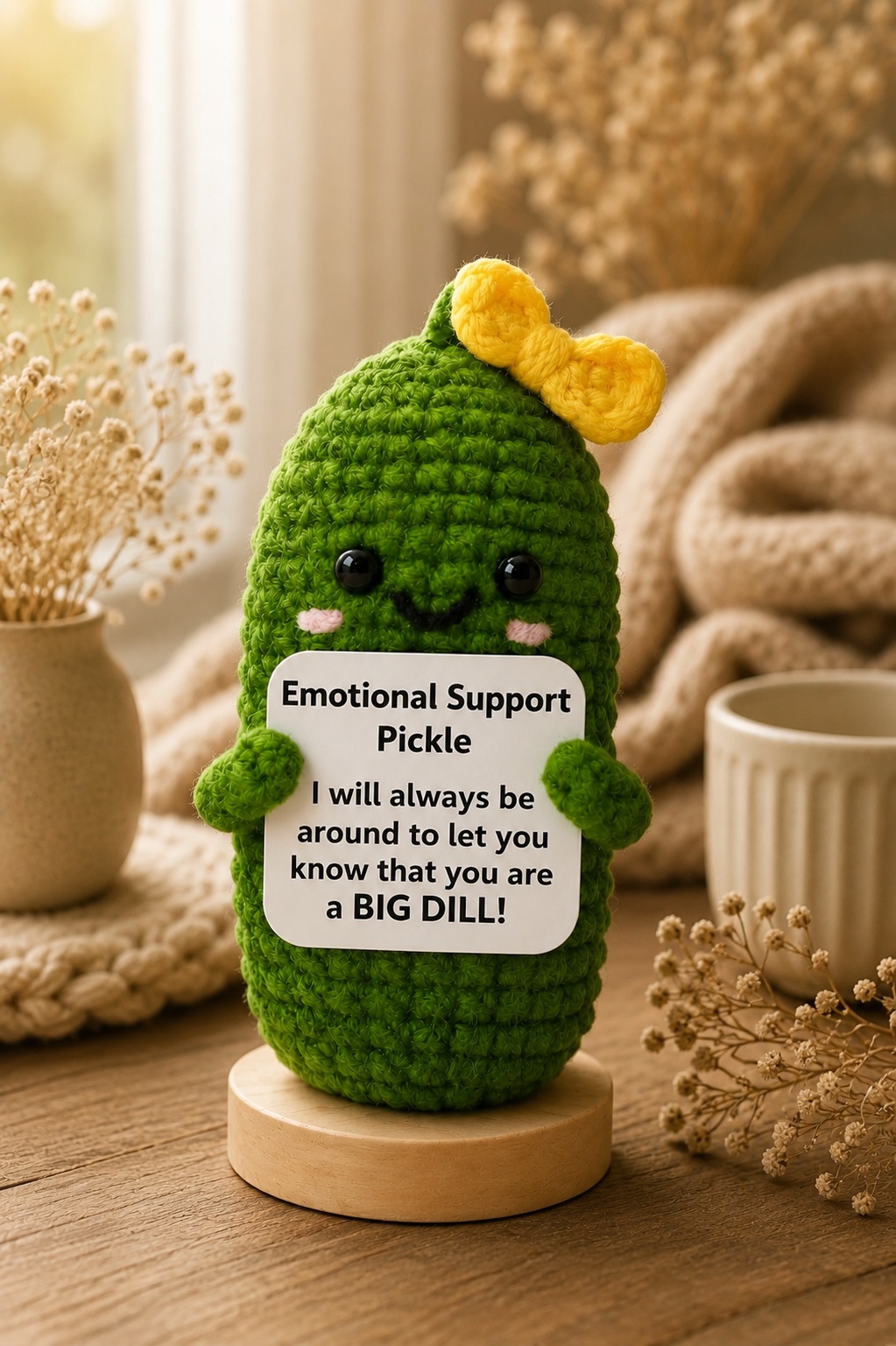
If you’re exploring similar ideas, you’ll also notice that crochet positive pickles have become another popular variation on this theme. While the characters are different, both celebrate the idea that a small, unexpected object can become a memorable symbol of encouragement and connection.
Sometimes the best gifts aren’t the ones that impress people.
They’re the ones that quietly remind someone they’re worth thinking about.
Can a Tiny Reminder Really Improve Your Day?
It’s easy to be skeptical of anything that seems too simple.
After all, life doesn’t become less stressful because a smiling potato is sitting on your desk. Deadlines still arrive. Relationships still require effort. Difficult emotions don’t disappear because of a crocheted plush toy.
But that’s never been the point.
Positive potatoes aren’t meant to fix problems. They’re meant to gently interrupt the mental patterns that often make difficult days feel even heavier. We spend much of our lives surrounded by reminders of unfinished tasks, obligations, and responsibilities. A calendar reminds us what we’ve forgotten. An inbox reminds us what’s waiting. News alerts remind us of problems we can’t control.
A positive potato quietly offers something different.
Instead of demanding your attention, it offers a brief invitation to pause. During that pause, you might smile for a second, take a deeper breath, or remember that one difficult moment doesn’t define your entire day. Those small interruptions may seem insignificant, but over time they can help create healthier emotional habits when paired with intentional daily self-care rituals.
The power doesn’t come from the object itself.
It comes from what you choose to remember when you see it.
Creating Your Own Encouragement Ritual
One reason positive potatoes continue to resonate long after the novelty wears off is that they naturally fit into everyday routines. Unlike activities that require extra time or planning, a small reminder can become part of moments that already exist.
Some people keep their positive potato beside their morning coffee. Others place it near their computer so it catches their eye between meetings. Some tuck one onto a bookshelf, a craft table, or a nightstand where they’ll naturally notice it throughout the day.
There isn’t a right way to use it.
The goal isn’t to repeat affirmations dozens of times or force yourself to feel optimistic. Instead, allow the potato to become a gentle cue for a brief moment of awareness.
You might pause and ask yourself:
- What’s one thing I handled well today?
- What would I say to encourage a friend in my situation?
- What’s one small step I can take next instead of worrying about everything at once?
These questions don’t ignore life’s challenges. They simply create a little breathing room before self-criticism takes over.
Many people discover that repeating this tiny ritual consistently feels more sustainable than waiting for motivation to appear. Encouragement often grows through repetition, not intensity.
Continuing the Journey Beyond the Potato
If a positive potato makes you smile, it may be because you’re responding to something much deeper than a clever gift. You’re responding to the human need for reassurance, connection, and gentle reminders that difficult moments don’t last forever.
Some people naturally extend that practice through journals for emotional wellness, using a few quiet minutes each day to reflect on small victories, moments of gratitude, or acts of kindness they experienced. Others prefer guided worksheets for emotional wellness that help them recognize unhelpful thought patterns and replace them with more balanced perspectives.
The resources themselves aren’t what create emotional growth.
What matters is developing a habit of paying attention to the small moments that remind you you’re making progress—even when it doesn’t always feel that way.
Whether that reminder comes from a journal, a meaningful keepsake, or a cheerful crocheted potato doesn’t matter nearly as much as the practice of returning your attention to hope, one ordinary day at a time.
Frequently Asked Questions About Positive Potatoes
What is a positive potato?
A positive potato is a small crocheted or knitted plush toy that usually holds a handwritten card with an encouraging message. While they’re often humorous and playful in appearance, they’ve become popular because they offer a simple reminder of kindness, hope, and perseverance during everyday life.
Their appeal isn’t about the potato itself. It’s about creating a small, visible reminder that encouragement doesn’t always have to come from another person in the moment. Sometimes seeing a thoughtful message is enough to interrupt a stressful thought and replace it with something gentler.
Why have positive potatoes become so popular?
Positive potatoes became popular through social media, handmade marketplaces, and word of mouth, but their lasting appeal comes from something much deeper.
Many people are carrying invisible stress. Between work, family responsibilities, financial pressures, and constant digital distractions, moments of lighthearted encouragement can feel surprisingly meaningful. A smiling crochet potato holding an uplifting message feels approachable, sincere, and refreshingly uncomplicated.
Instead of trying to solve someone’s problems, it simply reminds them they don’t have to face the day without a little encouragement.
Are positive potatoes good gifts?
Yes, many people choose positive potatoes because they’re thoughtful without feeling overly formal or expensive.
They make meaningful gifts for:
- Friends going through a difficult season
- Students preparing for exams
- Coworkers who could use a little encouragement
- Healthcare workers, teachers, or caregivers
- Someone starting a new job
- A loved one recovering from illness
- Anyone who appreciates small acts of kindness
Because they’re symbolic rather than practical, they often become keepsakes that remain on a desk or shelf long after other gifts have been put away.
Do positive potatoes actually help with emotional wellness?
A positive potato isn’t a treatment for stress, anxiety, or depression, and it shouldn’t replace professional support when someone needs it.
What it can do is serve as a gentle visual reminder of encouragement.
Many people intentionally surround themselves with meaningful objects that reflect values they want to remember, whether that’s gratitude, hope, resilience, or kindness. A positive potato simply joins that tradition in a playful, approachable way. Small reminders may not change difficult circumstances, but they can influence how we pause, reflect, and respond to those circumstances.
Where should I keep a positive potato?
There isn’t a right or wrong place.
Many people place theirs somewhere they’ll naturally see throughout the day, such as:
- A work desk
- A bookshelf
- A bedside table
- A home office
- A craft room
- Near a computer monitor
- Beside a favorite reading chair
The best location is simply one that gently reminds you to pause for a moment whenever life begins to feel overwhelming.
A Small Reminder That Can Mean More Than You Expect
At first glance, it’s easy to dismiss a positive potato as just another internet trend. It’s tiny. It’s handmade. It smiles from behind a little card with a few encouraging words.
And yet, that’s exactly why so many people have embraced them.
They don’t promise to transform your life or erase difficult emotions. They don’t encourage toxic positivity or pretend that every day is easy. Instead, they offer something much more realistic: a quiet reminder that kindness still has a place in ordinary life.
Sometimes encouragement arrives through a conversation with a trusted friend. Sometimes it comes during a peaceful walk outside or while writing in a journal. And sometimes it comes from an unexpected little potato sitting beside your coffee mug, reminding you to take one slow breath before moving on with your day.
Whether you give one to someone you love or keep one for yourself, the real value isn’t found in the yarn or stuffing. It’s found in the habit of noticing moments of hope, offering yourself a little grace, and remembering that progress is often built through small acts of encouragement repeated over time.
In the end, perhaps that’s why positive potatoes continue to make people smile.
Not because they’re extraordinary.
But because they gently remind us that even the smallest expressions of kindness can brighten an ordinary day—and sometimes, an ordinary day is exactly where healing begins.

Where softness, self-awareness, and emotional healing are allowed to coexist. Through reflective writing, grounding rituals, and intentional beauty, Sparrow Trades offers gentle support for sensitive souls learning to reconnect with themselves.