

Healing is often imagined as a moment—a breakthrough, a revelation, or the day everything finally starts making sense. Yet for most people, healing for emotional wellness unfolds very differently. It happens quietly. It appears in small decisions, gentle realizations, and moments when you respond to yourself with a little more compassion than you did before.
Many of us spend years carrying emotional experiences that were never fully processed. We move forward while still holding grief, disappointment, rejection, abandonment, criticism, or chronic stress beneath the surface. Life continues, responsibilities remain, and we learn how to function. From the outside, everything may appear fine. Internally, however, there can be a persistent feeling of exhaustion, emotional numbness, self-doubt, or disconnection.
Healing does not mean erasing what happened. It does not require becoming a different person or pretending painful experiences never existed. Emotional healing is the gradual process of creating enough safety within yourself to acknowledge what happened, feel what needs to be felt, and build a healthier relationship with your inner world.
For many people, the nervous system plays a significant role in this process. Experiences that felt overwhelming, unsafe, or emotionally destabilizing can leave lasting impressions on the body. Even when a difficult chapter has ended, your system may continue reacting as though the threat remains present. This is why healing is rarely accomplished through insight alone. Understanding yourself matters, but true healing often involves helping your mind, body, and emotions learn that safety is possible again.
The journey can feel uneven. Some days bring clarity and hope. Other days may feel like setbacks. Yet healing rarely moves in a straight line. What often looks like regression is actually another layer of growth becoming visible.
As you continue strengthening your emotional wellness foundations, healing becomes less about fixing yourself and more about reconnecting with the parts of yourself that have been carrying pain for far too long. It is a return to trust, self-respect, emotional awareness, and the quiet belief that your experiences matter.
What Emotional Healing Really Means
Emotional healing is not about becoming permanently happy or emotionally unaffected by life. Instead, it is about developing the capacity to experience emotions without becoming overwhelmed, disconnected, or trapped within them.
When emotional wounds remain unaddressed, they often influence relationships, decision-making, self-esteem, and daily well-being. You may find yourself reacting strongly to situations that seem minor, avoiding emotional vulnerability, struggling to trust yourself, or feeling disconnected from your own needs.
Healing begins when we stop fighting our internal experience and start becoming curious about it.
This curiosity allows us to notice emotional patterns without immediately judging them. We begin asking questions such as:
- Why does this situation affect me so deeply?
- What need is underneath this feeling?
- What am I protecting myself from?
- What part of me feels unseen or unheard?
These questions create space for self-understanding.
Developing greater self-awareness is often one of the first meaningful steps toward recovery. Many people discover that emotional wounds become easier to navigate when they begin cultivating a deeper sense of self-awareness in emotional healing. Understanding our reactions does not erase pain, but it often reduces the shame that surrounds it.
Healing also involves accepting that emotions serve a purpose. Sadness, anger, grief, fear, disappointment, and frustration are not evidence that something is wrong with you. They are signals carrying information about your experiences, needs, and boundaries.
As emotional healing progresses, these emotions often become easier to understand rather than something to fear.
Healing Requires Emotional Safety
Many people attempt healing by forcing themselves to “move on.” They push emotions away, stay busy, remain productive, and try to outwork their pain. While these strategies can provide temporary relief, lasting healing typically requires something deeper: emotional safety.
Emotional safety is the feeling that your thoughts, emotions, and experiences can exist without being criticized, dismissed, or punished.
For those who have experienced emotional invalidation, emotional safety may feel unfamiliar. You may have learned that your feelings were inconvenient, dramatic, or unimportant. Over time, this can create a habit of minimizing your own emotional experience.
The healing process often begins by reversing this pattern.
Creating emotional safety might include:
- Allowing yourself to feel emotions without immediate judgment.
- Spending time with supportive people.
- Establishing healthier boundaries.
- Reducing exposure to emotionally harmful dynamics.
- Practicing self-compassion during difficult moments.
Many people find that healing accelerates when they begin understanding emotional boundaries and respect. Boundaries are not walls that separate us from others. They are guidelines that help protect our emotional well-being and create healthier relationships.
Emotional safety is also closely connected to nervous system regulation. When the body remains in a chronic state of stress, healing becomes significantly more difficult. The nervous system must experience moments of rest, calm, and stability before deeper emotional processing can occur.
Healing is not weakness. It is the courageous act of creating conditions where your emotions no longer need to fight for recognition.
Rebuilding Trust in Yourself
One of the most overlooked aspects of healing for emotional wellness is self-trust.
Painful experiences often damage our confidence in our own perceptions, feelings, and instincts. This is especially common after emotional invalidation, manipulation, chronic criticism, or relationships where your reality was repeatedly questioned.
Over time, you may begin second-guessing yourself.
You might ask others what they think before making decisions. You may struggle to identify what you truly feel. You may even distrust your own emotional reactions.
Healing requires rebuilding this internal relationship.
Learning to trust your emotions again is rarely about becoming emotionally reactive. It is about recognizing that your emotional experiences contain valuable information. Your feelings deserve attention, even when they are uncomfortable.
Self-trust grows through consistent practice:
- Listening to your emotional responses.
- Honoring your needs.
- Following through on commitments to yourself.
- Respecting your personal boundaries.
- Allowing your intuition to have a voice.
Small moments matter.
Every time you acknowledge a feeling instead of dismissing it, you strengthen trust. Every time you choose self-respect over self-abandonment, you reinforce trust. Every time you honor your emotional needs, you build evidence that you can rely on yourself.
Healing often becomes more sustainable once self-trust begins to return. For some readers, an emotional self-trust tracker can become a gentle way to notice these small moments without pressuring yourself to heal perfectly.
Practical Practices That Support Emotional Healing
Healing is not achieved through insight alone. Understanding why you feel a certain way is valuable, but emotional wellness also requires practical support.
Consistent, gentle practices help create the stability needed for long-term growth.
Mindfulness for emotional wellness can help increase awareness of emotional experiences without becoming consumed by them. Rather than suppressing emotions or immediately reacting to them, mindfulness creates space for observation and understanding.
Grounding for emotional wellness can be especially helpful during periods of emotional overwhelm. When strong emotions arise, reconnecting with the present moment often reduces the intensity of emotional distress while supporting nervous system regulation.
Journaling is another valuable healing tool. Writing allows thoughts and emotions to move from the mind onto the page. Many people discover patterns, insights, and emotional truths they were previously unable to access.
Regular self-reflection can also strengthen emotional resilience. Over time, emotional wellness becomes less about avoiding discomfort and more about developing confidence in your ability to navigate it.
Daily healing practices do not need to be complicated. A few minutes of intentional reflection, grounding, mindfulness, movement, or daily self-care rituals often creates more meaningful change than occasional dramatic efforts.
Healing grows through consistency rather than intensity.
Healing Is Not Linear
One of the most important truths about healing is that it rarely follows a predictable path.
Many people believe healing should feel like steady progress. When old emotions resurface, they assume they are failing or moving backward. In reality, healing often unfolds in layers.
An emotion you thought was resolved may return because a deeper aspect of the experience is ready to be processed.
A difficult day does not erase months of growth.
A setback does not cancel your progress.
Periods of emotional discomfort are often part of integration. They provide opportunities to respond differently than you did in the past.
You may notice that situations which once overwhelmed you now feel manageable. You may recover more quickly after emotional challenges. You may recognize unhealthy patterns sooner. These subtle shifts often indicate significant healing, even when the journey feels difficult.
Compassion is essential during these moments.
Healing asks us to replace self-criticism with curiosity.
Instead of asking, “Why am I still struggling with this?” we can ask, “What is this experience trying to show me?”
That simple shift creates room for growth.
Over time, healing becomes less about eliminating pain and more about developing a stronger relationship with yourself.
Frequently Asked Questions About Healing for Emotional Wellness
How long does emotional healing take?
There is no universal timeline for healing. Every person’s experiences, nervous system, relationships, and support systems are different. Healing often occurs gradually and may continue throughout different seasons of life. Progress is better measured by increased self-awareness, emotional resilience, and self-trust than by the passage of time.
Can you heal emotional wounds completely?
Many emotional wounds become significantly less painful over time. While some experiences may always remain meaningful parts of your story, healing often changes how those experiences affect your daily life. The goal is not to erase the past but to reduce its control over the present.
Why do old emotions suddenly come back?
Emotional healing often happens in layers. As your nervous system develops greater capacity for processing emotions, previously buried feelings may resurface. This does not necessarily indicate regression. In many cases, it reflects deeper healing taking place.
What role does the nervous system play in healing?
The nervous system influences how safe, regulated, and emotionally balanced we feel. Chronic stress can make emotional processing more difficult. Practices that support nervous system regulation often help create the internal stability needed for emotional healing.
What if I feel emotionally disconnected?
Emotional disconnection is often a protective response. It can develop after overwhelming experiences, chronic stress, emotional invalidation, or prolonged emotional suppression. Healing frequently involves gently rebuilding connection with emotions rather than forcing emotional expression before you feel ready.
Is emotional healing possible even after years of struggle?
Yes. Many people begin meaningful healing after years—or even decades—of emotional difficulty. Growth remains possible throughout life. Emotional wellness is not reserved for people who have had easy experiences. It develops through awareness, compassion, support, and consistent practice.
Conclusion
Healing for emotional wellness is not a destination you reach once and never revisit. It is an ongoing relationship with yourself—one built through awareness, compassion, patience, and trust.
The process often begins quietly. A moment of honesty. A boundary that protects your well-being. A decision to stop dismissing your emotions. A willingness to listen to yourself differently than you have before.
These moments may appear small, yet they create profound change over time.
Healing is not about becoming perfect, emotionally invulnerable, or permanently free from pain. It is about developing the ability to meet your experiences with greater understanding and care.
As emotional safety grows, self-trust strengthens. As self-trust strengthens, resilience follows. Gradually, the parts of yourself that once felt disconnected begin to feel more integrated, understood, and supported.
There may still be difficult days. There may still be challenges. Yet healing allows those experiences to move through you differently.
With time, patience, and continued attention to your emotional well-being, healing becomes less about fixing what is broken and more about remembering what has always been worthy of care.
And that realization is often where genuine emotional wellness begins.
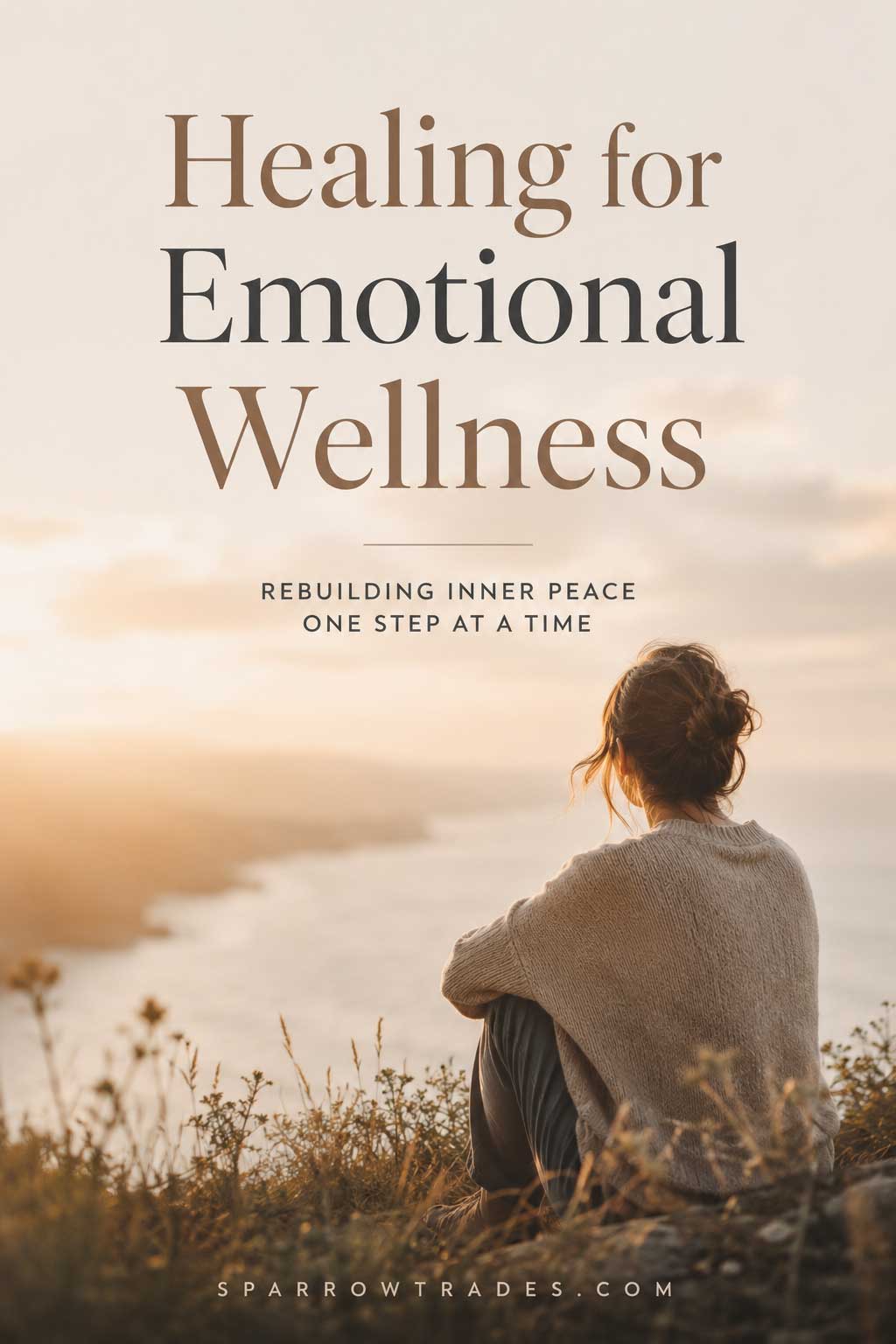

Where softness, self-awareness, and emotional healing are allowed to coexist. Through reflective writing, grounding rituals, and intentional beauty, Sparrow Trades offers gentle support for sensitive souls learning to reconnect with themselves.