
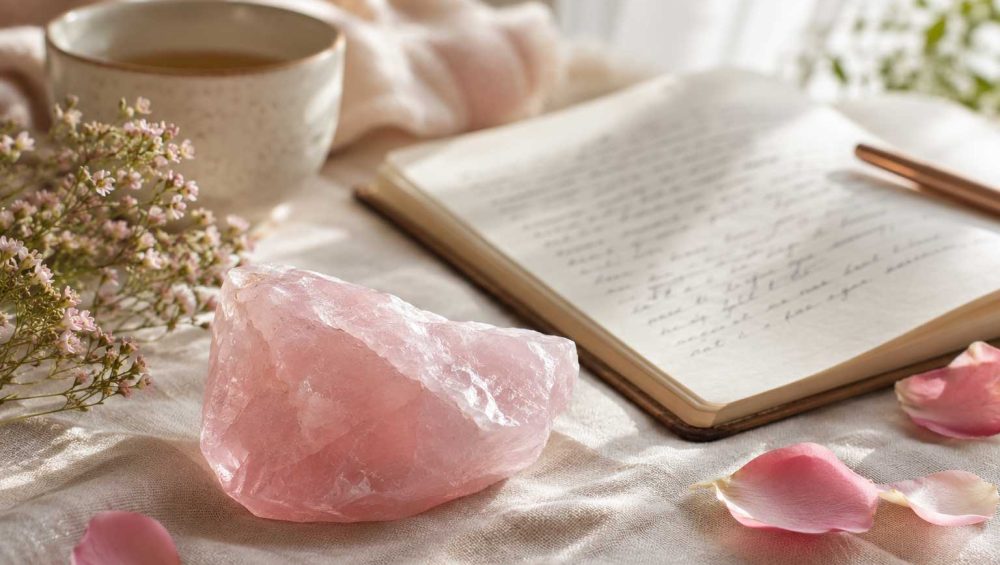
For many people, emotional healing doesn’t begin with finding all the answers. It begins with creating enough safety to ask honest questions. What am I feeling right now? What have I been carrying? What would it feel like to treat myself with more kindness?
This is one reason rose quartz for emotional wellness continues to resonate with so many people. Its soft pink color has long been associated with compassion, gentleness, and love—not only toward others but toward ourselves. Whether you appreciate gemstones for their symbolism, enjoy incorporating them into mindful rituals, or simply find comfort in surrounding yourself with meaningful objects, rose quartz offers a quiet reminder that healing doesn’t have to happen through force.
emotional wellness is rarely about eliminating difficult emotions. It’s about learning how to experience them without becoming overwhelmed or disconnected from yourself. There are seasons when resilience looks like moving forward, and others when resilience means slowing down enough to acknowledge what hurts. Rose quartz often becomes meaningful during these quieter seasons because it encourages softness rather than urgency.
Many people are naturally drawn toward gemstones for emotional wellness because physical objects can become gentle anchors during periods of emotional growth. A stone resting on your desk, tucked into a pocket, or worn as jewelry can serve as a simple cue to pause, breathe, and reconnect with your intentions throughout the day. While these practices are deeply personal and are not a substitute for medical or mental health care, they can become comforting parts of a broader emotional wellness routine.
If you’re just beginning to explore crystal healing, you may discover that different stones symbolize different emotional qualities. Some are traditionally connected with grounding, others with clarity or confidence. Rose quartz is most often associated with compassion, emotional openness, forgiveness, and learning to relate to yourself with greater gentleness.
Perhaps you’ve been navigating heartbreak, recovering from emotional exhaustion, rebuilding trust in yourself, or simply recognizing how often you extend compassion to everyone except yourself. If this feels like your current season, rose quartz may become less about changing your emotions and more about changing the way you respond to them—with patience, curiosity, and grace.
There is no requirement to believe that a crystal possesses healing powers to appreciate what it represents. For many people, the value of rose quartz lies in the intention it helps cultivate. Like lighting a candle before journaling or taking a mindful walk after a difficult conversation, it becomes part of a ritual that gently supports emotional awareness.
Throughout this guide, we’ll explore the symbolism of rose quartz, why it has become closely connected with emotional wellness, practical ways people incorporate it into everyday life, and how thoughtful rituals can help create space for greater self-compassion along your emotional journey.
What Is Rose Quartz?
Rose quartz is a naturally occurring variety of quartz recognized by its soft shades of pink, ranging from nearly translucent blush to deeper rosy hues. Its delicate appearance has made it one of the world’s most recognizable gemstones, admired across cultures for both its beauty and its symbolism.
If you’re new to exploring gemstones, understanding rose quartz can provide helpful context before considering its emotional significance. Like many crystals, its cultural meaning has evolved over centuries through stories, traditions, and personal interpretation. Today, rose quartz is commonly associated with unconditional love, compassion, emotional healing, forgiveness, and peaceful relationships.
Unlike gemstones that are often connected with protection or grounding, rose quartz represents a quieter emotional energy. Rather than encouraging us to build walls, it invites us to soften them where it feels safe to do so. Rather than emphasizing strength through endurance alone, it reminds us that gentleness can also be a form of resilience.
This symbolism often resonates with people who are learning to release perfectionism, process grief, rebuild trust after painful experiences, or practice speaking to themselves with greater kindness. The stone becomes less about changing external circumstances and more about supporting an internal shift toward acceptance and emotional balance.
Because rose quartz has become one of the most widely recognized stones in rose quartz healing, it is often chosen by beginners as a first crystal to explore. Its symbolism is approachable, its appearance naturally calming, and its message easy to understand: healing frequently begins with compassion.
For many, the stone becomes a visual reminder to pause before reacting, to notice self-critical thoughts with curiosity rather than judgment, and to remember that emotional wellness grows through consistent acts of care rather than dramatic transformation.
Why Rose Quartz Resonates with Emotional Wellness
Every person’s emotional journey is unique, yet many share a common desire: to feel more connected to themselves. In a world that often rewards productivity over presence, gentleness can feel surprisingly unfamiliar. Rose quartz speaks to this need by symbolizing emotional softness rather than emotional perfection.
Many people begin prioritizing healing for emotional wellness after experiencing periods of chronic stress, relationship difficulties, burnout, grief, or major life transitions. During these seasons, it can become difficult to recognize your own emotional needs beneath responsibilities, expectations, and constant mental noise.
Rose quartz offers a different perspective. Rather than asking, “How do I fix myself?” it quietly encourages a more compassionate question: “What do I need today?”
That subtle shift can change the way we approach emotional growth.
Instead of pushing through every difficult feeling, we may begin allowing ourselves moments of rest. Instead of criticizing emotional sensitivity, we may start recognizing it as valuable information. Instead of believing we must earn compassion, we gradually learn that kindness toward ourselves can exist even before everything feels resolved.
This is why rose quartz is often incorporated into mindful practices that encourage emotional awareness. Holding the stone during quiet reflection, placing it beside a journal, wearing it throughout the day, or simply noticing it during moments of stress can become gentle reminders to return to ourselves with patience.
Emotional wellness rarely unfolds in a straight line. Some days invite confidence and clarity. Others call for tenderness, forgiveness, and simply making space for whatever emotions arise. Rose quartz has become a meaningful companion for many people because it reflects this quieter side of healing—one built not on rushing toward change, but on creating enough emotional safety for lasting growth to unfold naturally.
Self-Compassion Begins with Small Moments
One of the reasons rose quartz has remained meaningful across generations is that it gently redirects our attention inward. Many of us find it easier to extend kindness to family members, friends, or even strangers than we do to ourselves. We notice our own mistakes quickly, replay conversations long after they’ve ended, or hold ourselves to standards we would never expect of someone we love.
Rose quartz symbolizes another possibility.
Its message isn’t that difficult emotions should disappear. Instead, it encourages the practice of meeting those emotions with patience instead of criticism. That shift can become an important part of self-compassion for emotional wellness, where healing begins not by becoming a different person, but by relating to yourself differently.
Self-compassion often sounds simple, yet it can feel unfamiliar if you’ve spent years believing your worth depended on achievement, perfection, or always taking care of everyone else first. In those moments, rose quartz can become a quiet reminder that your emotional needs deserve attention too.
This doesn’t require elaborate rituals. It may be as simple as noticing when your inner dialogue becomes harsh and intentionally choosing gentler words. It may mean allowing yourself to rest after an emotionally demanding day instead of believing you must always keep going.
For many people, emotional healing begins in these ordinary moments that slowly reshape how they experience themselves. The stone simply becomes a symbol of the intention to return to kindness again and again.
Rose Quartz and the Heart Chakra
Across many spiritual traditions, rose quartz is most closely associated with the heart chakra. The heart chakra is traditionally connected with love, compassion, forgiveness, emotional openness, and meaningful relationships.
Whether you view chakras as spiritual symbolism or simply appreciate them as helpful frameworks for reflection, they offer a language for exploring emotional experiences. This can help explain why certain gemstones have become connected with particular emotional qualities over time.
The heart chakra is often described as representing our ability to both give and receive love. When life brings disappointment, betrayal, grief, or emotional exhaustion, many people notice themselves becoming more guarded. Protective walls are a natural response to painful experiences, yet over time those same walls can also make it difficult to experience closeness, vulnerability, or trust.
Rose quartz symbolizes the gradual process of reopening—not by forcing yourself to be vulnerable before you’re ready, but by allowing compassion to return at a pace that feels emotionally safe. If this symbolism feels especially meaningful, rose quartz heart healing can be a gentle next step.
Healing doesn’t mean pretending painful experiences never happened. It means learning that those experiences don’t have to define every future relationship with yourself or others.
Some people choose to include rose quartz during meditation, quiet reflection, or intention-setting because its symbolism aligns with emotional openness and self-kindness. Others simply enjoy having it nearby as a visual reminder of the qualities they hope to cultivate.
There is no right or wrong way to connect with these traditions. What matters most is choosing practices that genuinely support your sense of emotional safety.
Gentle Daily Rituals with Rose Quartz
Emotional wellness is often strengthened through consistency rather than intensity. Small rituals practiced regularly tend to have a greater impact than occasional dramatic changes.
For this reason, many people incorporate rose quartz into simple daily routines that encourage presence and reflection. The crystal itself isn’t expected to create change. Instead, it becomes part of a mindful habit that gently interrupts the pace of everyday life.
You might begin your morning by holding rose quartz while setting an intention for the day. That intention could be as simple as:
“Today I’ll respond to myself with patience.”
Others place rose quartz beside their journal, allowing it to become associated with honest emotional reflection. Some keep it near their workspace as a reminder to pause during stressful moments and take several slow breaths before responding to challenges.
Many people are also drawn toward creating daily rose quartz rituals that combine journaling, mindfulness, gentle breathing, and intentional reflection. These practices create opportunities to notice emotions before they become overwhelming, making it easier to respond thoughtfully instead of react automatically.
If mindfulness for emotional wellness feels new to you, remember that there is no perfect way to practice. A few quiet moments spent noticing your breath, observing your thoughts without judgment, or simply appreciating a peaceful object can become meaningful acts of emotional care.
The purpose isn’t to eliminate every difficult emotion. It’s to build a relationship with yourself that feels increasingly supportive over time.
Wearing Rose Quartz as a Daily Reminder
For many people, jewelry carries meaning far beyond its appearance. A necklace, bracelet, or pendant can quietly represent a promise you’ve made to yourself, a chapter you’ve survived, or the person you’re becoming.
This is one reason rose quartz jewelry has become so popular among those interested in emotional wellness. Rather than serving as decoration alone, it often becomes a tangible reminder of compassion, hope, and intentional living.
Wearing rose quartz doesn’t need to communicate anything to others. Its significance can remain entirely personal. During busy days, simply noticing the stone resting against your skin may encourage you to slow your breathing, soften self-critical thoughts, or reconnect with the intentions you’ve chosen for yourself.
Some people wear rose quartz during periods of transition such as beginning therapy, recovering from heartbreak, navigating grief, rebuilding confidence, or practicing healthier emotional boundaries. Others simply appreciate the beauty of the gemstone while allowing its symbolism to quietly accompany their daily lives.
Choosing jewelry with personal meaning reflects an important truth about emotional wellness: healing isn’t built through one defining moment. More often, it grows through hundreds of small moments where we gently choose ourselves again.
If you’re exploring different styles, you may find yourself naturally drawn toward pieces that reflect both your personal aesthetic and the emotional qualities you hope to carry into everyday life.
Rose Quartz Within a Broader Emotional Wellness Journey
While rose quartz is often the first crystal people explore, emotional wellness rarely depends on a single practice or symbol. Lasting growth usually comes from creating supportive habits that work together over time.
Some days, that may look like wearing a meaningful piece of jewelry. Other days, it may involve journaling, spending time in nature, practicing mindful breathing, or simply giving yourself permission to slow down after an emotionally demanding week.
Rose quartz fits naturally into this larger picture because it symbolizes qualities that support emotional resilience rather than emotional perfection. Compassion, patience, forgiveness, and acceptance are not destinations—they are practices we return to repeatedly throughout life.
You may also find yourself drawn toward other crystals by intention depending on what you’re experiencing. Someone navigating uncertainty may gravitate toward stones associated with clarity, while another person seeking steadiness might appreciate gemstones traditionally connected with grounding. Each stone represents a different emotional theme, allowing your collection to evolve alongside your personal journey.
Rather than searching for one crystal that does everything, many people discover that different symbols resonate during different seasons of life.
Caring for Rose Quartz with Intention
For many people, caring for a meaningful object becomes another opportunity to practice mindfulness.
Some traditions encourage periodically cleansing crystals as a symbolic way of refreshing intentions or marking a new chapter. Others simply enjoy dusting, storing, or displaying their stones thoughtfully as part of a personal ritual.
There is no universally accepted method because these practices are deeply personal. What matters most is the meaning you attach to them.
If you enjoy caring for your crystals intentionally, gentle practices such as moonlight, soft cloth cleaning, or creating a peaceful place to display them can become moments of quiet reflection rather than obligations to complete correctly. A broader crystal healing guide can help you explore care practices in a way that feels grounded and supportive.
Much like emotional wellness itself, crystal care isn’t about following rigid rules. It’s about creating rhythms that encourage presence, gratitude, and awareness.
When approached this way, caring for rose quartz becomes less about maintaining the crystal and more about maintaining your connection to the intentions it represents.
Frequently Asked Questions
Does rose quartz really help with emotional wellness?
Many people find rose quartz meaningful because of what it symbolizes rather than because of scientifically proven healing properties. Its long-standing association with compassion, love, forgiveness, and emotional openness can make it a comforting reminder during periods of personal growth. While some individuals include crystals in their wellness routines, they should not be considered a replacement for professional medical or mental health care.
Can I wear rose quartz every day?
Yes. Many people choose to wear rose quartz daily because its symbolism aligns with qualities they want to remember throughout the day, such as patience, kindness, emotional balance, and self-compassion. Whether worn as a necklace, bracelet, or carried in a pocket, the crystal can become a quiet personal reminder of those intentions.
Is rose quartz only associated with romantic love?
Not at all. Although rose quartz is frequently connected with love, its symbolism extends far beyond romantic relationships. Many people associate it with self-love, forgiveness, family relationships, friendship, emotional healing, compassion, acceptance, and learning to relate to themselves with greater gentleness.
Is rose quartz suitable for beginners?
Absolutely. Rose quartz is often recommended as one of the most approachable gemstones for people beginning to explore crystals. Its symbolism is widely understood, its appearance is calming, and its message feels accessible regardless of prior experience with crystal traditions.
How can I use rose quartz during mindfulness or journaling?
Some people like to hold the stone while taking a few slow breaths before writing. Others place it beside their journal as a visual reminder to approach themselves honestly and without judgment. The crystal itself isn’t the practice—it simply becomes a meaningful object that supports intentional reflection.
Can rose quartz replace therapy or professional support?
No. Emotional wellness often benefits from many different forms of support, including trusted relationships, healthy routines, and, when appropriate, licensed mental health professionals. Rose quartz may become a comforting part of a personal wellness practice, but it should never replace evidence-based care when additional support is needed.
A Gentle Reminder That Healing Can Be Soft
Healing is often imagined as something dramatic—a breakthrough, a life-changing realization, or a moment that instantly transforms everything.
More often, it unfolds quietly.
It appears in the conversations where you finally speak kindly to yourself. It appears in the decision to rest instead of pushing harder. It appears in choosing curiosity over self-judgment, patience over perfection, and compassion over criticism.
That is why rose quartz continues to resonate with so many people.
Whether you view it as a meaningful symbol, a beautiful natural gemstone, or simply a gentle reminder of the qualities you hope to cultivate, its message remains remarkably consistent: emotional wellness grows through kindness practiced repeatedly.
You don’t need to become someone entirely new to begin healing. You only need to create enough space to meet yourself where you are today.
If you’re continuing to explore the relationship between gemstones and emotional well-being, you may enjoy discovering other gemstones that reflect different emotional seasons. And if you’d like to carry that symbolism into everyday life, thoughtfully crafted rose quartz jewelry can serve as a lasting reminder of compassion, hope, and the quiet strength found in caring for yourself one small moment at a time.
Where softness, self-awareness, and emotional healing are allowed to coexist. Through reflective writing, grounding rituals, and intentional beauty, Sparrow Trades offers gentle support for sensitive souls learning to reconnect with themselves.