There are seasons in life when our emotions feel tangled. We may carry the weight of old disappointments, unresolved conflict, or the quiet ache of feeling disconnected from ourselves. During these moments, emotional healing rarely happens all at once. More often, it unfolds through small acts of self-compassion, honest reflection, and a willingness to move forward one gentle step at a time.
Many people are drawn to rhodonite for emotional wellness because of its long-standing association with compassion, forgiveness, and emotional balance. With its distinctive rose-pink tones woven through deep black veins, rhodonite has become a meaningful symbol of finding beauty alongside life’s imperfections. While there is no scientific evidence that gemstones directly heal emotional conditions, many people incorporate them into personal rituals that encourage mindfulness, reflection, and intentional self-care.
If you’re just beginning your journey with gemstones, it can be helpful to first understand what gemstones are and why so many cultures have treasured them throughout history. Many people also enjoy learning about crystal healing, viewing crystals as symbolic companions that support personal growth rather than as medical treatments.
Within the broader world of gemstones for emotional wellness, rhodonite is often associated with the heart. Rather than encouraging us to avoid difficult emotions, it invites us to acknowledge them with honesty and kindness. For many people, that simple shift can become the beginning of meaningful emotional healing.
If you’ve experienced heartbreak, disappointment, family conflict, or simply feel emotionally worn down, rhodonite may resonate because it symbolizes compassion without asking you to ignore your pain. Instead of chasing constant positivity, it gently reminds us that healing often includes grief, forgiveness, acceptance, and learning to care for ourselves in new ways.
At Sparrow Trades, emotional wellness is viewed as a lifelong practice rather than a destination. True emotional wellness develops through self-awareness, healthy relationships, emotional regulation, supportive routines, and moments of quiet reflection. Some people find that meaningful objects—including gemstones—become comforting reminders of the intentions they want to carry into everyday life.
This guide explores rhodonite’s traditional symbolism, the emotional themes many people associate with it, practical ways to incorporate it into reflective practices, and additional resources that may support your journey. Whether you’re discovering rhodonite for the first time or returning to it during a new season of life, the goal is not to promise transformation but to create space for compassion, curiosity, and hope.
Gentle reminder: Crystal healing is a personal spiritual or wellness practice and should not be considered a substitute for professional medical, psychological, or mental health care.
The Meaning of Rhodonite
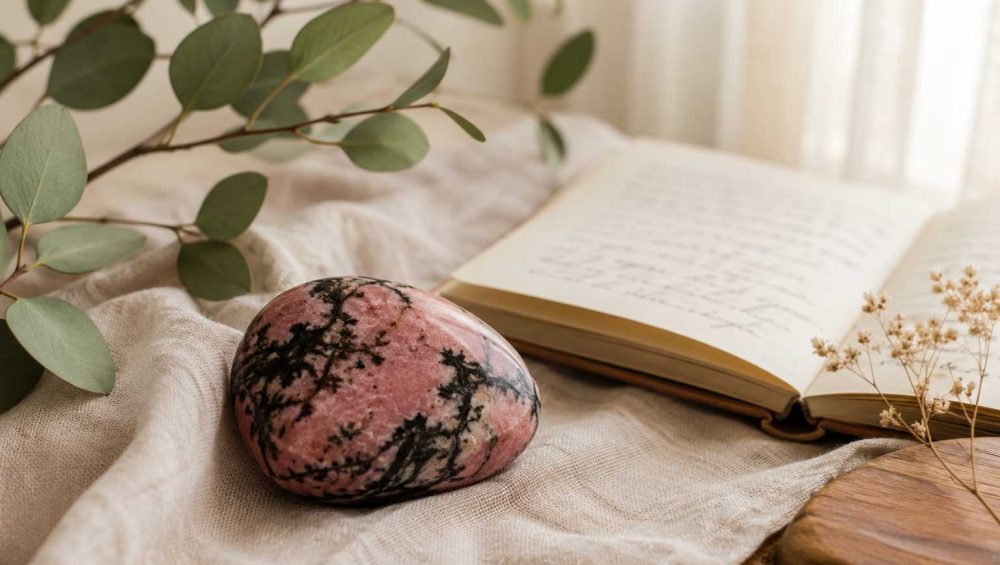
The name rhodonite comes from the Greek word rhodon, meaning “rose,” an appropriate description of its soft pink coloring. Natural rhodonite often contains dramatic black manganese veins, giving each stone a unique appearance that many people see as a beautiful metaphor for emotional growth. Life is rarely free from difficulty, and rhodonite seems to reflect that truth by holding both light and dark within the same stone.
If you’re interested in the geological origins and symbolism of the stone itself, you’ll likely appreciate learning more about rhodonite.
Across various crystal traditions, rhodonite has been connected with themes such as:
- Compassion
- Emotional healing
- Forgiveness
- Self-worth
- Healthy relationships
- Emotional resilience
These traditional associations are not supported by scientific evidence, but many people find symbolic value in them. Carrying or wearing rhodonite can become a personal reminder to respond to yourself with greater patience, especially during emotionally challenging seasons.
Unlike gemstones that are primarily associated with grounding or protection, rhodonite is often described as encouraging openness without abandoning healthy boundaries. It acknowledges emotional pain while gently pointing toward healing and personal growth.
Why People Choose Rhodonite for Emotional Wellness
Healing is rarely about forgetting the past. More often, it’s about changing our relationship with it.
Many people who choose rhodonite are navigating experiences such as:
- Relationship transitions
- Family conflict
- Grief or loss
- Emotional exhaustion
- Difficulty practicing self-forgiveness
- Rebuilding trust after disappointment
In these moments, meaningful rituals can provide a sense of steadiness. A journal, a quiet walk, a breathing practice, or a favorite piece of jewelry can become small anchors that help us reconnect with ourselves.
Rather than viewing rhodonite as something that changes emotions for us, many people use it as a visual reminder of the qualities they hope to cultivate—compassion, patience, courage, and emotional balance.
Some also find themselves exploring its traditional connection with rhodonite and the heart chakra, where it is symbolically associated with love, forgiveness, and emotional openness. Whether or not you work with chakra traditions, these themes often resonate because they reflect universal human experiences.
For readers who enjoy surrounding themselves with tangible reminders of these intentions, exploring rhodonite jewelry can feel like a natural extension of an emotional wellness practice. A necklace or bracelet isn’t a source of healing on its own, but it can quietly reinforce the values and intentions you hope to carry throughout your day.
Rhodonite and Self-Compassion
One of the most meaningful themes associated with rhodonite is self-compassion. For many people, emotional pain isn’t only caused by what happened—it is prolonged by the harsh way they continue speaking to themselves afterward.
Perhaps you replay conversations you wish had gone differently. Maybe you carry guilt for mistakes you’ve already learned from, or you hold yourself to expectations you would never place on someone you love. Over time, that inner criticism can quietly erode emotional resilience.
Choosing self-compassion doesn’t mean pretending everything is okay. Instead, it means allowing yourself to acknowledge your experience without adding shame to it. This perspective aligns closely with self-compassion for emotional wellness, where healing begins with treating yourself with the same kindness you would naturally offer another person.
Many people place rhodonite beside a journal, keep it on a bedside table, or wear it throughout the day as a gentle reminder to pause before slipping into self-judgment. The stone itself isn’t creating compassion, but it can serve as a meaningful symbol of the intention to practice it more consistently.
Sometimes emotional healing isn’t about fixing yourself. It’s about realizing you never needed fixing in the first place.
Rhodonite and Emotional Healing
As we begin responding to ourselves with greater compassion, we often discover that healing itself is rarely linear. Some days you may feel hopeful and grounded, while other days old emotions unexpectedly return. That doesn’t mean you’ve failed—it simply reflects the reality of being human.
Many people associate rhodonite with emotional healing because it symbolizes working through difficult emotions rather than avoiding them. Instead of rushing toward closure, it invites patience with the healing process itself.
This approach fits naturally within healing for emotional wellness, where growth is viewed as an ongoing practice of understanding yourself, building resilience, and creating supportive habits over time.
Healing may look like:
- Letting yourself grieve without rushing toward acceptance.
- Rebuilding trust after disappointment.
- Learning to identify your emotional needs.
- Practicing healthier boundaries.
- Choosing compassion over perfection.
For some people, this is also where emotional regulation for emotional wellness becomes important—not as a way to silence feelings, but as a way to meet them with enough steadiness to understand what they are asking for.
Some people enjoy pairing rhodonite with reflective journaling or quiet mindfulness practices, allowing the stone to become part of a ritual that encourages emotional awareness. The value often comes from slowing down long enough to notice what you’re feeling instead of immediately trying to change it.
If your emotional journey includes rebuilding trust in yourself after painful experiences, you may also appreciate learning to trust your emotions again, which explores how emotional confidence often returns gradually through gentle self-awareness.
Practicing Mindfulness with Rhodonite
Once we begin making space for difficult emotions, many people find it helpful to anchor those moments with simple, intentional practices. Mindfulness asks us to notice the present moment without immediately judging it. While that sounds simple, it can be surprisingly difficult when emotions feel overwhelming.
Many people incorporate rhodonite into quiet moments of reflection simply because having a physical object to hold or observe can help create a sense of intention. It becomes less about the gemstone itself and more about creating space to slow down.
You might find yourself holding rhodonite while:
- Writing in a journal.
- Sitting quietly for a few minutes.
- Practicing slow breathing.
- Reflecting after a difficult conversation.
- Setting an intention for the day ahead.
These moments don’t need to be long to be meaningful. Even a few mindful breaths can gently interrupt cycles of emotional overwhelm.
If you’re beginning a mindfulness practice, mindfulness for emotional wellness offers additional ideas for cultivating awareness with curiosity instead of criticism.
Some readers also enjoy combining mindfulness with simple breathing exercises. Creating a calm environment before exploring difficult emotions can help your nervous system feel safer and more supported throughout the process.
Understanding Rhodonite’s Traditional Healing Properties
Throughout crystal traditions, rhodonite has been associated with qualities such as compassion, emotional balance, forgiveness, and relationship healing. These traditional interpretations have developed through centuries of cultural symbolism and personal experience rather than scientific research.
If you’re curious about those historical associations in greater depth, rhodonite healing properties explores the symbolism most commonly connected with this distinctive pink gemstone.
Many people appreciate approaching these traditions with both openness and discernment. Rather than asking whether a stone possesses measurable healing power, they ask a different question:
“How does this symbol help me show up differently in my own life?”
Sometimes that answer is surprisingly practical.
Perhaps seeing rhodonite reminds you to pause before reacting during conflict. Perhaps it encourages a few minutes of reflection after a stressful day or reminds you to extend compassion toward yourself after making a mistake.
When viewed this way, the gemstone becomes less about changing your emotions and more about supporting intentional habits that nurture emotional wellness over time.
Ways to Use Rhodonite in Everyday Life
After understanding the symbolism behind rhodonite, many people naturally wonder how it might fit into everyday life. There is no single “correct” way to work with rhodonite. The most meaningful practices are often the ones that fit naturally into your existing routines rather than becoming another task to complete.
Some people choose to keep rhodonite nearby during moments of reflection. Others wear it throughout the day as a quiet reminder of the qualities they want to cultivate, such as compassion, patience, or emotional resilience. The value often comes from the intention behind the practice rather than the object itself.
Some gentle ways people incorporate rhodonite include:
- Keeping it beside a favorite journal.
- Holding it during quiet breathing or meditation.
- Placing it on a bedside table as part of an evening routine.
- Carrying it during emotionally challenging conversations.
- Wearing it as jewelry throughout the day.
If you’re looking for additional ideas, rhodonite uses explores thoughtful ways people include this gemstone in their personal wellness rituals.
For many readers, wearing a meaningful piece every day feels like the simplest approach. If that resonates with you, you may enjoy exploring our collection of rhodonite jewelry, where each piece celebrates the natural beauty of this distinctive gemstone while serving as a gentle reminder of your intentions.
Rhodonite Compared with Rose Quartz
Because both stones feature beautiful shades of pink and are traditionally associated with the heart, rhodonite and rose quartz are often mentioned together. While they share similar emotional themes, many people connect with them in different ways.
Rose quartz is traditionally associated with unconditional love, tenderness, and nurturing. Rhodonite, on the other hand, is often viewed as representing compassion in action—working through conflict, rebuilding trust, practicing forgiveness, and learning from emotional experiences.
Neither gemstone is “better.” Instead, they simply reflect different emotional seasons.
If you’re navigating fresh heartbreak or longing for greater gentleness toward yourself, rose quartz may feel especially meaningful. If you’re processing difficult emotions, rebuilding relationships, or learning to balance compassion with healthy boundaries, rhodonite may feel like a natural companion.
For a more detailed comparison, you might appreciate rhodonite vs rose quartz, which explores the unique symbolism and traditional associations of each stone.
Frequently Asked Questions
Is rhodonite good for emotional wellness?
Many people choose rhodonite for emotional wellness because it has long been associated with compassion, forgiveness, and emotional balance in crystal traditions. While there is no scientific evidence that rhodonite directly improves emotional health, it can become a meaningful symbol within mindfulness, journaling, meditation, or other intentional self-care practices.
What emotions is rhodonite associated with?
Traditionally, rhodonite is connected with compassion, emotional healing, forgiveness, patience, resilience, and self-acceptance. Different traditions may emphasize slightly different qualities, but many share the common theme of responding to emotional challenges with kindness instead of self-judgment.
Can I wear rhodonite every day?
Yes. Many people enjoy wearing rhodonite daily as a personal reminder of the intentions they want to carry with them. Whether worn as a necklace, bracelet, or kept in a pocket, the significance comes from the meaning you personally assign to it rather than any proven physical effect.
Does rhodonite help with relationships?
In crystal traditions, rhodonite is often associated with empathy, forgiveness, and healthy communication. While gemstones cannot change another person’s behavior or repair relationships on their own, they may serve as reminders to approach conversations with greater compassion, honesty, and emotional awareness.
Is rhodonite connected with the heart chakra?
Yes. Many crystal traditions associate rhodonite with the heart chakra because of its symbolic connection to compassion, emotional healing, and forgiveness. These associations are part of spiritual and cultural practices rather than scientific findings.
Is rhodonite a substitute for therapy or professional support?
No. Rhodonite and other gemstones should be viewed as complementary wellness tools rather than medical or psychological treatments. If you’re experiencing persistent emotional distress, anxiety, depression, trauma, or other mental health concerns, seeking support from a qualified healthcare or mental health professional is an important step. Gemstones may complement personal reflection, but they should never replace evidence-based care.
Conclusion
Emotional healing rarely arrives all at once. More often, it unfolds through quiet moments of honesty, small acts of self-compassion, and the courage to keep showing up for yourself even when the path feels uncertain.
Many people are drawn to rhodonite for emotional wellness because it symbolizes these very qualities. Its natural blend of soft pink and bold black reminds us that healing doesn’t require a perfect past or a life free from struggle. Instead, growth often emerges from learning to hold both joy and pain with compassion.
Whether you choose to keep rhodonite on your desk, carry it in your pocket, wear it as jewelry, or simply appreciate its symbolism, its greatest value may be the pause it creates. A pause to breathe before reacting. A pause to notice your emotions without judgment. A pause to remember that healing is not measured by how quickly you move forward, but by how gently you learn to care for yourself along the way.
Every emotional journey is unique. Some seasons call for forgiveness, while others invite stronger boundaries, deeper self-awareness, or renewed trust in your own inner voice. There is no single path that works for everyone, and that’s okay. Emotional wellness is less about reaching a destination and more about building a life that feels increasingly safe, authentic, and compassionate from the inside out.
If rhodonite resonates with you, you may also enjoy exploring our growing collection of rhodonite jewelry, where each piece celebrates the natural beauty of this remarkable gemstone while serving as a meaningful reminder of your personal intentions. You might also find inspiration in our broader guide to gemstones for emotional wellness, which explores the unique symbolism and emotional themes associated with many different stones.
Wherever you are today, may you continue moving forward with patience, curiosity, and compassion. Sometimes the smallest reminders—a quiet ritual, a thoughtful journal entry, or a favorite gemstone—become gentle companions that help us reconnect with ourselves, one moment at a time.
Disclaimer: The information in this article is provided for educational and inspirational purposes only. Crystal healing is a personal spiritual or wellness practice and is not supported by scientific evidence as a medical treatment. Gemstones should never replace professional medical, psychological, or mental health care. If you are experiencing significant emotional distress, please seek support from a qualified healthcare provider or licensed mental health professional.
Where softness, self-awareness, and emotional healing are allowed to coexist. Through reflective writing, grounding rituals, and intentional beauty, Sparrow Trades offers gentle support for sensitive souls learning to reconnect with themselves.