

There are moments when a single question can become so loud that it drowns out everything else.
“Am I the problem?”
Perhaps it comes after another argument where you ended up apologizing, even though you weren’t sure what you had done wrong. Maybe someone called you “too sensitive,” “too emotional,” or “too difficult,” and those words have stayed with you long after the conversation ended. Or perhaps someone has asked you, “Why do you always make everything about you?” and you’ve carried those words ever since.
If this question has been following you, you’re not alone.
Many thoughtful, compassionate people eventually begin wondering whether they are somehow the common denominator in every difficult relationship. For some, this pattern develops alongside people pleasing, where keeping others comfortable gradually becomes more important than listening to their own inner voice. They replay conversations in their minds, search for mistakes they may have made, and carry responsibility that was never entirely theirs. Over time, healthy self-reflection can quietly transform into chronic self-blame without you even realizing it’s happening.
The truth is that asking, “Am I the problem?” isn’t always a sign that you are. Sometimes it’s a sign that you care deeply about your impact on other people. Sometimes it’s evidence of humility and a willingness to grow. But sometimes it also reflects something else entirely—a nervous system that has learned to stay hyperaware of conflict, criticism, or emotional unpredictability.
This is where the question becomes more complicated.
Healthy self-awareness invites us to examine our own behavior honestly. It allows us to apologize when we’ve caused harm, learn from our mistakes, and become more intentional in our relationships. Self-blame, on the other hand, assumes responsibility for situations we didn’t create or couldn’t control. Instead of helping us grow, it slowly erodes our confidence until we begin doubting our own perceptions.
For some people, this pattern develops because they’re naturally high in empathy and instinctively try to understand everyone else’s perspective before considering their own. Others discover that years of criticism, emotional manipulation, or unpredictable relationships have taught them to question themselves first and trust themselves last. Still others simply grew up believing that keeping everyone happy was the safest way to maintain peace.
Whatever brought you here, this article isn’t about deciding whether someone else is “good” or “bad.” Nor is it about placing blame on yourself or another person.
Instead, it’s an invitation to gently explore where healthy accountability ends and unnecessary self-condemnation begins.
If this feels like your current season, you may also find yourself returning to the broader foundation of emotional wellness. Emotional wellness isn’t about never making mistakes or always feeling confident. It’s about developing the awareness, resilience, and self-compassion needed to navigate life’s complexities without losing yourself in the process.
Sometimes the most healing realization isn’t discovering that you’re perfect.
It’s discovering that you’ve been asking yourself the wrong question.
Perhaps instead of asking, “Am I the problem?”
A gentler place to begin is:
“What has led me to believe I always have to be?”
Why Do So Many People Ask, “Am I the Problem?”
People rarely ask this question after one disagreement.
More often, it grows slowly over time.
It begins with apologizing just to end an argument. It continues when someone dismisses your feelings or tells you that you’re remembering events incorrectly. Eventually, you stop trusting your own perspective and start assuming that if conflict exists, you must have caused it somehow.
It isn’t a sign of weakness.
It happens because human beings naturally seek explanation. When relationships feel confusing or emotionally inconsistent, our minds often look inward first. If we can identify something that’s “wrong” with us, perhaps we can fix it and finally feel safe again.
In many ways, this instinct reflects healthy self-awareness. Being willing to examine your own behavior is an important part of emotional growth. People who never question themselves can struggle to recognize when they’ve hurt others or need to change.
But there is an important difference between healthy reflection and chronic self-doubt.
Healthy reflection sounds like:
“Could I have handled that conversation differently?”
Chronic self-blame sounds like:
“Everything is probably my fault.”
Many people who repeatedly ask whether they’re the problem are actually carrying far more emotional responsibility than belongs to them. They notice other people’s moods, anticipate conflict before it happens, and work hard to keep everyone comfortable—even when doing so leaves them emotionally exhausted.
If this sounds familiar, you may find yourself drawn toward empathy for emotional wellness, where empathy is explored not simply as kindness, but as the ability to understand others without losing sight of yourself.
It’s also important to recognize that persistent self-doubt can sometimes emerge within relationships where criticism, blame-shifting, or emotional manipulation have become common. These experiences don’t automatically mean someone in your life has narcissistic traits, but they can make it much more difficult to trust your own judgment. Later in this article, we’ll gently explore how unhealthy relationship dynamics can influence the way we see ourselves while also honoring the complexity of every individual relationship.
Before we can answer whether you’re “the problem,” we first need to understand the difference between taking responsibility for your actions and taking responsibility for everyone else’s emotions.
Although they can feel similar, they’re profoundly different.
Healthy Self-Reflection vs. Self-Blame
One of the healthiest things we can do is ask ourselves difficult questions.
Did I communicate respectfully?
Could I have handled that differently?
Is there something I need to learn from this experience?
Questions like these are signs of emotional maturity. They allow us to grow without expecting perfection from ourselves.
Self-blame feels very different.
Instead of examining one situation, it becomes the lens through which we view every situation. Rather than asking whether we contributed to a problem, we automatically assume we caused it. We begin apologizing before fully understanding what happened. We second-guess our memories, our feelings, and even our instincts.
Over time, this pattern can quietly reshape our identity.
Instead of believing, “Sometimes I make mistakes,” we begin believing, “Maybe something is fundamentally wrong with me.”
That shift is important because shame rarely inspires healthy change. Growth is far more likely when we respond with curiosity instead of criticism. If this feels like your current season, you may also find yourself drawn toward self-compassion for emotional wellness, where kindness toward yourself becomes part of the healing process rather than something that must be earned.
Healthy self-reflection is grounded in curiosity.
Self-blame is rooted in fear.
Healthy reflection asks:
- What happened?
- What was my part?
- What can I learn?
Self-blame asks:
- What’s wrong with me?
- Why can’t I ever get it right?
- Why does this always happen to me?
Many people begin healing when they discover that taking responsibility for their actions does not require taking responsibility for another person’s choices, emotions, or behavior. Healthy relationships allow both people to own their part. They don’t expect one person to carry the emotional weight for everyone involved.
If this feels unfamiliar, you may find yourself drawn toward self-awareness for emotional wellness, where developing a clearer understanding of your own thoughts, emotions, and patterns becomes an act of compassion rather than criticism.
When Empathy Becomes Self-Blame
One reason this happens is because some people naturally pay more attention to other people’s emotions than their own.
Empathy is one of our greatest strengths.
It allows us to understand another person’s perspective, recognize emotional pain, and respond with compassion. Healthy empathy strengthens relationships because it helps us connect with one another in meaningful ways.
But empathy can become complicated when it loses its balance.
Not all empathy looks the same. Some people naturally understand another person’s perspective, while others deeply absorb emotions or express empathy through supportive action. Exploring the different types of empathy can help you recognize why empathy feels life-giving in some moments and emotionally exhausting in others.
Some people become so skilled at understanding everyone else’s feelings that they stop making space for their own. They instinctively explain away hurtful behavior, excuse repeated disappointments, or convince themselves that if they could simply be more patient, more understanding, or more accommodating, everything would finally improve.
Most people don’t choose this pattern consciously.
It’s often because caring for others has become deeply connected to feeling safe.
People who naturally experience high levels of empathy may find themselves noticing subtle changes in another person’s mood, anticipating conflict before it happens, or feeling responsible for restoring harmony whenever tension appears. While these qualities can make someone thoughtful and compassionate, they can also become exhausting when every disagreement feels like a personal failure.
Empathy was never meant to erase your own experience.
Understanding why someone behaves a certain way does not mean their behavior becomes healthy.
You can recognize that someone is stressed without accepting disrespect.
You can understand another person’s pain without becoming responsible for fixing it.
You can care deeply while still protecting your own wellbeing.
Many people discover this balance through empathy for emotional wellness, where empathy is viewed not as endless self-sacrifice but as a practice of understanding others while remaining connected to yourself.
One helpful question to ask during moments of conflict is:
“Am I taking responsibility for my behavior, or am I taking responsibility for someone else’s emotions?”
Those are not the same thing.
The first reflects healthy accountability.
The second often reflects over-responsibility.
Learning to recognize the difference can feel uncomfortable at first, especially if you’ve spent years believing that keeping everyone else happy was your job. But over time, it creates something many highly empathetic people have rarely experienced:
Permission to exist without constantly earning your place through emotional labor.
Empathy doesn’t ask you to disappear.
Healthy empathy invites you to care for others without abandoning yourself.
When Difficult Relationships Make You Question Yourself
Not every experience of self-doubt begins with your own thoughts. Sometimes the environment around you slowly teaches you to question yourself.
Sometimes the question begins inside a relationship. Not every difficult relationship is unhealthy, and not every disagreement points to manipulation. Every person has bad days, communicates imperfectly, and occasionally says things they later regret. Healthy relationships make room for repair, accountability, and mutual growth.
But some relationship patterns slowly erode your confidence in yourself.
Instead of resolving conflict together, you begin carrying it alone.
Instead of feeling understood after difficult conversations, you leave feeling confused. If you repeatedly find yourself questioning your own memory or perception after conversations, you may be experiencing gaslighting, a pattern that can slowly erode confidence in your own reality.
Instead of growing in confidence, you begin doubting your own memory, your emotions, and even your character.
Rarely does this happen overnight.
It often develops through hundreds of small interactions.
Perhaps you’re told you’re “too sensitive” whenever you express hurt.
Maybe your concerns are dismissed until you begin wondering whether they mattered in the first place.
Perhaps apologies are expected from you, while accountability rarely comes from the other person.
Eventually, your inner dialogue changes.
You stop asking:
“Was that hurtful?”
And start asking:
“Why am I so sensitive?”
That shift can profoundly affect your emotional wellbeing.
If this feels familiar, you may find yourself drawn toward understanding narcissism for emotional wellness. That page explores narcissistic behaviors and relationship dynamics in a balanced way, helping readers understand manipulation without encouraging them to label every difficult person as a narcissist.
It’s also worth remembering that emotional manipulation can exist without someone meeting the criteria for narcissistic personality disorder. Labels are far less important than recognizing patterns that repeatedly leave you feeling unsafe, unseen, or responsible for someone else’s choices.
The goal isn’t to diagnose another person.
The goal is to understand your own experience with greater clarity.
Your Nervous System May Be Protecting You, Not Telling You the Truth
When we experience repeated criticism, emotional unpredictability, or relationships where conflict never feels fully resolved, our nervous system adapts.
Its job is to keep us safe.
Sometimes that means becoming extraordinarily alert to anything that might lead to rejection or conflict.
You may find yourself constantly scanning conversations for signs that someone is upset.
You replay interactions long after they’ve ended.
You worry about saying the wrong thing before you’ve even spoken.
You apologize instinctively, even when you haven’t done anything wrong.
These responses aren’t evidence that you’re broken.
They’re often evidence that your nervous system has learned to anticipate emotional danger.
This is one reason healing rarely begins by simply “thinking more positively.”
Our bodies often remember experiences long after our minds have tried to move on.
When your nervous system has learned that conflict feels unsafe, it may encourage you to accept responsibility for problems that aren’t actually yours because doing so once helped reduce tension or preserve connection.
Understanding this can be deeply freeing.
It doesn’t remove responsibility for your own actions.
It simply helps explain why your first instinct might be to blame yourself.
Many people discover that strengthening boundaries for emotional wellness and relationships for emotional wellness gradually teaches the nervous system that safety doesn’t require constant self-sacrifice.
Healing often begins with small moments of noticing. As your nervous system begins to experience greater safety, you may also find yourself developing stronger emotional regulation for emotional wellness, allowing you to respond thoughtfully instead of reacting from fear.
Noticing when you apologize unnecessarily.
Noticing when you assume responsibility before gathering information.
Noticing when guilt appears simply because someone else is disappointed.
Awareness isn’t about criticizing these responses.
It’s about gently recognizing that they may have once protected you, even if they no longer serve you today.
A Gentle Resource for This Season
If you’ve spent years questioning yourself, it can be difficult to know which voice to trust—especially your own.
Sometimes reading the experiences of others and learning practical tools for courage, boundaries, and emotional resilience can make that journey feel a little less lonely.
Healing doesn’t begin by proving that you’re right.
It begins by giving yourself permission to ask honest questions without assuming that you’re automatically to blame.
If this article reflects what you’ve been carrying, you might appreciate exploring our empathy books collection. Rather than offering quick fixes, these carefully selected books encourage thoughtful self-reflection, healthier relationships, and greater confidence in your own experiences.
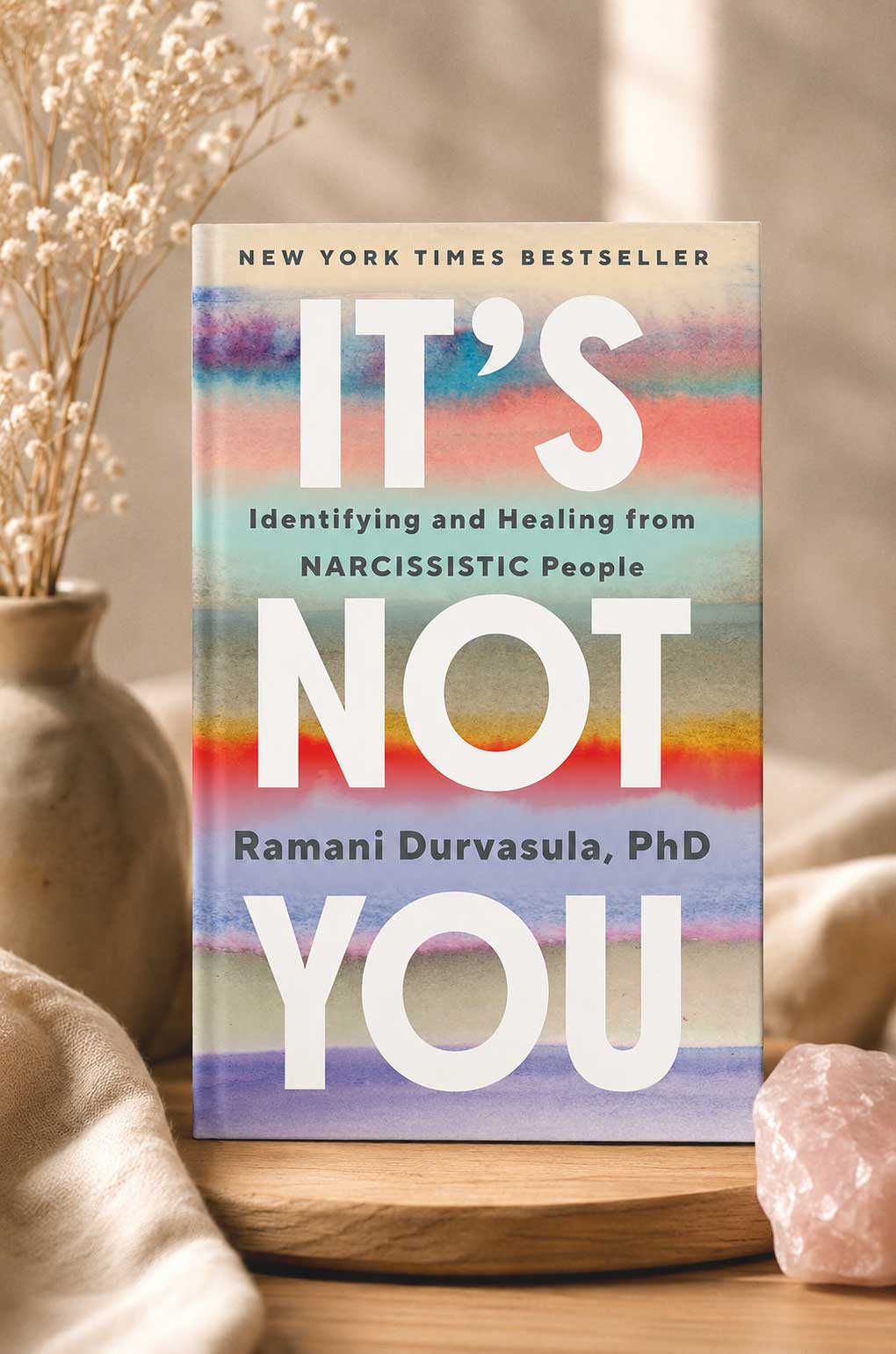
One resource that many readers find especially meaningful is It’s Not You by Dr. Ramani Durvasula. With warmth and clarity, she explores how emotionally manipulative relationships can gradually reshape a person’s sense of self while offering practical guidance for rebuilding confidence, recognizing unhealthy patterns, and learning to trust your own perceptions again.
Sometimes that permission is the first step toward finding yourself again.
Practical Ways to Stop Assuming You’re Always the Problem
Changing years of self-blame doesn’t happen because someone tells you, “It’s not your fault.” If only it were that simple.
Real healing begins when you become curious about your patterns instead of automatically believing them.
The next time conflict arises, try pausing before apologizing.
Ask yourself:
- What actually happened?
- What part of this belongs to me?
- What part belongs to the other person?
- Would I judge someone else as harshly as I’m judging myself?
These questions create space between the situation and your automatic response.
It can also help to notice how your body responds.
Do your shoulders tense?
Does your stomach tighten?
Do you immediately begin searching for what you did wrong?
Those physical reactions are often your nervous system trying to protect you. They deserve compassion rather than criticism.
Another gentle practice is learning to tolerate someone else’s disappointment without immediately assuming you’ve caused harm. Healthy relationships allow room for differing opinions, unmet expectations, and honest conversations. Another person’s frustration doesn’t automatically mean you’ve failed.
As your confidence grows, you may find yourself becoming less concerned with proving you’re a “good person” and more interested in showing up as an authentic one. That shift often marks the beginning of genuine emotional freedom.
Remember, accountability is healthy.
Self-condemnation is not.
One helps you grow.
The other keeps you small.
Questions like these rarely have simple answers. Below are some of the concerns readers most often ask when they’re trying to understand whether they’re experiencing healthy self-reflection or unnecessary self-blame.
Frequently Asked Questions
Is asking “Am I the Problem?” a sign that I’m emotionally healthy?
Not necessarily, but it can be. People who are willing to examine their own behavior often demonstrate humility and self-awareness. The important question is what happens next. Healthy self-reflection leads to learning and growth. Chronic self-blame leads to shame, anxiety, and constant self-doubt.
Can highly empathetic people blame themselves too much?
Yes. People with strong empathy often work hard to understand everyone else’s perspective, which can make it easier to overlook their own needs and experiences. Compassion becomes unhealthy when it turns into taking responsibility for emotions, choices, or behaviors that belong to someone else. If this feels familiar, you may find yourself returning to empathy for emotional wellness, where empathy is explored as a balance between caring deeply for others and remaining connected to yourself.
Does wondering if I’m the problem mean I’m a narcissist?
No. In fact, people with strong narcissistic traits are generally less likely to spend significant time questioning whether they are the problem. While everyone benefits from honest self-reflection, repeatedly assuming that every conflict is your fault often points toward self-doubt rather than narcissism. If you’re trying to understand the difference, narcissism can provide a balanced overview of narcissistic characteristics without encouraging self-diagnosis or labeling others.
How do I know if someone is manipulating me?
Emotional manipulation usually isn’t defined by one isolated event. Instead, look for repeated patterns. Do you consistently leave conversations feeling confused? Do you apologize even when you don’t understand what you did wrong? Are your feelings regularly dismissed or minimized? Do you feel responsible for keeping the relationship emotionally stable? Patterns like these deserve gentle attention, especially if they leave you doubting your own perceptions.
Can healthy relationships still include conflict?
Absolutely. Healthy relationships involve disagreements because every person has different experiences, needs, and perspectives. The difference is that healthy conflict usually moves toward understanding, accountability, and repair. Unhealthy conflict often leaves one person carrying all the responsibility while the other avoids examining their own behavior.
What if I really have made mistakes?
Every person makes mistakes. Recognizing them doesn’t make you “the problem.” Healthy accountability allows us to apologize, repair what we can, and continue growing without defining ourselves by our worst moments. Emotional wellness isn’t built on perfection. It’s built on honesty, compassion, and the willingness to keep learning.
Conclusion
Perhaps you’ve spent months—or even years—trying to answer the question:
“Am I the problem?”
Maybe you’ve replayed conversations until you could barely remember what actually happened.
Maybe you’ve apologized simply to restore peace.
Maybe you’ve become so accustomed to questioning yourself that certainty now feels unfamiliar.
Maybe you’ve carried guilt that was never fully yours because it felt safer than risking conflict or rejection.
If so, I hope you leave this article with a different perspective.
Self-awareness is a beautiful quality.
It allows us to grow, repair relationships, and become more thoughtful human beings.
But self-awareness should never require abandoning yourself.
You can be accountable without accepting blame that doesn’t belong to you.
You can be deeply empathetic without carrying everyone else’s emotional burdens.
You can care about another person’s experience while still honoring your own.
Over time, those small choices begin rebuilding something that chronic self-doubt often takes away—your ability to trust yourself. If that’s where your journey is leading, you may also appreciate exploring trust for emotional wellness, where confidence grows not from certainty, but from learning to believe your own lived experience again.
Sometimes healing begins not when we stop asking difficult questions, but when we begin asking kinder ones.
Instead of asking, “Am I the problem?”
You might gently ask:
“What is this experience trying to teach me about myself?”
That question leaves room for growth.
It leaves room for compassion.
And perhaps most importantly, it leaves room for the possibility that your worth has never depended on carrying burdens that were never yours to hold.

Where softness, self-awareness, and emotional healing are allowed to coexist. Through reflective writing, grounding rituals, and intentional beauty, Sparrow Trades offers gentle support for sensitive souls learning to reconnect with themselves.