

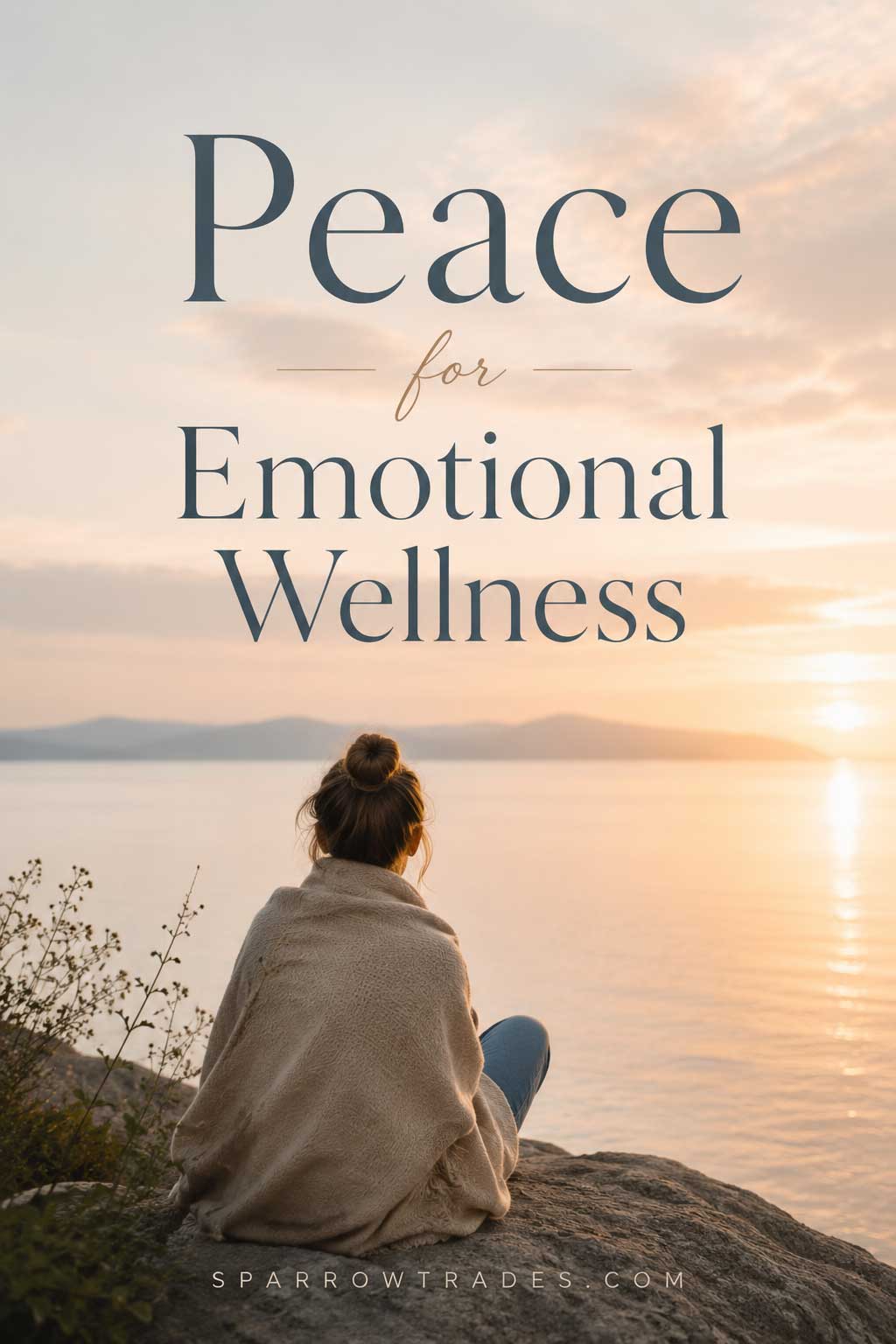
Peace is often described as something we hope to find someday—after the stress eases, after the uncertainty passes, or after life finally becomes manageable. Yet for many people, peace can feel frustratingly out of reach. Modern life pulls our attention in countless directions. Responsibilities, relationships, financial pressures, personal healing, and constant digital stimulation can leave the nervous system feeling like it is always preparing for the next challenge.
Because of this, peace is sometimes misunderstood. Many people imagine peace as the complete absence of stress, conflict, grief, or emotional discomfort. In reality, emotional wellness is not built by eliminating every difficult feeling. Peace emerges when we learn how to remain connected to ourselves even when life feels uncertain.
There is a difference between peace and avoidance. Avoidance pushes emotions away. Peace allows emotions to exist without letting them take control of our entire inner world. One disconnects us from ourselves; the other helps us feel grounded within ourselves.
For people who have experienced chronic stress, emotional invalidation, trauma, difficult relationships, or years of prioritizing everyone else’s needs, peace may feel unfamiliar. Sometimes the nervous system becomes so accustomed to tension that calm feels uncomfortable at first. Moments of stillness can even trigger anxiety because the body has learned to expect danger.
This is why peace for emotional wellness is not simply a mindset. It is a relationship with your nervous system, your emotions, and your inner experience. It is the gradual practice of creating safety within yourself. It is learning that you do not have to earn rest, deserve calm, or solve every problem before allowing yourself a moment of ease.
The journey toward peace often begins with awareness. Many people discover that cultivating self-awareness for emotional wellness helps them recognize the patterns, fears, and habits that keep them trapped in cycles of emotional tension. Once awareness grows, peace becomes less about changing everything around you and more about changing how you relate to what is happening within you.
Peace is not perfection. It is not emotional numbness. It is not pretending everything is fine. Peace is the quiet confidence that you can meet life as it unfolds while remaining connected to yourself.
Why Peace Matters for Emotional Wellness
When people think about emotional wellness, they often focus on resilience, healing, confidence, or emotional regulation. While all of these are important, peace serves as the foundation that supports them.
Without peace, emotional growth can begin to feel like another task to accomplish. The nervous system stays locked in problem-solving mode, constantly scanning for what still needs fixing. Even positive changes can feel exhausting when they are pursued from a place of urgency rather than grounded presence.
Peace creates space.
It allows the mind to slow down enough to process experiences rather than simply react to them. It helps us notice our emotions without becoming overwhelmed by them. It encourages thoughtful responses instead of automatic reactions. This is where emotional regulation for emotional wellness becomes part of peace, not because emotions need to be controlled perfectly, but because they deserve to be met with steadiness.
From a nervous system perspective, peace often develops when the body experiences greater safety. This does not mean life becomes perfectly secure. Instead, it means the body gradually learns that not every challenge requires a survival response. Practices that support nervous system regulation for emotional wellness can help create the conditions where peace becomes more accessible.
Peace also supports healthier relationships. When we feel internally grounded, we become less dependent on external validation, approval, or control. We can listen more deeply, communicate more clearly, and navigate conflict without losing our sense of self.
Perhaps most importantly, peace creates room for joy. When the mind is constantly occupied with worry, there is little space left to appreciate the present moment. Peace allows us to experience life rather than continuously brace for it.
The Difference Between Peace and Emotional Suppression
One of the most common misunderstandings about peace is the belief that peaceful people simply do not feel strong emotions.
In reality, emotional suppression and peace are very different experiences.
Suppression occurs when emotions are judged, denied, ignored, or pushed away. Someone may appear calm on the surface while carrying significant emotional tension underneath. Over time, suppressed emotions often reappear through anxiety, irritability, emotional exhaustion, physical symptoms, or sudden emotional overwhelm.
Peace, on the other hand, makes room for emotions.
A peaceful person can feel sadness without becoming consumed by it. They can experience anger without losing themselves in it. They can acknowledge fear without allowing fear to dictate every decision.
This distinction is especially important for people healing from emotional invalidation. Many individuals learned early in life that their emotions were inconvenient, dramatic, or unacceptable. As a result, they developed habits of emotional suppression that were mistaken for maturity or strength.
Healing often involves learning how to feel emotions safely again. Resources such as learning to trust your emotions again can support this process by helping individuals reconnect with their emotional experience in a healthy way. For many people, peace also grows through healing for emotional wellness, especially when old survival patterns begin to soften into self-understanding.
Peace does not require fewer emotions. It requires a healthier relationship with them.
When emotions are welcomed instead of resisted, they tend to move through us more naturally. The nervous system spends less energy fighting internal battles, creating greater capacity for calm and balance.
Creating Inner Peace Through Presence
Many people spend much of their lives mentally living somewhere other than the present moment.
The mind revisits past mistakes, replays conversations, anticipates future problems, and searches endlessly for certainty. While this tendency is natural, it can quietly erode emotional wellness over time.
Peace often becomes available when attention returns to the present.
This does not mean ignoring future responsibilities or forgetting the past. It means recognizing that most emotional suffering comes from being trapped in stories about what has happened or what might happen.
Presence invites us back to what is happening right now.
This moment.
This breath.
This experience.
Practices that support mindfulness for emotional wellness can help strengthen this skill. Mindfulness is not about emptying the mind or achieving perfect calm. It is about noticing what is happening without immediately judging it.
Simple moments of presence can create surprising shifts. Feeling sunlight on your skin. Listening to rain. Taking a slow breath. Drinking tea without multitasking. Sitting quietly for a few minutes before beginning the day.
These moments may seem small, but they remind the nervous system that safety and calm can exist in the present moment.
Over time, presence becomes less of a practice and more of a way of relating to life.
Peace and the Role of Emotional Boundaries
Many people struggle to find peace because they are carrying emotional responsibilities that do not belong to them.
They feel responsible for everyone’s happiness.
Everyone’s comfort.
Everyone’s reactions.
Everyone’s expectations.
This emotional burden can make peace feel impossible because the mind remains constantly focused on managing other people’s experiences.
Healthy boundaries create the conditions where peace can grow.
Boundaries are not walls that shut people out. They are guidelines that protect emotional energy and support healthy relationships. They help us recognize where we end and another person begins.
For many people, establishing boundaries feels uncomfortable at first. Guilt, fear, and anxiety often arise when old patterns begin to change. Yet peace frequently emerges when individuals learn that they can care deeply without carrying everything.
Understanding how to set emotional boundaries without feeling guilty can help create greater emotional freedom and reduce the chronic tension that often accompanies people-pleasing behaviors.
Peace is rarely found through control.
It is often found through healthy limits.
Practical Ways to Cultivate Peace Daily
Peace is not built through a single breakthrough moment. More often, it develops through small daily experiences that teach the nervous system how to feel safe, grounded, and connected.
A daily emotional check-in can be a powerful starting point. Simple reflection practices such as daily emotional check-in prompts encourage awareness without judgment.
Grounding practices can also support peace by helping attention return to the present moment. Many people find that grounding for emotional wellness creates a greater sense of stability during stressful periods. During moments of overwhelm, emotional grounding can help the body remember that the present moment is not always as unsafe as the mind fears.
Other supportive practices may include:
- Spending time in nature
- Limiting unnecessary digital stimulation
- Practicing slow breathing
- Creating moments of intentional stillness
- Journaling emotional experiences
- Establishing healthy routines
- Prioritizing rest and recovery
- Engaging in meaningful relationships
Peace grows through repetition.
Small moments of calm experienced consistently often have a greater impact than occasional dramatic efforts at self-improvement. Consistent self-care for emotional wellness can make peace feel less like a rare escape and more like a rhythm the body begins to recognize.
The goal is not perfection.
The goal is creating enough moments of safety and presence that peace begins to feel familiar.
Peace, Resilience, and the Ability to Return to Yourself
Peace does not mean life will stop testing you. It does not mean you will never feel hurt, disappointed, anxious, overstimulated, or uncertain. Emotional peace becomes meaningful because life is not always gentle.
There are seasons when peace looks less like stillness and more like returning. Returning to your breath after a hard conversation. Returning to your values after a moment of fear. Returning to your body after spiraling thoughts. Returning to yourself after absorbing too much of the world around you.
This is why resilience for emotional wellness is so closely connected to peace. Resilience is not about becoming unaffected by life. It is the capacity to be moved by life without becoming permanently disconnected from yourself.
Peace gives resilience softness. Resilience gives peace strength.
Together, they help you move through difficult moments without abandoning your inner world. You may still need rest. You may still need support. You may still need time to process what happened. But you begin to trust that emotional disruption does not mean you have lost yourself forever.
Sometimes peace is not the first feeling that arrives.
Sometimes peace is what comes after you let yourself cry, after you admit that something hurt, after you stop pretending you are fine, after you choose one small act of care instead of pushing through.
In that way, peace becomes less about never being shaken and more about knowing how to come home to yourself again.
Frequently Asked Questions About Peace for Emotional Wellness
What does peace mean in emotional wellness?
Peace in emotional wellness refers to an inner sense of calm, stability, and acceptance that remains available even during challenging experiences. It is not the absence of emotion but the ability to stay connected to yourself while experiencing life’s ups and downs.
Can you have peace while experiencing stress?
Yes. Peace and stress can exist simultaneously. Stress is a natural response to challenges, while peace reflects how we relate to those challenges. A person may experience stress while still feeling grounded, emotionally aware, and connected to a sense of inner stability.
Why does calm sometimes feel uncomfortable?
For individuals who have experienced chronic stress or trauma, the nervous system may become accustomed to operating in a heightened state of alertness. As a result, calm can initially feel unfamiliar or even unsettling. With consistent support, the nervous system can gradually learn to tolerate and trust peaceful states.
Is peace the same as happiness?
No. Happiness is often associated with positive emotions and enjoyable experiences. Peace is broader and more stable. A person can experience sadness, grief, or uncertainty while still maintaining a sense of peace.
How do mindfulness and peace connect?
Mindfulness helps develop awareness of the present moment without judgment. This awareness often reduces mental overwhelm and creates space for greater calm. Many people discover that cultivating mindfulness naturally supports deeper emotional peace over time.
Can boundaries improve emotional peace?
Healthy boundaries reduce emotional overload and help individuals protect their energy. By creating clear limits around responsibilities, relationships, and expectations, boundaries often make peace more accessible and sustainable.
Conclusion
Peace is not something that arrives once life becomes perfect.
It is something that develops as we learn to meet life differently.
There will always be uncertainty. Challenges will still arise. Emotions will continue to move through us. Yet emotional wellness grows when we no longer believe that peace depends on controlling every outcome.
Peace begins when we stop fighting ourselves.
It grows through self-awareness, presence, healthy boundaries, emotional honesty, and nervous-system safety. It deepens when we learn that difficult emotions do not make us broken and that calm does not have to be earned.
The journey toward peace is often quieter than we expect. It unfolds through small choices, gentle awareness, and moments of stillness that gradually reshape our relationship with ourselves.
Over time, peace becomes less of a destination and more of a way of being.
It becomes the place within you that remains steady, even when life feels uncertain.
And from that place, emotional wellness has room to flourish.
Where softness, self-awareness, and emotional healing are allowed to coexist. Through reflective writing, grounding rituals, and intentional beauty, Sparrow Trades offers gentle support for sensitive souls learning to reconnect with themselves.