

There are parts of ourselves we learn to hide long before we ever realize we are hiding them.
Sometimes it begins in childhood. A feeling that was “too much.” A need that was ignored. A version of yourself that made other people uncomfortable. Over time, you may have learned to become agreeable instead of honest, quiet instead of expressive, self-protective instead of emotionally open.
The strange thing is that those hidden parts do not disappear simply because they are pushed away. They wait beneath the surface. They show up in reactions you cannot explain, patterns you keep repeating, relationships that leave you emotionally exhausted, or moments where shame suddenly floods your body without warning.
That hidden emotional landscape is often what people are referring to when they talk about shadow work.
Shadow work is not about becoming darker, more broken, or emotionally consumed. It is about slowly learning how to face the parts of yourself that were abandoned, rejected, suppressed, or disconnected in order to survive. For many people, the process begins after years of emotional numbness, people-pleasing, chronic self-criticism, or feeling strangely disconnected from their own identity.
Sometimes the “shadow” is anger that was never allowed to exist. Sometimes it is grief. Sometimes it is softness, creativity, sensitivity, or emotional honesty that felt unsafe in your environment.
For trauma survivors, highly sensitive people, or those healing from emotional manipulation, shadow work can feel deeply emotional because it touches the places where survival patterns formed. This is why nervous-system safety matters. Healing does not happen through emotional force. It happens through enough safety to finally stop running from yourself.
Many people first begin exploring shadow work while trying to rebuild emotional wellness foundations after years of emotional survival mode. Others encounter it while recovering from gaslighting and trust erosion that made them question their own inner reality.
What makes shadow work difficult is that hidden emotions rarely announce themselves clearly. They often emerge through defensiveness, emotional shutdown, jealousy, perfectionism, fear of abandonment, resentment, or chronic shame. The goal is not to judge those reactions. The goal is to become curious about what they may be protecting.
“Until you make the unconscious conscious, it will direct your life and you will call it fate.” — Carl Jung
Shadow work asks a difficult but compassionate question: What parts of me did I have to disconnect from in order to feel safe, loved, accepted, or emotionally protected?
The answer is rarely simple. But for many people, it becomes the beginning of finally feeling emotionally whole.
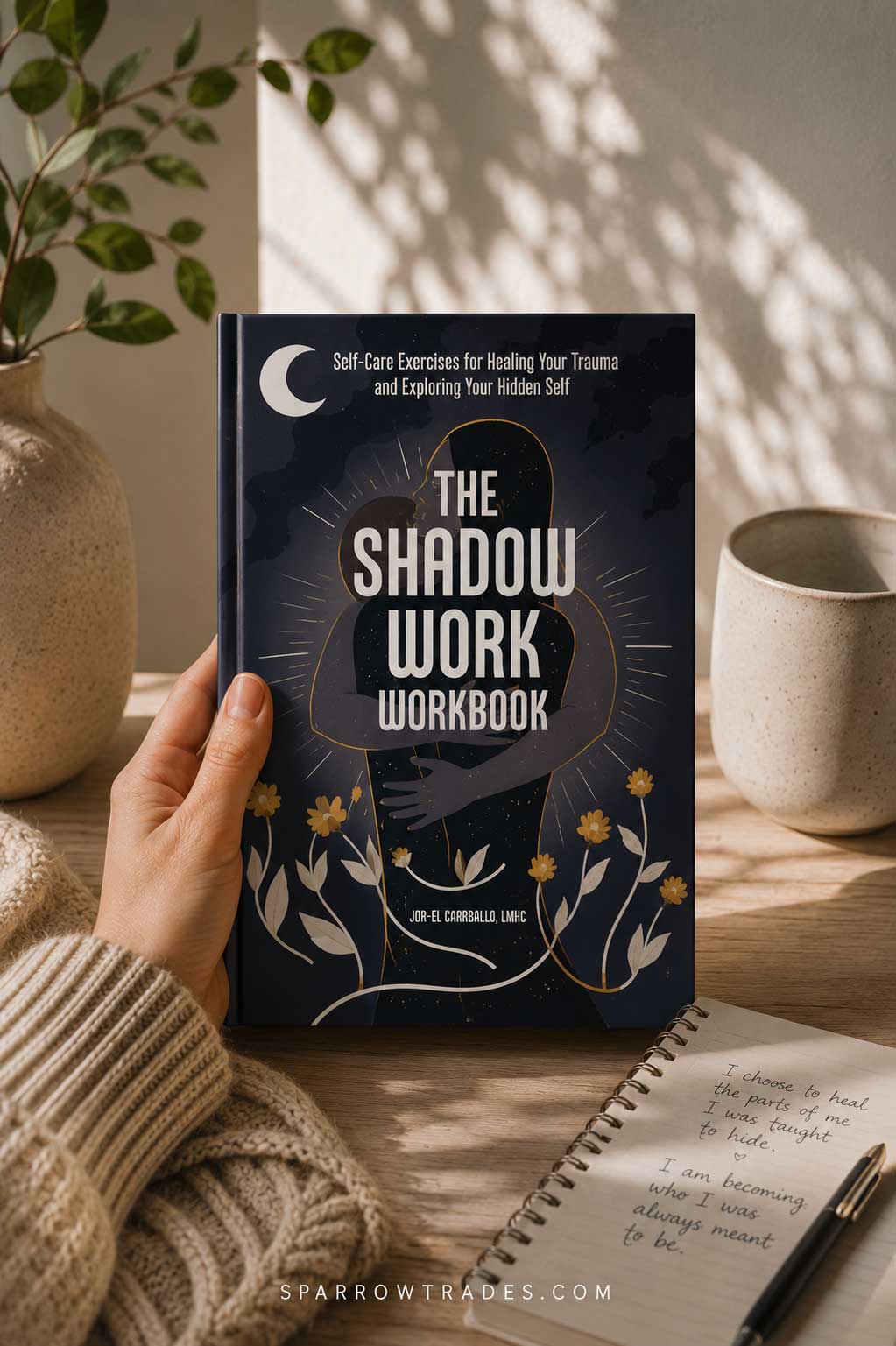
What Shadow Work Actually Means
At its core, shadow work is the process of becoming aware of the hidden emotional patterns, beliefs, reactions, and wounded parts of yourself that operate beneath conscious awareness.
The “shadow self” is not inherently evil. In many cases, it is deeply protective.
A child who was constantly criticized may learn to hide vulnerability. Someone who grew up around emotional unpredictability may suppress anger because anger once created danger. A person who was repeatedly invalidated may disconnect from their own instincts entirely.
Over time, these hidden parts shape how we move through the world. They influence relationships, emotional reactions, boundaries, self-worth, and identity. Many people spend years trying to fix symptoms without realizing they are disconnected from the emotional root beneath them.
This is why shadow work often overlaps with self-awareness in emotional healing and emotional regulation practices. The process is less about “fixing yourself” and more about understanding why certain emotional responses formed in the first place.
For some people, the shadow appears through emotional triggers. You may feel irrationally hurt when ignored. You may become intensely defensive after minor criticism. You may feel overwhelming shame after expressing a need. These reactions often point toward emotional wounds that never received safety or acknowledgment.
Others begin recognizing the shadow through exhaustion. Chronic caretaking, emotional suppression, perfectionism, and people-pleasing can all become survival identities. Eventually, the nervous system begins signaling that something deeper needs attention.
This is part of why learning to trust your emotions again can feel so difficult after years of emotional self-abandonment. When emotions were once unsafe, reconnecting with them may initially feel threatening instead of healing.
Shadow work also requires compassion. Without compassion, self-awareness easily becomes self-punishment. Many people discover hidden shame and immediately begin judging themselves for it. But shame rarely heals through criticism. It heals through understanding.
You are not weak for having emotional defenses. You developed them for a reason.
The deeper goal of shadow work is integration. Instead of splitting yourself into “acceptable” and “unacceptable” parts, you slowly learn how to hold more of your emotional truth without rejecting yourself for it.

Why Shadow Work Feels Emotionally Intense
One of the hardest parts of shadow work is realizing that healing does not always feel peaceful at first.
Sometimes it feels destabilizing.
When suppressed emotions begin surfacing, the nervous system may react as though danger is returning. You may suddenly feel emotional fatigue, grief, irritability, sadness, or confusion without understanding why. Old memories may feel emotionally closer. Certain relationships may begin feeling impossible to ignore.
This does not necessarily mean you are doing something wrong.
For many people, emotional suppression was once a survival strategy. The body learned to disconnect from difficult emotions because feeling everything fully was overwhelming, unsafe, or unsupported at the time. Shadow work interrupts that emotional avoidance.
This is why grounding practices matter so deeply during emotional healing. Without regulation and safety, self-exploration can quickly become emotionally flooding instead of restorative.
Many people find themselves needing grounding during periods of intense emotional processing, especially when hidden grief or fear begins surfacing unexpectedly. Others rely on somatic self-soothing practices to reconnect with the body when emotions begin feeling overwhelming.
The goal is not to force emotional exposure. The goal is to remain connected to yourself while difficult emotions move through.
This distinction matters.
Shadow work is not emotional punishment. It is not endlessly reliving trauma. It is not spiraling into self-analysis until you feel broken. Trauma-informed healing requires pacing, gentleness, and nervous-system awareness.
There may also be moments where you realize certain emotional patterns were shaped by manipulation or invalidation. People recovering from emotional manipulation and gaslighting often discover they learned to distrust their own emotions entirely. Others begin recognizing early signs of gaslighting only after beginning deeper emotional self-reflection.
Sometimes the intensity comes from grieving the version of yourself that never felt emotionally safe enough to exist fully.
And sometimes the intensity comes from finally realizing that the parts you hated most about yourself were often wounded survival responses all along.
Signs You May Be Entering Shadow Work Without Realizing It
Many people begin shadow work accidentally.
It often starts during burnout, heartbreak, emotional collapse, identity shifts, or periods where old coping strategies stop working. Something inside begins asking for honesty instead of performance.
You may notice emotional patterns repeating despite your best efforts to change them. Certain triggers may feel larger than the present moment. You may feel emotionally reactive in situations that logically seem “small.” Or you may suddenly feel disconnected from who you thought you were.
Sometimes shadow work begins when you can no longer maintain emotional numbness.
For people healing from chronic self-suppression, the process may begin through reclaiming your voice after emotional suppression and slowly recognizing how often silence became emotional survival.
Others begin noticing how deeply they adapted themselves around other people’s emotions. Those recovering from being told they were “too emotional” or “too sensitive” often carry hidden shame around emotional authenticity. This can become visible while healing from being called sensitive is manipulation and realizing sensitivity itself was never the true problem.
Some common signs of shadow work include:
- Feeling emotionally triggered by situations that seem disproportionate
- Becoming aware of people-pleasing patterns
- Recognizing unresolved resentment or grief
- Feeling disconnected from your identity
- Struggling with emotional numbness
- Repeating unhealthy relationship dynamics
- Experiencing intense self-criticism
- Feeling shame around emotional needs
- Becoming emotionally exhausted from constant masking
For some people, shadow work also reveals dissociation patterns that formed years earlier. Reconnecting emotionally after long-term shutdown can feel disorienting at first. Gentle practices like reconnecting with your body after years of dissociation can help create more emotional safety during this process.
There is also a quieter side to shadow work that many people overlook.
Sometimes the shadow is not rage or grief.
Sometimes it is joy you were never allowed to express.
Creativity you learned to minimize.
Needs you convinced yourself were “too much.”
Tenderness you buried to avoid rejection.
Healing often means discovering that entire parts of your humanity were hidden simply because they once felt unsafe to embody.
How to Begin Shadow Work Gently
Many people approach shadow work as though they need to uncover every hidden wound immediately.
That urgency often comes from survival mode.
In reality, healing tends to happen more sustainably through consistency, gentleness, and emotional safety than through emotional intensity. Your nervous system does not need to be overwhelmed in order for healing to be real.
A safer beginning often looks slower than people expect.
Instead of trying to “fix yourself,” start by observing yourself compassionately. Notice emotional reactions without immediately judging them. Ask what emotions might be underneath defensiveness, withdrawal, perfectionism, or emotional shutdown.
Journaling can help create emotional distance between observation and shame. Some people naturally begin exploring journaling for emotional processing when difficult emotions become hard to untangle internally. Others benefit from journaling for self-reflection because writing often reveals emotional truths that are difficult to access consciously.
Mindfulness also becomes important here, not as emotional bypassing, but as emotional witnessing. Learning to stay present with your internal experience without immediately escaping it is part of the work itself. Gentle forms of mindfulness can help create enough inner steadiness to remain emotionally connected without spiraling.
It is also important to recognize that shadow work is not meant to be constant. Emotional integration requires rest, grounding, and stabilization too. Some days healing looks like deep reflection. Other days it looks like eating consistently, resting your body, and stepping away from emotional intensity altogether.
Many people also begin noticing the connection between hidden emotions and boundaries. Suppressed resentment often points toward unmet needs or chronic emotional overextension. This becomes clearer while practicing emotional boundaries or learning how to set emotional boundaries without feeling guilty after years of self-abandonment.
Healing rarely happens all at once.
Often, shadow work is simply the gradual process of becoming someone who no longer abandons themselves emotionally.
Frequently Asked Questions About Shadow Work
Is shadow work the same as trauma healing?
Not exactly, although they can overlap deeply.
Shadow work focuses on becoming aware of hidden emotional patterns, suppressed emotions, and unconscious survival responses. Trauma healing often includes nervous-system regulation, safety-building, grief processing, and recovering from overwhelming experiences.
For many people, shadow work naturally intersects with healing after being emotionally invalidated because emotional suppression and self-rejection frequently develop after repeated invalidation.
Can shadow work make emotions feel worse at first?
Yes, sometimes.
When emotions have been buried for years, reconnecting with them can initially feel intense. Old grief, fear, shame, or anger may surface unexpectedly. This is why pacing and nervous-system safety matter.
Practices like emotional grounding and grounding after emotional overload can help reduce emotional flooding while processing difficult emotions.
How do I know if I’m doing shadow work correctly?
Shadow work is less about doing it “perfectly” and more about increasing honesty, awareness, and self-compassion over time.
If you are becoming more emotionally aware without becoming more self-hating, that is usually a healthy sign. If the process feels constantly destabilizing, overwhelming, or emotionally consuming, slowing down may be necessary.
Many people also benefit from resources like shadow work and emotional triggers because triggers often become the doorway into understanding hidden emotional wounds.
Is shadow work only spiritual?
No.
Although some spiritual communities discuss shadow work frequently, the concept itself also overlaps with psychology, emotional healing, trauma recovery, and self-awareness practices.
You do not need to approach shadow work spiritually for it to be meaningful. For some people, it looks more like therapy, emotional reflection, nervous-system healing, or reconnecting with identity after years of survival mode.
What if I uncover parts of myself I do not like?
This fear is extremely common.
Many people worry that looking inward will reveal something “bad” about them. But often, what surfaces are wounded emotional protections rather than personal failures.
People exploring shadow work after gaslighting frequently discover that self-hatred was shaped by emotional conditioning rather than objective truth.
The goal is not to approve of every behavior. The goal is to understand yourself deeply enough to respond with honesty instead of shame.
Are there mistakes people make during shadow work?
Yes. One of the most common mistakes is approaching healing aggressively instead of compassionately.
Many people try to force emotional breakthroughs before the nervous system feels safe enough to process them. Others become trapped in endless self-analysis without emotional integration.
Resources like common shadow work mistakes can help people recognize when healing has shifted into emotional overwhelm, perfectionism, or self-punishment.
Healing the Parts of Yourself You Were Taught to Hide
Shadow work is not about becoming someone entirely different.
In many ways, it is about returning to yourself.
The process can feel painful because it often involves meeting emotions, memories, and truths that were hidden for survival. But hidden does not mean wrong. Many people discover that the parts they rejected most fiercely were actually the parts that needed compassion the longest.
Healing rarely happens through emotional perfection. It happens through gradually becoming more emotionally honest, more self-aware, and more willing to stay connected to yourself even when difficult feelings arise.
For some people, this journey includes inner child healing practices that reconnect them with forgotten emotional needs. Others may find themselves exploring shadow work journaling prompts as a safer way to approach difficult emotions gently over time.
There is no finish line where you suddenly become completely healed, emotionally untriggered, or perfectly self-aware. Shadow work is not about erasing your humanity. It is about holding more of it with compassion.
Sometimes healing looks dramatic from the outside.
Sometimes it looks like finally admitting you are tired.
Finally setting a boundary.
Finally feeling grief instead of numbing it.
Finally recognizing that survival patterns are not your identity.
And sometimes the deepest healing begins the moment you stop treating hidden parts of yourself as enemies.


Where softness, self-awareness, and emotional healing are allowed to coexist. Through reflective writing, grounding rituals, and intentional beauty, Sparrow Trades offers gentle support for sensitive souls learning to reconnect with themselves.