

There are parts of ourselves we learn to hide long before we have language for why.
The anger that made someone uncomfortable. The sadness that felt “too much.” The need for reassurance that was ignored often enough that we stopped asking. The jealousy, fear, resentment, shame, sensitivity, grief, and longing we quietly pushed into the background just to stay connected, accepted, or safe.
Most people do not wake up one day and consciously decide to disconnect from themselves. It usually happens slowly. A child learns which emotions create tension in the room. A teenager realizes vulnerability gets mocked. An adult becomes so used to surviving that self-honesty begins to feel dangerous.
Over time, entire emotional landscapes disappear underground.
Shadow work journaling is not about becoming darker, more dramatic, or spiritually “advanced.” It is the deeply human practice of turning toward the parts of yourself you learned to abandon.
Sometimes that looks like realizing your anger has always protected grief. Sometimes it looks like admitting you are exhausted from pretending to be emotionally okay. Sometimes it means recognizing how often you silence yourself in relationships just to avoid conflict.
The hidden parts of us rarely disappear simply because we ignore them. They usually emerge indirectly — through emotional triggers, shutdowns, resentment, anxiety, perfectionism, emotional numbness, over-explaining, people-pleasing, or the quiet feeling that you are somehow disconnected from your real self.
For many people, journaling becomes one of the first places where honesty finally feels possible.
Not performative honesty. Not productivity disguised as healing. Not writing the “right” thing.
Just truth.
The kind that appears slowly when your nervous system realizes it no longer has to protect everyone else from your emotions.
That is why shadow work journaling can feel unexpectedly emotional. You are not simply writing thoughts onto paper. You are allowing hidden emotional experiences to become visible again.
Sometimes people begin this process after emotional burnout. Others arrive here after heartbreak, manipulation, chronic self-abandonment, or years of functioning while feeling emotionally disconnected inside.
Many people who begin shadow work are also quietly searching for journaling for emotional wellness because part of them senses that healing is not only about coping better — it is about reconnecting with themselves honestly.
The difficult thing about hidden emotions is that they rarely stay hidden without consequences.
A person who suppresses anger may eventually collapse into emotional exhaustion. A person who hides grief may become emotionally numb. A person who was taught their emotions were irrational may spend years doubting their own instincts.
That disconnection can become so familiar that people stop recognizing it.
Sometimes shadow work begins with a single uncomfortable realization:
“I don’t actually know what I feel anymore unless someone else tells me first.”
Journaling creates a slower space where buried emotional truths can rise without immediate judgment.
It allows you to notice patterns. To hear your own inner voice. To recognize emotional contradictions. To witness the parts of yourself that developed in survival.
And perhaps most importantly, it allows hidden emotions to exist without needing to immediately fix, justify, spiritualize, or suppress them.
That kind of emotional honesty can feel terrifying at first.
But it can also become the beginning of returning home to yourself.

Why Hidden Emotions Often Feel Safer Than Honest Ones
Most emotional suppression begins as protection.
People rarely disconnect from themselves because they are weak or emotionally unaware. More often, they learned early that certain emotions created danger, conflict, shame, rejection, or instability.
A child who was mocked for crying may learn to intellectualize feelings. A sensitive person repeatedly called dramatic may become emotionally silent. Someone raised around unpredictability may learn to monitor everyone else’s emotions while abandoning their own.
The nervous system adapts.
That adaptation can become so automatic that emotional self-abandonment starts feeling normal.
This is why shadow work journaling often uncovers emotions that feel surprisingly young. Many emotional reactions are connected to earlier experiences where authenticity no longer felt safe.
People sometimes believe their shadow consists only of “negative” emotions like rage, jealousy, or bitterness. But hidden emotions can also include tenderness, creativity, longing, excitement, softness, confidence, and emotional needs.
Sometimes the shadow is not only what you hate about yourself. Sometimes it is what you were never allowed to become.
This is especially common in people who spent years adapting themselves to survive emotionally unsafe environments.
Many eventually realize they have been living through forms of emotional invalidation for so long that they instinctively dismiss their own emotional reality before anyone else can.
The journal becomes important because it interrupts emotional performance.
When no one else is watching, hidden truths often begin to emerge.
- resentment beneath constant caregiving
- grief beneath numbness
- fear beneath perfectionism
- loneliness beneath independence
- anger beneath people-pleasing
- shame beneath emotional shutdown
These realizations are not evidence that you are failing. They are evidence that buried emotions are finally becoming visible.
That visibility matters.
Many people spend years trying to heal symptoms without understanding the emotional fragmentation underneath them. They try to become calmer, more productive, more spiritual, more emotionally controlled — while still remaining disconnected from the parts of themselves that need compassion the most.
Shadow work journaling slows that cycle down.
It asks: What are you afraid would happen if you fully acknowledged your emotions?
For some people, the answer is abandonment. For others, it is shame. For others, it is losing the identity they built around being “strong.”
This is why healing often requires more than insight alone. Emotional honesty also requires nervous system safety.
Many people gradually begin pairing shadow work with journaling for nervous system safety because emotional truth becomes easier to access when the body no longer feels trapped in survival mode.
The goal of shadow work is not to expose yourself harshly. It is to stop abandoning yourself internally.
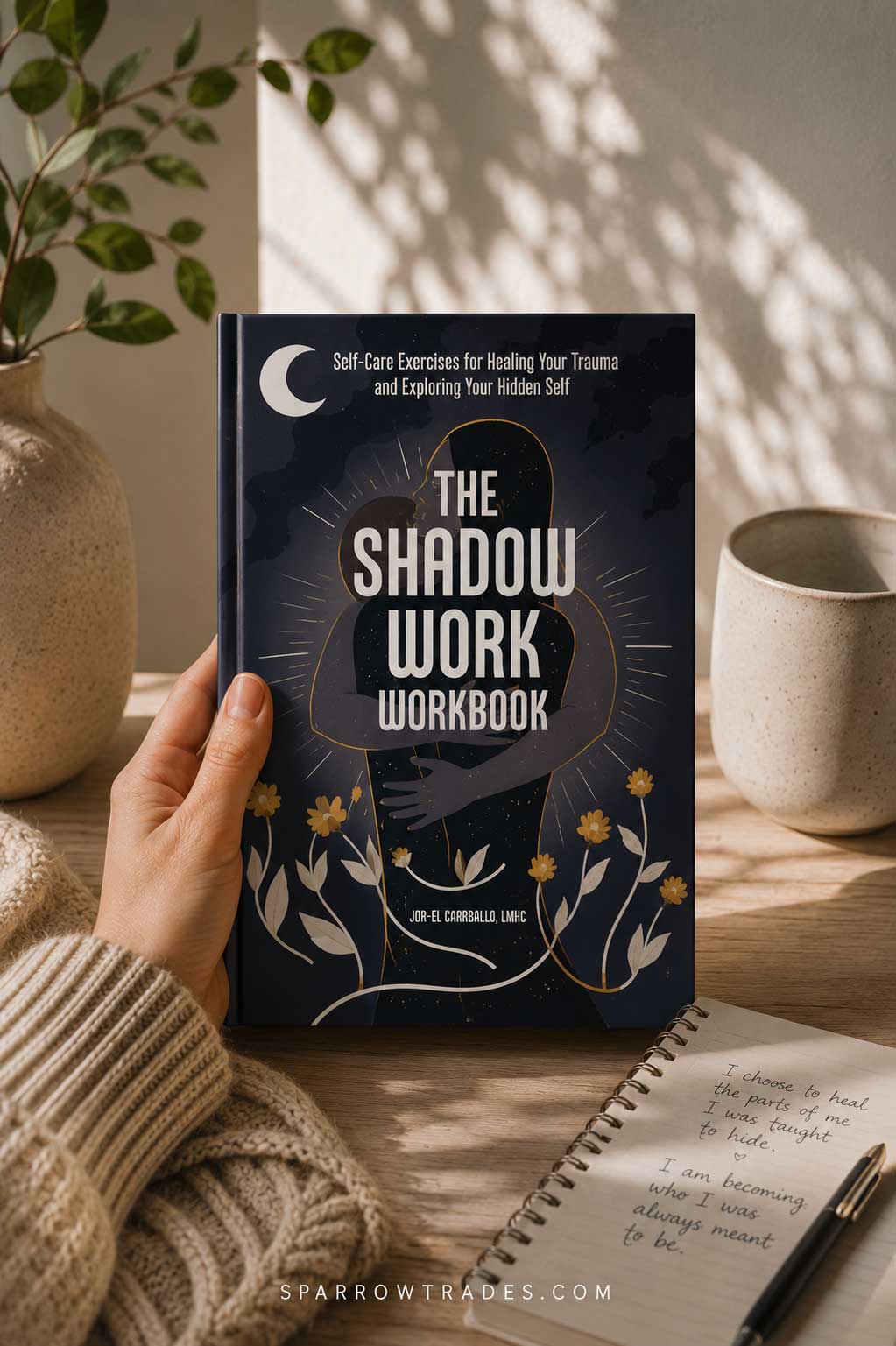
What Shadow Work Journaling Actually Looks Like in Real Life
Shadow work journaling is often much quieter than people expect.
It is not always dramatic revelations or emotional breakdowns. Sometimes it is simply noticing the same emotional pattern appearing again and again.
You may realize you apologize constantly even when you have done nothing wrong. You may notice how quickly you dismiss your own hurt. You may recognize how uncomfortable rest feels without productivity attached to it.
These moments matter because the shadow often reveals itself indirectly.
The journal becomes a place where emotional patterns can finally be observed instead of immediately acted out.
A person who struggles with emotional suppression might begin writing: “Why do I feel guilty every time I need support?”
Another might notice: “I say yes when I actually mean no because disappointing people feels unsafe.”
Over time, these small observations create emotional clarity.
Many people entering shadow work eventually realize they have spent years disconnected from learning to trust your emotions again because self-protection taught them to prioritize survival over honesty.
The journal becomes a witness.
Not a judge. Not a performance. Not proof that you are healing correctly.
Just a place where your internal world is finally allowed to exist fully.
This is why overly structured healing can sometimes feel emotionally distant. People who are deeply disconnected from themselves often do not need more emotional perfectionism. They need gentler access to truth.
That truth might sound like:
“I’m angry that no one noticed how overwhelmed I was.”
“I’m grieving the version of myself that learned to disappear.”
“I don’t know who I am outside survival.”
Those realizations can feel destabilizing at first.
But they can also become deeply liberating.
Especially for people who spent years adapting themselves emotionally in order to remain accepted.
Sometimes shadow work uncovers painful forms of what self-erasure can look like that were normalized for so long they no longer felt visible.
The journal allows those hidden emotional experiences to become conscious again.
Not all at once. Not violently. Not through forced exposure.
But gradually.
Like someone learning to speak honestly after years of emotional silence.
The Fear of Becoming “Too Much” During Emotional Honesty
One of the most common fears people experience during shadow work is the fear of becoming emotionally overwhelming.
Many people secretly worry that if they stop suppressing themselves, they will become angry, needy, dramatic, unstable, selfish, or impossible to love.
That fear usually did not appear randomly.
It often developed in environments where emotional expression was criticized, mocked, minimized, or punished.
People who were repeatedly told they were too sensitive often learn to disconnect from their emotional needs entirely. Others become hyper-independent because vulnerability once felt unsafe.
Over time, emotional suppression becomes mistaken for maturity.
But suppressing emotions is not the same thing as regulating them.
In fact, hidden emotions often intensify internally when they are consistently ignored.
This is why people sometimes feel emotionally flooded once they begin journaling honestly. It is not because they are “too emotional.” It is because emotions that have been trapped beneath survival finally have room to move.
That movement can feel frightening.
Especially for people who have spent years trying to appear emotionally composed.
Many eventually realize they have been emotionally surviving through constant self-monitoring instead of authentic self-expression.
That is why shadow work often overlaps naturally with reclaiming your voice after emotional suppression because hidden emotions are frequently connected to hidden identities.
Sometimes people discover they are not actually emotionless. They are emotionally exhausted from chronic self-censorship.
Shadow work journaling creates a safer place to explore emotions before expressing them outwardly.
That distinction matters.
You do not need to immediately explain every realization to other people. You do not need to expose your inner world before you feel ready. You do not need to become emotionally raw with unsafe people.
The journal simply becomes a place where emotional truth is no longer forced underground.
For many people, this process slowly softens the nervous system.
Especially when paired with practices like somatic self-soothing practices that help the body remain emotionally present without collapsing into overwhelm.
Because healing is not only cognitive.
The body also has to learn that honesty no longer equals danger.
When Shadow Work Brings Up Grief, Shame, or Emotional Exhaustion
There are moments during shadow work journaling where people suddenly encounter emotions they have avoided for years.
Grief. Shame. Loneliness. Fear. Anger. Humiliation. Emotional abandonment.
Sometimes these feelings emerge quietly. Sometimes they arrive all at once.
This is why shadow work should be approached gently, especially for people with trauma histories, chronic emotional invalidation, dissociation, or nervous system overwhelm.
Healing does not require emotional force.
Many people unconsciously approach self-awareness with the same harshness that wounded them in the first place. They interrogate themselves instead of listening compassionately.
But the hidden parts of you are not problems to punish.
They are often younger emotional states that never felt safe enough to exist openly.
The journal becomes important because it allows emotional experiences to unfold slowly.
- you learned to disconnect from anger because anger caused conflict
- you learned to suppress needs because needing support felt shameful
- you learned to over-function because collapse once felt dangerous
- you learned to stay emotionally guarded because vulnerability led to betrayal
These realizations can create grief.
Not only grief for what happened. But grief for who you had to become in order to survive it.
This is why many people eventually begin seeking healing after being emotionally invalidated after recognizing how deeply emotional dismissal shaped their relationship with themselves.
The difficult truth about hidden emotions is that they still affect the nervous system even when they remain unspoken.
Suppressed fear can become chronic anxiety. Suppressed anger can become numbness or resentment. Suppressed grief can become emotional detachment.
Shadow work journaling allows those internal experiences to become visible before they continue shaping your life unconsciously.
And sometimes visibility alone becomes transformative.
Because many people have never actually witnessed themselves compassionately before.
Gentle Shadow Work Questions That Invite Honesty Instead of Shame
The most healing journal prompts are usually not the most aggressive ones.
People often assume shadow work requires intense confrontation, but many nervous systems respond better to curiosity than emotional force.
Questions that create safety often uncover deeper truths than questions that demand immediate exposure.
Instead of asking, “What is wrong with me?” a gentler question might be, “What part of me learned this behavior for protection?”
That shift matters.
Because shame tends to shut emotional honesty down. Compassion creates space for honesty to emerge naturally.
Many people discover that their hidden emotional patterns make more sense once viewed through the lens of survival.
- perfectionism may have developed around fear of criticism
- emotional withdrawal may have developed around fear of conflict
- people-pleasing may have developed around fear of abandonment
- emotional numbness may have developed around overwhelm
The journal helps connect emotional reactions to emotional history.
Some gentle prompts include:
- What emotions do I judge most harshly in myself?
- When did I first learn those emotions were unsafe?
- What emotional needs do I struggle to admit openly?
- What part of myself am I trying hardest to hide?
- What would emotional honesty look like if shame were absent?
- What am I afraid would happen if people saw the real me?
These questions are not meant to produce immediate breakthroughs.
They are invitations.
And often, emotional healing happens slowly.
Especially for people whose nervous systems have spent years prioritizing protection over openness.
This is why many people pair shadow journaling with daily emotional check-in prompts or emotional regulation journaling routines so emotional awareness develops consistently instead of only during moments of crisis.
Consistency builds emotional trust.
Not perfection.
SEO-Friendly FAQs About Journaling for Shadow Work
What is shadow work journaling?
Shadow work journaling is the practice of exploring hidden emotions, suppressed experiences, emotional triggers, fears, and unconscious behavioral patterns through reflective writing. The goal is not self-judgment, but greater emotional honesty and self-awareness.
Many people use journaling to uncover emotional patterns connected to shame, people-pleasing, perfectionism, emotional numbness, or self-abandonment. Over time, this process can create deeper emotional clarity and compassion.
Is shadow work journaling emotionally intense?
It can be.
Some people experience strong emotions when they begin acknowledging feelings they have avoided for years. Others move through the process gradually and quietly.
The intensity often depends on emotional history, nervous system regulation, trauma exposure, and how much emotional suppression has existed previously.
This is why emotional pacing matters. Many people benefit from combining shadow journaling with beginner’s guide to somatic check-ins or grounding practices that help the body remain emotionally safe during reflection.
What should I write about during shadow work?
You can begin with emotional triggers, recurring relationship patterns, fears, emotional reactions, self-judgment, hidden resentment, or emotions you struggle to express openly.
Some people explore childhood emotional experiences. Others focus on present-day emotional patterns.
There is no perfect structure.
The goal is emotional honesty, not performing healing correctly.
Can shadow work help with emotional healing?
It often can.
Many people begin recognizing unconscious emotional patterns that have shaped relationships, self-worth, emotional regulation, and identity for years.
Shadow work does not erase pain instantly, but it can reduce emotional fragmentation by helping hidden emotions become conscious and acknowledged.
This process often overlaps naturally with inner child healing practices because many hidden emotional reactions formed during earlier experiences where emotional safety was limited.
Why does journaling sometimes make emotions feel stronger?
Writing honestly can temporarily increase emotional awareness.
People who have spent years suppressing emotions may suddenly notice grief, anger, loneliness, fear, or exhaustion more clearly once those feelings are acknowledged consciously.
This does not necessarily mean healing is going wrong.
Often, emotions feel stronger because they are finally being witnessed instead of avoided.
That is why emotional support practices matter during shadow work.
Some people find comfort in grounding journaling during anxiety spikes when emotional processing begins to feel overwhelming.
How do I know if shadow work is helping?
Healing usually appears gradually.
You may notice greater emotional honesty, less emotional self-abandonment, improved self-awareness, reduced shame around emotions, stronger emotional boundaries, deeper emotional clarity, and less fear around vulnerability.
Many people eventually realize they are becoming more emotionally present with themselves instead of constantly performing stability.
That shift can become the beginning of genuine internal trust.
Returning to the Parts of Yourself You Were Never Meant to Abandon
Shadow work journaling is not about becoming someone entirely new.
In many ways, it is about becoming less emotionally divided.
The hidden parts of you are often carrying emotions that once felt too unsafe, inconvenient, vulnerable, or painful to express openly.
But hidden emotions do not disappear simply because they remain unspoken.
They continue shaping relationships. They influence nervous system responses. They affect emotional boundaries, self-worth, trust, intimacy, and identity.
Eventually, many people grow exhausted from carrying an internal life that feels fragmented.
They become tired of pretending. Tired of emotional suppression. Tired of surviving through disconnection.
That exhaustion is often what leads people back toward themselves.
Not through perfection. Not through spiritual performance. Not through forcing emotional breakthroughs.
But through gentler honesty.
One truthful sentence in a journal can sometimes create more healing than years of emotional avoidance.
Especially when that sentence allows something hidden to finally exist openly.
Many people who begin shadow work are not actually searching for darkness.
They are searching for wholeness.
And wholeness requires making room for the parts of yourself that survival once taught you to hide.
That process can feel vulnerable.
But it can also become profoundly relieving.
Because eventually, healing stops feeling like becoming better at suppressing yourself.
And starts feeling like becoming safe enough to finally tell the truth.

Where softness, self-awareness, and emotional healing are allowed to coexist. Through reflective writing, grounding rituals, and intentional beauty, Sparrow Trades offers gentle support for sensitive souls learning to reconnect with themselves.