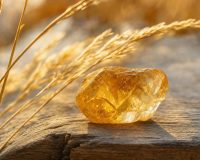
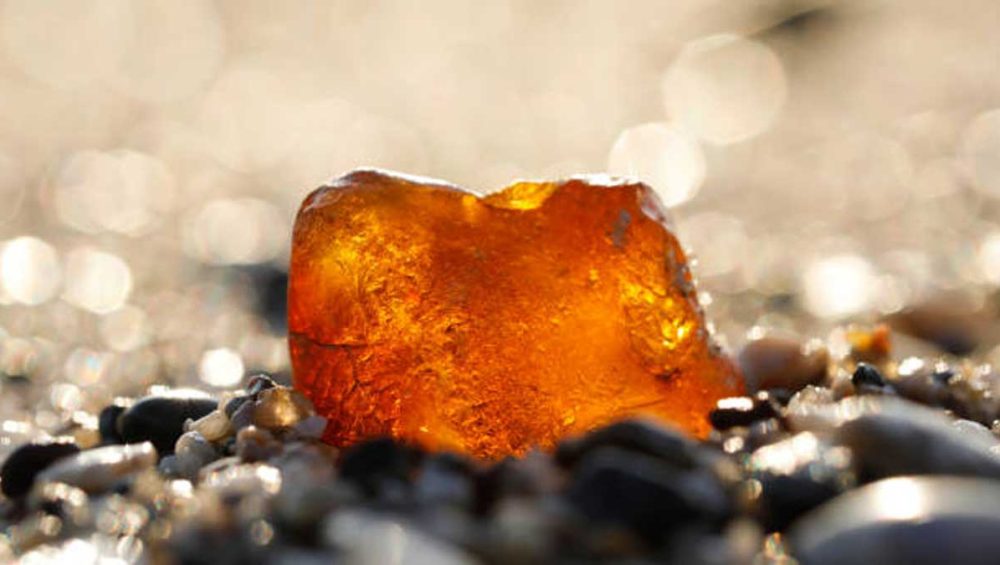
Amber tends to stir something immediate and wordless in people. Even before you know what it is, it can feel warm, preserved, almost tender in the way it holds light. Some stones feel sharp, cooling, or clarifying. Amber often feels different. It carries a soft glow that many people instinctively read as comforting, as if it belongs to memory, sunlight, and old earth all at once.
That emotional response matters, because the question “what is amber?” is not only scientific. It is also relational. People are often drawn to amber during seasons when they want steadiness without heaviness, warmth without intensity, and beauty that feels grounded rather than performative. In a world that can leave the nervous system overstimulated, amber often speaks through gentleness first. It does not usually arrive like a dramatic wake-up call. It tends to arrive like recognition.
In the language of gemstone meanings, amber occupies a unique place because it is not a mineral crystal in the usual sense. Amber is fossilized tree resin that hardened and transformed over millions of years. That means it began as something fluid and protective, something that once moved through living trees, before time turned it into an organic treasure. For many people, that origin story is part of its emotional power. Amber is not just beautiful. It is a record of preservation.
That sense of preservation is one reason amber is often welcomed into crystal healing spaces, even by people who are cautious about spiritual language. You do not have to believe everything said about energy work to understand why a material formed through time, pressure, and protection might feel meaningful. Its symbolism is naturally regulating. It suggests that what is soft is not weak, that what is old is not lifeless, and that something can hold history without being trapped by it.
Amber also bridges emotional and aesthetic experience in a way that feels especially natural for Sparrow Trades. It can belong to ritual, reflection, adornment, or simple appreciation. It can sit beside gemstone jewelry when someone is choosing support for a season of change, and it can just as easily belong in a quiet corner of the home where beauty itself feels stabilizing.
So if you have ever felt drawn to amber without fully knowing why, that response makes sense. Amber often meets people where they are. It offers warmth, memory, and a kind of ancient reassurance. To understand it more fully, it helps to begin with the simplest truth: amber is a piece of living history that became something you can hold.
What Amber Is and Why It Feels So Different
Amber is fossilized tree resin, not sap, and not a traditional gemstone formed inside the earth through mineral crystallization. That distinction matters, because it explains why amber looks and feels different from stones like quartz, amethyst, or citrine. Resin once flowed from ancient trees as a protective substance. Over immense stretches of time, that resin hardened, changed chemically, and became the amber we recognize today.
This origin gives amber an unusual emotional texture. Many stones are associated with strength because they feel dense, cool, and solid. Amber often feels warm, light, and almost intimate by comparison. Even when you are approaching it through geology rather than spirituality, amber carries the impression of something once-living that has been carefully kept by time. That alone can make it feel more personal than other materials.
It also helps explain why people sometimes ask whether amber is “really” a crystal. In everyday spiritual and jewelry conversations, it is often grouped with crystals because it is used in the same practical and symbolic ways. Within a broader crystal healing guide, amber still belongs naturally because people turn to it for grounding, calm, protection, and emotional warmth. Technically, though, its organic origin sets it apart.
That is part of its beauty. Amber does not need to fit perfectly into a rigid category to matter. Its identity is already clear: it is preserved resin, shaped by time, carrying traces of the natural world in a way few other materials can. Sometimes it even contains inclusions such as plant matter or insects, which only deepen the sense that amber is less like a polished object and more like a memory that became visible.
For people moving through emotionally demanding seasons, that symbolism can land deeply. Amber embodies the idea that what once protected life can continue protecting in another form. It can feel reassuring to hold something that suggests continuity rather than rupture, warmth rather than sharpness. This is one reason amber is often chosen by people who want steadiness without the dense, heavy feel of darker grounding stones. It sits comfortably beside practices like grounding with crystals daily practices because its energy is often described as earthy, stabilizing, and softly restorative.
Amber Meaning, History, and Emotional Symbolism
Amber has been valued for thousands of years across cultures for ornament, trade, spiritual protection, and healing symbolism. It has traveled through burial sites, prayer objects, amulets, family heirlooms, and jewelry traditions, which gives it a layered human history beyond its geological one. People have long treated amber as something more than decorative. They have treated it as carrying life, memory, and blessing.
Its meaning often centers on warmth, vitality, preservation, and protection. If some stones feel like they clear the air, amber often feels like it softens the body’s relationship to that air. It can suggest safety without sedation, which is part of why people who are easily overwhelmed may feel drawn to it. There is a subtle emotional logic to amber: it does not push. It accompanies.
This makes amber meaning a natural subtopic rather than a separate marketing angle. People are not only asking what amber is in a literal sense. They are often asking what it represents when it keeps appearing in their awareness. Amber’s symbolism tends to resonate during times when someone is rebuilding trust with their own pace, reconnecting with hope after burnout, or seeking beauty that does not feel flashy or demanding.
Historically, amber has also been linked with sunlight and life force. Its gold, honey, and cognac tones can carry associations of warmth, renewal, and gentle confidence. That symbolism can overlap with articles on best grounding gemstones because amber grounds without feeling emotionally cold. It supports the idea that grounding can be warm and alive, not only dark, heavy, or austere.
There is also tenderness in amber’s age. Holding amber can evoke the reality that time changes everything, but not all change is loss. Some change is preservation in another form. For readers who have lived through stress, grief, emotional confusion, or long periods of self-protection, that symbolism can feel deeply regulating. Amber does not erase history. It holds it without panic. That is part of why its meaning can feel so steadying.
Amber Healing Properties and Everyday Support
When people speak about amber healing properties, they often describe amber as supportive for warmth, protection, confidence, and emotional balance. In nervous-system-aware language, that can be understood as amber’s tendency to feel containing rather than activating. It is often chosen by people who want energetic support without intensity.
Amber is commonly associated with the solar plexus and sacral areas because of its color, vitality, and relationship to warmth. Symbolically, that links it with self-trust, creative flow, and gentle life force. Emotionally, amber can feel helpful when someone has become disconnected from pleasure, spontaneity, or inner steadiness after long periods of stress. It does not necessarily feel like a dramatic “breakthrough” stone. It feels more like a quiet return.
That is one reason amber can belong in daily rituals with crystals rather than only in ceremonial or highly spiritual settings. You might keep a piece nearby while journaling, wear it during a transition-heavy season, or hold it while breathing through a moment of overstimulation. Its presence often supports the body’s sense that softness and steadiness can coexist.
Amber also pairs naturally with quieter forms of reflection, including crystals for meditation, especially for people who find meditation easier when it feels warm and sensory rather than abstract. Some stones sharpen attention. Amber tends to soften resistance first. That can matter when the goal is not performance, but reconnection.
If you are working intuitively, amber uses may include carrying amber for emotional comfort, wearing it for energetic protection, placing it in a calming space, or using it as a tactile reminder to slow down. None of that needs to be approached rigidly. The deeper value lies in what amber helps you remember: that regulation can feel warm, that healing can be gradual, and that ancient things sometimes help us feel less hurried in a modern world.
Amber Jewelry and the Meaning of Wearing It
Amber translates beautifully into jewelry because its emotional tone already feels close to the body. Some materials are admired from a distance. Amber often feels best when worn, touched, or kept near the skin, where its warmth and glow can become part of daily life.
In the language of protective jewelry meaning, amber jewelry often carries a softer form of protection. It does not usually signal defense in a hard or guarded way. Instead, it can symbolize warmth, preservation, vitality, and the right to stay connected to yourself in overstimulating environments. For people who dislike wearing pieces that feel severe, amber can offer emotional shelter without emotional armor.
Jewelry also changes how amber is experienced. A stone on a shelf can be symbolic, but amber worn as a necklace or bracelet becomes rhythmic. It moves through the day with you. It catches light when you are tired. It gives the hands something to return to. In that way, amber jewelry can function almost like a private grounding cue, especially for people who feel soothed by texture, warmth, and visual softness.
Caring for Amber with Gentleness
Because amber is organic and softer than many stones, it benefits from care that matches its nature. This is less about perfection and more about relationship. When something has survived millions of years yet still requires gentleness in your hands, that can become its own kind of teaching. Strength and delicacy are not opposites.
Amber should generally be treated more carefully than harder crystals. It can scratch, cloud, or react poorly to harsh chemicals and excessive heat. That makes softer care practices the right fit. In a broader sense, this aligns beautifully with how often to cleanse crystals, because not every material wants frequent or forceful cleansing. Some forms of care are better when they are less intrusive.
For amber, crystal cleansing without water can be especially relevant, since gentle smoke-free intention, moonlight, soft cloth care, rest, or simple pauses in use may feel more appropriate than exposing it to strong cleansing methods. Amber tends to invite a slower, more respectful approach.
That slower approach also connects with resting crystals intentionally and signs your crystal needs rest. Even if you understand those ideas symbolically rather than literally, they encourage a healthier way of relating to meaningful objects. You do not have to extract constant usefulness from everything you love. Sometimes care means letting something simply be.
If you are building a quieter relationship with your collection overall, amber can also sit naturally within crystals for grounding rather than purely aesthetic categories. Its care becomes part of its message. Amber responds best to gentleness, patience, and warmth, and for many people, those are exactly the qualities they are trying to welcome back into their own lives.
FAQ: What People Often Ask About Amber
Is amber a real gemstone?
Amber is real, but technically it is not a mineral gemstone. It is fossilized tree resin. In jewelry and spiritual spaces, it is often grouped with gemstones and crystals because people use it in similar ways. That classification difference does not make amber less meaningful or less valuable. It simply reflects its organic origin.
Is amber a crystal or a resin?
Amber began as resin and became fossilized over immense time. So it is more accurate to call it fossilized resin than a crystal. Still, many people include it in crystal collections because it is used in personal ritual, adornment, and energy work alongside traditional stones. If you are comparing materials, an article like amber vs copal becomes especially helpful, because copal is younger resin and not fully fossilized in the same way.
What does amber symbolize spiritually?
Amber is often associated with warmth, preservation, protection, vitality, and ancient wisdom. Spiritually, it can feel like a reminder that life can change form without losing meaning. Many people are drawn to amber during seasons when they want emotional steadiness, renewed hope, or a sense of being held by something older and calmer than the pace of everyday life.
What chakra is amber associated with?
Amber is commonly linked with the solar plexus and sacral areas because of its golden-orange tones and its association with vitality, warmth, and gentle confidence. In practice, though, many people experience it more simply as a regulating presence. It can support embodiment, self-trust, and a softer connection to personal energy rather than forcing intense activation.
Can you wear amber every day?
Yes, many people wear amber daily, especially when they want jewelry that feels warm, natural, and emotionally comforting. Everyday wear can make amber feel more relational and less ceremonial. Because it is softer than many stones, it helps to wear it with some care and avoid rough handling, harsh products, or excessive heat. Its beauty tends to deepen when it is treated gently.
How do you use amber in everyday life?
Amber can be worn as jewelry, held during reflection, kept near a restful space, or included in gentle ritual. Some people choose it during transitions when they want support that feels warm rather than intense. Others simply keep it nearby because its color and history feel reassuring. In that sense, amber fits naturally among grounding jewelry meaning and low-pressure forms of care that help the body feel less rushed.
Conclusion
Amber is easy to underestimate if you only look at it as a pretty object. But the deeper answer to “what is amber?” is far richer than appearance. Amber is fossilized resin, preserved across unimaginable time, carrying the memory of protection into a form that can still be held, worn, and cherished now. That alone gives it a different emotional quality from many other stones.
Its appeal is not only visual. Amber often reaches people through feeling first. It can suggest warmth without urgency, grounding without heaviness, and beauty without performance. For readers who are tired, overstimulated, emotionally stretched, or simply craving something gentler, amber’s presence can feel like permission to soften without losing strength.
That is why amber belongs so naturally in conversations about benefits of healing crystals, jewelry with meaning, and slower forms of ritual. It honors the reality that support does not always need to be dramatic to be real. Sometimes what helps most is what glows quietly, stays close, and reminds you that preservation is also a form of transformation.
If amber keeps calling your attention, it may be because some part of you recognizes that tone. Ancient, warm, patient, alive. Not rushed. Not hard. Just steady enough to hold the light.

Where softness, self-awareness, and emotional healing are allowed to coexist. Through reflective writing, grounding rituals, and intentional beauty, Sparrow Trades offers gentle support for sensitive souls learning to reconnect with themselves.