
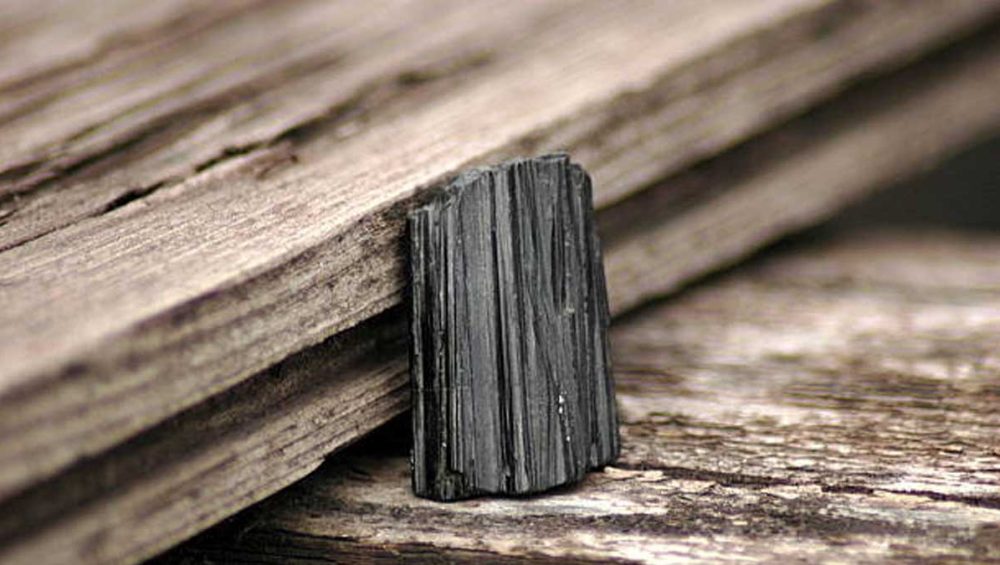
Some stones feel decorative. Others feel like companions. Black tourmaline belongs firmly in the second category.
People rarely come to this stone out of curiosity alone. More often, they arrive at it after a season of feeling too porous for the world they live in—after emotional overload, burnout, hypervigilance, or the quiet realization that their nervous system never fully gets to rest. There’s usually a backstory. Years of absorbing other people’s moods. Living in constant alertness. Trying to stay calm in environments that don’t feel safe. Or carrying the kind of invisible pressure that builds when you’ve learned to keep functioning no matter what your body is saying.
The meaning of black tourmaline isn’t flashy or aspirational. It doesn’t promise a new personality, a new life, or an overnight spiritual upgrade. Instead, its presence points to something far more basic and far more human: safety. Stability. The ability to remain yourself in a world that often asks you to fragment.
At its core, black tourmaline is associated with grounding and protection—but not in a rigid, combative way. Its energy is often described as steady rather than forceful, absorbing rather than projecting. For many people, that subtlety matters. Especially for those whose nervous systems have learned to brace instead of soften, or whose bodies interpret “intensity” as danger even when the mind says everything is fine.
Understanding black tourmaline crystal meaning requires looking beyond surface-level symbolism and into lived experience. This stone tends to show up when emotional boundaries feel thin, when external stressors accumulate faster than the body can process them, or when the instinct to “stay strong” has been running for too long. Sometimes it shows up when you’re trying to stop spiraling and you don’t know what to hold onto. Sometimes it shows up when you’re tired of feeling like the world is louder than your own inner voice.
In that sense, black tourmaline often becomes a bridge—between awareness and embodiment, between insight and felt safety. It’s tied not only to energetic protection, but to the deeper work of staying present without being overwhelmed. Many people start by learning more about the stone itself, because naming the thing you’re reaching for can be a form of relief: the moment you realize you’re not “too much,” you’re simply overloaded. If you’re new to the basics, beginning with a clearer understanding of black tourmaline can help you locate the stone’s meaning in something tangible rather than purely abstract.
What follows isn’t a prescription or a ritual script. It’s an exploration of meaning—how black tourmaline supports grounding, how it interacts with the nervous system, and why it resonates so deeply with people navigating emotional intensity, sensitivity, or recovery. This is the kind of meaning you don’t memorize. It’s the kind of meaning you feel over time.
The Deeper Meaning of Black Tourmaline
Black tourmaline is often described as a grounding stone, but grounding itself is frequently misunderstood. It isn’t about suppressing emotion or “toughening up.” It isn’t about bypassing your sensitivity. Real grounding is the opposite of that. It’s about staying connected to the body while remaining present with experience—so you can feel what you feel without losing yourself to it.
At an energetic level, black tourmaline is associated with drawing excess stimulation downward—out of the mind and into the body. Emotionally, this can translate into a sense of containment. Thoughts slow. The body feels heavier in a supportive way. There’s less urgency to react. Less compulsion to fix, explain, or brace. And for many people, that shift is the beginning of steadiness.
This is why black tourmaline’s symbolism often centers on protection—not as a shield against life, but as a stabilizing influence within it. The meaning isn’t “nothing can touch you.” It’s “you can stay intact when life touches you.” That difference matters. Especially if you’ve spent years feeling like the world gets inside you too easily.
For readers who want the broader spiritual and emotional lens, it can also be grounding to connect this article to the larger meaning hub of black tourmaline meaning without turning the experience into a checklist. Sometimes it’s enough to name what you’re sensing: that this stone carries a quiet, stabilizing presence that doesn’t demand anything from you.
From a symbolic standpoint, black tourmaline represents boundaries that don’t require constant effort. It’s often associated with the ability to remain present in emotionally charged spaces without absorbing what doesn’t belong to you. Many people don’t want to be less caring. They just want to stop paying for caring with their health.
Rather than amplifying energy, black tourmaline stabilizes it. Rather than elevating consciousness, it anchors awareness in the body. It doesn’t ask you to become someone else. It helps you return to yourself.
Grounding as a Nervous System Experience
To understand why black tourmaline resonates so strongly with certain people, it helps to think of grounding as a nervous system experience—not a mental exercise.
When the nervous system is overwhelmed, the body often lives in a state of low-grade threat response. Muscles stay tense. Breathing becomes shallow. Awareness narrows. Your mind becomes a problem-solving machine that never powers down. Over time, this can feel normal—even when it’s exhausting. And when you’re used to operating like that, the idea of “relaxing” can feel unrealistic or even unsafe.
Grounding works by re-establishing a sense of physical safety. It brings attention back into the body in a way that feels supportive rather than invasive. It’s not about forcing calm. It’s about creating enough steadiness that your system can stop scanning for danger. Many people start this journey by learning what grounding looks like in daily life—not as a performance, but as a state of being.
Black tourmaline’s meaning intersects here because it supports the felt sense of being anchored. For some, that anchoring is subtle: a slowing of internal urgency, a little more space in the chest, a steadier breath. For others, the shift is more obvious: less emotional spillover, fewer “why am I crying?” moments, fewer nights spent buzzing with stress long after the day is over.
Because grounding is so deeply physical, many people pair the stone with gentle regulation supports like vagus nerve exercises or small nervous-system resets that don’t overwhelm the body. Black tourmaline doesn’t replace these practices—it often makes them feel more accessible by reducing the sense of internal chaos that can make even simple self-care feel impossible.
If you want to explore grounding through a more emotional lens, the framework of emotional grounding can help you understand why a stone like this feels different than “positive thinking.” Emotional grounding isn’t about becoming unbothered. It’s about building a safe enough internal container that your emotions can move without flooding you.
Black Tourmaline as Protection Without Armor
Protection is often misunderstood as something rigid or impermeable. But emotional protection that relies on constant vigilance tends to backfire. It can lead to exhaustion, numbness, or shutdown. And if you’ve been living in that cycle—hyper-aware, hyper-responsible, always bracing—then “protection” can start to feel like just another word for burnout.
Black tourmaline’s meaning offers a different kind of protection: protection that feels grounded rather than guarded. Instead of blocking life, it helps filter life. Instead of hardening you, it supports you. It’s the difference between a wall and a rooted tree. A wall cracks under pressure. A rooted tree bends, but stays anchored.
This distinction is especially meaningful for people who identify as empathic or emotionally sensitive. Many resonate with how the stone supports black tourmaline for empaths because it reinforces energetic boundaries without demanding emotional shutdown. The goal isn’t to feel nothing. The goal is to feel what’s yours and let the rest pass through.
In modern life, overload doesn’t only come from relationships. It comes from screens, noise, constant information, constant urgency. It’s why some people explore the stone through the lens of black tourmaline for emf protection—not as a technical guarantee, but as a grounding counterbalance to constant stimulation.
If you’re looking for a more direct protection-oriented context, the supportive hub on black tourmaline for protection can clarify how protection is often experienced emotionally: not as a dramatic shield, but as a quieter sense of “I’m still here, and I’m still myself.”
That is the heart of black tourmaline’s protective meaning. It doesn’t promise that life will stop being intense. It helps you meet intensity with steadiness.
Benefits, Chakras, and Rooted Safety
Black tourmaline is often associated with the root chakra—the center connected to safety, survival, and belonging. But this association isn’t abstract. It maps closely onto how the body experiences stability. When that root sense of safety is compromised, people may feel unmoored, anxious, or constantly scanning for threat. Even good days can feel like they require effort.
Black tourmaline’s grounding energy supports re-establishing contact with the body and environment. For some, it helps slow racing thoughts. For others, it helps reduce emotional “leakage,” the feeling that everything gets inside you and sticks. And for many, it simply provides a steady presence that makes it easier to remember what calm feels like.
If you’re exploring how people describe the stone’s real-world impact, the overview of black tourmaline benefits can help you see how meaning becomes lived experience—how symbolism shows up in the body as steadiness, stability, and decreased overwhelm.
For readers who connect more directly to chakra language, grounding can also be explored through black tourmaline chakras in a way that keeps the focus on safety rather than spiritual pressure. Chakras are not a test you pass. They’re a language for noticing where you feel supported and where you feel strained.
Because trauma and long-term stress can make the body feel unsafe even in safe places, some people need an approach that is gentle, paced, and consent-based. That’s why trauma-informed frameworks matter. When you want grounding that doesn’t overwhelm you, leaning into trauma-informed grounding practices can support a more compassionate relationship with your own body signals.
How Black Tourmaline Supports Grounding in Daily Life
Black tourmaline’s meaning becomes most real in the moments when your body starts to drift—when you can feel yourself getting overstimulated, emotionally flooded, or pulled into a reaction you’ve repeated a thousand times. Meaning, here, is not philosophical. It’s practical. It’s the moment you notice your shoulders creeping up, your breath shortening, your mind speeding up, and you choose a steadier path.
Many people connect with the stone through a grounding-focused lens, especially if they’ve been craving stability in the middle of stress. If you want that specific emotional framing—safe, steady, protected—the page on black tourmaline for grounding fits naturally into the meaning conversation without shifting into a rigid “how-to.”
Grounding is also easier when you feel supported by a wider ecosystem of calming tools. Some people pair black tourmaline with other stones and find it helpful to explore crystals for grounding as a broader category—especially if their nervous system needs multiple anchors throughout the day, not just one.
And sometimes what you need isn’t more information—it’s emotional safety. When you’re trying to feel steady during a hard season, gentle supports like grounding rituals for emotional safety can offer a quiet structure that doesn’t feel demanding. The point isn’t to perfect a ritual. It’s to give your body a signal that it’s allowed to settle.
If you’re also building practical regulation skills alongside spiritual supports, returning to nervous system regulation techniques can help you keep the stone’s meaning connected to lived nervous-system reality: steadiness is something your body learns, not something your mind forces.
Care, Cleansing, and the Meaning of Maintenance
For many people, the meaning of black tourmaline includes the idea of “holding.” Holding space. Holding steadiness. Holding boundaries. And when you carry that symbolism long enough, it’s natural to wonder about maintenance—not in a superstitious way, but in a relational way. If this stone has become part of your emotional ecosystem, then caring for it can feel like caring for your own capacity.
Some people keep black tourmaline in a consistent place: near a workspace, by a doorway, beside a bed. Others move it with them, letting it function as a sensory anchor. Either way, there’s a quiet kindness in checking in: does this still feel supportive? Do I need to rest it? Do I need to cleanse it? Not because you “have to,” but because relationships—especially healing relationships—benefit from attention.
If you prefer a simple, safety-first approach, the guidance on how to cleanse black tourmaline supports the emotional tone of this article without turning the experience into a rigid checklist. Cleansing, at its best, isn’t about fear. It’s about restoration.
And sometimes, the most meaningful part is the pause itself: the moment you stop pushing through and choose to tend to what’s carrying you. In that way, maintenance becomes part of the meaning.
Everyday Relationship With Black Tourmaline
For some, black tourmaline exists as a stone on a desk or by the bed. For others, it becomes something worn close to the body. When incorporated thoughtfully, wearing black tourmaline can reinforce a sense of steady presence throughout the day—especially if your stress tends to rise in predictable places: crowded rooms, difficult conversations, bright screens, long commutes, emotionally charged family dynamics.
This is where meaning intersects with form. Jewelry isn’t inherently symbolic—it becomes meaningful through relationship. If wearing the stone helps you feel steady in the body, it can be natural to browse black tourmaline jewelry not as decoration, but as a tactile reminder of grounding that moves with you.
The physical weight of the stone, its contact with the skin, and its visibility can all reinforce emotional anchoring. This doesn’t make the stone a solution—but it can support awareness when stress begins to rise. Sometimes the reminder is enough: breathe, soften your jaw, feel your feet, come back.
For others, the relationship remains purely personal and non-wearable. The meaning of black tourmaline adapts to the role it plays in someone’s life, whether as a quiet presence or a daily companion. It’s less about how you use it and more about what it helps you remember: you’re allowed to be here without bracing.
Common Questions About Black Tourmaline
Does black tourmaline absorb negative energy?
Black tourmaline is often associated with absorbing excess or disruptive energy, especially in emotionally intense or overstimulating environments. Many people experience this as a sense of containment rather than the disappearance of emotion.
What does black tourmaline symbolize emotionally?
Emotionally, black tourmaline is commonly linked with safety, steadiness, and healthy boundaries. Its symbolism tends to center on staying present without becoming overwhelmed.
Is black tourmaline good for anxiety?
Black tourmaline is not a medical treatment, but many people find it supportive during anxious seasons because of its grounding presence and its connection to emotional stability.
How does black tourmaline support grounding?
Many people describe black tourmaline as supportive for grounding because it reinforces awareness of the body, the environment, and the present moment—elements that can help the nervous system feel safer.
Can black tourmaline help with emotional boundaries?
Black tourmaline is often used as a symbol of energetic and emotional boundaries. People who feel emotionally porous sometimes find it supportive as a reminder to stay connected to themselves while interacting with others.
Does black tourmaline need cleansing?
Some people choose to cleanse black tourmaline periodically, especially if they use it as a grounding or protective companion. Cleansing can be approached as gentle maintenance rather than a strict requirement.
Conclusion
Black tourmaline crystal meaning isn’t about power or transformation. It’s about steadiness. It’s about the quiet work of staying connected to yourself in a world that often pulls attention outward.
For people who live with emotional intensity, sensitivity, or chronic stress, this stone often appears as an ally rather than a solution. Its presence supports grounding, emotional protection, and nervous system awareness—without demanding effort or performance.
Over time, the meaning of black tourmaline can deepen—not because the stone changes, but because your relationship with safety changes. It becomes a reminder that steadiness is allowed. That boundaries can be gentle. That you don’t have to armor your heart to stay intact.
In that way, black tourmaline reflects a broader truth: safety isn’t something we achieve once and then keep forever. It’s something we practice, slowly and compassionately, until the body begins to believe it again.
And when you reach for grounding—whether through breath, boundaries, or a stone that feels like quiet stability—you’re not being dramatic. You’re honoring your nervous system. You’re choosing the kind of life where you don’t have to disappear to survive it.