There are seasons in life when finding the right words feels harder than finding the right answers. You may know something feels unsettled inside, yet struggle to explain it—even to yourself. During these moments, many people are drawn toward symbols, rituals, and meaningful objects that encourage reflection rather than certainty. Lapis lazuli has long been one of those stones.
Known for its rich royal-blue color and shimmering flecks of pyrite, lapis lazuli has been treasured across cultures for thousands of years. Ancient civilizations associated it with wisdom, truth, insight, and honest communication. While these traditions are meaningful to many people, it is important to remember that their spiritual and emotional associations are rooted in cultural and historical beliefs rather than established scientific evidence.
Today, lapis lazuli continues to resonate with people who are seeking greater emotional clarity, deeper self-awareness, or the courage to express what they have been holding inside. For some, simply carrying or wearing the stone becomes a quiet reminder to pause before reacting, listen inwardly, and approach difficult conversations with greater intention.
If you are exploring emotional wellness, you may notice that meaningful objects sometimes become gentle companions during periods of growth. They do not change our emotions for us, but they can help anchor habits like mindfulness, journaling, meditation, or honest self-reflection. Many people find that intentional rituals create small moments of steadiness during emotionally complex seasons.
Among the many gemstones for emotional wellness, lapis lazuli is often associated with truth, communication, and inner wisdom. Rather than promising transformation, it invites curiosity—encouraging us to ask thoughtful questions, notice our emotional patterns, and become more aware of the stories we tell ourselves.
Whether you are new to gemstones or already enjoy incorporating crystals into reflective practices, this guide explores the symbolism of lapis lazuli, its traditional emotional associations, and gentle ways people choose to include it in everyday routines. The goal is not to tell you what to believe, but to offer a compassionate place to begin if this beautiful blue stone feels meaningful during your current season of life.
What Lapis Lazuli Traditionally Represents
Lapis lazuli has fascinated people for more than 6,000 years. Mined in what is now Afghanistan and treasured by civilizations including the Egyptians, Greeks, Romans, and Mesopotamians, it has long symbolized wisdom, truth, insight, and personal integrity. The stone’s striking ultramarine blue, often speckled with golden pyrite, naturally drew associations with the night sky, inspiring stories about higher understanding and spiritual awareness.
Today, many people continue to appreciate these traditional meanings, even if they approach crystal symbolism from a personal rather than spiritual perspective. Whether viewed as a meaningful reminder or simply admired for its beauty, lapis lazuli often represents qualities that support intentional emotional growth.
People commonly associate lapis lazuli with:
- Honest communication
- Emotional clarity
- Inner wisdom
- Self-awareness
- Authentic self-expression
- Thoughtful decision-making
- Reflection before reacting
Unlike gemstones that are often connected with comfort or emotional soothing, lapis lazuli carries a reputation for encouraging honesty—even when that honesty feels uncomfortable. Sometimes emotional wellness begins not with feeling better immediately, but with becoming willing to acknowledge what is already true.
If you are just beginning your journey with this gemstone, learning more about lapis lazuli can provide additional historical context, geological background, and symbolism that complements its role in emotional wellness.
Lapis Lazuli and Emotional Wellness
Emotional wellness is not about avoiding difficult emotions. Instead, it involves developing the ability to recognize, understand, and respond to them with greater awareness and compassion.
Many people are drawn to lapis lazuli because its traditional symbolism naturally aligns with several practices that nurture emotional wellness. While no crystal has been scientifically proven to change emotional states, meaningful rituals and intentional reminders can support habits that help people slow down, reflect, and reconnect with themselves.
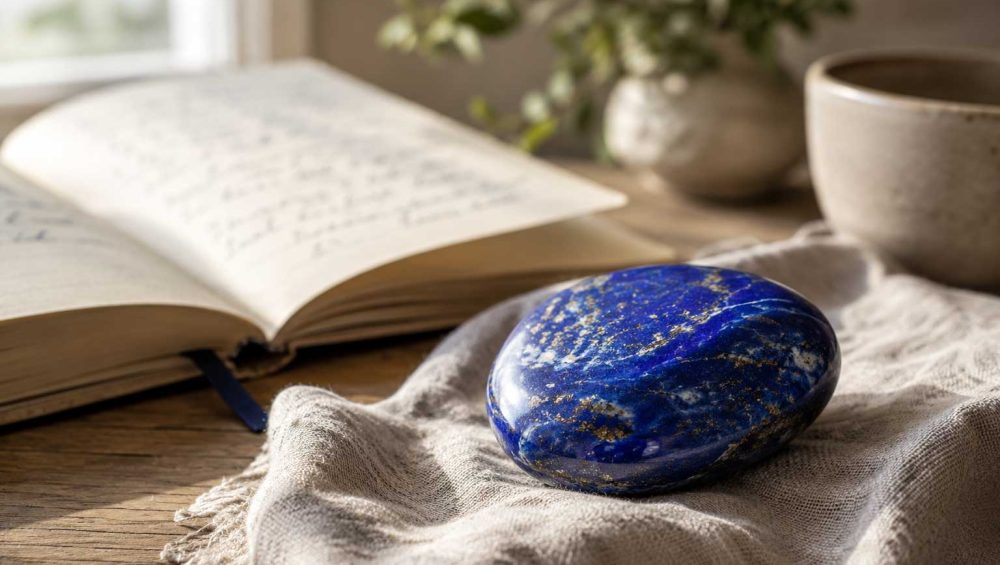
For example, someone navigating a challenging conversation may keep lapis lazuli nearby as a personal reminder to speak thoughtfully instead of reacting impulsively. Another person may place the stone beside a journal to encourage honest writing without self-judgment. Others simply enjoy wearing lapis lazuli jewelry because it reminds them to stay connected to their values throughout the day.
These quiet rituals work not because the stone itself changes emotions, but because intention often shapes attention. Objects that carry personal meaning can gently interrupt automatic habits and invite us back into the present moment.
If you are exploring healing for emotional wellness, lapis lazuli may feel less like a solution and more like a companion—one that encourages curiosity, reflection, and authenticity as you navigate your own experiences.
Over time, many people discover that emotional clarity grows through consistent practices rather than dramatic breakthroughs. A few mindful minutes spent noticing your thoughts, writing honestly, or sitting quietly with your emotions can become powerful acts of self-care. Lapis lazuli simply offers a tangible symbol that many people choose to include in those moments.
Its greatest value may not lie in changing who you are, but in gently reminding you to return to yourself with openness, honesty, and compassion.
Honest Communication Begins with Yourself
One of the qualities most often associated with lapis lazuli is honest communication. While this is frequently described in terms of conversations with others, meaningful communication almost always begins within ourselves.
It is surprisingly common to know that something feels “off” without being able to explain why. We may dismiss uncomfortable emotions, talk ourselves out of our instincts, or avoid difficult truths because acknowledging them feels overwhelming. Over time, this disconnect can make it harder to understand what we truly need.
Many people use lapis lazuli as a visual reminder to pause before speaking or making important decisions. Holding the stone during journaling, meditation, or quiet reflection can become part of a ritual that encourages thoughtful self-inquiry rather than immediate answers.
You might gently ask yourself:
- What emotion am I trying not to feel?
- What truth have I been avoiding?
- What would honesty sound like if I spoke with kindness?
- What do I need instead of what I think I should need?
Questions like these do not always produce immediate clarity, but they create space for greater self-awareness over time.
If you are working to strengthen your relationship with your own thoughts and emotions, self-awareness for emotional wellness offers another meaningful place to continue exploring this inner work.
Lapis Lazuli, the Throat Chakra, and the Third Eye Chakra
Within many spiritual traditions, lapis lazuli is closely connected with both the throat chakra and the third eye chakra. These associations come from historical and contemporary spiritual practices rather than scientific evidence, but many people find the symbolism personally meaningful.
The throat chakra is traditionally associated with communication, authenticity, and expressing thoughts with honesty and compassion. When people feel unable to speak their truth—or frequently silence themselves to avoid conflict—they may be drawn toward practices centered around this energy center.
The third eye chakra, meanwhile, is commonly linked with intuition, wisdom, perception, and inner insight. Rather than focusing only on external answers, it encourages turning inward with curiosity and openness.
Because lapis lazuli is connected with both of these symbolic centers, many people see it as representing the relationship between understanding ourselves and expressing that understanding honestly. Insight without communication often remains hidden, while communication without reflection can feel reactive or disconnected. Together, these qualities create a balanced approach to emotional wellness.
If these traditions resonate with you, you may also enjoy exploring lapis lazuli throat chakra healing or third eye chakra activation practices, both of which expand on these symbolic connections in greater depth.
Gentle Ways to Incorporate Lapis Lazuli into Daily Life
There is no “correct” way to use lapis lazuli. The most meaningful practices are often the simplest—small rituals that encourage you to slow down, become present, and reconnect with yourself.
Some gentle ideas include:
- Wearing lapis lazuli jewelry as a daily reminder to communicate with honesty and compassion.
- Keeping the stone beside your journal during moments of self-reflection.
- Holding it during quiet meditation while focusing on your breath.
- Placing it somewhere visible on your desk to encourage thoughtful pauses throughout the day.
- Pairing it with a daily affirmation centered on authenticity or self-trust.
These rituals do not need to be elaborate. In fact, consistency often matters more than complexity. A brief moment of intention each morning can gradually become part of a larger rhythm of emotional wellness.
Many people also combine lapis lazuli with mindfulness for emotional wellness, allowing the stone to serve as a grounding visual cue whenever their thoughts become scattered or emotionally overwhelming.
The object itself is not the practice—the awareness it helps cultivate is. Over time, that awareness can become something you carry with you whether the stone is in your hand or simply in your memory.
Lapis Lazuli Jewelry as a Daily Reminder
For many people, jewelry becomes more than an accessory. It can quietly reflect a value, commemorate a meaningful season, or serve as a gentle reminder of the person they hope to become. Wearing lapis lazuli jewelry is often less about the stone itself and more about the intention it represents throughout the day.
Because necklaces, bracelets, and rings naturally accompany us through everyday moments, they can become subtle cues to pause before responding, listen more carefully, or return to our authentic voice during difficult conversations. A quick glance at a favorite piece may be enough to interrupt automatic reactions and create space for greater awareness.
If you are drawn to incorporating lapis into your daily life, you may enjoy exploring our collection of lapis lazuli jewelry, where each piece celebrates the timeless beauty of this remarkable gemstone.
If you are still discovering which styles resonate with you, browsing our wider collection of gemstone jewelry can help you find pieces that reflect your own story, intentions, and personal style.
Lapis Lazuli and Other Complementary Gemstones
Although every gemstone carries its own history and symbolism, many people enjoy pairing lapis lazuli with stones that support different aspects of emotional wellness. These combinations are based on traditional crystal practices and personal preference rather than scientific evidence, allowing each person to create rituals that feel meaningful to them.
For example:
- Amethyst is often associated with reflection, intuition, and inner calm, making it a natural companion for thoughtful decision-making.
- Rose quartz is traditionally connected with compassion, gentleness, and emotional openness.
- Blue lace agate is frequently chosen by those seeking calm, patient communication.
- Clear quartz is commonly used as a symbolic amplifier for personal intentions.
- Black tourmaline is often selected by people who want their reflective practices to also feel grounded and steady.
Rather than searching for the “perfect” combination, many people gradually discover which stones feel most supportive during different seasons of life. What resonates during a period of healing may naturally change as new experiences unfold.
Exploring other gemstones for emotional wellness can help you better understand how different stones have traditionally been associated with qualities like resilience, compassion, grounding, confidence, or emotional balance.
A Gentle Reminder About Crystal Healing
Many people find comfort and inspiration in gemstones, yet it is important to approach crystal traditions with realistic expectations.
While lapis lazuli has been associated with emotional clarity, truth, and self-expression for centuries, there is currently no scientific evidence demonstrating that crystals directly heal emotional or physical conditions. Their value is often found in the personal meaning they hold and the mindful rituals they encourage.
For some, holding a meaningful stone before journaling creates a moment of intention. For others, wearing gemstone jewelry becomes a daily reminder to practice patience, honesty, or self-compassion. These experiences are deeply personal and can be valuable regardless of whether someone views the stone through a spiritual, symbolic, or purely aesthetic lens.
If you are curious about how these traditions developed, learning more about crystal healing provides helpful historical context while encouraging a balanced, informed perspective.
When emotional challenges begin interfering with daily life, relationships, or your sense of well-being, reaching out to a qualified mental health professional can provide compassionate, evidence-based support. Personal rituals and meaningful objects can complement emotional wellness practices, but they are not replacements for professional care when it is needed.
Frequently Asked Questions
Does lapis lazuli really help with emotional wellness?
Many people believe lapis lazuli supports emotional wellness by encouraging reflection, honest communication, and self-awareness. These associations come from long-standing cultural and spiritual traditions rather than scientific research. For many individuals, its greatest value lies in serving as a meaningful reminder to slow down, reflect, and approach emotions with greater intention.
Can I wear lapis lazuli every day?
Yes. Many people choose to wear lapis lazuli daily because it complements both casual and formal styles while providing a personal reminder of the qualities they wish to cultivate, such as authenticity, wisdom, or thoughtful communication. Daily wear is a matter of personal preference and should follow appropriate care guidelines for natural gemstones.
Is lapis lazuli connected to a chakra?
Within many spiritual traditions, lapis lazuli is most commonly associated with the throat chakra and the third eye chakra. These symbolic connections relate to communication, intuition, and inner wisdom. Whether these associations resonate is entirely a matter of personal belief.
Can lapis lazuli replace therapy or mental health treatment?
No. Lapis lazuli should never be viewed as a replacement for professional mental health care. Some people enjoy incorporating gemstones into mindfulness, meditation, or journaling practices because they add personal meaning to those routines. If you are experiencing ongoing emotional distress, anxiety, depression, or trauma-related symptoms, a qualified healthcare professional can provide appropriate support.
How can I begin using lapis lazuli?
There is no single right way to begin. Some people wear lapis lazuli jewelry, while others keep the stone near a journal or use it during quiet meditation. The most meaningful practice is one that gently encourages presence, reflection, and honest self-awareness rather than trying to achieve a specific outcome.
Conclusion
There are times when emotional wellness grows through dramatic moments of insight, but more often it develops quietly—through small choices made again and again. Choosing to pause before reacting. Choosing to listen to yourself with curiosity instead of criticism. Choosing honesty, even when it feels uncomfortable. These gentle practices gradually shape the way we understand ourselves and relate to others.
Lapis lazuli has long been associated with truth, wisdom, and authentic self-expression. Whether you appreciate it for its rich history, its striking beauty, or the personal meaning it holds for you, the stone can become a thoughtful companion during seasons of reflection. Its greatest gift may not be found in changing your emotions, but in reminding you to return to them with openness, patience, and compassion.
If you are continuing to explore gemstones for emotional wellness, you may naturally find yourself drawn toward other stones that reflect different aspects of your journey. Some offer symbolic reminders of grounding, others of self-compassion, resilience, confidence, or hope. Each one invites its own quiet conversation about what you need most right now.
If meaningful jewelry helps you carry those intentions into everyday life, you might also enjoy exploring our collection of lapis lazuli jewelry or browsing our broader selection of gemstone jewelry. Sometimes a simple piece worn close each day becomes a gentle reminder of the qualities you are learning to nurture within yourself.
No matter where you are on your journey, emotional wellness is not about becoming someone different. It is about becoming more fully yourself—with greater awareness, honesty, and kindness than yesterday. If lapis lazuli encourages even one thoughtful pause along that path, it has already served a meaningful purpose.

Where softness, self-awareness, and emotional healing are allowed to coexist. Through reflective writing, grounding rituals, and intentional beauty, Sparrow Trades offers gentle support for sensitive souls learning to reconnect with themselves.