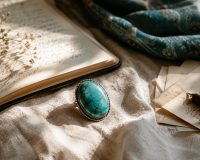

There is a particular kind of helplessness that can settle over a home when a baby is teething. The crying can feel sharp and sudden, sleep can unravel in little pieces, and even calm parents can start second-guessing themselves by the third or fourth hard night. You try the chilled washcloth. You try the teether that everyone swore by. You rock, pace, hum, bounce, and hope. And when nothing seems to settle your child for long, it makes sense that your mind starts reaching for gentler answers, softer answers, older answers.
That is often where amber jewelry for teething enters the picture.
For many parents, it does not show up as a trend first. It shows up as a recommendation from another tired parent, a gift from a grandparent, or something seen during a late-night search for natural ways to ease discomfort. It carries a certain emotional promise. It looks warm, earthy, and calm. It feels different from hard plastic or brightly marketed gadgets. Even the color can seem soothing. There is something about it that suggests comfort, patience, and a slower kind of care.
That emotional pull is real, and it deserves to be acknowledged without judgment.
At the same time, teething can put parents in a vulnerable state. When your baby is uncomfortable, you are more likely to grasp for anything that might help. When sleep is broken and your nervous system is already stretched thin, every decision can start to feel heavier than it is. You may find yourself wanting certainty where there is only mixed information. You may also feel pressure to choose perfectly, which is a hard place to parent from.
This is why conversations about amber teething jewelry need to be grounded in both tenderness and honesty.
Amber has a long history in crystal healing and adornment, and many people feel deeply connected to its warmth, organic beauty, and protective symbolism. On Sparrow Trades, amber also lives within a wider story of symbolism of jewelry, where what we wear can hold meaning, comfort, and intention. But when the conversation shifts to babies and teething, the emotional tone changes. Parents are no longer just choosing something beautiful or spiritually resonant. They are trying to decide what feels safe, what feels kind, and what they can trust.
This article holds that tension carefully. It is here to meet the parent who feels curious about amber jewelry for teething, while also needing steady, non-alarmist clarity. It is here for the parent who wants natural support but does not want magical thinking to override discernment. And it is here for the parent who may already own a piece and wants to think about it more clearly, without shame.
Because the truth is that teething seasons are tender. They can make even simple choices feel emotionally loaded. So instead of treating this like a debate, it helps to approach it like care: with warmth, caution, and enough room to breathe.
Why Parents Are Drawn to Amber During Teething
Parents are rarely drawn to amber because they want something trendy. Most are drawn to it because teething can feel relentless, and amber seems to offer a gentler path through the overwhelm. The appeal is not hard to understand. It looks natural. It feels old-world rather than manufactured. It carries a softness that can seem comforting in a season that often feels jagged.
For some families, amber teething jewelry feels aligned with a broader desire to parent with less intensity and less noise. When your baby is already overstimulated, the idea of something simple and earth-based can feel grounding in itself. There is often an emotional logic beneath the interest: if something comes from nature, maybe it will feel less harsh. If something has been passed down or widely trusted in certain circles, maybe it will help us soften this hard moment.
That does not make parents gullible. It makes them human.
Amber also carries meaning beyond teething. Many people are first introduced to amber meaning through themes of warmth, protection, and old energy held in physical form. Others connect with amber healing properties because amber is often associated with comfort, vitality, and calm presence. Even outside baby care, people are drawn to wearing amber with intention because it can feel like carrying a small source of steadiness.
When you place that symbolism next to a teething child, the emotional association becomes even stronger. Parents may not only be asking, “Will this help?” They may also be asking, “Can this hold some comfort for us right now?” In that sense, amber sometimes becomes part of the parent’s regulation too. It can represent hope during a tiring stage, and hope matters.
Still, it helps to separate emotional resonance from physical effect. Something can feel calming, meaningful, and deeply aligned without being a proven solution to teething pain. Both things can be true. That is why some families hold amber as a sentimental or ritual object rather than relying on it as a direct remedy.
For parents who are also trying to understand the difference between real amber and lookalike materials, questions like amber vs copal or what is baltic amber vs regular amber often come up quickly. Beneath those questions is a simple longing: if I am choosing this, I want to know what I am actually bringing close to my child.
What Amber Jewelry Is Believed to Do, and Where Uncertainty Lives
Most of the claims around amber jewelry for teething center on baltic amber. You will often hear that when the amber rests against warm skin, it releases compounds that support comfort during teething. That explanation is part of why many parents go looking specifically for baltic amber jewelry rather than just any amber-colored piece.
But this is also where calm discernment matters most.
Parents deserve language that is gentle without being vague. The belief around amber teething jewelry is meaningful to many families, yet the stronger claims about how it works are not something you should treat as settled fact simply because they are repeated often. There is a difference between tradition, symbolism, anecdotal comfort, and evidence. When you are caring for a baby, that difference matters.
This does not mean amber has no value. It means the value may live in a different place than some product descriptions suggest. For some parents, amber becomes part of a soothing rhythm rather than a single fix. It may sit alongside cool teethers, cuddling, contact naps, predictable sensory comfort, and a slower pace on hard days. It may also live within a larger appreciation for amber uses that are emotional, symbolic, or aesthetic rather than strictly functional.
For families who want to stay close to both curiosity and honesty, it can help to hold this question softly: is this something I believe will directly change teething pain, or is this something that feels meaningful, comforting, and aligned with how I like to care?
That distinction can reduce pressure. It can also protect you from spiraling into all-or-nothing thinking.
If you find yourself wanting a clearer breakdown of claims, materials, and common misunderstandings, it would make sense for a future piece like how amber teething jewelry works to sit in this cluster. Likewise, parents trying to sort through benefit-driven language may naturally look for something like baltic amber teething benefits explained before making a decision.
In other words, uncertainty does not mean you have to shut down your intuition. It means your intuition works best when it is paired with grounded thinking.
Safety Matters More Than Hope
When babies are uncomfortable, hope can become very persuasive. That is why safety deserves its own space, not as a fear-based interruption, but as an act of care.
Anything worn around a baby’s neck or wrist needs to be considered with extra caution. Parents do not need shaming language here. They need a clear reminder that developmental stages change quickly, sleep can be unpredictable, and what seems manageable in one moment can become risky in another. A baby cannot tell you when something feels wrong. So the adult has to carry that discernment on their behalf.
This is especially important because amber jewelry for teething often gets framed as soft and natural, which can make it feel inherently safer than it is. But “natural” is not the same as “risk-free.” That is true across parenting, and it is especially true with anything a baby wears.
For some families, the safest emotional shift is moving amber out of the category of active teething aid and into the category of keepsake, supervised accessory, or symbolic object held by the parent instead. That does not diminish its meaning. In many cases, it may actually bring the choice back into alignment with what parents are really seeking: comfort, beauty, and steadiness without unnecessary risk.
This is also where amber jewelry for emotional safety can resonate in a very different way. Emotional safety is not only about what a gemstone symbolizes. It is also about the felt sense that your decisions are grounded, your body is not bracing around uncertainty, and your care choices do not leave you silently anxious.
If you are a parent who already feels overstimulated by conflicting opinions, it may help to imagine a future resource such as amber jewelry safety for babies or risks of amber teething necklaces. Those are not fear-driven questions. They are regulated questions. They come from the part of you that wants warmth and wisdom to exist together.
And that is the deepest safety cue of all: if something leaves your nervous system more activated than soothed, pause. Reconsider. Let the pause be part of your parenting intelligence.
If You Still Feel Drawn to Amber, There Are Gentler Ways to Hold It
Not every parent who feels drawn to amber needs to reject that pull entirely. Sometimes the healthiest path is not all-or-nothing. Sometimes it is a softer reframe.
You might love amber for its warmth, color, and ancient feeling, while also deciding that your baby does not need to wear it unsupervised. You might appreciate the emotional associations of amber without making it carry the full burden of pain relief. You might even choose to keep a piece as part of your own ritual, a reminder that this phase is temporary and that tenderness counts, even when sleep is broken.
This approach lets amber become supportive without turning it into a promise.
Some parents also find comfort in exploring adjacent forms of meaning rather than leaning on the teething claim alone. For example, they may connect with grounding jewelry meaning because they themselves need more steadiness during the teething stage. Others feel drawn to protective jewelry meaning because early parenthood can make you want every object around your child to carry a blessing.
There is nothing wrong with that longing. The key is to place meaning where meaning belongs and safety where safety belongs.
If the piece matters to you, authenticity may matter too. Questions like how to tell if baltic amber is real are often about more than shopping. They are about trust. Parents want to feel that if they bring something into their child’s world, they understand what it is.
And if you find yourself wanting amber to function more like a family symbol than a baby tool, you may naturally drift toward broader expressions of gemstone jewelry or other forms of healing jewelry that are meaningful for the caregiver rather than worn by the child. That shift can be surprisingly relieving. It returns choice to a place of clarity instead of desperation.
Amber Jewelry for Teething FAQ
Is amber jewelry for teething actually proven to work?
Many parents report positive experiences, but that is not the same as clear proof. Teething is also unpredictable by nature, which can make it hard to know what is helping and what is simply changing on its own. If amber feels meaningful to you, it may still have value in your family story, but it helps to stay honest about the difference between emotional comfort and proven effect.
Is baltic amber different from regular amber for teething jewelry?
Most teething-related claims are tied specifically to baltic amber, which is why parents often search for that material by name. If you are trying to understand the distinction, what is baltic amber vs regular amber is the more precise question than simply asking about amber in general. That kind of clarity can help you make calmer decisions.
Is amber teething jewelry safe for babies to wear all the time?
This is where a cautious approach matters. Anything worn by a baby deserves close consideration, especially around sleep, movement, and unsupervised time. Even when a product is widely recommended in parenting spaces, it is still wise to let safety lead over popularity. If a piece only feels acceptable under constant supervision, that feeling is worth listening to.
Can amber still have meaning if I do not use it as a teething remedy?
Yes. For many people, amber carries warmth, comfort, and symbolic protection whether or not it is used for a specific physical purpose. You may connect more deeply with amber meaning or wearing amber with intention than with teething claims themselves. That can still be a valid relationship with the stone.
How can I tell if the amber I bought is real?
That question matters because it is really a trust question. Parents often want reassurance that they are not buying dyed plastic, imitation resin, or a mislabeled material. Looking into how to tell if baltic amber is real can help you slow the process down and choose with more confidence.
What should I do if I feel conflicted about using amber jewelry for teething?
Conflict usually means your care instincts are active, not that you are failing. If part of you loves the idea and another part of you feels uneasy, let the unease have a voice. You do not have to force yourself into certainty. Sometimes the most regulated decision is choosing a middle path: appreciating amber, keeping it meaningful, and not asking it to do more than feels truly safe or clear.
Choosing From a Place of Calm, Not Pressure
Parents do not need more pressure during teething seasons. They need room to think clearly, feel honestly, and make decisions they can live inside with a little more ease.
Amber jewelry for teething sits at the intersection of many things parents care about at once: natural support, beauty, tradition, symbolism, safety, and the wish to relieve discomfort without adding more intensity. That is why it can feel so emotionally charged. It is never just about the jewelry. It is about the baby you are trying to comfort and the kind of care you hope to offer.
If amber draws you in, that does not mean you are naïve. It may simply mean you are responding to warmth in a hard moment. If caution rises in you too, that does not mean you are overreacting. It may mean your body is protecting what matters.
The kindest approach is usually the one that leaves you feeling more grounded afterward. Maybe that means choosing not to use amber on your baby at all. Maybe it means treating it as a symbolic object rather than a remedy. Maybe it means wearing it yourself as a quiet reminder that this season will pass, and that care does not have to look dramatic to be real.
In that sense, the wisest answer is rarely the loudest one. It is the one that lets tenderness and discernment sit at the same table. And when they do, parents often find something steadier than certainty.
They find trust in their own pacing.

Where softness, self-awareness, and emotional healing are allowed to coexist. Through reflective writing, grounding rituals, and intentional beauty, Sparrow Trades offers gentle support for sensitive souls learning to reconnect with themselves.